From death penalty to guns to prosecuting cops, Meck DA candidates spar over policies
In a prayer Tuesday before a debate between the two Democrats running for Mecklenburg County District Attorney, Ceretha Sherrill asked for God to bless those on hand with a “restless discomfort for easy answers.”
Prayer answered.
What followed during the venerable Sarah Stevenson Tuesday Forum was an hour-long back and forth between the candidates on how they intend to do their jobs.
Most of the discussion between incumbent Spencer Merriweather and challenger Tim Emry was driven by questions from an engaged call-in audience of more than 100 that dealt with criminal justice issues confronting the minority community — from mass incarceration and racial equity to the death penalty and the prosecution of police violence.
The Democratic primary is May 17. The winner gets the job since there is no Republican in the race.
In his five-minute opening statement, Merriweather, who is seeking his second four-year term, highlighted his office’s creation of a special victims team to prosecute sex crimes and offenses against children as well as a violent crime unit to focus on felonies involving firearms.
To place more emphasis on violent crime, Merriweather dropped the prosecution of low-level drug crimes last year.
He pledged to work for a “school system that is free of guns,” and promised an early-intervention policy so defendants with mental health problems can get the care they need and not languish in jail.
Merriweather, the first African-American to be elected to the top prosecutor’s job, also pledged a continuation of bond-reform policies in which custody is based on “dangerousness not debt.”
He promised a prosecutor’s office that would continue to balance public safety and justice. He also pledged to “take the fight to Raleigh” in hopes of persuading the state legislature “to make sure we have the 21st century criminal justice system we deserve,” one that is fair, efficient and deserving of public trust.
The challenger
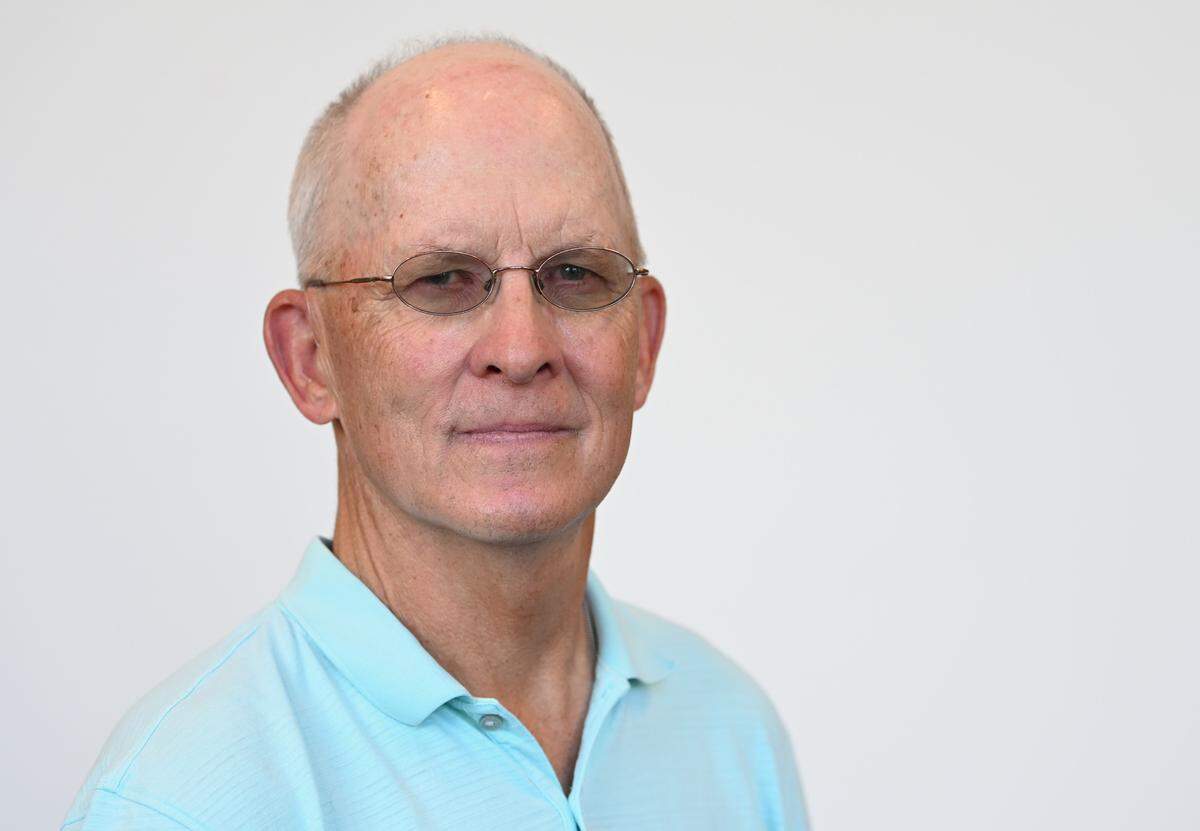
Emry, a veteran Charlotte criminal defense attorney and former public defender, outlined a vision of significant reform to a “criminal punishment system” that he claims is rooted in white supremacy and racism and which is supported by Merriweather and his staff.
“It’s not broken,” he said of the system. “It’s working exactly the way it was designed.”
He promised a 50% cut in the number of Mecklenburg residents sent to state prisons within his first two years in office. In 2019, more than 8 out of 10 sentenced to state Department of Correction facilities were Black, he said. “Those kind of disparities are not acceptable, and they are not getting better.”
Upon taking office in January, Emry said he will disband the DA’s habitual felon team, which he accused of punishing mostly low-level offenders with inappropriately harsh sentences. He also pledged to create a special unit to “investigate police misconduct and criminality.”
In a promise that undoubtedly found support from the mostly Black audience, Emry said he would refuse to prosecute any case involving a racially profiled traffic stop. Studies indicate that Black drivers are far more likely than whites to be stopped, searched and charged with a crime.
Other issues raised by the audience included:
▪ The death penalty.
Emry vowed to never seek the death penalty, calling it the “most visible symbol of white supremacy in North Carolina.”
Merriweather refused to make the same promise, saying he would “never look into the eyes of a mother who had just lost a child” without “thoughtfully considering” all the options at his disposal, including capital punishment.
Merriweather’s office dropped its only capital murder prosecution last month.
▪ Gun violence.
Emry pledged to aggressively prosecute cases involving firearms, but added that “prison is not solving” the problem. “Do we have the courage to try something different?”
Merriweather, on the other hand, said there are circumstances — an armed robbery, a shooting into a home, a killing — where “citizens have a right to expect that these people will be held accountable and not pose a threat (to them) in the future.”
▪ The pandemic backlog.
COVID-19 has crippled the Mecklenburg courthouse for two years. Merriweather said the county “needs more resources from Raleigh” to explore ways of reducing the wait for court dates.
“There’s no way we can try our way out of the backlog,” he said.
Emry said the backlog has been unfair to both victims of crime and defendants. “Justice delayed is justice denied,” he said.
While acknowledging that Merriweather’s office “has been dealt a tough hand” from the pandemic, he said prosecutors should have been more aggressive in using remote hearings to move cases along. He also said that prosecutors should re-examine cases and drop those with insufficient evidence.
There’s “a lot of junk” on the dockets right now, he said.
▪ Jail overcrowding.
A state jail inspector said in late December that the Mecklenburg County jail has too few jailers to safely manage the number of inmates. As of Tuesday morning the jail population was 1,317, about 100 fewer than the December figure, but well above the state’s recommended threshold of under 1,000.
Merriweather said that since 2018, he has been involved with efforts to reform custody decisions by the courts to make sure low-level defendants aren’t jailed because they can’t pay their bonds.
He said the majority of those jailed by the state face violent felony charges — “the folks the community would want to have in custody.”
According to Emry, far too many inmates remained jail on misdemeanor charges — 79 as of Tuesday. He says the DA should back away from “mass incarceration policies” and more aggressively push for pre-trial releases. He said “98%” of the defendants in those cases “do not commit new crimes” while awaiting trial.
This story was originally published March 8, 2022 at 4:54 PM.