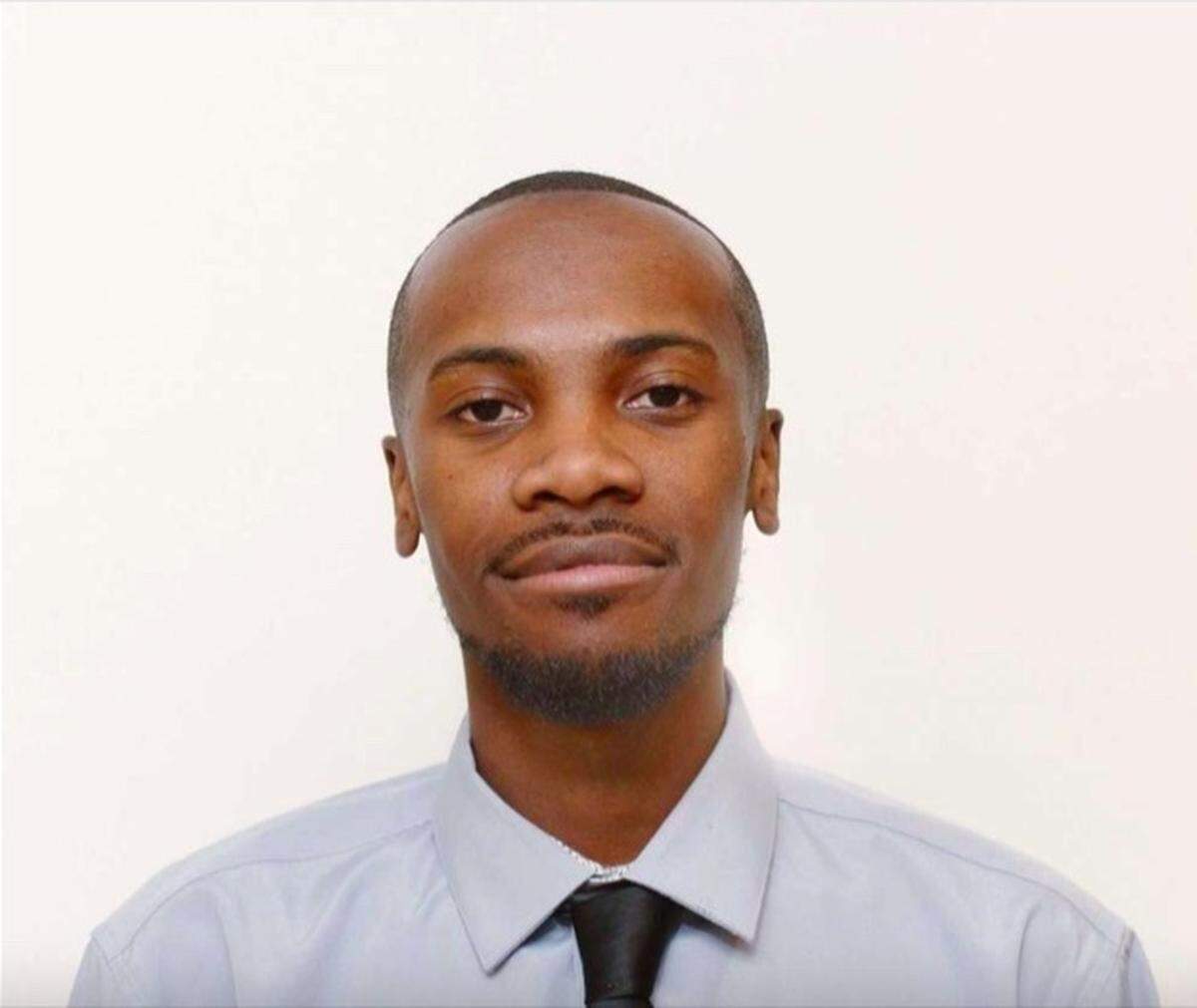
Mother demands that 15-year-old accused of killing her son be death be tried as adult
Editor’s note: This story was updated on Oct. 20, 2022, to reflect that the case of the juvenile defendant in the fatal shooting of Kashawn Johnson will remain in juvenile court.
Tianna Nelson says she feels ambushed. Again.
In May, her 18-year-old son, Kashawn Johnson, was shot and killed during an apparent robbery attempt in north Charlotte.
Ever since, Nelson has been attending court hearings for one of her son’s accused killers, a 15-year-old boy. Throughout, she says, she was led to believe the Mecklenburg County District Attorney’s Office would ask the juvenile court judge hearing the case to transfer it Superior Court.
There, the teenager — who because of state law has not been identified — would be tried as an adult. If convicted of first-degree murder, he could be sentenced to life in prison with at best the possibility of parole after 25 years.
Under N.C. law, juvenile defendants accused of first-degree murder are automatically tried as adults.
But five months after her son’s death, Nelson said she learned this week that the prosecutor’s office intends to press for the lesser charge of second-degree murder. The change could keep the case in juvenile court and might lead to the teenager’s release from a state-run youth development center in a matter of months. At the very longest, the teen would be released from state juvenile custody when he turned 21.
Nelson says her emotions swung from grief to disbelief.
“Tell me you think this is an ethically and morally correct decision,” she says she told Assistant District Attorney Glenn Cole on Monday.
“This is a very hard decision,” Cole replied, according to Nelson.
“That’s not what I asked,” the mother said she responded.
Nelson’s pursuit for justice for her son finds itself at the collision of public interests — the laws put in place to protect juvenile defendants vs. a disturbing uptick in juvenile violent crimes, including murders.
In 2021 alone, according to Charlotte-Mecklenburg police, 12 juveniles were murdered in the county while 14 others were charged with the crime.
How those defendants are to be prosecuted can lead to court fights — as is the case of a 14-year-old Charlotte youth caught on camera as he opened fire and wounded a Charlotte-Mecklenburg police officer in December 2021. His prosecution is on indefinite hold after his lawyer appealed a juvenile judge’s ruling moving the case to Superior Court.
In Raleigh, a 15-year-old faces five murder charges tied to a mass shooting last Thursday in the Hedingham neighborhood in a northeastern part of the city. Sources have confirmed for The News & Observer that the suspect is Austin Thompson, a sophomore at Knightdale High School and the brother of one of the victims, 16-year-old James Thompson.
Wake County District Attorney Lorrin Freeman says she hopes to try Austin Thompson as an adult.
Sealed details of the case
In the Charlotte case, Kashawn Johnson was found on May 23 with a gunshot to the back of his head. The 15-year-old suspect was taken into custody the same day; police arrested 20-year-old Desmond Dailey on Aug. 12.
Both were charged with murder, robbery with a dangerous weapon, and conspiracy to commit robbery in connection with Johnson’s death. Dailey also faces one count of possession of a firearm by a felon.
So far, the public conversation of the case has been one-sided. District Attorney Spencer Merriweather told The Charlotte Observer that his office is legally prohibited from discussing the juvenile’s case. He also declined to discuss the pending charges against Dailey.
In a statement to the Observer and other media, the DA’s office said the decision to transfer a juvenile case to Superior Court is “based solely on a thorough analysis of the available evidence and circumstances of the case. Additionally, there is a pending case against an adult co-defendant, which also prevents us from commenting further.”
Nelson told the Observer in a phone interview on Tuesday that after attending as many as 10 detention hearings for the juvenile charged with her son’s killing, she said she still doesn’t know whether he or Dailey pulled the trigger.
She said it doesn’t matter. Both defendants pulled and aimed their guns, she said. She also claims prosecutors have told her the juvenile has a history of violent crimes, which she says makes him undeserving of early release.
Moreover, Nelson said she believes Merriweather’s office is shortchanging the prosecution of her son’s accused killers due to the mammoth backlog of murders and other violent crime cases jamming the Mecklenburg courts.
“The backlog has made them lazy. They’re saying, ‘Let’s just let him plead guilty to second-degree murder and get it over with,’” she said. “I want the district attorney to do his job, the job he was elected to do. Stop letting these juveniles out to offend again. Fifteen-year-olds who murder people are getting released.”
Based on rulings from the Supreme Court on down, young offenders are treated differently under the law. North Carolina, which in 2019 became the last state in the country to adopt 18 as the legal age of adulthood, keeps all juvenile court records sealed and most proceedings as private as possible — all with the goal of rehabilitating a young life, not locking it away.
Barbara Fedders, director of the UNC law school’s Youth Justice Clinic, says the legal rationale that “kids are different, cognitively different, developmentally different so they should be treated differently,” should stand regardless of the seriousness of their offenses.
“It may be a terrible crime, but it’s still a kid,” Fedders said. “I can see how a mother who just lost her child would feel shortchanged by that. But the right thing appears to be happening.”
A final word
On Thursday, a Mecklenburg County judge is expected to decide if the prosecution of the 15-year-old accused killer will stay in juvenile court or whether he will be tried as an adult.
By law, District Judge Faith Fickling-Alvarez will base her ruling on a series of factors, including the defendant’s age and maturity, the seriousness of his crime, the level of danger he poses to the community and the likelihood of rehabilitation.
Nelson will have a chance to speak at the Thursday hearing. On Wednesday, she wanted her son’s cause heard in hopes of influencing what criminal charge the District Attorney’s Office presents to the judge.
At noon — and at her urging — about 40 people gathered outside Merriweather’s office to demand that the 15-year-old suspect be charged with first-degree murder and tried as an adult.
Nelson told the gathering that she moved to Charlotte when her son was 10, believing the city provided a space for Black people to flourish. And for the rest of his life, Kashawn did just that, she said, graduating ahead of his class in the International Baccalaureate Program at Rocky River High School.
Three months later he was dead.
“He was a contributing member of his community,” Nelson said. “A loss of this magnitude, I can’t even put into words how it has affected my family.”
Nelson, a registered nurse and licensed real estate agent, said the community is placed in danger when violent offenders are allowed back on the streets, even young ones.
“It is a community crisis,” Nelson said. “And it’s going to take a community to do something.”
Tina Sykes-Mosley, whose son Marcus was murdered in 2020, told the gathering that murder is usually the last crime, not the first.
“If you stop the revolving door just maybe the murders will decrease,” she said. “Just maybe you won’t see another mother up here pleading for justice for their child.”
After the meeting, Nelson said she had one more stop to make on her dead son’s behalf — a 3 p.m. meeting with Merriweather and some of his assistant prosecutors involved in the case.
She said she wanted Merriweather “to have to look me in the eyes” and explain what he intends to do with the killers of her son.
On Thursday, the teenage defendant, now 16, was found responsible in juvenile court for second-degree murder and robbery with a dangerous weapon. He was sent to a juvenile development center for a minimum of six months, and will be released no later than his 18th birthday.
This story was originally published October 19, 2022 at 4:31 PM.