
Two survivors, two stories and a shared goal: Fight Charlotte’s growing violence
Gun violence survivors will meet Saturday at the Allegra Westbrooks Regional Library to talk about a shared and deeply personal goal: a safer Charlotte and a safer country.
Some of them say the government needs to do more because they aren’t getting the help they need.
“We’re pleading with our local officials, our city leaders: Listen to what we have to say,” said Shonda Lifhred, who lives in Charlotte. “Be a part of what we have to say.”
In 2000 she was a victim of both domestic violence and gun violence when someone shot her multiple times, and she’s since vowed to “be a voice for those that lost their lives” to it, she said.
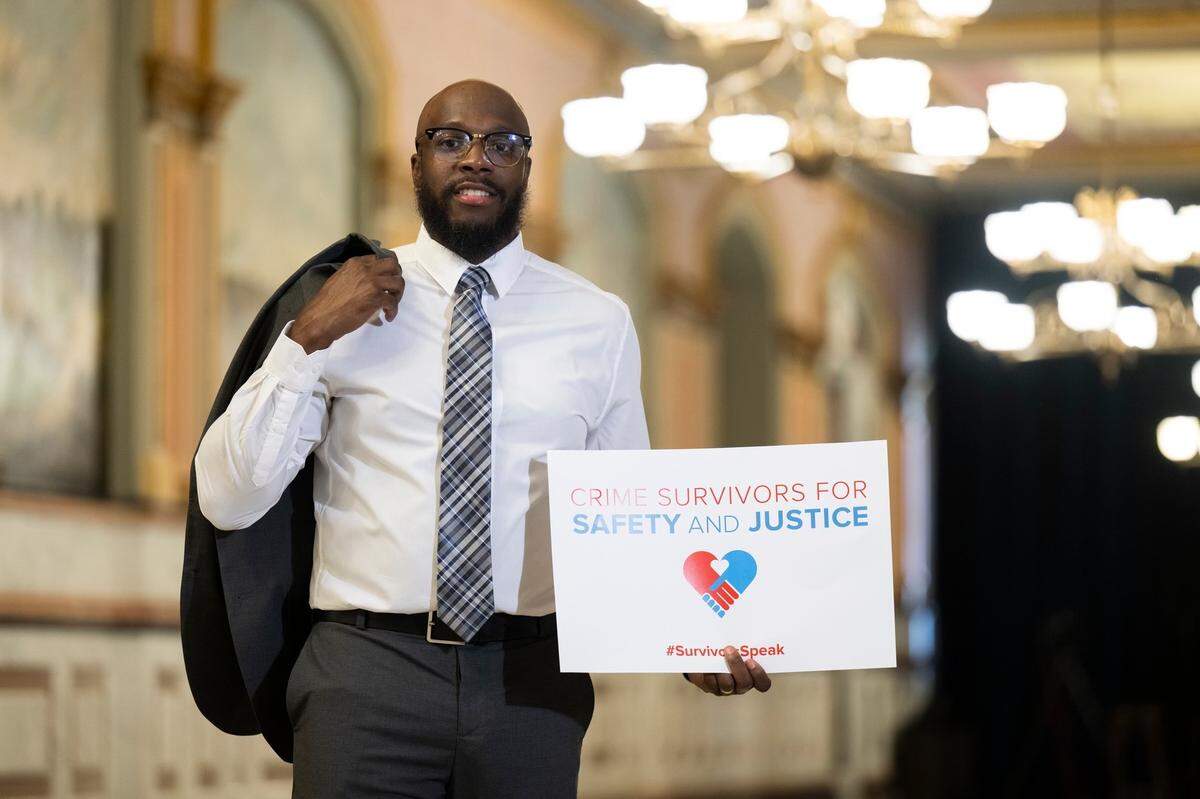
Aswad Thomas, a national leader on the issue who also has a story, has partnered with her.
In 2009 he was slated to play basketball professionally in Europe. About three weeks before he was scheduled to leave the country, he was shot twice in the back during an attempted robbery at a convenience store in Hartford, Connecticut, he said.
Now he’s the vice president of the Alliance for Safety and Justice, a multi-state organization that’s trying to “replace mass incarceration with more safety solutions,” he said.
“Like many of our members, violence actually led me to this work,” he said.
More support needed to end cycle
Charlotte, defying national trends, has seen an increase in homicides recently. More people were killed in the city from January through June of this year than in the first six months of any year since at least 2015.
Thomas came to Charlotte earlier in the year and spoke with about a dozen community groups who work directly with people affected by the violence, as well as people affected themselves.
He had a few takeaways: Charlotte needs more “infrastructure” to help violent crime victims, like a trauma recovery center. More investment in community intervention programs is also needed to stop violence from happening in the first place. The third thing?
“People that experience violence, they’re not even seen as victims,” he said.
Instead, they’re often seen by law enforcement as contributing to their own woes, he said.
Lifhred said politicians at home and at the national level need to do more.
“We don’t have enough people advocating for us in Washington,” she said. “We don’t have enough people advocating for us in our local community.”
Some projects will expand resources to Charlotte’s crime victims soon. The Umbrella Center will streamline services for victims of domestic violence, sexual assault, child abuse, elder abuse and human trafficking, for example. It’s slated to open next year. It will be a sort of one-stop shop for those survivors.
And Mecklenburg County is undergoing a strategic five-year plan dubbed “The Way Forward.” That plan has many ideas like Thomas’ that focus on long-term health and ground-level solutions, not a tough-on-crime attitude.
For now, Lifhred said, it’s nice that something is growing close to home.
Saturday’s meeting is just a lead-up to a national “March on Washington” for crime victims in September, which 11 Charlotte-based groups will join.
“It’s a small community, and we want to expand,” she said of the groups that are partnering. “But there’s a lot of people that don’t want to share because they’re ashamed of their trauma… They’re ashamed that they’re a victim.”
She added: “But you don’t have to feel shame. We’re a family. We’ll love you. And we understand.”
Want to go?
Victim advocates, crime survivors and activists — including Lifhred and Thomas — will be at Saturday’s meeting.
WHERE: Allegra Westbrooks Regional Library at 2412 Beatties Ford Road in Charlotte.
WHEN: Saturday from 9:30 a.m. to 11:30 a.m.
This story was originally published July 12, 2024 at 6:00 AM.