‘If I die, it is on you’: Family sues CMPD and the city over deadly detainment
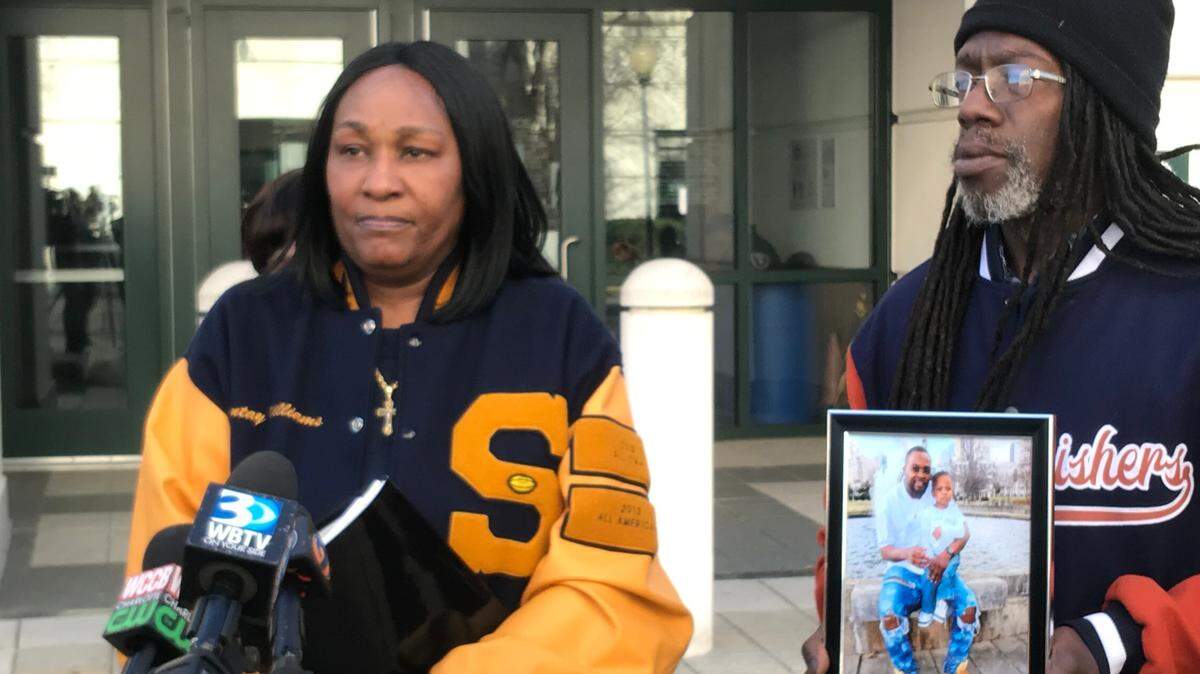
Jovontay Williams left officers with a prophetic warning as they pinned him to the boards of a back porch in 2022, according to a new lawsuit filed in federal court.
“If I die, it is on you,” the former Johnson C. Smith University All-American football player told Charlotte police, the lawsuit said.
With his hands behind his back and his face to the floor, he told police he could not breathe and asked to stand up, video shows. Officers refused. They kept him on the ground, turned him on his side, told him “you’re good” and asked him to take deep breaths, The Charlotte Observer previously reported. An ambulance was on the way, they told him.
Paramedics didn’t arrive for nearly 20 minutes. Williams died hours later, on June 13, 2022.
An autopsy obtained by the family said he died of “positional asphyxia (the inability to breathe because of a contorted body) by the police while under the police restraint and custody.”
The lawsuit filed Friday, exactly three years after Williams’ death, alleged that old Charlotte-Mecklenburg Police Department policies were vaguely worded and contributed to the “restraint-induced homicide.” The lawsuit said the department’s lack of “mandatory life-saving measures” violated constitutional rights that prohibit unreasonable searches and seizures, and protection of due process.
In 2023, the year after Williams’ death, CMPD updated policies concerning positional asphyxia. If police now acted as they did with Williams in 2022, the lawsuit said, they would be in violation of those new policies.
Williams’ mother, Christa Williams, is suing the city and four officers — Timothy Abramo, Zavon Joseph, Brenton Thomas and Jacob Grigg.
CMPD Chief Johnny Jennings previously told WBTV that officers “acted appropriately and admirably.” District Attorney Spencer Merriweather did not file criminal charges against them.
CMPD did not respond to a request for comment about the lawsuit from The Charlotte Observer.
Jovontay Williams’ in-custody death
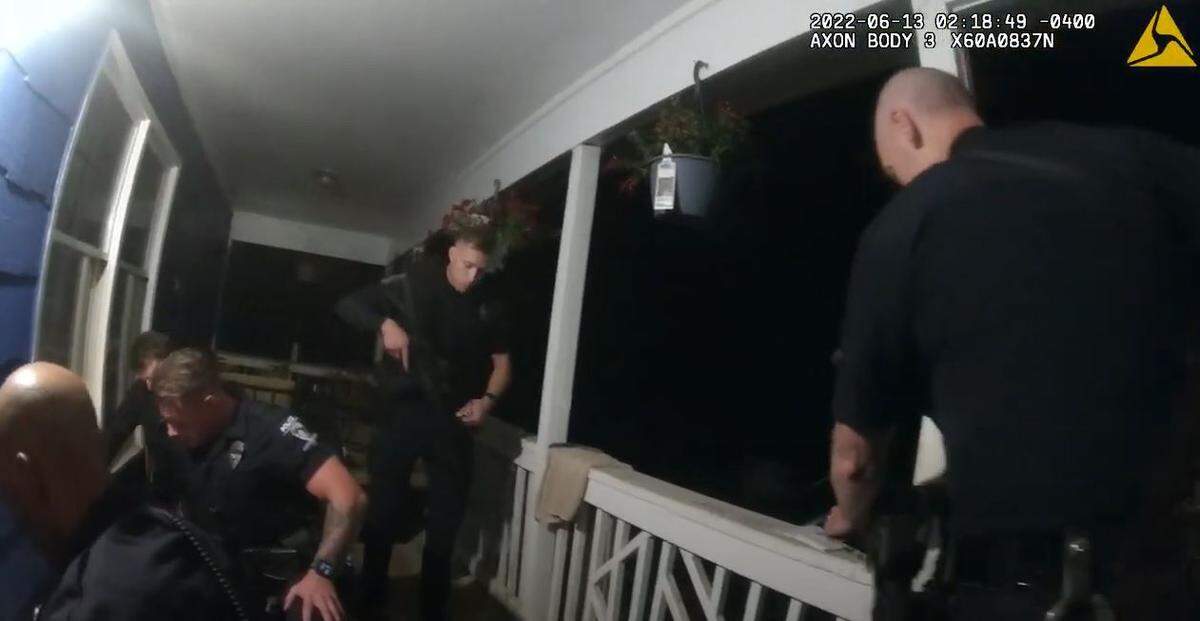
In 2022, police came to 324 Featherstone Drive — a one-story home in northeast Charlotte’s Autumnwood neighborhood, in response to reports of gunfire and break-ins.
On the front porch of a nearby home, they found tipped plants, the lawsuit said. On the back porch, they found Williams.
He was “acting erratically, exhibiting stress and delirium,” CMPD officials previously said. He lived on the other side of town, his mother previously told reporters.
Officers previously said Williams jumped when they approached. After determining he didn’t have a gun, body-worn camera footage showed, they pushed him face-down onto the porch, put his hands behind his back and later put him into a “recovery position” — or moved him onto his side.
According to CMPD policies, that maneuver is meant to prevent positional asphyxia. Jennings has said that his officers followed policies.
Previously released body-worn camera footage showed officers kept Williams’ hands and feet tightly secured behind his back while he told officers he was lightheaded, seeing double and was “going to die.”
“I can’t breathe,” Williams told police, according to the lawsuit. “Help me... I’m about to die.”
“The fact that we have these statements by Jovontay Williams post-George Floyd is ludicrous,” Michael Littlejohn, Jr., the family’s attorney, told the Observer.
The family, in the lawsuit filed in the U.S. District Court of Western North Carolina, argued that CMPD’s policy at the time of Williams’ death lacked necessary instruction on how officers should respond when someone in a pinned position starts to struggle.
CMPD pinning policies
In 1992, CMPD introduced a written policy on how to avoid positional asphyxia when pinning people to the ground and transporting them.
Since November 1992, the department has instructed officers to avoid holding people “in a position that is likely to contribute to positional asphyxia,” such as “being handcuffed behind and being placed face down,” according to a CMPD Directives Manual entry filed within the lawsuit.
That directive also instructed officers to “closely monitor arrestees for signs of breathing difficulty.”
The department’s 2018 policy on how to approach people experiencing mental health crises said: “If the person appears unarmed and does not appear to pose an immediate threat... officers will, if practical, contain the subject while maintaining a safe distance. The objective in this situation is to gain the person’s voluntary cooperation.”
According to that policy, if the person seems combative or poses immediate threat, officers should “employ the amount of force that is reasonable and necessary to protect themselves and others at the scene and take the person into custody... Efforts should be made to minimize the intensity and duration of the subject’s resistance and to avoid engaging in a potentially prolonged struggle.”
The Williams family’s lawsuit said that directive failed to require timely repositioning, CPR or immediate medical intervention. It “merely discouraged prolonged prone restraint and left airway monitoring, EMS activation, and repositioning to officer discretion,” Littlejohn stated in a news release Tuesday afternoon.
After Williams’ death, CMPD “overhauled” its policy, Littlejohn stated. CMPD now advises officers to pin suspects only briefly and when necessary, roll people onto their sides, monitor breathing and give paramedics real-time updates.
“These revisions confirm that CMPD policymakers knew or should have known the 2018 Directive posed a substantial and obvious risk of death, yet allowed it to remain in effect until after Mr. Williams was killed,” the lawsuit said.
This story was originally published June 18, 2025 at 6:00 AM.