Before payment controversy, Chief Johnny Jennings made progressive strides at CMPD
Johnny Jennings. Linebacker. 6’2”, 220 pounds. Jefferson City, Tenn.
Long before Charlotte Police Chief Johnny Jennings’ name was tied to kneeling with protesters, using tear gas on crowds, reforming policies, taking inspiration from Chick-fil-A’s trainings and, most recently, a mysterious retirement-settlement payout that drew the attention of North Carolina’s state auditor, he was known to Charlotte Observer readers by only a few things: his height, weight, hometown and plan to play football for the Appalachian State Mountaineers.
That was in 1986.
He has since had a more than 30-year career climbing the ranks, navigating modern policing, and upending the status quo to sow better community relations. He leads a department of more than 1,800 officers. And last year, he witnessed and led the department through the loss of four law enforcement officers who were trying to serve a warrant on east Charlotte’s Galway Drive on April 29, 2024.
Now, the police chief is stepping down from Charlotte-Mecklenburg Police Department’s helm surrounded by controversy. His recent secretive dealings with the city, which included two closed-session council meetings and a $305,000 “separation agreement,” have spurred concerns over transparency.
A review of more than 200 Observer articles details how Jennings got here.
It starts when his name first appeared in The Charlotte Observer near the bottom of a February 1986 article about teens committing to colleges across the state. By 1989, a second article says, he’d recovered five fumbles in one season — tying a school record and eventually joining the school’s Athletic Hall of Fame and Hall of Legends.
Decades later, in a new game with a new uniform, Jennings would keep trying to recover the ball.
City payout controversy
Last month, Jennings reportedly opted to sign the payout agreement with the city instead of filing a lawsuit against it over former Charlotte City Council member Tariq Bokhari’s words and calls for Jennings to resign in 2024. It’s still unclear whether Jennings had any legitimate legal ground for a lawsuit, or exactly how he felt his rights were violated.
Bokhari, who now works as a senior administrator at the Federal Transit Administration, told Jennings he would “cripple” his legacy if he didn’t supply officers with new “outer carrier” bulletproof vests, according to text messages obtained by WFAE in a public record request.
WSOC’s Joe Bruno broke news of the payout with scant details provided by city leaders.
State Auditor Dave Boliek, about a week after news reports flooded the topic, wrote a letter alerting the City Council he would be investigating the deal. Days later, Jennings spoke only to the Charlotte Optimist newsletter about select details of the agreement — including the dollar amount.
The muddied chaos crescendoed as Jennings nears his fifth anniversary as chief.
Chief in crisis
In 2020, he became Charlotte’s third consecutive Black chief at a moment of national reckoning as cities — including Charlotte — convulsed with protests following the murder of George Floyd by a police officer who is now in prison.
In one protest, Jennings kneeled and put his right fist in the air “in solidarity against what happened in Minneapolis,” he told WCNC in 2020.
“...We don’t agree with this either,” he said. “People have to realize that when we saw this as police officers, it made us sick to our stomachs.”
The month before Jennings took over from Chief Kerr Putney, CMPD officers were accused of firing tear gas, pepper balls and stun grenades at peaceful protesters and not allowing them to disperse afterwards. Protesters were trapped, several lawsuits said.
Weeks after the June 2, 2020, incident, during a three-hour emergency hearing on one of the lawsuits, Mecklenburg Superior Court Judge Karen Eady-Williams issued a temporary restraining order that restricted police from using similar tactics.
She ordered that the use of munitions against protesters must be approved by Putney, Jennings or their designee as “the only reasonable alternative available,” the Observer reported.
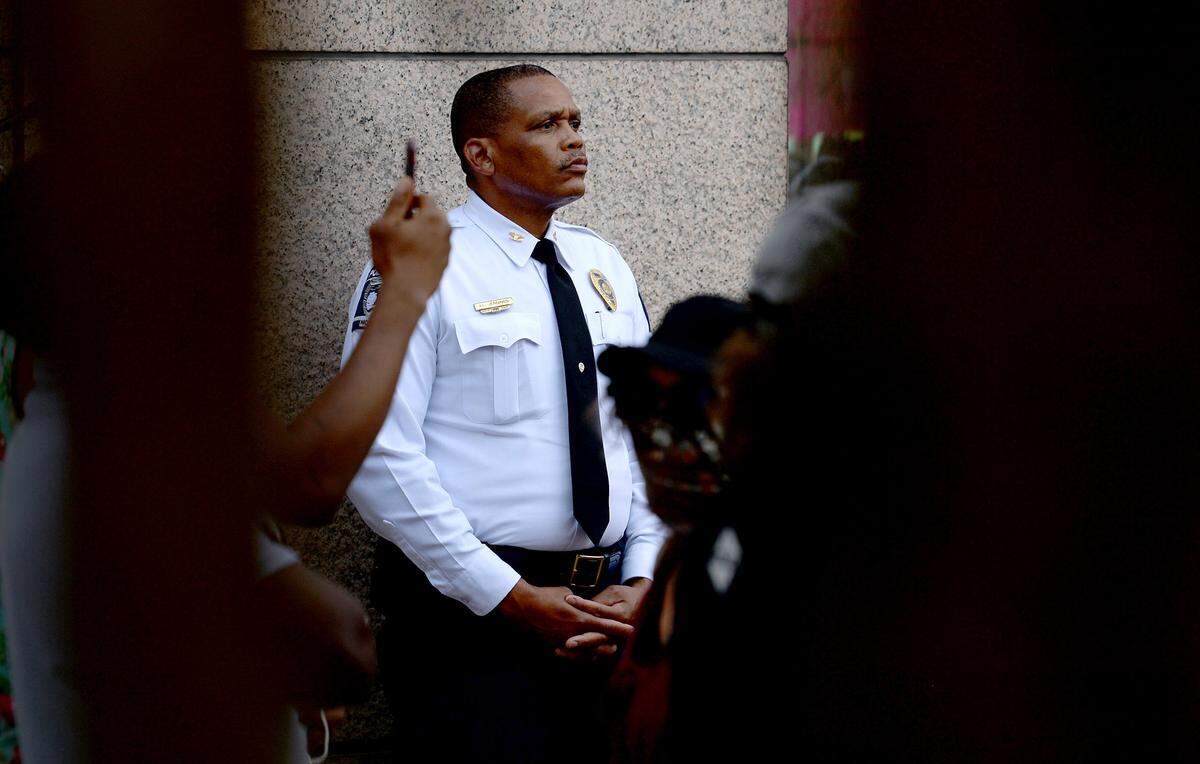
In the following months, a state review found that officers’ conduct and use of chemicals on people were in line with existing policies. Still, Jennings changed policies to make ensure CMPD was in line with “8 Can’t Wait” policies from Campaign Zero — a police reform organization that cites research showing “more restrictive use of force policies are associated with fewer killings.”
The policies require officers to use de-escalation, warn before using deadly force, exhaust all alternatives before turning to deadly force, intervene and stop excessive force used by other officers and report each time they use force or threaten to use force (including when they point a gun at someone). They also must abide by a use of force continuum that reserves the most severe type of force for the most extreme situations. Policies also ban chokeholds, strangleholds and shooting at moving vehicles.
Since becoming chief, Jennings has also:
Banned officers from firing munitions from multiple directions.
Required that all officers wear body-worn cameras.
Introduced a holster monitor that tracks every time an officer draws a weapon and automatically activates their body-worn camera.
Paid consultant The DiJulius Group $60,000 to help his department address a nationwide loss of public trust through “CMPD Serves.” He said he wanted officers to have a Chick-fil-A style approach to customer service. It was “the nation’s first formalized customer service curriculum for law enforcement,” according to a May CMPD news release on Jennings’ announced retirement. CMPD says the trainings have led to a 24% decrease in use of force incidents, a 61% decrease in external complaints, a 39% decrease in internal complaints and a 43% decline in police shooting people.
Said he would not “criminalize homelessness” when County Manager Dena Diorio ordered a camp of more than 200 people living in tents near uptown to move.
Repeatedly called out low bonds that allowed people facing serious charges out of jail before trial.
Underlined parents’ responsibility for their children when teen crime rose. When 17 teens were arrested for fighting and having guns outside a Truist Field Fourth of July fireworks show in 2023, Jennings cited 15 parents.
And the controversies didn’t stop with the protests. During his tenure, Jennings has:
Effectively fired four officers and a supervisor who knew Harold Easter had swallowed cocaine during a traffic stop in January 2020 but failed to render any aid, instead leaving him alone in an interrogation room for more than 10 minutes. The Easter family filed a lawsuit against the city, which was settled in 2023 for $800,000.
Disciplined three officers who approached a car in a traffic stop with a “fictitious license plate” with guns drawn, smashing windows in and dragging the driver to the ground.
Petitioned a judge for release of body camera footage of the viral beating and arrest of a couple sitting on a bench and minding their own business outside of a Bojangles.
Seen the Fraternal Order of Police hold a vote of no confidence against him. The group said it didn’t receive enough responses to declare an outcome.
Early career
“I don’t want to chase cars and run people down and arrest people all day,” the police chief once said.
Jennings wanted no part in Charlotte’s police department, he told the Observer, reflecting on his early career in September 2020. He really wanted to be postal inspector, but they weren’t hiring.
So he worked as a fitness instructor at a YMCA in east Charlotte. There, two cops who came to the gym eventually changed his opinion. He applied, and in September 1997, Jennings is quoted in an Observer article about a teenager who was shot in the back of the head by another teen.
“Tempers flared when one teen offered a dollar to a rival’s girlfriend,” Jennings said at the time.
He worked more than 150 murder cases in just three and a half years, and he told reporters he would follow every lead — no matter how cold the case.
As purported gang activity spread across Charlotte in 2003, he cautioned against profiling.
“You have to be very careful... You can’t label every kid who dresses a certain way a gang member,” he said, and most are teens who join gangs seeking acceptance.
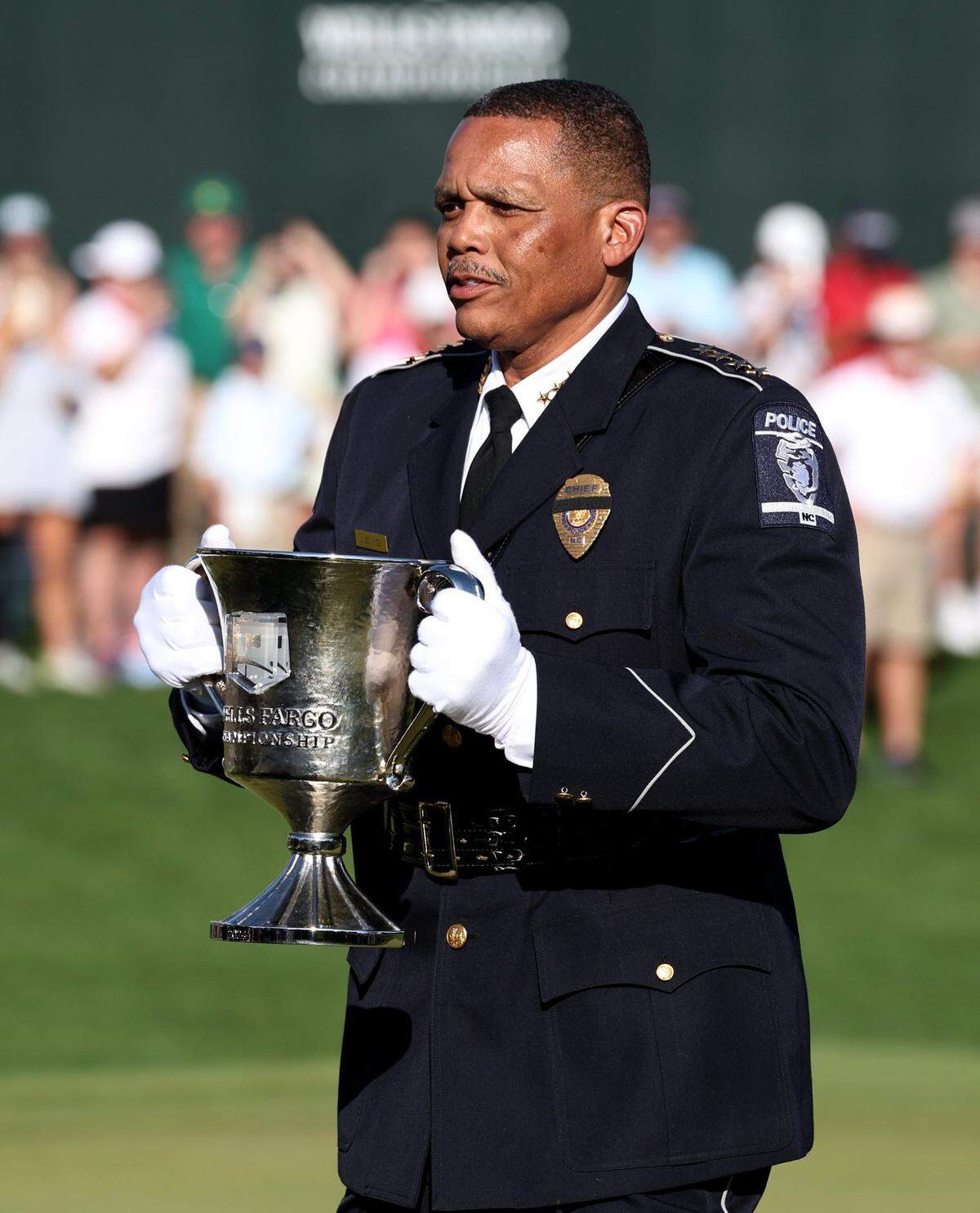
He commanded the North Tryon Division, which saw a 17.8% drop in crime under his leadership in 2008. There, he implemented “focused mission teams” that targeted specific areas using surveillance, undercover operations and engagement with people who may appear suspicious.
He stood by the tactic even after residents of Timber Ridge apartments, where police shot a man on a playground, said it felt like officers were harassing them.
As he rose in rank — from homicide detective to sergeant to captain to major to deputy chief — Jennings’ on-the-scene interviews with reporters morphed.
More recently, Jennings stopped talking about progressive policing — or answering questions.
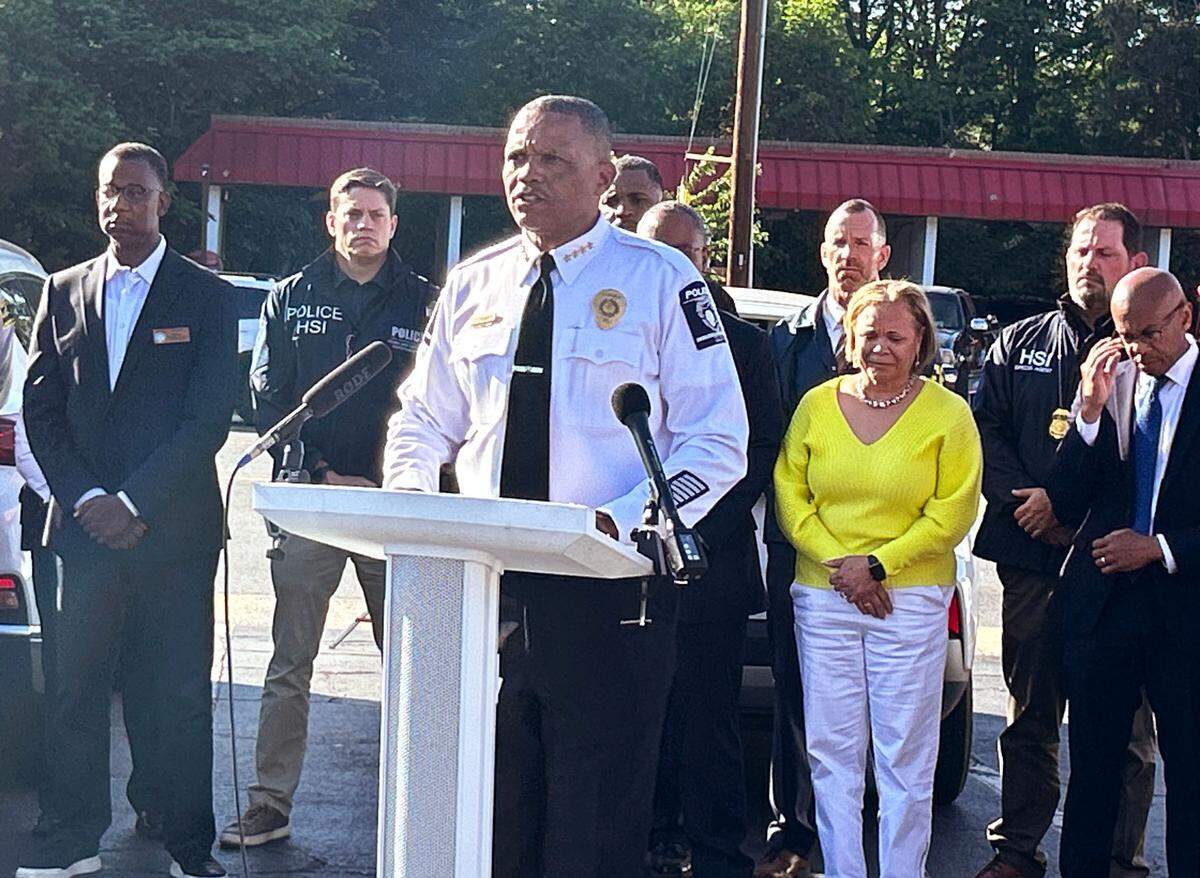
Recent stories often place his quotes in news conferences, public forums, prepackaged videos posted to CMPD-controlled sites or rare one-on-one interviews.
Jennings has declined requests from the Observer to speak about the settlement, and for many months has declined to take direct questions.
This story was originally published June 6, 2025 at 11:23 AM.