‘Roofman’ was poised to make a final escape. Then his heart got him in trouble.

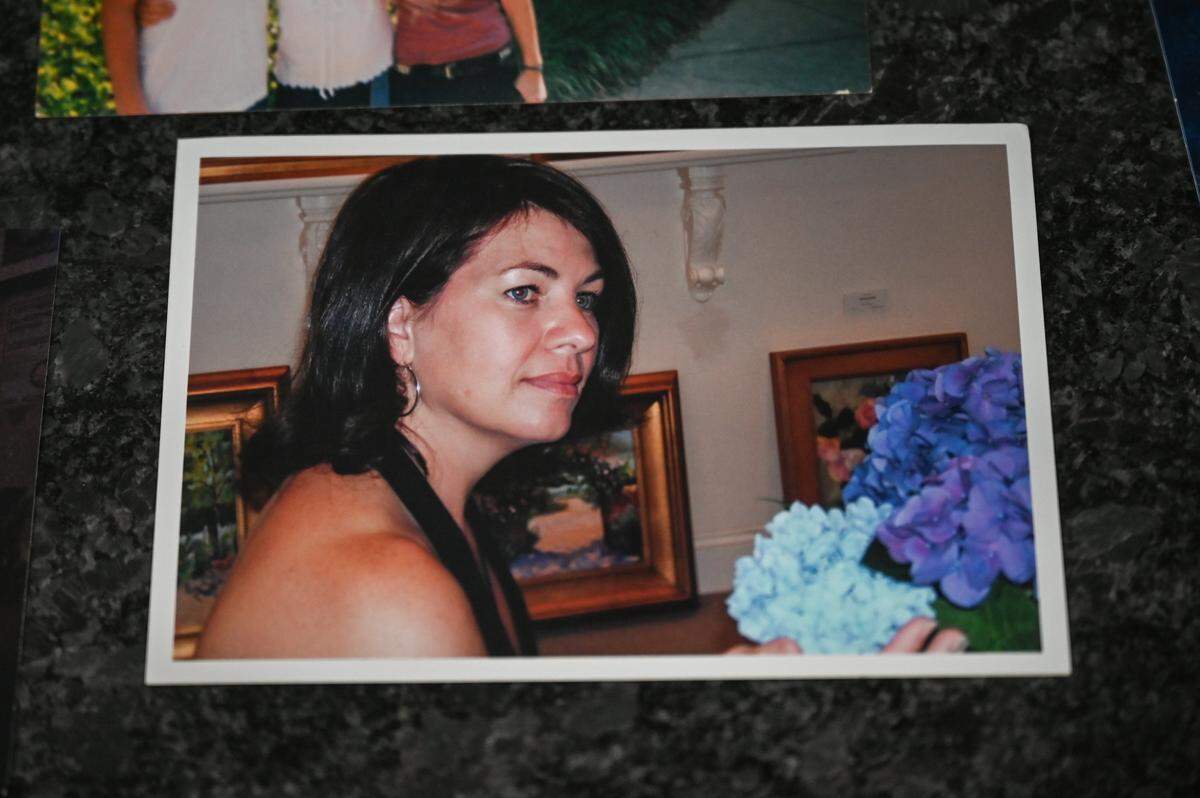
On Jan. 5, 2005, the day Leigh Wainscott turned 40 years old, she was surprised by something she never would’ve wished for.
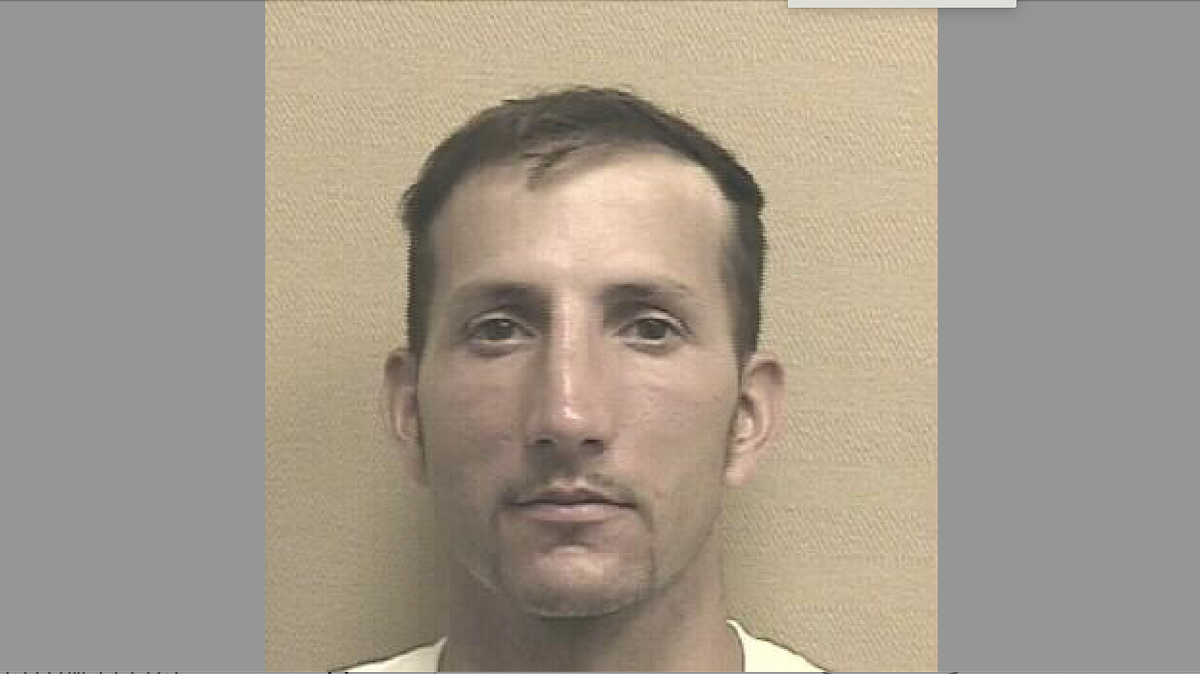
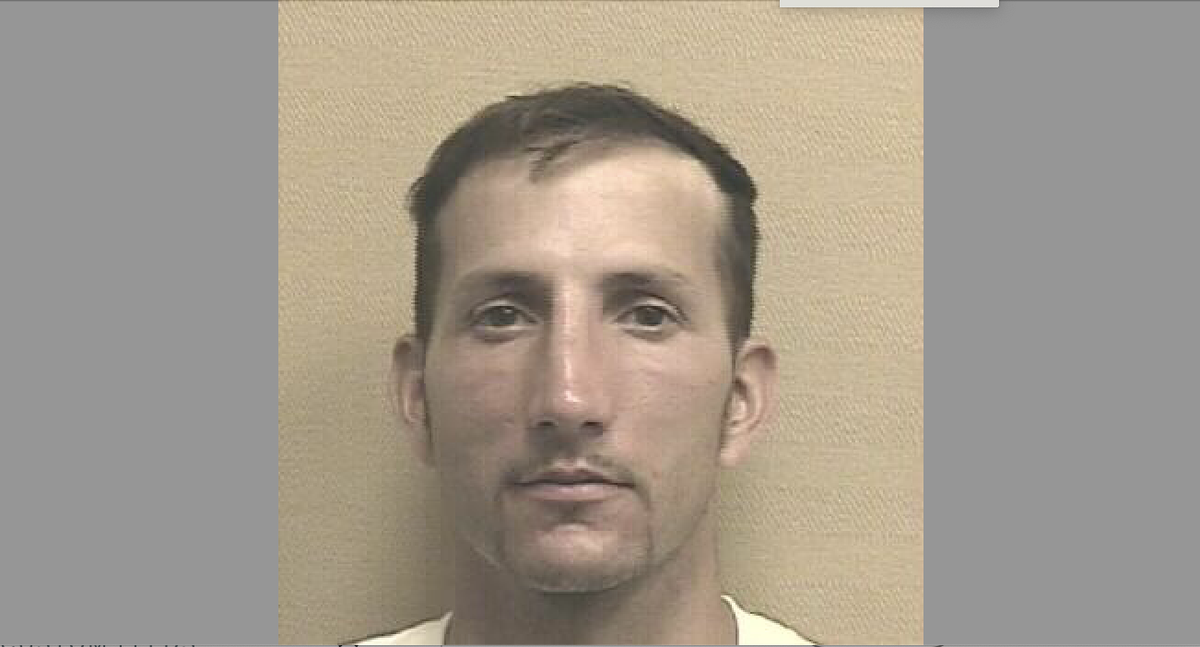
The single mother of three was at her job that morning when she was asked to report immediately to the front of the building, where Wainscott was met by police officers — who showed her a photo of an unsmiling man in his early 30s, with short brown hair and a light goatee.
Of the man she’d been dating for the past two months.
The man she knew as John Zorn.
The officer continued holding the picture in front of her face and said to her, flatly, “Miss Wainscott, the man that you’ve been dating is not who you think he is.” Then, this bombshell: “He’s an escaped convict. He’s considered extremely dangerous.”
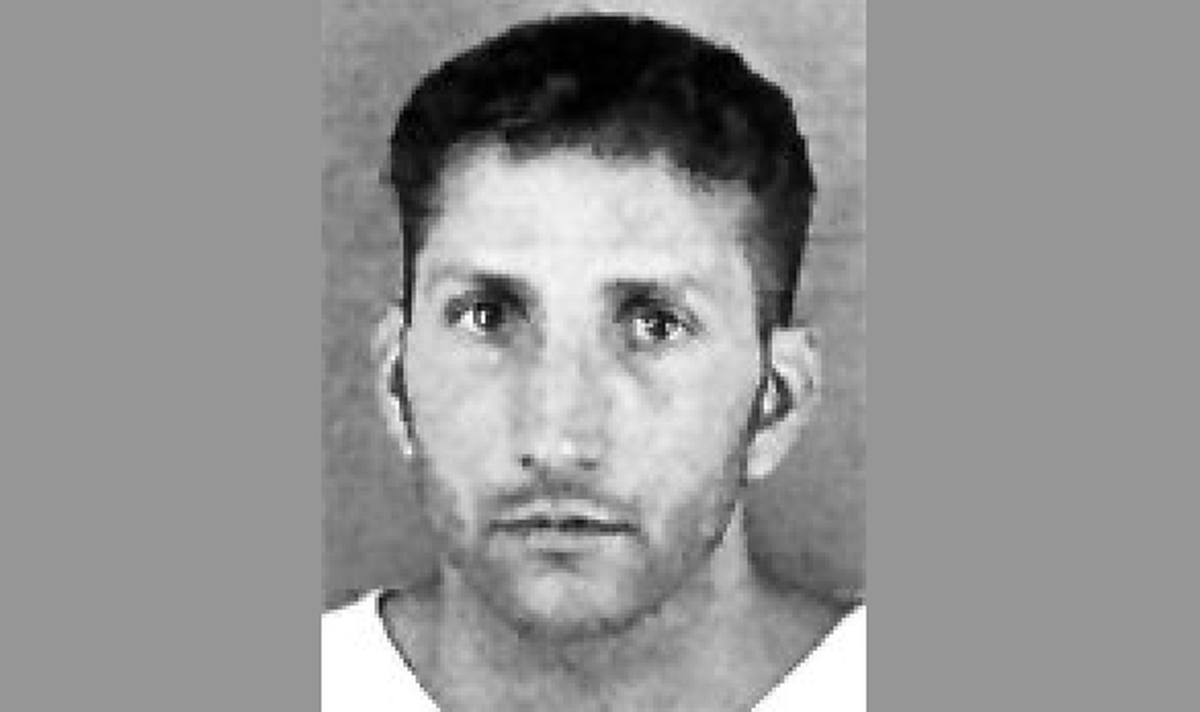
It felt, to Leigh, like someone was playing a twisted joke on her. The world went wobbly. When she steadied herself, she shook her head at them. “You’re crazy,” she said. They suggested they all go up to her office, and once inside, an officer pulled up the “America’s Most Wanted” website to show her his mug shot. Except the name underneath it wasn’t “John Zorn.”
It was Jeffrey Manchester.
“Holy s---,” she blurted. She immediately started sobbing.
The cops laid out everything they knew about the man she thought she had been falling in love with — first and foremost, that Manchester was a convicted armed robber and kidnapper who had been on the lam six months after making a daring prison break — but also all of this:
Four years earlier, in May 2000, he’d carved a hole into the roofs of two McDonald’s — one in Gastonia and one in Belmont — and held a total of eight employees at gunpoint. After making them shovel money into his bag while saying “please” and “thank you” and “I’m so sorry,” he gave them coats and left them locked inside the cooler. Belmont police captured him after his second robbery, and Manchester swore he’d never rob again.
But in June 2004, he escaped from prison, made his way to Charlotte, and at some point started hiding out in an abandoned Circuit City store on Independence Boulevard, while regularly sneaking into the adjacent Toys R Us through a hole he’d bored into that wall.
Then, around the beginning of November, armed with a fake name and false identity, he ventured over to check out Crossroads Church, where he met Leigh.
And on the day after Christmas, he broke his oath by robbing the Toys R Us at gunpoint.
As Leigh tried to process everything she was hearing, police explained to her that Manchester now knew they were onto him, and they believed he was on the verge of skipping town. Given all that, they said, they needed Leigh — on her 40th birthday, an occasion she planned to celebrate with him over dinner — to help set a trap for him.
This was it, they told her: His “I-need-to-see-the-girl-one-last-time” moment, and her opportunity to help finally bring Jeffrey Manchester back to justice.
Setting a trap with a phone call
Leigh’s head spun, and her stomach churned. She was heartbroken. Horrified. Humiliated.
For the next few hours, she sat in the back of a police car answering question after question about the man she’d known till then as John Zorn. She learned about his crimes. She learned that he was originally from Sacramento, California (not New York, which is where he told her he’d just moved from), and that he had three young children of his own.
And she learned that the police were intent on using her as bait: “We need you to cooperate with us,” they told her, “to help us capture him.”
The police knew it was her birthday. They knew that could work in their favor. She told them “John” was planning to take her out to dinner that evening to celebrate.
“Let’s use that,” one of the cops said. “So, I’d like you to call him to confirm what time he’s picking you up, and just act as normal as you possibly can. Tell him that you’re looking forward to seeing him.”
She’d always been a goody two shoes. She wanted to do the right thing. More than anything, though, she was panicked by the notion that she’d put her own three kids at risk.Were they in danger now?, she wondered. But the cops assured her the kids would be picked up and taken to a safe location before any of this went down, and she managed to pull herself together.
Then she managed to pull off the phone call.
Nearer to the appointed meeting time, Charlotte-Mecklenburg police Sgt. Katherine Scheimreif’s task force was able to track him down in the green Chrysler Concorde he was driving en route to Leigh’s apartment, and began tailing him.
But Sgt. Scheimreif didn’t have them engage because she didn’t want a car chase. She didn’t want to give him an opportunity to start a shootout in the middle of Independence during afternoon rush hour, or to take other motorists as hostages. So the tactical unit waited outside Leigh’s apartment at McAlpine Ridge and set the trap.
Officers were still trailing Manchester as he headed toward Leigh’s place around dinnertime.
Then, a surprise. “He just made a U-turn all of a sudden in the middle of Independence,” Sgt. Scheimreif heard over the radio.
She muttered an expletive and added: “We’ve been made.”
‘What the heck did you do, Mom?’
He didn’t make a run for it, however. He just turned into the lot for the Bi-Lo grocery store, parked, and emerged from the store a few minutes later with a bouquet of flowers in his hand.
Manchester then got back into the Concorde and headed toward McAlpine Ridge, where he parked, grabbed the flowers, got out, and hurdled over some low bushes as he trotted up to the front door of Leigh’s apartment carrying the flowers. An instant after he started knocking on the door, the tactical unit blitzed him.
He was unarmed, and surrendered relatively peacefully.
Leigh listened to the arrest unfold from the back seat of a squad car parked outside the Chili’s off Sardis Road North, less than a mile away. She could hear officers yelling. She could hear him surrendering. She could hear Sgt. Scheimreif asking him what his name was, as well as his reply: “You already know what it is.”
“But I’d like to hear you say it,” the sergeant responded. And then, in the voice Leigh had known to this point as John’s: “Jeffrey Manchester.”
Leigh couldn’t stop crying.
She was still crying when police escorted her home, where she found her apartment complex flooded with news media and police cars and FBI agents and investigators.
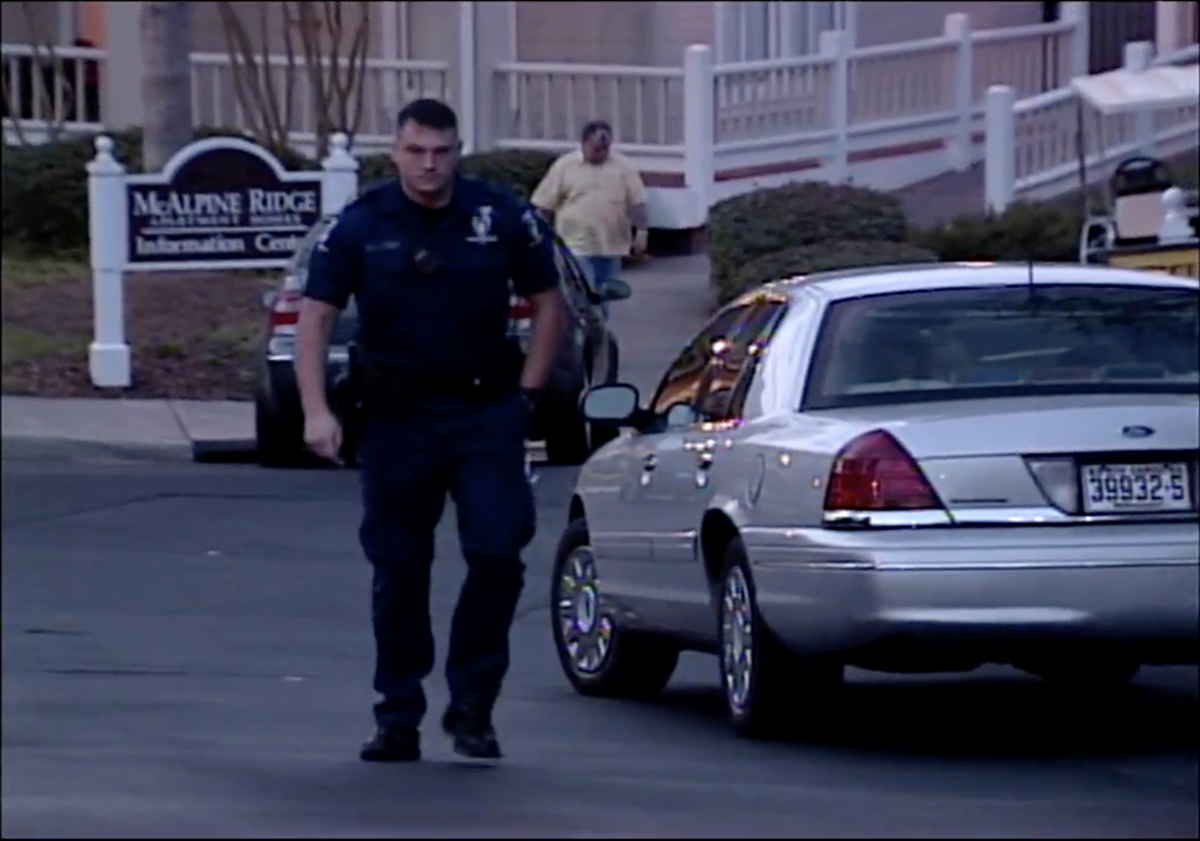
Her kids were there. They were safe. But they were, like she’d been for much of the day, horrified.
“What the heck did you do, Mom?” her oldest daughter asked her. “What’s going on?”
Officers were searching the apartment. They asked her and the kids to surrender everything Manchester had ever given to them. It now qualified as evidence. It felt like she’d answered every question they could have possibly asked in the back of that cruiser earlier; but they managed to ask many of the same ones again, along with a whole bunch of new ones.
Leigh asked just one of her own. “Can I talk to him?” And since police were trying to get Manchester in as cooperative a frame of mind as possible, they OK’d it.
It was a tearful call for both of them. While police would later characterize him as remorseless overall, with Leigh, he apologized repeatedly and profusely. He pleaded for her not to be mad at him. He said the lies were to protect himself, but that his feelings for her had been true.
Leigh barely slept that night. She stayed home from work for the next few days. She was intensely ashamed of herself, and of the fact that she’d put her children through something as outrageous as this.
Everyone is staring, she thought anytime she left the house. Everyone is judging.
So she stayed home as much as possible until things died down, including skipping the Crossroads Church service Pastor Ron Smith hosted the following Sunday, when he talked about visiting Manchester in the city jail shortly after the arrest, about the sin of betrayal, and the virtue of forgiveness.
In fact, Leigh never returned to Crossroads again.
She did visit Manchester in jail, not too long after he was put back there, but just that once — for closure. More than anything, she wanted to start to push this bizarre chapter of her life aside. But before she could do that, she was blindsided by one more shocking reminder of it.
‘This would make a great movie’
When Manchester was arrested, the green Concorde was impounded and held as evidence.
She expected she wouldn’t get it back, but really didn’t care. She didn’t need it. She had her minivan. She’d actually almost forgotten about it by the time the police called to say she could come pick it up.
The car certainly made her think of Manchester, but it still could be fun to drive, so she occasionally used it to get where she needed to go. Then one day, the ventilation system started acting funny. She eventually got fed up enough that she dropped it off to be checked out at a repair shop near her apartment.
A few hours later, the mechanic called and said, “Miss Wainscott, you need to come down here.”
Upon arrival, he took her back into an area of the garage normally off-limits to customers. Then he pulled a gun out of the front seat. “Well, this is what we found in the ventilation system. This is why it wasn’t working.” Leigh was dumbfounded. She drove straight to the police station with the weapon in her trunk, took it inside, and explained that the cops might have missed something.
On the whole, though, authorities by this point had gained a fairly comprehensive picture of the Manchester saga.
They were able to connect him to other prior (but less-audacious) robberies at the Toys R Us, ascertaining that he had been triggering an emergency-exit alarm during those, making cops think he’d left the store — when in actuality he was fleeing via the secret passageway into the abandoned Circuit City.
They connected him to a break-in at a pawn shop about five miles farther south down Independence, where he stole guns that he used in his day-after-Christmas robbery at the Toys R Us.
They also connected him to a dentist’s office that was burned down before sunrise on the day of his capture, alleging that he was trying to destroy dental records; it was the same dentist’s office that had imprinted its name on the whitening trays found in his Circuit City lair.
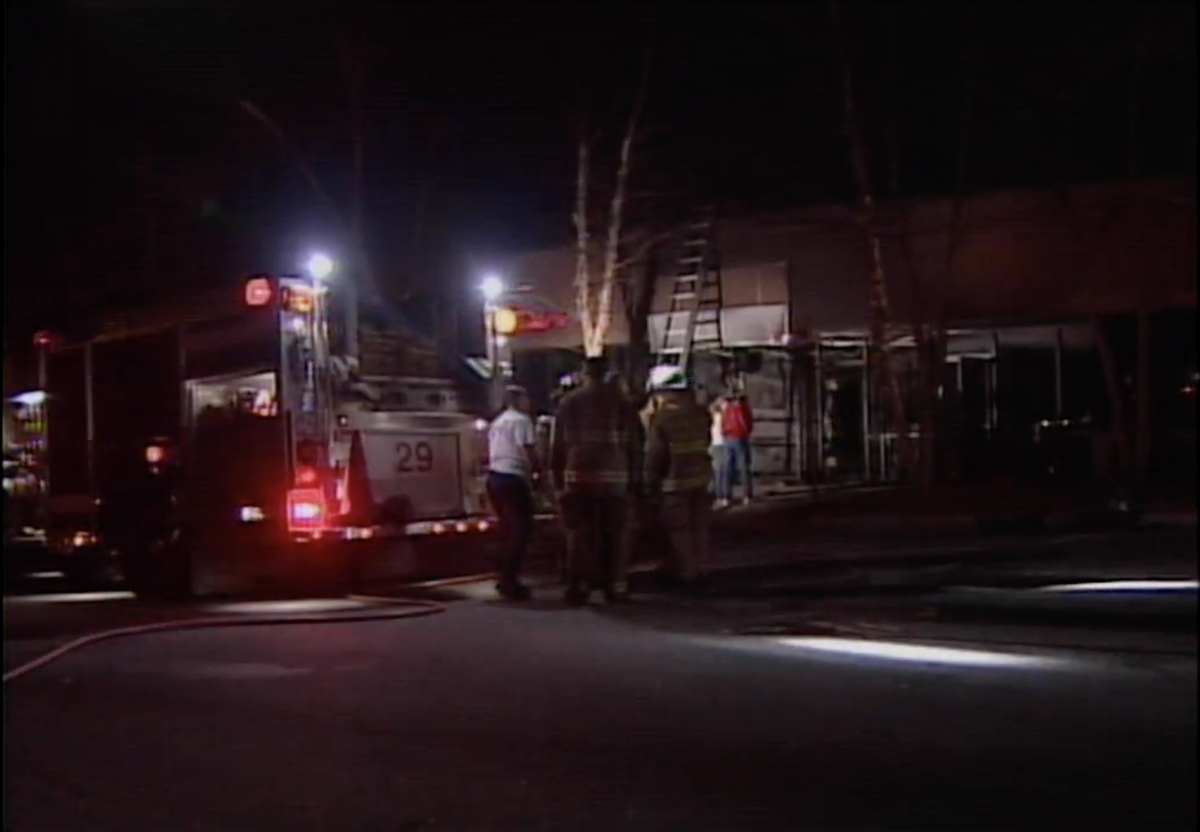
Basically, Charlotte police determined, the Toys R Us wound up being more than just a hideout, more than just a big playground for him to ride kids’ bikes around at night, and more than just a place ripe for borrowing bunny costumes for laughs, or for stealing video games to pawn. At some point, they figured, he hatched a plan — aided by everything from his stealthy use of baby monitors to his undetected access to the employee-scheduling system — to rob the store during the height of the Christmas season, then flee the country with the loot.
But after four long, largely successful months of laying low, he apparently grew lonely and isolated enough to decide to wander over to Crossroads Church, which most likely triggered his eventual downfall.
Indeed, at least to some extent because he developed an unexpected crush on Leigh, Jeffrey Allen Manchester wound up being returned to prison after pleading guilty to a slew of new crimes, including robbery with a dangerous weapon, breaking and entering, and arson.
Johnny Jennings, now the chief of CMPD, was a sergeant with CMPD in 2005. He declined to be interviewed for this story, but at the time, a reporter for The Charlotte Observer caught up with him to ask about Manchester’s exploits.
“This,” Jennings told him, “would make a great movie.”
Twenty years and two more failed escapes by Manchester later, Paramount Pictures has made “Roofman.” The crime drama/comedy centers around Manchester as played by actor Channing Tatum, and Leigh Wainscott (now Leigh Moore) as played by Kirsten Dunst, who — in yet another bizarre twist of fate — graced the “Spider-Man 2” poster the real-life Manchester taped to the wall of his hideout back in 2004.
But unless “Roofman” gets screened for a movie night at Central Prison in Raleigh, Manchester will have to wait till after he’s released on Dec. 4, 2036, to see it.
Continue reading: The real ‘Roofman’ | Epilogue
On the eve of the release of a movie based on his crimes, people who knew Jeffrey Manchester (aka “John Zorn”) share their reflections.
This story was originally published October 2, 2025 at 5:00 AM.