
He spent six months in Charlotte’s jail for a killing. Then prosecutors let him go
Police said he killed a man on a front porch in Charlotte last August. But more than six months later, David Graves walked out of jail.
No trial.
No bond.
No plea agreement.
Graves said he initially told police he had nothing to do with the Aug. 28 shooting of Sean Watson, his friend’s cousin. But Charlotte-Mecklenburg Police Department officers arrested him anyway, and he spent six months and five days in jail without the option of posting bond.
Police announced the arrest and charges against Graves — first degree murder and attempted armed robbery — in a news release two days after the shooting.
CMPD did not announce a detail tucked in court records and caught on video: Two men attacked Watson, not one.
When Mecklenburg District Attorney Spencer Merriweather’s office tossed the case against Graves on March 4, citing insufficient evidence and revisiting his original alibi, officers had not announced any other arrests.
They still haven’t.
Now Graves says he is trying to rebuild his life. Data shows his isn’t the only case that’s been dismissed for lack of evidence.
Merriweather’s office has dismissed about 106 homicide charges since 2020 — not including charges in which a defendant died, pleaded guilty, or wasn’t mentally competent to stand trial.
Ten homicide charges filed in 2025 were dropped before a trial or plea. That was a five-year low, approximate data provided by the Mecklenburg district attorney shows.
Many of these dismissals were a result of the difference between what police need to arrest and what prosecutors need to prove guilt — which is a much higher burden, said DA spokesperson Mike Stolp.
‘I knew it was a setup’
CMPD declined to answer questions about the investigation that ended in Graves’ release and has left Watson’s death unsolved, but court records and Ring doorbell video obtained by The Charlotte Observer build out the crime scene:
Two armed men — one with a handgun and one with a rifle — chased Watson up a north Charlotte porch about 30 minutes after midnight on Aug. 28. They demanded Watson’s keys and phone.
“I knew it was a setup,” Watson told the attackers, according to court documents, adding: “I ain’t got nothing.” He started knocking on the front door at 234 Hoskins Mill Lane. That’s around the corner from Graves’ apartment.
Then the man with the handgun shot him in the neck.
The woman who lived behind that door called 911 at 12:37 a.m., saying she heard shots and moaning outside. Watson died at the hospital two days later.
He was 48.
Watson’s family did not respond to interview requests the Observer made through the Charlotte mortuary and crematory that published his obituary.
‘This sounds horrible’
CMPD officers arrested Graves, a 40-year-old father of three, on Aug. 30 at his cousin’s home in Matthews. In their affidavit filed in court, officers paint Watson’s death as a drug deal gone wrong.
“This sounds horrible,” Graves recalled thinking from jail as he read that affidavit and later the grand jury’s decision to indict him.
“That isn’t what happened.”
Police wrote in the arrest warrant that Graves and Watson talked about “buying and selling large quantities of marijuana” starting in July and had called each other more than 300 times from June to August.
For one of those deals, police say, Graves gave Watson his address at the time — 225 Hoskins Mill Lane.
About 36 hours before the shooting, at 10 a.m. on Aug. 26, Graves texted Watson: “I got my dude coming to tonight he want everything.”
It’s unclear whether the two spoke any more that day. In court documents, police next reference messages in the two hours before Watson was shot. The meaning of the messages is murky.
“What is time looking like?” Watson asked just after 11 p.m. on Aug. 27.
Graves replied, “35.”
Then, at 12:08 a.m., Graves says “14 out.”
At 12:30 a.m., Watson texted again:
“Yooooooo.”
As these messages were being sent, there were also six calls between Graves and Watson, police said.
The last was Watson’s 12:32 a.m. video call to Graves.
Graves didn’t pick up.
Five minutes later, a 911 dispatcher sent police and paramedics toward the northwest Charlotte neighborhood off Rozelles Ferry Road, where Graves lived and where Watson had been fatally shot.
On the day Watson died, officers found in his car: 6.6 pounds of marijuana, vacuum sealed and in a duffle bag, $1,780 in his wallet, and spare keys for “multiple exotic cars.”
A CMPD officer wrote in his affidavit that the text message thread between Graves and Watson “establishes a pattern of meeting in the 200 block of Hoskins Mill Lane for the sale of marijuana.”
He also wrote that the “height and weight” of the person shown on doorbell video shooting Watson matched Graves’ build from eight months earlier in a January 2025 police body camera video. (Police records show Graves was the victim in a reported assault at a Steele Creek Waffle House.)
When they arrested him in Matthews, police took a gun that was the same caliber as the gun used in the shooting.
A grand jury of at least 12 people found that police had probable cause for both charges. The murder charge could have put Graves in jail for life or led to a death sentence, though prosecutors did not plan to seek the death penalty.
Case dismissed
In his initial August interview with two detectives, in a December letter to a Superior Court judge, in a Feb. 26 jail call to the Observer, and later during an interview at his mother’s Waxhaw home, Graves said he did not kill Watson.
He was in south Charlotte at the time, according to court filings.
Records showing “pings” from cell towers put Graves’ phone in south Charlotte — in the area of his “reported alibi at the time of the offense,” Assistant District Attorney Desmond McCallum wrote in his motion to dismiss.
Forensic evidence did not tie Graves to the scene, the prosecutor wrote. Officers had written in a search warrant that doorbell video showed the man who shot Watson touching the railing. But in the motion to dismiss, McCallum said the shooter did not touch the railing.

The gun police took from his cousin’s home wasn’t the gun used in the shooting, either, a firearms report showed.
But what about those texts, the ones police laid out in their arrest warrant?
“Although the messages regarding a transaction suggest a motive, they do not identify the perpetrator,” McCallum wrote, adding that prosecutors could still refile charges against Graves if new evidence comes to light.


Airbnb alibi
Graves says police got it totally wrong.
To start, the earlier texts were not about drug deals — at least not illegal ones, he claims.
Graves met Watson five years ago, but they didn’t talk much until June, he said. Watson had just moved to Charlotte from Greensboro, and he sold federally legal hemp — the kind of stuff that smells, smokes and acts like weed but is sold legally at shops across the country.
Prosecutors’ motion to dismiss said Watson “had documentation that represented he had a federally legal hemp product.”
Graves said he is well-connected in the Charlotte community and tried to help Watson. A few days before the shooting, he loaned $1,000 to Watson, he said. In the past, he routinely introduced Watson to business owners who wanted to buy the hemp. He never dealt with the leafy substance himself, he said.
And those late Aug. 27 and early Aug. 28 texts weren’t about meeting up for a drug deal — or any deal.
Graves said he thought Watson was going to meet him in uptown at a club.
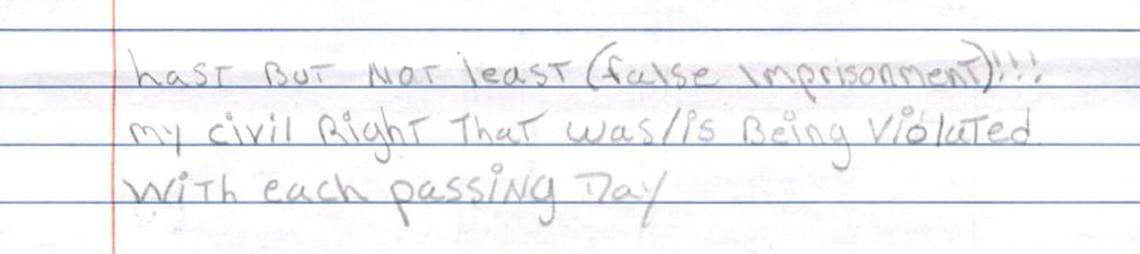
Graves’ apartment on Hoskins Mill Lane hadn’t had air conditioning or hot water for weeks, he said in his handwritten letter to the judge. (He provided the Observer messages about the broken heater and an A/C unit he says were between him and his landlord.) So he was with a friend at an Airbnb in south Charlotte, near Pineville.
Watson must not have understood that, Graves said in an interview, because Watson went to Graves’ neighborhood anyway.
Graves says he didn’t pick up that last phone call from Watson because he was in the rental’s shower and then fell asleep.
Graves says he told police he had an alibi — that video from an ATM he stopped at on the way to the rental and doorbell video from the rental would show where he was and when.
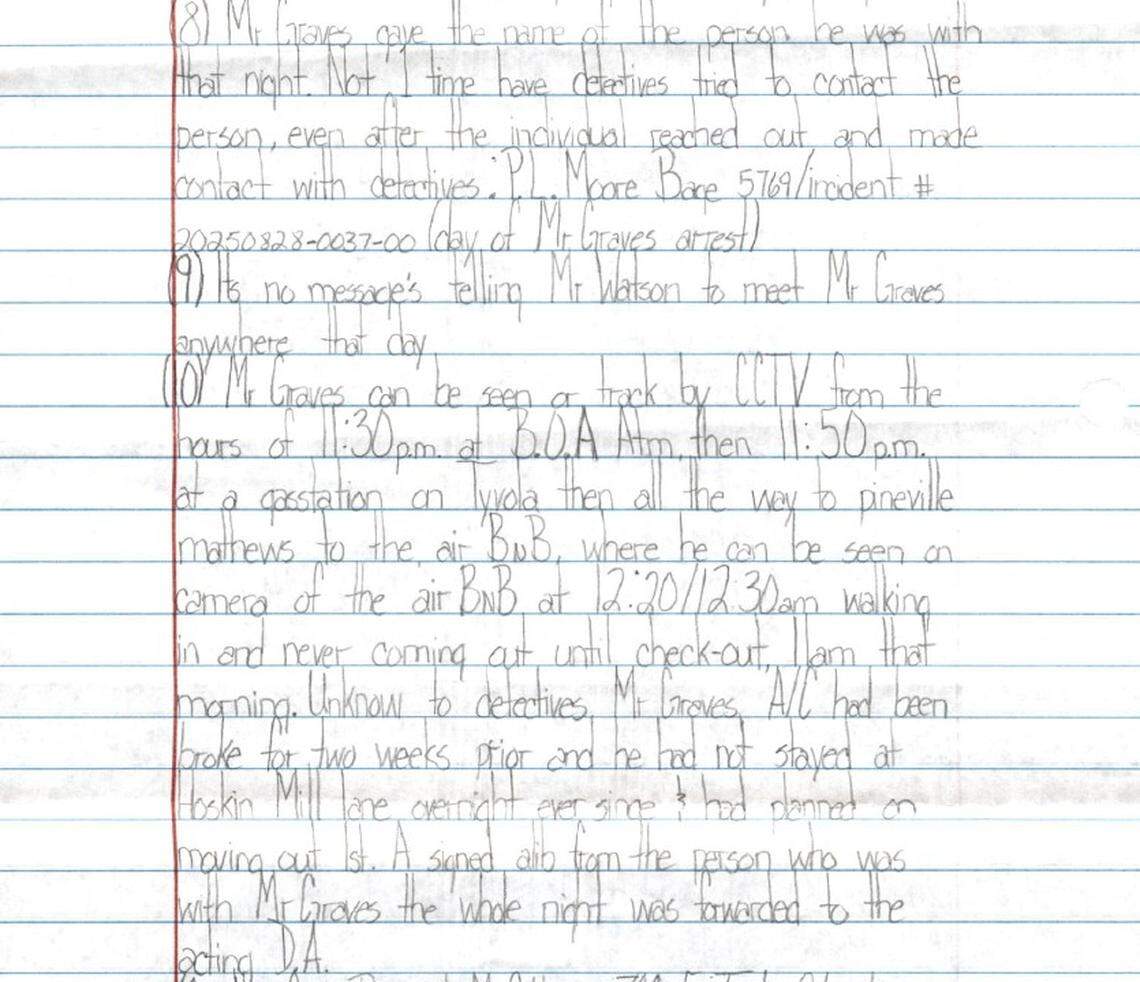
The friend he was with wrote a letter in early September vouching for Graves’ alibi, saying they were together and he’d picked Graves up from his Hoskins Mill Lane home around 11 p.m., and that they arrived at the rental about 20 miles south right around the time Watson was shot.
It is not clear whether investigators or Graves’ appointed defense attorney, Robert Reeves, requested surveillance video of the ATM and or door video from the rental. Like CMPD, Reeves declined to be interviewed for this story. The only video referenced in court documents is the one showing the shooting.
Graves plans to file a lawsuit for wrongful imprisonment, and he’s retained Charlotte civil rights attorney Michael Littlejohn — who has filed and settled lawsuits against the jail, county and police — to do so.
“I’m having to create a new me for something I didn’t do,” Graves said, “and that’s not right.”
‘Like a dog’
Before August, Graves had four times before been arrested in Mecklenburg County on domestic assault and threat charges. None ended in convictions.
After those four arrests, his time in jail ranged from one day to one month. This time, he spent 186 days behind bars.
Most of them looked the same.
He woke up, did 150 pushups, ate breakfast in silence, showered, walked around, studied his case, did 150 more pushups, ate lunch, called his family or lawyer or a reporter, watched a movie from the jail library (an Indiana Jones movie or an old sci-fi flick).
Most of the time, inside his cell, he talked to God, he said.
“It just made me realize how bad the jail systems are… it’s a power struggle. They come in there, they treat you like a dog. They treat you like the poop on the bottom of your shoes. You’re not a person, you’re a number,” he said.
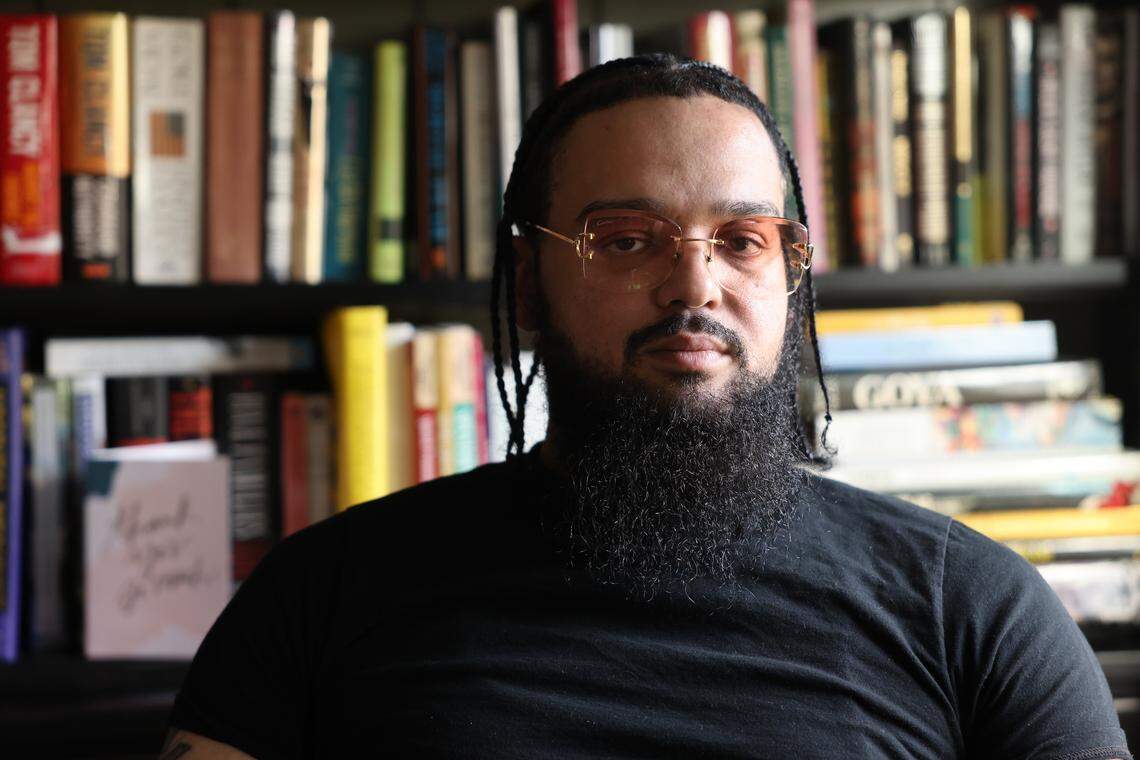
Then, on March 5, a day after the prosecutor dismissed the charges, Mecklenburg County Detention Center deputies came up to him and told him he could go.
“I had to walk out in my boxers,” Graves said.
Police had kept his pants to test for DNA, he said.
He went to the free phone in the jail lobby. A wristband that said “Sunday” was sitting on top of it.
He slid it over his hand and dialed one of the few numbers he knew by heart: his sister’s. She ordered him an Uber to his mother’s house, where he had a few outfits tucked away in a closet. But the wristband stayed on.
“We all knew he was innocent,” his mother, Donna Graves, a 63-year-old studying to be a minister, said from her million dollar, 5,000 square-foot home in Waxhaw.
Police left her disappointed. But her son, she said, made her proud. He came out of the cell more spiritual, she said.
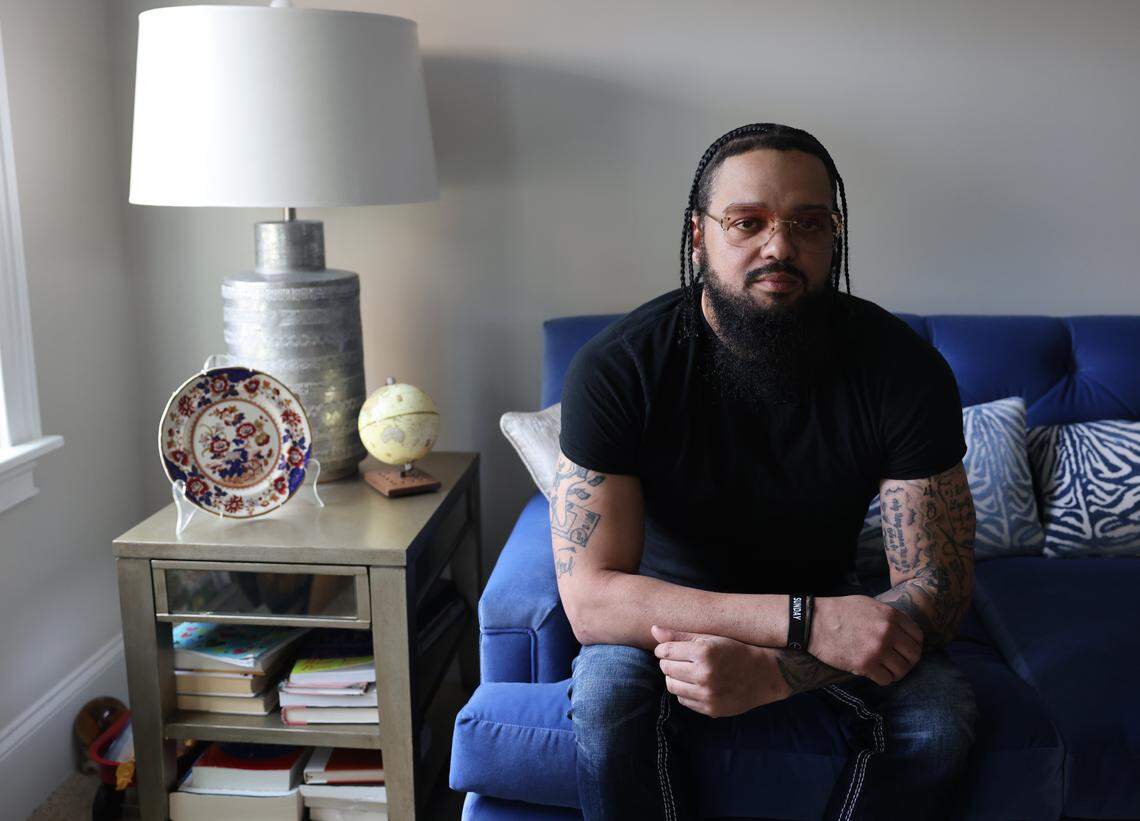
Graves says he came out “ecstatic,” too.
He grinned as the Uber driver took him into “Momma Donna’s” arms and as he saw his niece and then a message from his friend telling him to come to her salon and not to bring a dollar. She braided his hair, which hadn’t been touched for months, for free.
He saw his 23-year-old and 3-year-old sons. The smile stayed.
“Then reality set in,” he said.
The mother of his 10-year-old daughter, someone he dated for 10 years, won’t let him see his girl. She’s scared someone will recognize him, believe he killed Watson and try to jump him.
“And I can’t blame her,” Graves said. But for his daughter, that means “no parks, no movies, no mall.”
He started wincing at the color orange.
He has no apartment, no car and no more work cleaning restaurant kitchens and stove hoods. (Arby’s used to pay $350. Dave & Buster’s was a $1,000 gig.)
His car got repoed.
Unable to pay rent in jail, he got evicted.
The landlord got rid of his king-sized bed, his Gucci, Louis Vuitton, Fendi and Dolce and Gabbana items.
The management also tossed pictures of his kids. His grandfather’s war medals and flag are gone, too. He has no clue where they went.
“All of a sudden it’s ‘Let him go,’” Graves said. “And you throw me back into the world and expect everything to be fine.”
Graves tried to jump-start his life on his third day out of jail. He got a gig power washing a woman’s driveway. He met her husband and their dog. Then she went inside, and after a few minutes, she told him to go home – that it was almost sunset, and he should come back the next day.
The next day, he got a call. First, she gave a sanitized: “We no longer need your services.”
When Graves asked why, she responded with words Graves says hit him in the stomach. They’re words he fears he’ll hear again:
Listen, she said. I saw you on the news. I know who you are.
You’re a murderer.
This story was originally published April 9, 2026 at 5:00 AM.
