UNC’s deal to give Confederate group $2.5M and Silent Sam statue came before lawsuit
Even before the N.C. Sons of Confederate Veterans sued the UNC System to take ownership of the Silent Sam Confederate monument and gain access to $2.5 million from the university, the settlement terms had already been agreed upon.
The lawsuit was filed in Orange County Superior Court on Nov. 27, at 11:10 a.m. — the day before Thanksgiving. It outlined a number of allegations against the UNC System related to the Confederate monument and sought declaratory and injunctive relief and monetary damages.
Less than 10 minutes later, a judge declared that an agreement about Silent Sam was lawful and turned over ownership of the statue to the North Carolina chapter of the Sons of Confederate Veterans. The agreement also said the organization can use the money from the university system to transport and preserve the monument, as well as build a facility to display the statue.
As part of the agreement, Silent Sam can not go back up on UNC-Chapel Hill’s campus or in any of the 14 North Carolina counties that are home to a UNC System university.
How was this solution reached?
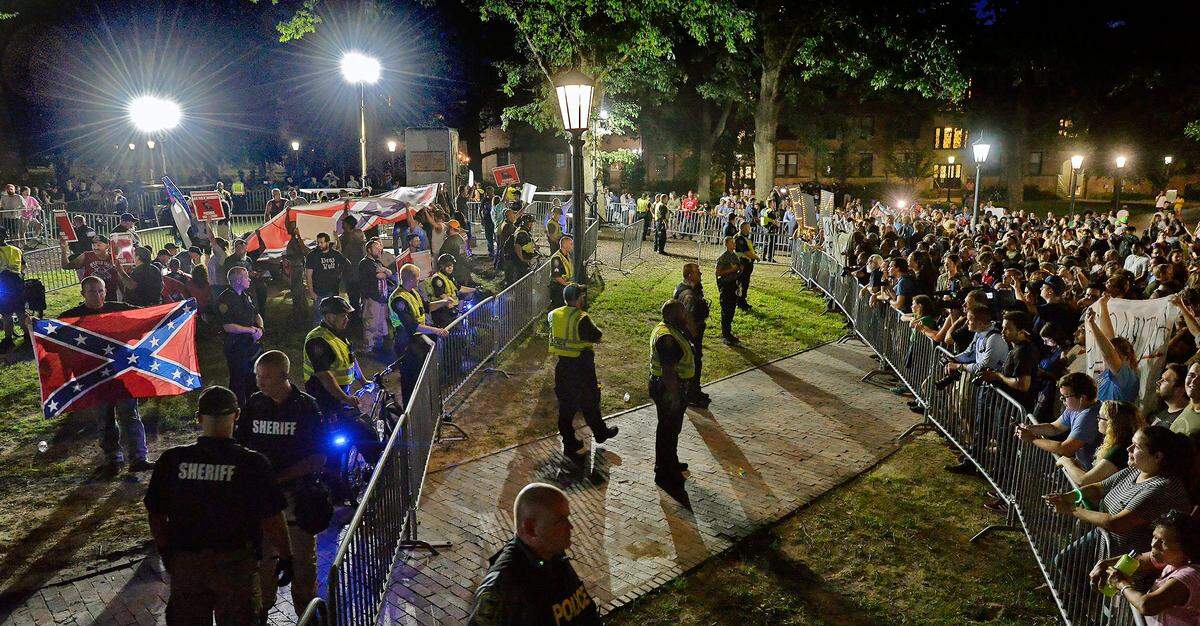
A group of five UNC System Board of Governors members worked throughout the year with UNC-Chapel Hill trustees and senior leadership to decide what to do with the statue, which protesters toppled in August 2018.
They were tasked with developing a plan for the statue in early 2019, after the BOG rejected a proposal by former UNC-Chapel Hill Chancellor Carol Folt and university trustees to construct a $5.3 million building to house it on campus.
Members of the BOG committee — Darrell Allison, Jim Holmes, Wendy Murphy, Anna Nelson and Bob Rucho — were supposed to consult with unnamed UNC personnel and present a plan to the full Board of Governors.
The group never held a public meeting to discuss the statue or what options it was considering. But members helped come up with this solution and were aware of it before the lawsuit was filed.
It’s unclear how long UNC System officials and board members had been talking with the N.C. Sons of Confederate Veterans about the group taking ownership of Silent Sam or suing. But court documents show UNC System Interim President Bill Roper and Board of Governors Chairman Randy Ramsey agreed to the terms before the lawsuit was filed.
The announcement and the lawsuit came after the board’s university governance committee met in closed session Wednesday. The UNC System said the meeting was behind closed door to discuss a legal matter.
Greenville businessman Harry Smith, who was chairman of the Board of Governors when the committee was formed, left the board in November but remains interested in developments there. Reached by phone on Monday, he said he was not aware that the committee had been in discussions with the Sons of Confederate Veterans.
“I never recall seeing anything in writing,” he said.
But Smith said that, in the long run, the settlement and the cash payout would be a good deal for the university. University officials didn’t want Silent Sam reinstalled on campus, and Smith said it was important for the Board of Governors to defer to the university’s wishes on the matter.
Meanwhile, he noted, UNC was spending “upwards of $500,000 a year” keeping the statue from further harm and trying to keep peace between opposing groups protesting on campus.
“I strongly support the decision,” he said.
Where is the money coming from?
The N.C. Sons of Confederate Veterans have access to up to $2.5 million through a charitable trust set up by the UNC System for the “preservation and benefit of the Confederate monument,” according to court documents. That money comes from multiple sources, including accruing interest from the UNC System’s endowment that’s built through donations.
Smith said that each university has discretion over how to spend the interest earned by its endowment.
The UNC System calls the money “non-state funds” and says it is not taxpayer money. Though the money is not appropriated by state legislators, it does belong to the university. The money could ultimately support students, but instead will be used to help preserve and display the Silent Sam statue.
In other cases, this money has been used for settlement agreements when a university’s chancellor or president have stepped down.
The trust will be held “independently by a non-party trustee,” but the UNC System has not specified who administers the money or how it will be distributed.
Why are the Sons of Confederate Veterans getting the statue?
Just days after Silent Sam was torn down, the United Daughters of the Confederacy, who originally had the statue built on UNC’s campus, asked for the monument back, court documents show. But the statue remained in the hands of the university system.
Now, the statue has been given to another group that seeks to honor soldiers who fought for the South in the Civil War.
On Nov. 23, prior to the lawsuit being filed, the United Daughters of the Confederacy gave the property rights to the N.C. Sons of Confederate Veterans, according to court documents.
The commander of the N.C. Sons of Confederate Veterans, Kevin Stone, said in a letter to SCV members that there have been “many months of confidential negotiations” between the group and the university system. The letter was sent to The News & Observer by Durham attorney Greg Doucette, who said he received the document confidentially from a member of the Sons of Confederate Veterans. He posted the entire letter on his Twitter feed.
“Since August of 2018 when [Silent Sam] was ripped down, we have been looking for a way through our attorney, Boyd Sturges, to accomplish one of two things: either to have the memorial restored to its place of honour on campus while being properly protected; or to gain possession of the memorial and make an equally prominent public display for it at UNC’s expense,” the letter says.
Stone said in the letter that the Board of Governors approached the group to open negotiations earlier this year because the board “heard the group was preparing to file a suit and wanted to avoid fighting with an organization represented by high-profile attorney Sturges.”
He said their legal action was immediately met with a settlement offer that gave the group “legal possession of Silent Sam, and over $2 million in a dedicated trust (that we requested) for the perpetual care of Silent Sam and the purchase of land on which to prominently display him, to build a small museum for the public, and to build a comprehensive Division headquarters for the benefit of the membership.
“What we have accomplished is something that I never dreamed we could accomplish in a thousand years, and all at the expense of the University itself,” the letter said.
Stone said this is a “major strategic victory” that will “insure the future of Silent Sam” and the “legal and financial support for our continued and very strong actions in the future.” That includes the dedication of the “new site and prominent display for Silent Sam and our new Division headquarters.”
Sturges, reached by email, declined to comment, and said Stone, the SCV’s state commander, and Frank Powell, the national group’s spokesman who lives in North Carolina, had both declined to comment also.
Who are the Sons of Confederate Veterans?
The group now known as the SCV started as the United Sons of Confederate Veterans in Richmond, Va., in 1896, when delegates from groups across the South came together to form a national organization. Delegates crafted a constitution for the group, whose preamble said its purpose was to “encourage the preservation of history, perpetuate the hallowed memories of brave men, to assist in the observance of Memorial Day, and to perpetuate the record of the services of every Southern soldier.”
The document said its purposes were “not to create or foster, in any manner, any feeling against the North, but to hand down to posterity the story of the glory of the men who wore the gray.”
The SCV is open to all male descendants of any veteran who served honorably in the armed forces of the Confederacy.
The North Carolina chapter claims about 3,000 members and said earlier this year it is growing.
Lecia Brooks, chief workplace transformation officer for the Southern Poverty Law Center in Atlanta, said Monday that the organization considers the SCV a neo-confederate “heritage group” that actively promotes “Lost Cause” mythology.
“In its attempts to gloss over the legacy of slavery in the South, SCV helps strengthen the appeal of Lost Cause mythology,” Brooks said in an email to The News & Observer.
Brooks said today’s SCV has evolved from its 19th-century origins in that it is now “far more overt in its defense of the Confederacy and the principles for which it stood.
“Its website says the group ‘is preserving the history and legacy of these [Confederate] heroes so that future generations can understand the motives that animated the Southern Cause.’”
Brooks noted that the SCV’s website features a 1929 pamphlet called “A Confederate Catechism,” which denies that slavery or secession were causes of the Civil War. It also asserts that “[t]he negroes were the most spoiled domestics in the world.”
The SPLC has said the Sons of Confederate Veterans erected almost 100 Confederate monuments and symbols. The SPLC has said that 95 Confederate monuments still stand in North Carolina.
This story was originally published December 2, 2019 at 6:41 PM with the headline "UNC’s deal to give Confederate group $2.5M and Silent Sam statue came before lawsuit."