A majority of CMS schools are now low-income. What are Charlotte’s leaders doing to help?
More than half of Charlotte-Mecklenburg Schools will receive Title I money in the upcoming school year because of their percentage of low-income students.
With 11 schools newly given that designation, 94 out of the district’s 181 schools now receive Title I money — provided to schools with high percentages of students from low-income families so the children can meet academic standards.
”We count it a privilege to serve the students in our community, no matter their circumstances,” said Frank Barnes, CMS’ chief accountability officer. “When families are under financial pressure and strain, it impacts their children. That a larger number of our families are under such conditions should be an area of concern for us all in Mecklenburg County.”
The milestone of having a majority of schools designated Title I has prompted questions among community leaders about whether city and county governments are doing enough to help address root causes.
$14.7 million more in federal funding
The federal government’s Title I program was created “to ensure economically disadvantaged children receive a fair, equitable and high-quality education, by helping to close academic achievement gaps,” according to the U.S. Department of Education.
The additional Title I schools mean the district will receive about $14.7 million more in federal funding this school year for services such as hiring teachers, tutoring, purchasing equipment and family engagement. A total of $56.8 million will support CMS programming in all of its Title I schools, said Allison Whittaker, CMS’ executive director of Title I programs.
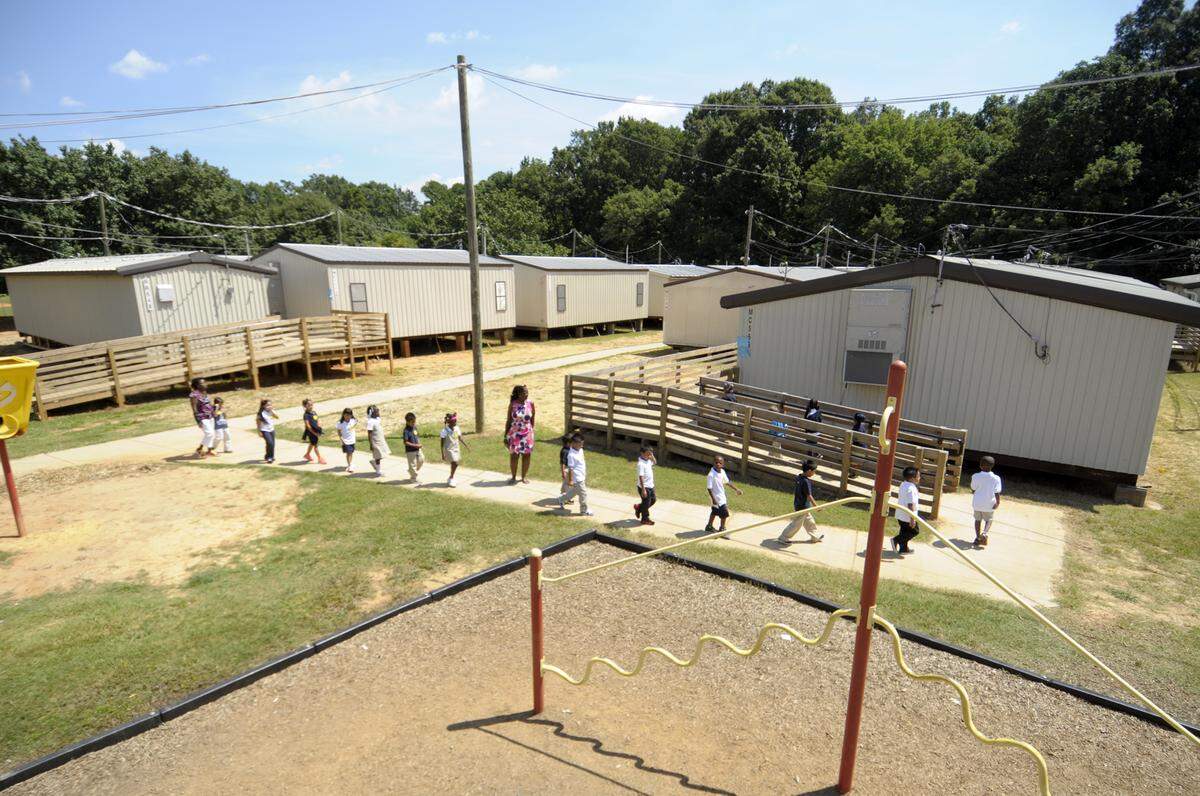
To be eligible, a school or group of schools within a district must have an Identified Student Percentage of 40% or higher. That means counting all of the students eligible for free school meals and dividing by total student enrollment.
Across CMS Title I schools, more than 57% of students are considered impoverished according to Community Eligibility Provision guidelines.
At Windsor Park Elementary, Principal Shannon Rae said the building is Title I in name only.
“We’re not walking around saying we’re a Title I school because of the stigma that comes with that,” Rae told the school board this month. “But (we’re) grateful for all of the services that Title I allows me as a principal and my team to utilize to support teaching and learning.”
Alejandra Garcia is the principal of Governors’ Village STEM Academy, a Title I school. She uses Title I money to help develop teachers.
Title I designations this year relied on 2020 U.S. Census numbers. The 2020 Census found 11% of Mecklenburg County’s population living in poverty, but the number of impoverished children is higher at just over 16%.
During the 2021-22 school year, 33.1% of CMS students were economically disadvantaged, according to data from the North Carolina Department of Instruction. And 13.9% of families in CMS have an income below the poverty level, according to the National Center for Education Statistics.
Mecklenburg County Commissioner Laura Meier thinks local government can do more.
“While the county’s fiscal year 2023 budget didn’t directly impact this immediate increase, it is fair to say that the ability of the county to provide wraparound health and human services, housing and workforce development opportunities to families contributes, positively or negatively, to the level of poverty that is measured by the federal government,” Meier said.
What has government done for homeless students?
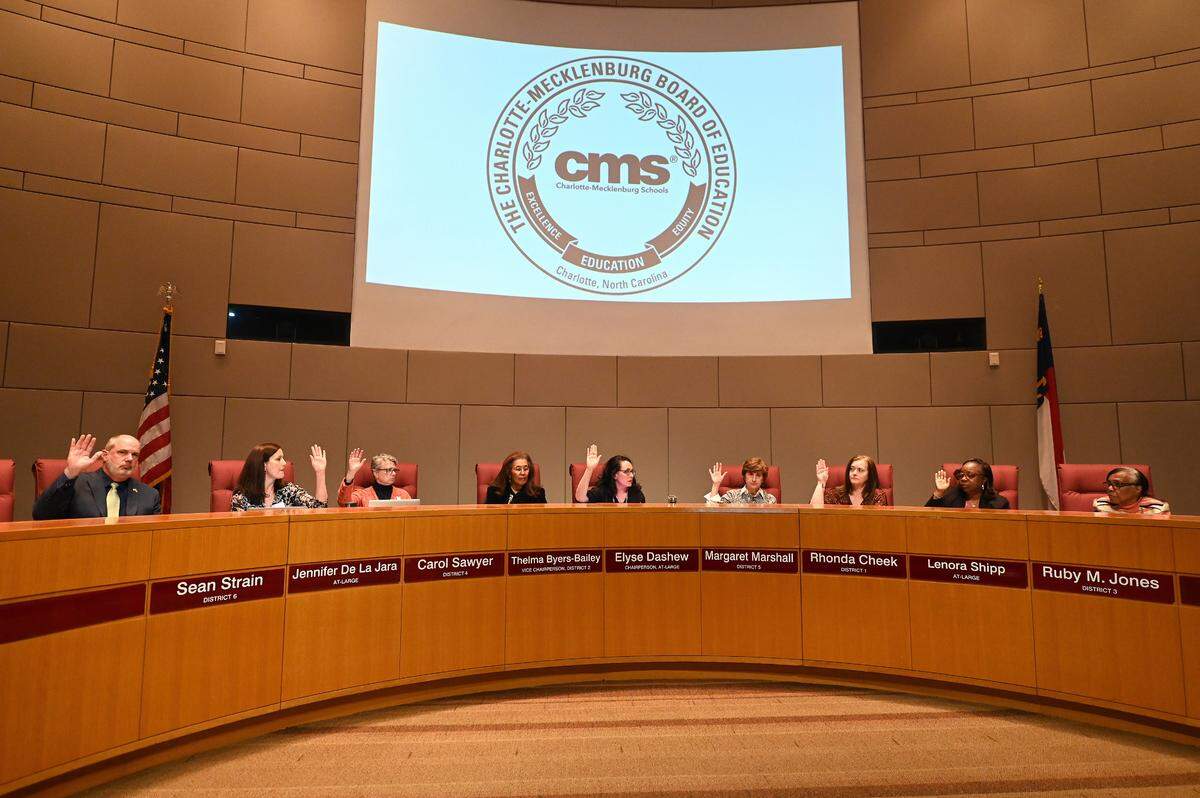
Contributing to the number of Title I schools, more than 4,200 CMS students could be without stable housing this year. It’s a number CMS board member Jennifer De La Jara called “tragic.” Like Meier, De La Jara says local government officials should do more to help economically struggling students.
“I’ve called before from the dais on our community government partners that focus on housing to potentially set up a particular goal (or) targeted measure,” De La Jara said. “There can be programs that can specifically target supporting those children where by 2025, we cut that (number) in half.”
The district has seen a slight decrease in the number of students experiencing homelessness in the last few years: 4,598 during the 2017-18 school year; 4,744 during the 2018-19 school year; and 4,118 during the 2019-2020 school year.
Situations that qualify a student as homeless include living with a friend, relative or other person/family because of a loss of housing, staying in a motel or hotel because of a loss of housing, fleeing domestic violence or natural disaster, living in an emergency shelter, transitional housing or domestic violence shelter and living temporarily in substandard housing.
In January 2002, Congress authorized the McKinney-Vento Homeless Assistance Act to help people experiencing homelessness. The federal law includes the Education of Homeless Children and Youth Program that entitles children who lack a fixed, regular and adequate nighttime residence to a free education. Services provided include immediate enrollment, school selection promoting stability, free meal benefits, and academic support.
The academic support is much-needed. A third-grade progress report from March showed just 13.4% of students in CMS were projected to meet the year-end goal in English language arts and only 5.9% of Black and Hispanic third-grade students were projected to meet the same goal.
“If our entire community could rally behind one idea alone — that stabilizing these housing-insecure families — then we could focus our efforts and resources that will have a trickle-down effect producing stronger student outcomes and higher chance of upward mobility for future generations to come,” Meier said. “It’s not just either or between (the) county and CMS — it’s all of us.”
Will Jones, president of Charlotte-based Thompson Child & Family Focus, an organization that has served more than 900 school-aged children experiencing homelessness, says there are well-intended discussions and efforts to increase upward social mobility and eradicate poverty, but they’re failing to get to the root of the issue.
“Unfortunately, there are few financial supports available to sustain and grow needed services for homeless children at the state and city level which requires organizations like Thompson Child & Family Focus to rely on philanthropic support from corporations, foundations, and individuals,” Jones said. “Long term, this is not a sustainable plan and certainly will not allow us and others to increase overall services and impact.”
For real change to happen, Jones said more organizations and local government need to work together.
“We must go deep, not wide, with organizations that can collaborate and provide impact at scale in this community,” Jones said. “At Thompson we are focusing on how we can help one child, one family and one community at a time. That is the only thing that is within our control.”
Disagreement over Mecklenburg County help
A Mecklenburg County spokesperson told the Observer the $591 million included in its fiscal year 2023 budget for CMS is enough to close achievement gaps. The allocation is 5.3% higher than what the school district received last fiscal year.
“CMS receives adequate funding from the federal government, state government and the county to close the achievement gap and is responsible for using that funding to ensure every student graduates from high school ‘College and Career Ready,’” the Mecklenburg County statement said.
County Commissioners Laura Meier and Susan Rodriguez-McDowell, who were staunch supporters of giving CMS more money this fiscal year, disagree with this part of the county statement.
“I do not believe the state, the federal government or the county is giving adequate funding to CMS to close the achievement gap — they cannot do more with less, particularly after how the pandemic halted learning for Black and brown children disproportionately,” Meier said.
Rodriguez-McDowell called current funding an unsustainable situation.
“We must face the fact that this is an unsustainable situation and all levels of government must come together to come up with solutions. The state’s failure causes a crisis at the county level as the county cannot make up the shortfall,” Rodriguez-McDowell said. “The county is in a bind, but when county residents continually rate education as a top priority, we must respond. Our broken politics are failing us miserably.”
‘We’re so hard on ourselves here in Charlotte’
City Councilman Malcolm Graham, vice chair of Charlotte City Council’s Great Neighborhoods Committee, said he believes the city is fulfilling its role to help families find affordable housing. When he talks to city leaders from Dallas or Atlanta, they tell him Charlotte is the shining example they look toward for housing solutions.
“We’re so hard on ourselves here in Charlotte,” Graham said. “We care about each and every one of our citizens.”
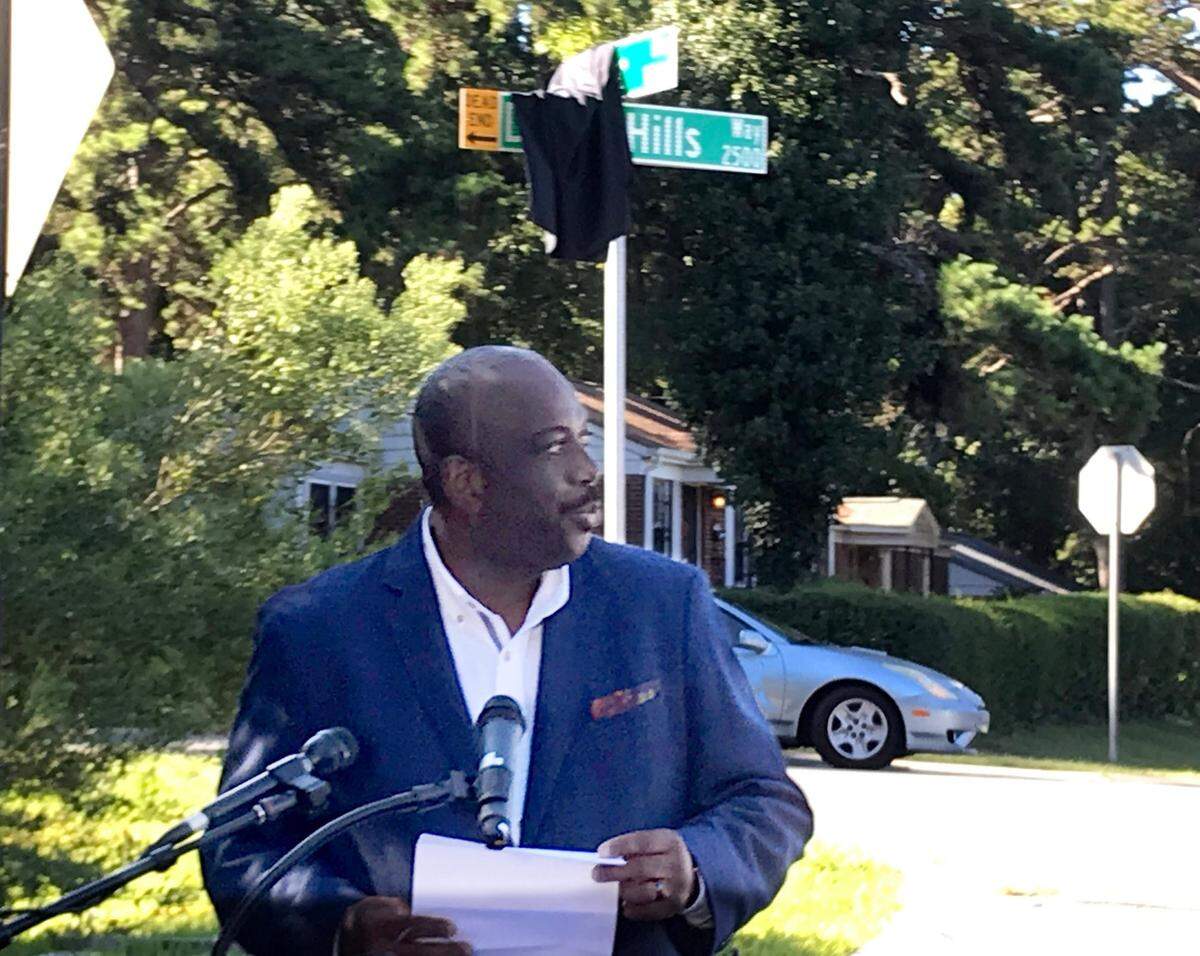
Graham referenced Charlotte becoming the first city to implement a source of income anti-discrimination policy intended to ensure people who pay for housing with vouchers, a federal subsidy toward monthly payments, aren’t denied quality housing.
Meier says the city of Charlotte and Mecklenburg County have made investments in local programs such as Roof Above, an organization whose mission is to unite the community to end homelessness. The county also approved recommendations from the Homelessness Task Force, including proposals for affordable housing.
Since 2018, more than $327 million has been raised by the public and private sectors for affordable housing initiatives in Mecklenburg County, Mecklenburg housing data show. This initiative, led by the United Way, seeks to connect that backing with the work already being done by groups seeking to end homelessness like Roof Above and the faith community.
But is it enough?
“It will never be enough until we have eradicated poverty,” Meier said.
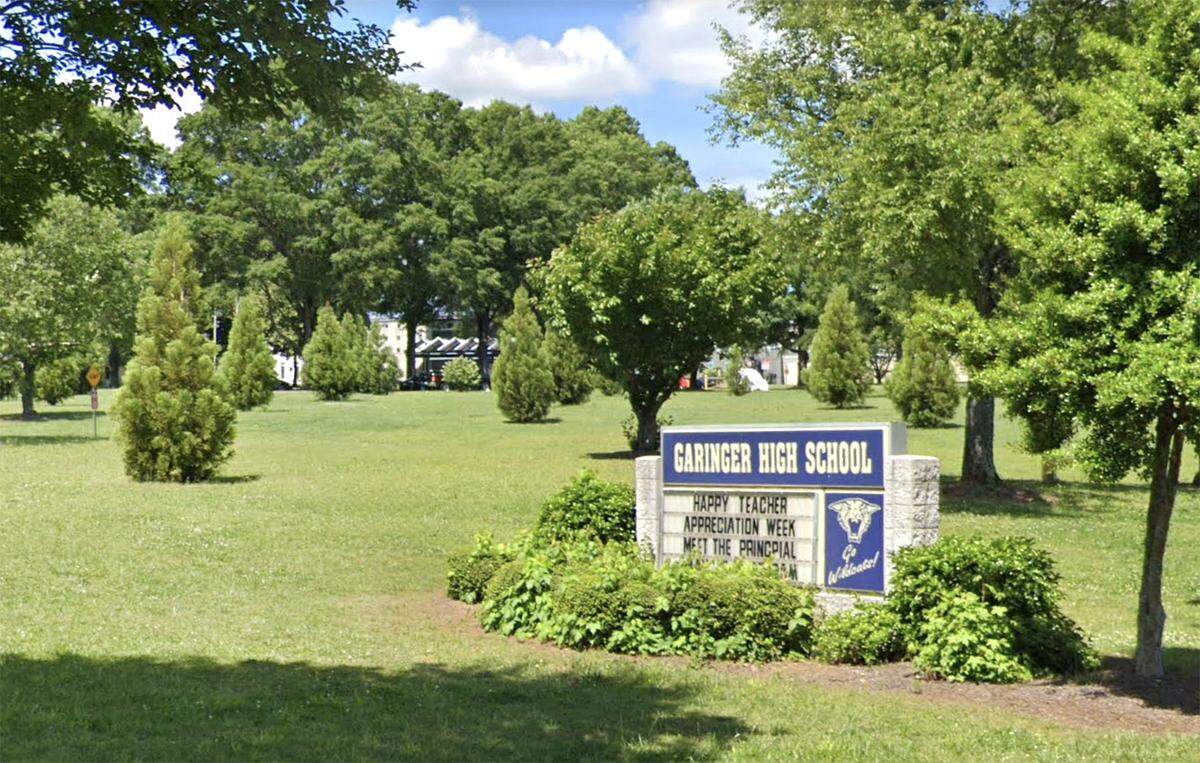
What are the new CMS Title I schools?
The additional CMS Title I schools for 2022-23 are:
▪ Mallard Creek Elementary
▪ Parkside Elementary
▪ Long Creek Elementary
▪ Quail Hollow Middle
▪ Ridge Road Middle
▪ Steele Creek Elementary
▪ Croft Community School (Pre-K through 5)
▪ Lake Wylie Elementary
▪ Crown Point Elementary
▪ Hawthorne Academy of Health Sciences
▪ Charlotte Virtual High School
This story was originally published August 26, 2022 at 6:00 AM.