A record number of guns found in CMS schools? That was predictable, experts say

READ MORE
Our Kids Need Us: Will we stop guns in schools?
Our series, “Our Kids Need Us,” covers growing concerns about safety and ideas for stopping violence and guns in Charlotte-Mecklenburg Schools.
Expand All
Kids + Guns: 3 ways to curb violence in Charlotte-Mecklenburg schools
A record number of guns found in CMS schools? That was predictable, experts say
Tips for talking with kids about school violence, mental health
Clear backpacks? More cops? Weigh in on Charlotte school safety here.
Students with guns in Charlotte-Mecklenburg Schools broke record this year
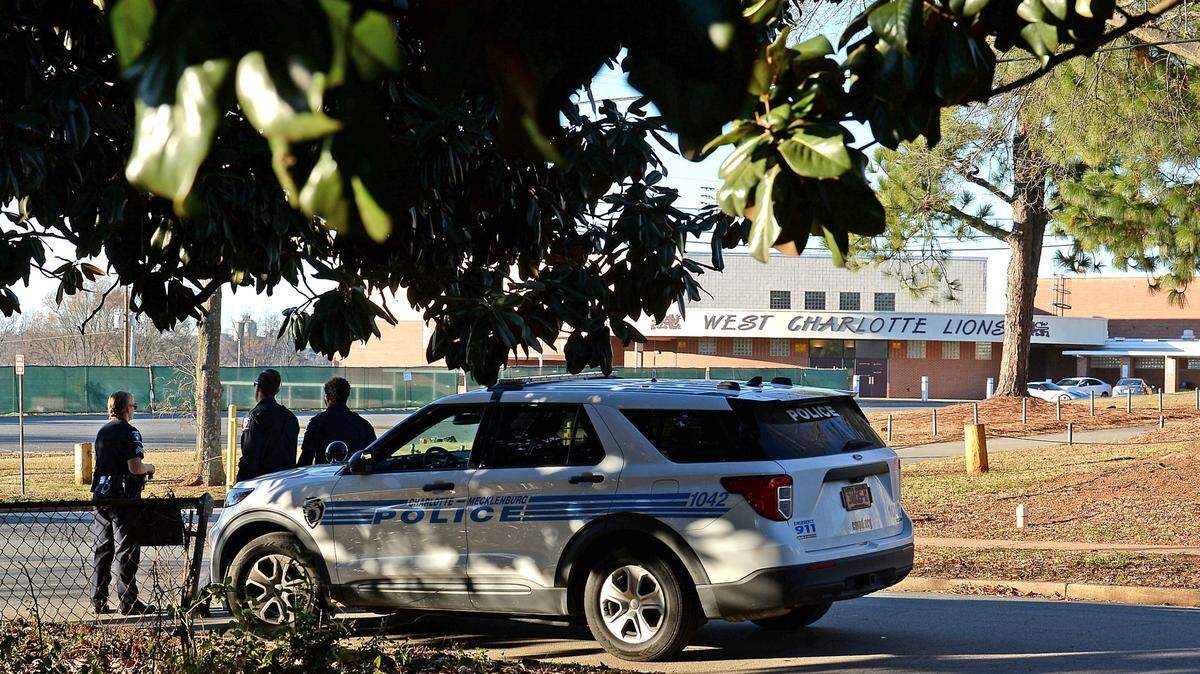
After a large fight broke out at Harding University High School around lunchtime on a Tuesday in late November, a pistol was found stuffed in a 15-year-old student’s backpack.
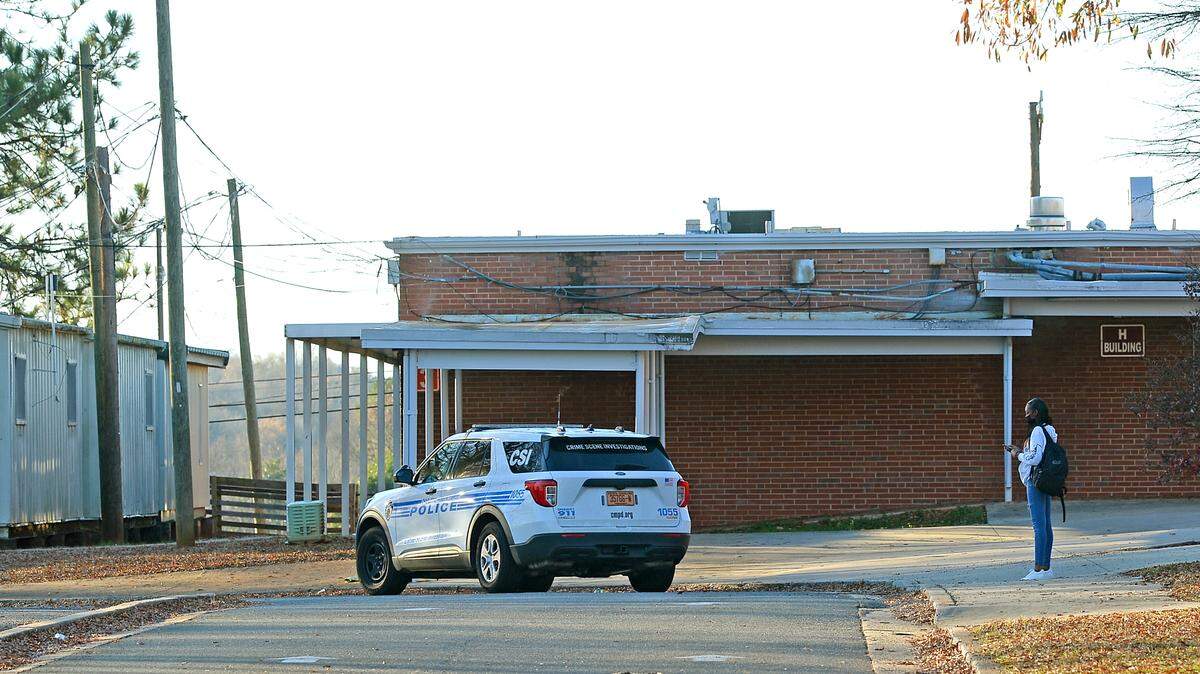
At the time, that was the 17th gun found on a Charlotte-Mecklenburg Schools campus this school year. Within two weeks, another six firearms were found at CMS schools, including another at Harding.
The 23 weapons broke the CMS record for guns found on campus in a single school year — a record going back to 2007 and likely longer, though publicly available state data only goes back that far. And this year is only half over.
Harding interim principal Jane Sutton said she never saw the gun after Charlotte Mecklenburg police officers seized it, adding that she doesn’t know where it came from off campus.
“The CMPD officers handled everything with the weapon,” Sutton wrote in an email. “So there isn’t much to tell. Wish there were more to be told but this is what happened.”
Much of Charlotte is feeling in the dark about why so many firearms are turning up on public school campuses. But some experts say it was predictable heading into this school year.
Criminologists, both local and national, say that an increase in violent crime over the past couple of years mixed with a surge in gun sales made it almost inevitable that this problem would spill onto school campuses.
North Carolina state officials know of 123 weapons seized from school campuses so far this school year, more than the 83 found in the shortened 2019-2020 school year, according to data from the Department of Public Instruction. That’s nearly equal to the 124 firearms found during the full 2018-2019 school year.
“We’ve seen an extremely high number of weapons on school property,” said William Lassiter, deputy secretary for juvenile justice in the state Department of Public Safety, who also chairs the state’s safe school task force. “That’s alarming and concerning for us.”
CMS has accounted for nearly 20 percent of guns found in North Carolina school districts so far this school year despite having less than 10 percent of the student population, according to state data.
Lassiter said the Department of Public Safety conducted a survey in 2019 where in about 75 percent of cases, students said they brought guns on campus for protection. That aligns with what criminologists are seeing now.
“Kids are feeling less safe on their way to school, in their neighborhoods,” said Lyn Exum, a professor of criminal justice at UNC Charlotte.
State officials say they are alarmed at the degree to which students feel they need to take their protection into their own hands.
Spike in violent crime
After large declines in violent crime over the past 30 years in the United States, the numbers began trending up a couple of years ago, though property crime continues to fall.
In 2020, violent crime across the country was up 5.6 percent from 2019, according to FBI data released in September. In North Carolina that spike was even larger.
Violent crime in the state jumped 7.5 percent from 2019 to 2020, FBI data shows. Homicides were up by a startling 23 percent in North Carolina in 2020. The statewide FBI data for 2021 has not been released, but CMPD data shows that murders in Charlotte fell from 117 in 2020 to 96 in 2021.
The national increase increase in violent crime, experts say, can’t be separated from a raging pandemic that upended life for just about everyone, or from a spike in gun sales in a country already awash in firearms.
A gun industry report from early 2021 shows that gun sales in North Carolina jumped about 60% in 2020.
“The more guns on the street, the more likely a gun is going to be used in an assault and robbery. The more likely a gun will be carried to school,” said Richard Rosenfeld, a nationally recognized criminologist who teaches at the University of Missouri-St. Louis.
“What’s underlying the uptick in firearm purchases? Clearly the pandemic has played a role. It’s produced a lot of uncertainty. I would also argue that what we saw during the summer of 2020 after George Floyd was murdered in Minneapolis may have also played a role,” Rosenfeld said, referring to the uncertainty and volatility of the last few years.
And while all this was playing out — the stress and deaths from COVID-19, the social unrest, 2020’s spike in crime — CMS students were stuck at home without access to the structure that in-person school, including extracurricular activities, usually provides.
And when kids returned to classrooms in August, they brought that baggage with them.
“We can’t help but to see it locally,” said Johnson C. Smith University criminology professor Nicola Bivens. “I think what’s going on in the communities and whatever is going on outside of the schools is starting to trickle into the schools.”
Charlotte-Mecklenburg Schools and police have released very little information about the 23 guns seized on school campuses. The school district did disclose that the majority of the seized firearms had not been reported stolen, in response to a public records request.
CMPD did not describe how they’re tracing the guns, what they’re doing to try to prevent guns from being carried onto campuses, or how they’re working with CMS on this problem, despite The Observer requesting that information multiple times.
While there has been no public disclosure about where the weapons came from, the state has found guns on campuses generally come from students’ homes about half the time, Lassiter said. The rest coming off the street, with students in communities with high-crime rates most likely to obtain guns that way, said Rosenfeld, the Missouri-based criminologist.
Schools Superintendent Earnest Winston has announced a number of steps the district is taking to prevent guns from being carried onto school campuses, including requiring clear backpacks, beginning with high schools.
The district has also launched a working group to find ways to reduce guns at schools, said Charles Jeter, the CMS executive director of public affairs. Part of that group’s work includes evaluating body-scanning equipment and metal detectors, focusing on the schools that have seen the most guns, he said.
Jeter said recommendations would soon be shared with the superintendent and the public.
Feeling unsafe in schools
While state and local officials have said they’re alarmed by the spike in guns on CMS campuses, they’re also concerned about another underlying factor: Kids appear to feel less safe at school than in the past.
Lassiter, the deputy secretary of juvenile justice, said his organization’s survey found that the two biggest reasons for bringing protection were bullying and gang retaliation.
“The conflicts that were occurring in the community are now occurring in schools,” he said. “It starts with put-downs and trash talk and it continues on that continuum until kids are bringing guns to school.
”We need to start engaging in conversations with kids at these schools,” Lassiter said.
Local data shows that even before the pandemic, kids in Mecklenburg County schools didn’t feel as secure as they once did.
In 2019, 15 percent of Mecklenburg County public high school students said that at some point they did not go to school because they felt unsafe on campus or on the way to school, a county Health Department survey of more than 1,600 students found. That was up from only 8 percent of students who avoided school for safety reasons in 2011.
Since teenagers are known to be reluctant to come forward with concerns about bullying or other safety issues, N.C. school districts for years have been required to use apps where students can anonymously report bullying or threats.
CMS is soon launching Say Something, an app endorsed by the state and used by many N.C. school districts, including Union County. Whether that will prompt more students to report threats is not yet clear. Jeter said students will start being trained on the app this month.
Exum, the UNCC criminologist, said societal breakdowns in trust related to both the pandemic and highly publicized instances of police misconduct likely has contributed to students feeling the need to take their safety into their own hands, which in extreme cases has meant bringing guns to school.
“That lack of trust doesn’t necessarily lead directly to an increase in violence, but it may lead to them not turning to adults or authority,” Exum said.
Joseph Asamoah-Boadu, an 18-year-old senior at Olympic High School, said students aren’t keen to report threats to police officers at school. He was a freshman when a 16-year-old student was shot and killed at Butler High School in 2018. Since then, he has seen dozens of guns seized on CMS campuses.
“There is a disconnect between the police and the youth today,” he said. “Outside the school, officers seem distrustworthy. They see police officers with guns, they don’t necessarily feel safe or welcomed in our environment.”
“An officer is the last person you want to talk to,” he added.
Asamoah-Boadu said he and his friends are not convinced the school district is doing enough to address the problem.
“It becomes an everyday occurrence,” he said. “We’re like, ‘Oh my god, is this real life right now?’ It seems like every day there’s something else. We’re kinda wondering what’s missing, what’s not being done?
“These clear backpacks and metal detectors aren’t going to solve the problem. They’re just temporary solutions,” he said.