Kids + Guns: 3 ways to curb violence in Charlotte-Mecklenburg schools
READ MORE
Our Kids Need Us: Will we stop guns in schools?
Our series, “Our Kids Need Us,” covers growing concerns about safety and ideas for stopping violence and guns in Charlotte-Mecklenburg Schools.
Expand All
Kids + Guns: 3 ways to curb violence in Charlotte-Mecklenburg schools
A record number of guns found in CMS schools? That was predictable, experts say
Tips for talking with kids about school violence, mental health
Clear backpacks? More cops? Weigh in on Charlotte school safety here.
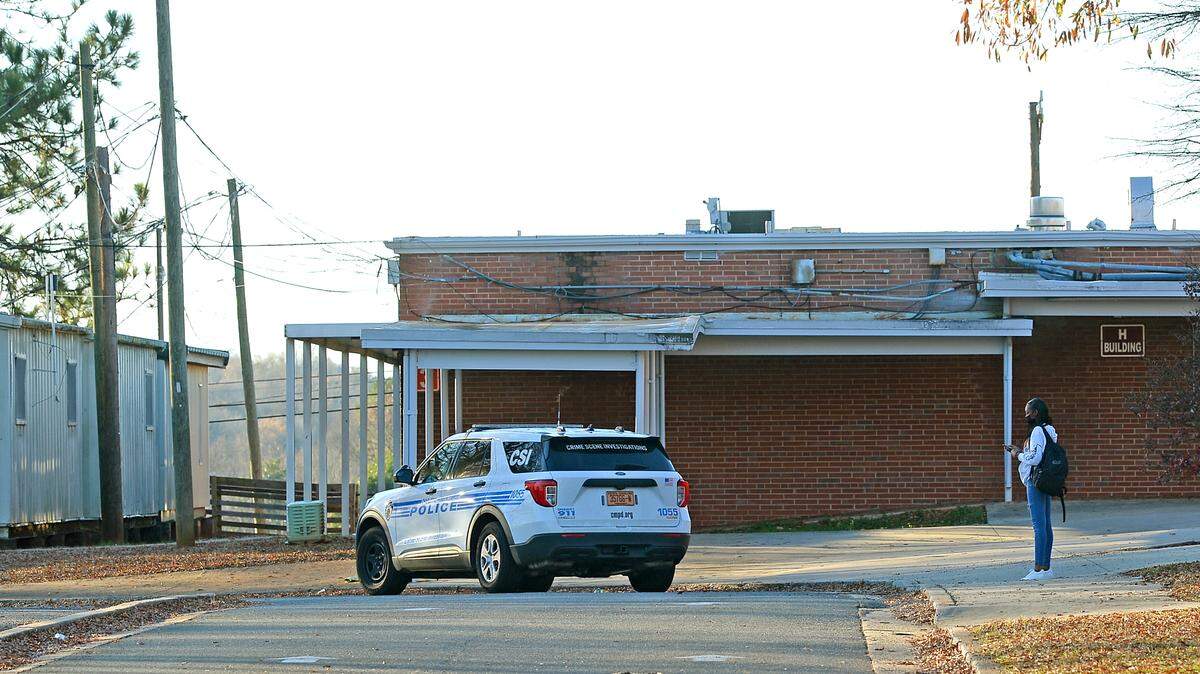
Students with guns in Charlotte-Mecklenburg Schools broke record this year
Charlotte-Mecklenburg Schools — in the eyes of some students, parents and teachers — has been stuck in a reactive approach to a dramatic rise in the number of guns seized on school campuses this year.
The district is spending almost half-a-million dollars on clear backpacks for high school students, for instance, which little to no research has proven can help stop weapons at the door, critics say.
When one of the 23 guns found in schools this academic year went off in December, school leaders closed classrooms the following day — missing an opportunity for teachers, students and administrators to confront the threat together immediately.
In more than a dozen interviews, school safety experts, educators, parents and students said Charlotte-Mecklenburg Schools should direct its attention to the causes of these serious problems.
“CMS is not addressing the root cause of the problem,” Harding University High School teacher Genevieve Campisano said. “I would like to see a root cause analysis and proposals that respond to the causes and not the suspected outcomes. Our students need support in developing skills of conflict mediation and emotional mindfulness.”
The district is moving in that direction.
Over the next two years, CMS plans to spend millions to add both employees and support programs, and increase the number of social workers, counselors and psychologists in schools. CMS also will begin paying for outpatient mental health treatment for eligible students.
It could help address a central part of the problem: Turmoil in children’s everyday lives spills into and gets recirculated on campus. In other words, fixing “school safety” means addressing the risks and problems that students face year-round, in and out of the classroom. While fights at football games and at school have led to injuries for some, no one in CMS has been shot or injured by a firearm this school year.
Specifically, hiring more psychologists, social workers and behavior modification technicians is the most reliable way to reach short- and long-term solutions, many say.
But in a district with not even half of the recommended number of psychologists per student, this particular part of CMS’s game plan may be the one furthest from reach with a timeline that isn’t aggressive enough. Critics also question why it’s taken school leaders until now to formulate a plan when the district has struggled with violence on campuses for years.
According to the North Carolina Association of Educators, recommended staffing levels for school psychologists is 1 to 500-700 students. Statewide, North Carolina schools have an average of 1 for every 1,800 students, according to NC Policy Watch.
In CMS, there’s one school psychologist for roughly every 1,447 students, and many serve more than one school at a time.
To meet the NCAE’s upper-limit recommendation of one psychologist per 700 students, CMS needs around 200 school psychologists, roughly twice the current staffing.
The shortage is playing out in a year when many school leaders braced for a return to classrooms amid the pandemic, predicting student welfare could be at an all-time low and violence could spike. Even before COVID-19, students expressed concerns over safety on campus. A 2019 survey conducted by the county showed increases in middle school students carrying weapons and both high school and middle school students feeling unsafe at school.
The devastating effect on mental and emotional health caused by the pandemic is precisely why so many want the school district to prioritize hiring more therapists and mental health professionals.
Here’s a closer look at that issue, plus two more possible solutions that experts say could help reduce violence and make schools safer.
It takes money — and people
Four days after a student fired a gun on the West Charlotte High campus multiple students dressed in black and participated in a peaceful protest. The students’ message: clear backpacks won’t solve the problem. More security and support services are what students need.
“Instead of having kids rely on weapons for safety, the schools should have supportive individuals be their safety net,” Katie Moua, a senior at West Charlotte High, wrote to school board members.
Veronica Bofah, a student at Harding University High where twice this school year guns have been found on campus, agreed.
“Rather than taking reactionary measures, CMS should be preventative by being more involved in the (lives) of students,” said Bofah, who supports getting students better access to counselors and social workers along with a better disciplinary program for students who do get into fights or bring weapons on campus.
But money, not just in CMS but statewide, hinders this approach.
“The state did pass legislation this year to allocate more school psychologists, but the question still remains if we will be able to hire enough qualified staff at the current pay rate,” said CMS board member Jennifer De La Jara, who spoke to students at West Charlotte High during the protest. “We also need to add more school counselors and social workers at our schools.”
The current state budget includes an average 5% pay raise for teachers over two years; $1.7 million for a state-of-the-art school safety training facility; and ensuring school psychologists are in every district and increasing their compensation, which will attract more to the profession.
But De La Jara said at least $1.7 billion more is needed in school funding across the state. NC Policy Watch reports North Carolina lags in staffing levels for both school social workers and counselors. For example, the recommended ratio for social workers is 1 for every 250 students. North Carolina has one for every 1,289 students, according to NC Policy Watch.
“School-based social and emotional support is certainly part of the solution,” De La Jara said. “Wrap-around services Mecklenburg County can provide for the whole family, including mental health support and housing stability, are greatly needed. All governing bodies need to be looking at the tools within their toolboxes to assist with the social angst we are experiencing in our communities.”
Good Therapy, an online platform for mental health services, estimates more than 115 million people in the U.S. live in designated mental health professional shortage areas. In the South Atlantic region, which includes North Carolina, there are 25 psychologists per 100,000 residents, according to Good Therapy.
The Substance Abuse and Mental Health Services Administration estimates that by 2025, the U.S. will have a shortage of 57,490 psychologists, 48,540 social workers and 26,930 mental health counselors.
The shortage has hit school districts — hard.
The National Association of School Psychologists last March said a national shortage of school psychologists is “critical.” The association recommends a ratio of one school psychologist per 500 students “in order to provide comprehensive school psychologist services.” It estimates a current national ratio of one to 1,211, but some states are approaching a ratio of one to 5,000.
In North Carolina, the average salary range for a school psychologist is between $46,000 and $64,020. The average salary range for a school social worker is between $45,000 and $62,000.
“The issue of violence must be understood and handled systemically,” Jacqueline Dinh, a junior at Olympic High School, said. “The main perpetrators of violence in schools come from backgrounds where violence is seen in their communities and home lives.
“CMS should hire psychologists and counselors who can talk and meet students more intimately. Having a trusted source at the school will reduce the urge to incite or bring violence on campus,” Dinh said.
The district already has increased by 20 the number of social workers, counselors and psychologists through the 2023-24 school year and is in the process of hiring 26 additional support services staff.
It’s allocated $1.5 million from American Rescue Plan dollars over the next two years to fund mental health treatment for students through a school-based mental health program. This includes paying for outpatient therapy for students who can’t afford it, as well as contracting for full-time therapists to serve students who lack insurance.
Superintendent Earnest Winston said he, his staff and school-based leaders are dedicating time during the school day specifically for social and emotional learning.
To adults: Keep guns secure
Stopping gun violence at school before it happens also includes collaborating with community partners, school officials and experts say.
Since 2019, the CMS Community Partnerships & Family Engagement team has worked with Be SMART, a public education campaign created to raise awareness that secure gun storage can save children’s lives. The organization emphasizes that it’s an adult responsibility to keep kids from accessing guns, and “every adult can play a role in keeping kids and communities safer.”
Gun safety, for example, is a topic during some professional development sessions, says Shannon Klug, the Charlotte co-lead for Be SMART. Klug also has children in CMS.
“People own guns for a variety of reasons, and there is no judgment,” Klug said. “We want to make sure those guns are secure. Deny a child from getting the gun.”
Klug believes the surge in guns on CMS campuses is directly related to the surge in gun sales during the height of the COVID-19 pandemic. More than twice as many people applied for concealed handgun permits in December 2020 compared with December 2019 — 1,113 applications in December 2020 and 475 applications in December 2019, according to data from the Mecklenburg County Sheriff’s Office.
According to national statistics from Be SMART, gun sales increased 64% in 2020, when kids spent more time at home due to the pandemic.
“We have a lot of first-time gun owners who maybe haven’t thought through keeping them locked and secure,” said Klug, whose organization handed out gun locks with masks at multiple locations in the city during the pandemic. “We need to educate the public more. It’s everybody’s responsibility.”
“In the 1980s, we had Mothers Against Drunk Driving (MADD). Before that group, no one had considered a designated driver,” she added. “We need to do the same with firearms and the message to lock them up. We have to make that cultural shift.”
Out of the 23 guns found on 12 different CMS campuses between August and December, seven were reported stolen, according to CMS data.
“Statistics show that the majority of guns that end up on a school campus are not stolen,” Klug said. “If we keep (guns) locked, we’ll keep them out of schools.”
Klug said adults need to make guns and safe storage a main part of discussions.
“We talk about peanut allergies, or if a kid is afraid of dogs,” she said. “Why aren’t we talking about safety and security measures and if there’s a firearm in the home? Add that to the list. We should be normalizing it like screen time. Hey, we have a firearm in our home, here’s how we have it secured.”
What works?
Instead of holding class at West Charlotte High on Dec. 13, the day after a student fired a gun on campus, teachers met with students online — just as they did for nearly a whole year due to COVID.
Some schooled in student mental health say that wasn’t the right move.
“We know that remote learning is unhealthy for kids academically, socially, and emotionally,” Kenneth Trump, the president of National School Safety and Security Services, said. “And we agree that the main causes of the current uptick in school violence and aggression are the social and emotional stressors coming from remote learning. So why would school administrators resort to forcing kids back?”
Vilma Leake, a member of the Mecklenburg County Board of Commissioners and a long-time educator, agreed that canceling in-person learning was the wrong step.
“This could have been a day of teaching,” Leake said soon after. “This could have been a day to talk about what happened. Students could have shared their thoughts with their peers.”
Trump has more than 30 years experience in advising schools, education associations, and public policy makers on school safety, security, and emergency preparedness issues. He is a four-time congressional expert witness and has served as a civil litigation expert witness on some of the nation’s highest profile school shootings.
He believes one of the most effective tools to curb school violence is when school and community leaders come together and hold training exercises through hypothetical scenarios. That way, Trump says, leaders can experience problem-solving these incidents before they happen in real life.
Adding equipment — like metal detectors and wands — is a typical response by schools attempting to stop guns from coming in and ultimately, to reduce the likelihood of a school shooting, Trump said. But that reactive approach isn’t enough. In reviewing what goes wrong before a school shooting, he said, the most common findings involve failures of training or policies and procedures — not failures of security hardware or equipment.
He also has doubts about see-through backpacks.
Many students agree, calling clear backpacks “Band-Aids” for the real problem. But they feel differently about metal detectors. Right now, students said, it’s important that kids feel safe at school. Metal detectors can provide some security.
“Metal detectors should be on our buses so that the weapon can be detected before coming on to school campuses. The metal detectors should be at each entrance of the school’s campus,” said Malachi Thompson, the student government student advisor at West Charlotte High, where eight guns have been found on campus this school year.
The majority of schools in the United States do not use metal detectors on a day-to-day basis, reports the National School Safety and Security Services. “Stationary metal detectors used on a daily basis are typically limited to large urban school districts with a chronic history of weapons-related offenses.”
In CMS, Charlotte Mecklenburg Academy and Turning Point Academy already use metal detectors. The district is contacting screening equipment manufacturers about metal detectors and wands for more schools, Winston announced in December.
The district does use security equipment during random screening at schools, which have increased since the beginning of the school year. CMS began using metal-detector wands in 2019 following the fatal shooting of a Butler High student. Charlotte-Mecklenburg Police also have recommended security equipment in schools.
Winston also said CMS has begun identifying and hiring more security staff for campuses, an action students have requested.
Thompson said another reality is that some students don’t know their campus security guards. “They say they want a better relationship with their security guards,” he said.
And school leaders need to ask more questions, Thompson said. In a 2019 Youth Risk Behavior Survey that Mecklenburg County government conducted, 15% of high school students polled reported not going to school in the past 30 days because they felt it was unsafe. And 12% of high school students at the time reported carrying a weapon in the past 30 days.
“Let’s find out what is going on in the minds, the mental state of these individuals who are bringing these weapons into our campuses,” Thompson said. “What’s going on in their homes and their communities, in their environments that are making them feel as though they have to protect themselves with a gun instead of talking things out?”
A few weeks before the holiday break, multiple schools including Garinger High School received anonymous online threats. Garinger English teacher Greg Asciutto said he got fed up and sent an email to school board members urging them to ask students how to reduce the presence of guns and violence at schools.
“It’s wild to me how their voices and concerns are not at the forefront of this conversation — they are operating in a totally different world from the rest of us,” Asciutto said.
“We’re operating under assumptions about these incidents that are misguided, and the students are the best ones to give us clear guidance on how to solve them.”
This story was originally published January 9, 2022 at 6:00 AM.