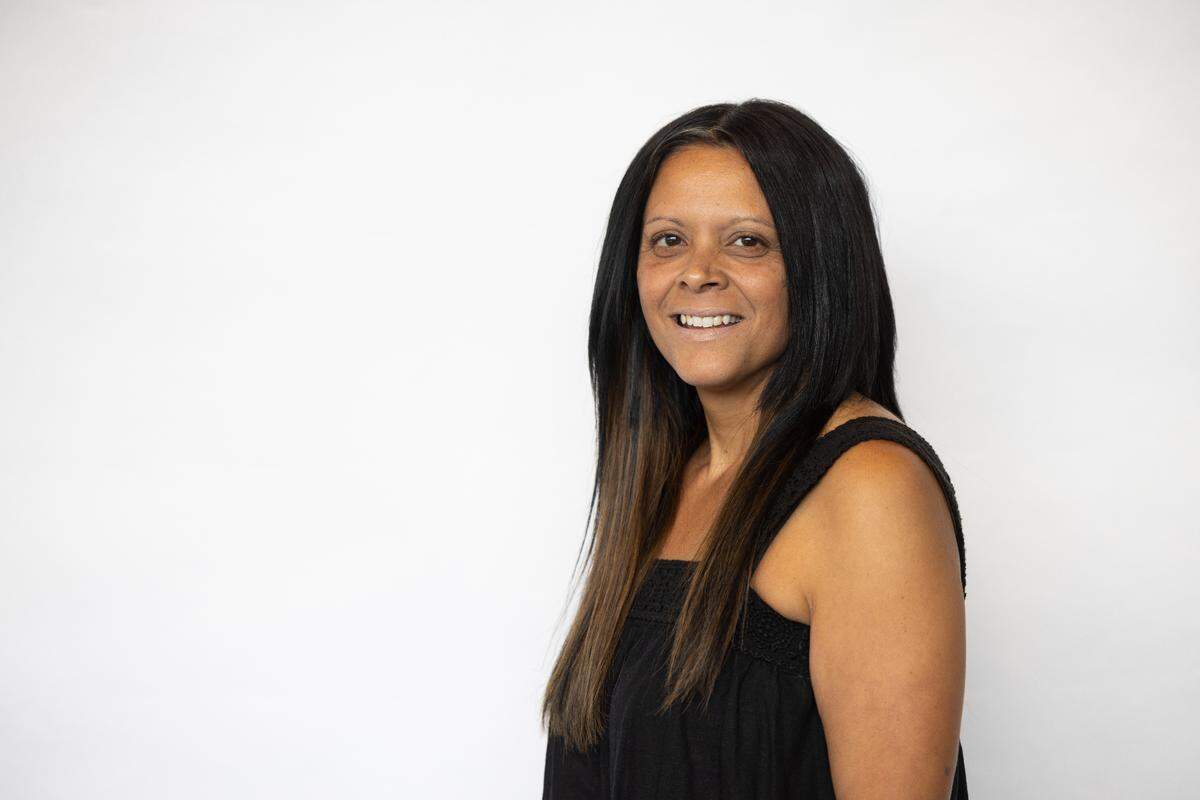
Meet new CMS Superintendent Crystal Hill. She wants to ‘keep that magic’ every school day
For Crystal Hill, being a wife to husband, Lee, and mom to two teenage daughters is her first priority.
So when the 46-year-old decided to accept the permanent superintendent position of Charlotte-Mecklenburg Schools — the board made it official Friday — she made sure her family approved first.
“They are absolutely on board,” Hill said.
Hill will be the first Black female superintendent in the district’s history when her contract begins July 1, and she’s ready for the work ahead. Her contract, which has a base pay of $300,000, ends in 2027.
But her first order of business Friday was not a big family celebration.
“Sleeping. A great night’s sleep,” Hill said. “I’m a volleyball mom, so this weekend we’ll be with my daughter.”
Hill talked with The Charlotte Observer’s Anna Maria Della Costa and Joe Bruno from its news partner WSOC-TV for her first interview after being named CMS’ new superintendent. Responses in this Q&A are edited for clarity and brevity.
Observer: When did you decide you were going to apply for the superintendent position?
Hill: Probably around March, late February. I fell in love with Charlotte. The more I did this work, the more I fell in love with the job. I’m really excited about the opportunity to make big things happen for our students and community. But I didn’t actually apply until the day the application was due. It was that morning, about 3 a.m. and I just hit send.
WSOC: What was the hesitation?
Hill: It’s just so big. It’s huge. I’ve been asked to be a superintendent before, tapped on the shoulder. Even since the time I’ve been here in Charlotte things have come open, and I’ve just said I’m not interested in that. I don’t think I want to do that job. But given the opportunity to do it here, I just have fallen in love with it. The entire process was extremely rigorous. It’s the hardest thing I’ve done my entire life. Up to this point, it had been getting my doctorate (degree).
WSOC: Four years seems like a long time. Did you ask for the four-year contract (July 1, 2023 - June 30, 2027) or is that something you agreed to?
Hill: It was in the original draft. I don’t think four years is a long time. I think what it does do is show the board’s commitment to stability. As you all know here in Charlotte, there’s been instability in leadership, and of course that’s had not-so positive impacts on the organization and the community as a whole. So advancing a four-year contract was just a great show of: we’re committed, we’re focused on stability, and we’re ready to move our district forward.
Observer: Your hiring is historic for the district because you are the first Black female to lead CMS. What does that mean to you?
Hill: Growing up, my mama always said you have got to be better. If this is the standard, you always have to be better. When I talk about high expectations, she’s always pushed, pushed, pushed.
I hadn’t really thought about it until you asked that question. What it means to me is that anything’s possible. The other thing my mom instilled in me is this is not about you. You are better because you have to serve. I think it opens up an opportunity for me to serve in ways that I’ve not been able to serve before, which again speaks to why I decided at 3 a.m. to push the button. I just hope that I can reflect and be a good role model for our students so they can look at me and say, ‘Wow, if she can do it, I can do it.’
Observer: Name a couple things that you believe the district is doing well.
Hill: We’ve lined up some great processes in terms of monitoring student outcomes and performance. The budget appropriation the county manager announced Thursday — fully supporting our budget expansion appropriation — was huge. I’m not aware of how long ago that’s happened with 79% of that budget focused on people. We are a $2.1 billion business. Families are our customers. We have to know what they want.
Observer: How do you start repairing the relationship between CMS and the community and getting trust back?
Hill: It starts with focusing on things that are going extremely well and elevating those successes. There are a lot of great things happening in our district with our school, our students, our community, our leaders. But also being honest about the areas we need to work on.
One of the things you’ll hear about me if you haven’t already is I have extremely high expectations, not just for the people around me but for myself. The reason those expectations are so high is because 141,000 kids are counting on us. I really view all 141,000 students through: this is somebody’s Madison and Morgan (Hill’s daughters).
It’s critically important to make those connections with the community, to build that trust and to help them understand that you are sending your child to a wonderful place. We want to engage your child, and we want to engage you as family. That happens by building relationships.
We are going to have a family and parents superintendent advisory group that does not exist right now. So, making sure that we’re connecting with those folks, connecting in the corporate space, connecting with our nonprofits.
Above all, executing. That’s how you develop trust: following through with what you say you’re going to do.
Observer: What work still need to be done with Title IX?
Hill: I’m always looking through the lens of continuous improvement.
One of the things we’re already switching next year is that every single principal’s meeting, assistant principal’s meeting, dean’s meeting there will be some type of Title IX tabletops when we’re looking at scenarios ... pulling them from things that have happened here or across the country. We’ll have folks sit around the table and look at the scenario and say, “OK, what would you do? What should we do? What should be the protocol?”
The reality is that, even when folks are trained, a complaint is not something you deal with on a daily basis. It’s not necessarily top-of-mind. We need to make sure it is top-of-mind all the time.
The other thing that I really, really want us to work on is report, report, report, report. And if parents feel like they’ve made a report and they haven’t gotten an immediate response, I want them to reach out to my office. Myself, my team respond to emails immediately. If something’s going on, I want to know about it because I will pick up the phone, I’ll text, “Has this been followed?” That’s the No. 1 thing, if you don’t get the response like you’re supposed to at the school level, if you’ve reached out to Title IX and haven’t gotten a response, reach out to me.
The other step that we are really intentional moving forward is making sure our community members that come in are fully trained on Title IX. We have lots of folks we contract with. We want to make sure they have the same level of training our employees do.
WSOC: What does it say to you that parents are going to the media because they don’t feel like they’re being heard?
Hill: It goes back to customer service.
We have to be able to respond. We have to be able to say, “No, come to us. We are going to take care of it.” If you make the report like you’re supposed to and you don’t get the response, immediately reach out to my office. It concerns me.
I don’t want our families to feel like they have to go to the media for Title IX, for any issue to get something resolved. It’s not great customer service. I am absolutely committed to making sure that we’re providing the best service for our families.
Observer: Talk about teacher retention. What are some ways you can encourage your staff and teachers to stay at CMS?
Hill: It is so important to create a culture of care and candor and making sure our teachers and all of our other staff feel valued. We want them here, and we completely support them. That takes a lot of work, and it definitely starts at the top but occurs at all levels.
One of the things we’re working on is a housing initiative for teachers. We’re working very closely with members of the corporate community, nonprofit and some governmental agencies about what we can do to support teachers in housing.
Many of our teachers are working second and third jobs just to make ends meet. That should not be. We should value our teachers enough to pay them a livable wage and make sure we’re providing a total rewards package so they have the opportunity for housing. We’re very hopeful we’ll be able to launch that this summer to help us recruit and retain teachers.
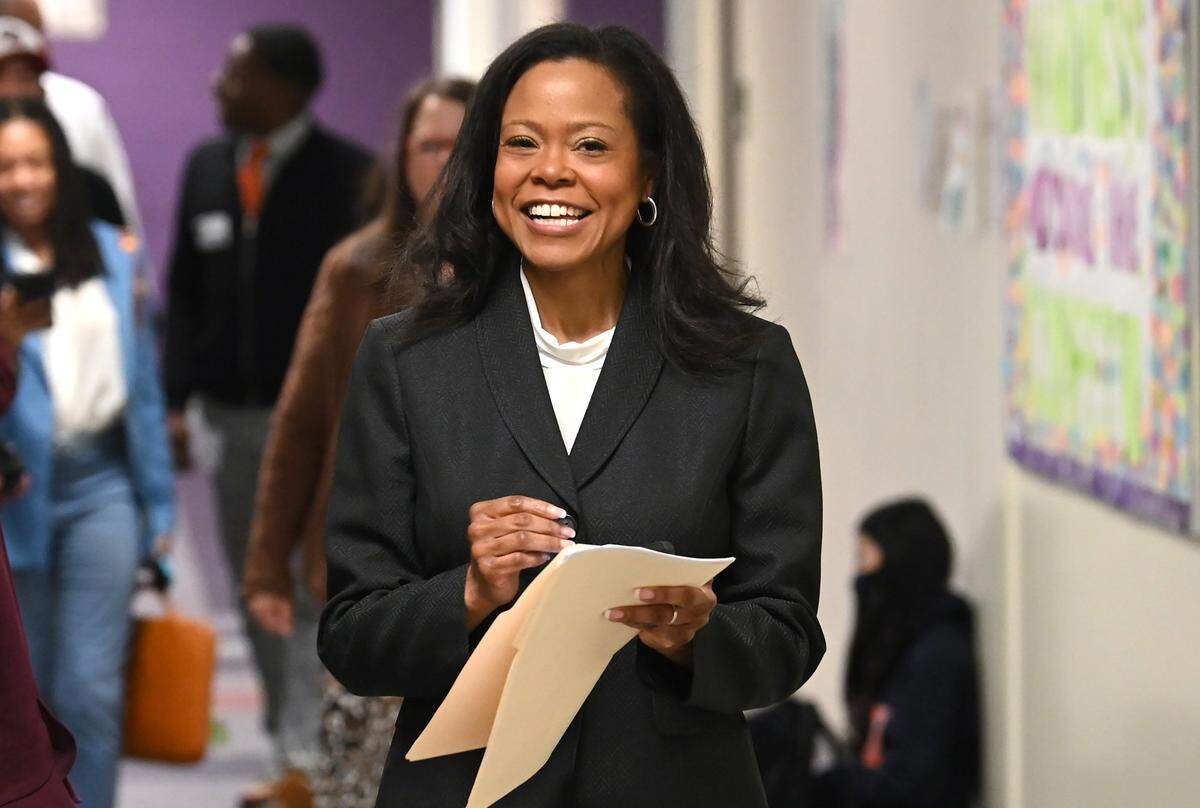
WSOC: Talk about security and can we expect the weapons detectors to stay in place? Can we expect any additional security measures?
Hill: The weapon detection scanners have been a game-changer for us. Our team has done an excellent job of bringing them in, normalizing them and getting students through.
But it’s just a layer. One of the things the team is working on now is they just secured a large grant. We will be purchasing go bags for every single classroom. (A go bag is a portable stockpile of emergency supplies, often placed in a backpack and left in an accessible and secure location so that it is ready to go.)
Safety is the most important thing that we have to focus on. So we’re never done with safety. We are also working closely with the county to do a full safety assessment.
Observer: What is day No. 1, or the first day of school, going to look like for you?
Hill: I want to be on a bus and experience the first day of school as students get on a bus. I want to be standing in the car-rider line as parents pick up their students. I want to ask students what they did over the summer, greet new teachers and new staff.
Something is magical about the first day of school. My highest hope is we keep that magic every single day of the school year.
WSOC: How important is transparency to you?
Hill: It’s extremely important. My name is Crystal. I think names are associated with personalities. I’m extremely transparent. If you heard the county manager (Dena Diorio) talk about our budget process and how transparency was key. I absolutely believe in being transparent. It’s the cornerstone of building trust.
This story was originally published May 20, 2023 at 6:00 AM.