With easy access, drugs in Charlotte-Mecklenburg Schools at a 10-year high
READ MORE
Fentanyl crisis among teens
Drugs found in Charlotte-Mecklenburg Schools reaches a 10-year high. For the first time, overdose-reversal medicine will be placed in schools. Teens describe how they easily access illegal painkillers and fentanyl — and why.
Expand All
Reports of students having drugs reached a 10-year high during the most recent school year — just as public health officials and police in Charlotte warn of the prevalence of fentanyl, an ultra-lethal synthetic opioid often mixed with illegal substances.
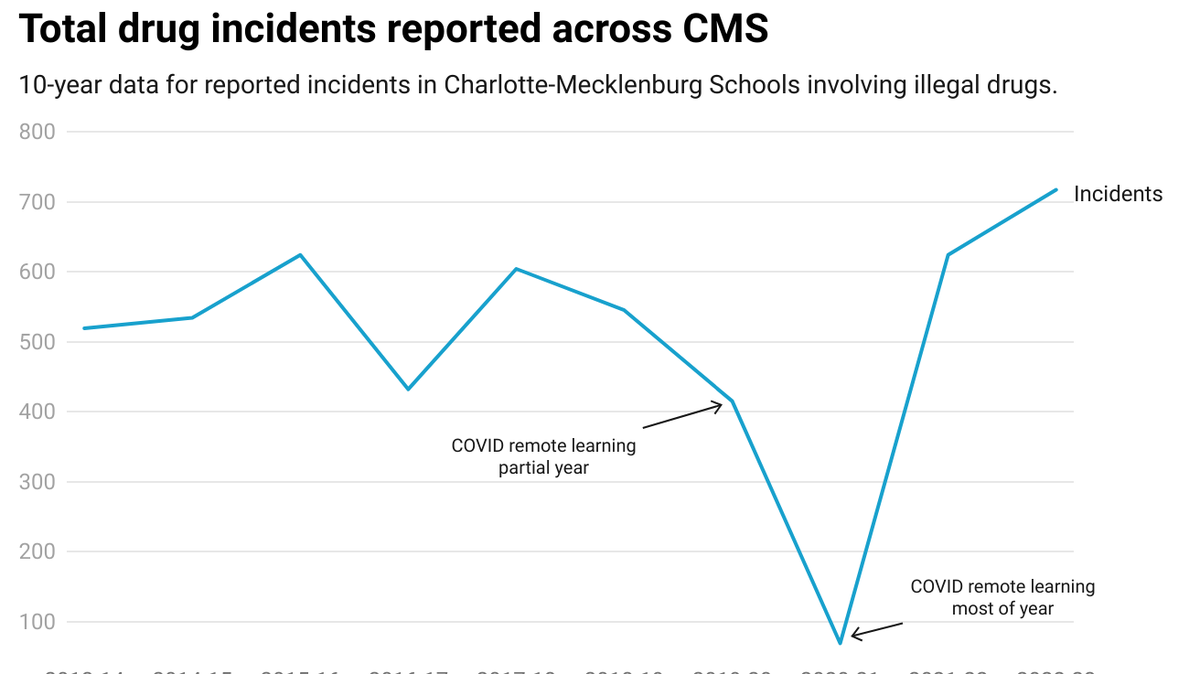
A data analysis by The Charlotte Observer shows drug incidents reported by Charlotte-Mecklenburg Schools have gone up 38% in the last 10 years while enrollment has remained flat or fallen most years. Statewide, district-level data shows possession of drugs at schools is the most common reported offense among students and has been for at least a decade. North Carolina public schools saw around a 10% increase in drug incidents over a 10-year period ending in mid-2022, the most recent data available.
While the district and statewide data does not indicate the type of drug found, leaders outside the school system have said use of opioids and fentanyl is on the rise among teens.
And fentanyl — either laced in other drugs, like pain pills, or on its own — is 100 times more potent than morphine. Even a small amount of fentanyl can be deadly.
In CMS, district leaders plan to stock in school buildings an FDA-approved medicine that can reverse or lessen the likelihood of death from a drug overdose. Parents, some teens and public health experts say high school-aged youth are increasingly at risk of overdose from buying illicit painkiller pills laced with fentanyl.
A recent investigation by the Observer found teens report relative ease in buying knock-off prescription pain pills; sometimes deliberately escalate drug use by ingesting pure fentanyl; and become addicted after first using drugs to deal with chronic mental health problems.
Students are being found with drugs more often across North Carolina, data from the Department of Public Instruction shows. But — even when accounting for COVID-related impacts and a decrease in public school enrollment — the rate of increase of drugs in CMS schools outpaces the statewide trend, according to the Observer’s analysis of NCDPI data.
The Observer’s analysis of data shows 10 CMS high schools account for nearly half of all the district’s reported drug incidents.
In the 2021-2022 school year, drugs were found on at least one occasion at 60 school sites. That’s about one-third of CMS schools.
High schools were most affected but drugs were reported among students at 23 CMS middle schools and 12 elementary schools or academies with lower grades.
In the 2022-23 school year, a total of 717 incidents labeled possession of controlled substance were reported by CMS. The year prior, the total was 624. The pre-COVID school year of 2018-2019 saw 545 incidents reported.
This story was originally published November 9, 2023 at 5:00 AM.