‘Demand like never before.’ Why millions are flowing to NC charter schools from investors
Millions of dollars are flowing from private equity firms into charter schools across North Carolina to help buy new classroom materials, renovate and expand.
Unlike traditional public schools, charter schools historically have been responsible for finding their own ways to pay for capital needs. That means using donations, grants or nonprofit and private investments for renovations, new construction and upgrading classroom materials — crucial for attracting teachers, parents and students.
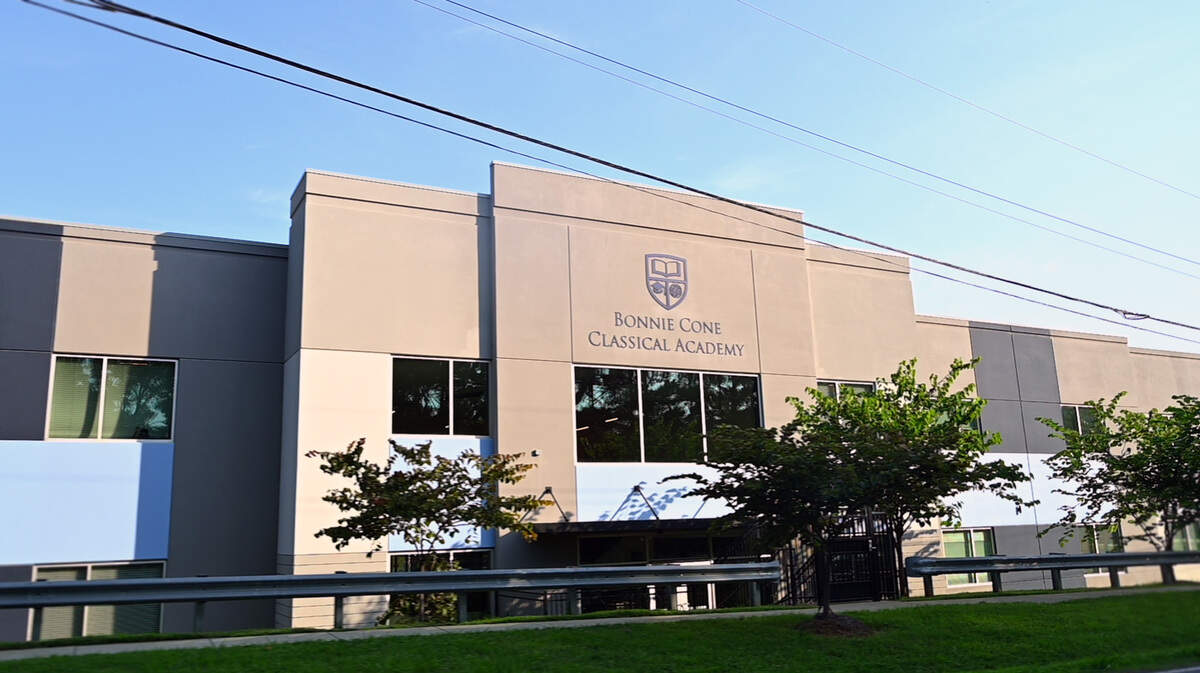
One prominent firm helping charter schools in North Carolina is Chicago-based B.C. Ziegler and Company, a niche investment bank, that facilitated loans, acquisitions or debt refinancing of six North Carolina charter schools in the past four years: Unity Classical Charter School in Steele Creek, The Franklin School of Innovation in Asheville, The Capitol Encore Academy in Fayetteville, Bonnie Cone Classical Academy in Charlotte, The Point College Prep & Leadership Academy in High Point and Pine Springs Preparatory Academy in Holly Springs.
Ziegler’s work totals $97.49 million, but it’s just one firm making investments.
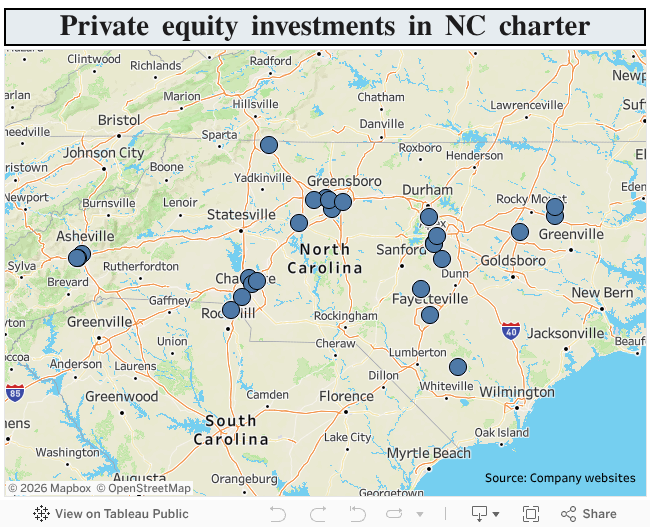
A Charlotte Observer analysis reveals at least $279 million in private equity investments in North Carolina charter schools since 2013. The investors range from large national firms to smaller regional players, signaling a renewed enthusiasm for an industry investors are targeting.
Proponents argue investments are essential for the survival and growth of the partially state-funded schools, while critics worry about risks and a lack of oversight.
One of the risks is schools losing their buildings while investors profit, say critics with the Network for Public Education Foundation and the N.C. Justice Center. The buildings could also be sold for other projects or used for future charters because relatively few buildings are built for that purpose, according to critics.
Investors, though, say they have the best interest of students in mind and don’t want any of their schools to close.
Why is this happening?
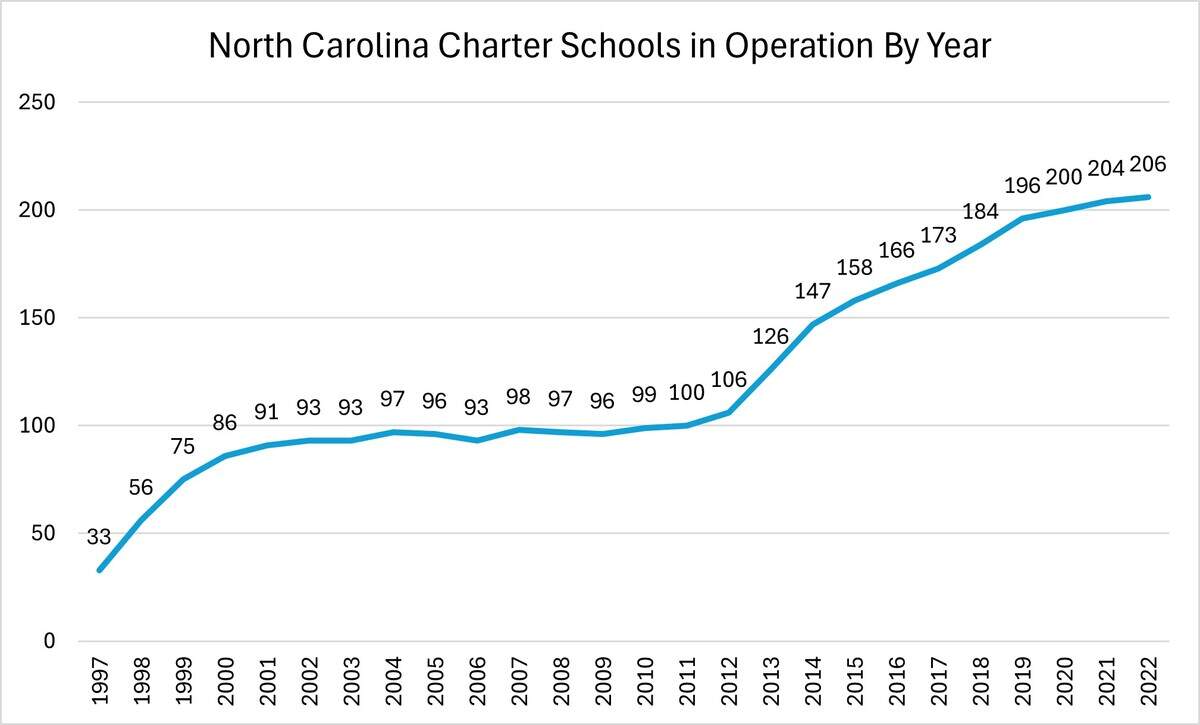
Many policymakers and parents embrace charter schools as an alternative to traditional public schools perceived as failing, underfunded and using misguided curricula. The number of charter schools has grown to 210 since the General Assembly removed a 100-school cap in 2011.
“There is a demand like never before,” said Bartley Danielsen, a member of the state Charter Review Board, which approves and revokes school charters.
Statewide, charter school enrollment is expected to eclipse 145,000 students this year, according to the state Department of Public Instruction, as several schools are expanding to accommodate some of the more than 85,000 students on waiting lists.
However, the number of charter schools won’t grow for the first time since 2011. It’s projected to remain at 210, due to a shortage of available buildings and real estate, said Lindalyn Kakadelis, executive director of the North Carolina Coalition for Charter Schools.
“More students necessitate the need for more desks, books, classrooms and everything else,” she said. “Finding money isn’t a problem. The only thing that will slow down growth is finding real estate to set up new schools.”
State funding can be used for lease agreements on some property or mobile classrooms, according to state law. But charter schools receive almost all public money based on how many students are enrolled. Traditional public schools, meanwhile, receive per-pupil funding and money from local governments for building needs.
“Maintaining top-notch facilities and supporting our teachers is crucial for educational outcomes,” said Jonathan Bryant, chief administrator of Lincoln Charter School, which has two campuses in Lincoln County and is the largest charter school in the state with about 1,900 students in grades K-12 at campuses. “Doing that takes money.”
Lincoln Charter School uses U.S. Department of Agriculture grants for rural schools instead of private investments.
Donations, grants and nonprofit help are often insufficient, said Kakadelis, a former Charlotte-Mecklenburg school board member. Private equity firms like Ziegler step in offering loans, tax-exempt bonds and other financing options.
“Grants and money from the nonprofit sector aren’t enough to solve funding gaps,” Kakadelis said. “There are multiple funding sources available. The biggest one is outside investors.”
How do the deals work?
The most common financing tool for charter schools is a tax-exempt bond, a specialty of Ziegler’s.
Ziegler connects schools with investors who want to purchase tax-exempt bonds and are willing to accept lower interest rates for the tax benefit, said managing director Scott Rolfs. The bond proceeds go toward school upgrades and are seen as more manageable for schools because repayment spans 30 to 40 years like a home mortgage.
In 2021, Ziegler facilitated a $17.18 million bond issuance for Bonnie Cone Classical Academy in north Charlotte, enabling the school to acquire and renovate its facilities. The school will repay Kansas City-based UMB Financial Corporation until 2056, according to property records.
“One of the benefits of issuing a tax-exempt bond is to reduce the cost of borrowing money,” said Wake Forest University finance professor Ajay Patel, an expert in corporate and financial management. “If you’re borrowing the money to invest in facilities, then it reduces the cost of creating new infrastructure for the institution. Bonds are more affordable to pay back.”
Part of the way Ziegler determines if bond issuance is the best choice for a school to raise capital is through the debt underwriting process. That’s where Ziegler evaluates a school’s financial health to determine the best strategy to raise money, be that through bonds, other loans or other options and then connects the school with potential investors who can offer them.
“There are investors around the country ... who say, ‘Ziegler, if you’re underwriting the project, we’d love to take a look at it and see about buying some bonds in that project,’” Rolfs said.
If the school thrives, investors receive interest payments. If the school fails, investors may recoup their initial investment by selling, converting or leasing the property, already zoned for education, to a for-profit private school or to another charter school operator.
“Just like when you get a home loan from the bank, if for some reason you couldn’t pay… the bank would, in effect, foreclose and take over the property and then resell the property to someone else,” Rolfs said. “You’ve always got collateral in these situations.”
Ziegler receives fees for its work with schools and it also receives some profits from helping to issue bonds and other financing measures, Rolfs said. But individual investors receive the bulk of profits.
Are there safeguards?
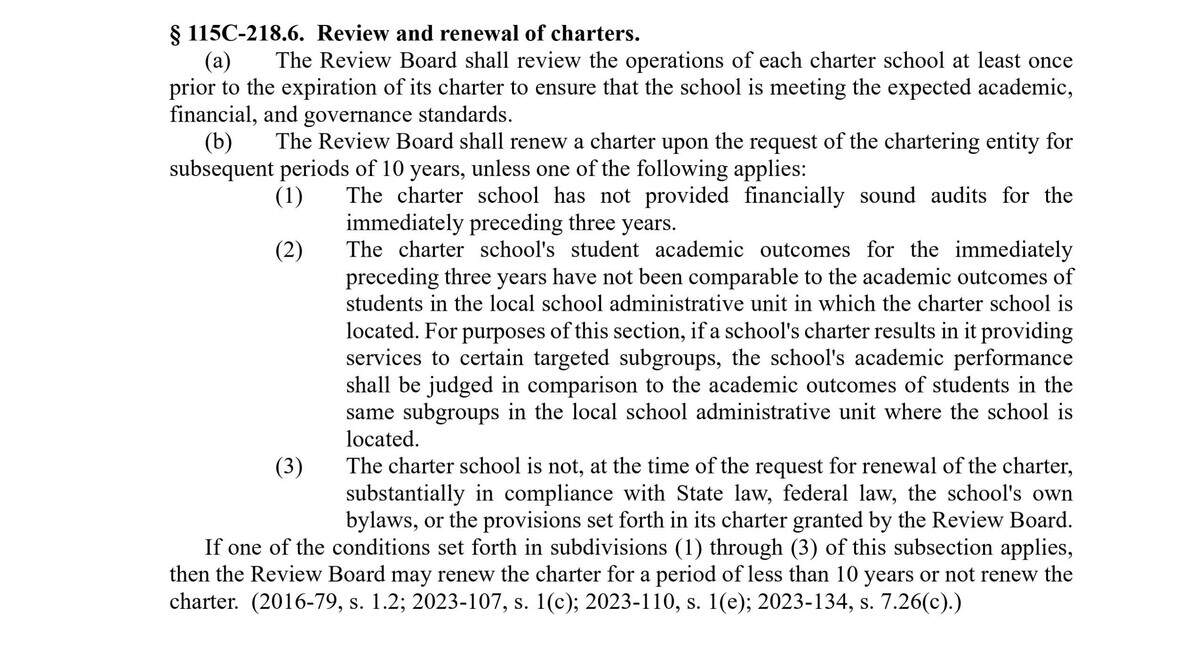
Statewide, advocates and opponents generally agree that, once operational, charter schools face similar levels of oversight to traditional public schools. Schools submit audits to state officials and undergo academic, facilities and disability compliance reviews when seeking or renewing their charters.
“What we traditionally think of as accountability, they have the same testing requirements and the state monitors their finances like any other public school,” said Kris Nordstrom, a senior policy analyst with the left-leaning nonprofit N.C. Justice Center.
However, there are no regulations about where or how charter schools get money for capital improvements or rules to ensure they repay private investors, review board member Danielsen said. There is no state review before a contract is signed.
“They don’t come to (the charter review board) and ask permission if they can take out a bank loan,” Danielsen said. “They don’t have to consult us before they take out money.”
The onus, Danielsen said, falls on the school and investors.
“Our efforts are to make sure that there are high quality board members in place leading the schools that will make sound academic and financial decisions on behalf of the charter school,” he said.
Kakadelis, the leader of the state coalition for charters, agrees.
“The review board looks under every rock and cranny once schools are up and running and private investors do the same before making a contract,” she said. “Investors aren’t going to lend out tons of money and not know there’s a really good chance they are getting paid back.”
Why are critics worried?
The lack of state oversight before contracts are signed raises fears that charters are cutting risky deals with investors more interested in profits than student success.
“Investors want profits, they don’t seem to care what comes of the kids,” said Carol Burris, executive director of the New York-based Network for Public Education Foundation, who has written about North Carolina charter schools.
Currently, 62 of North Carolina’s 210 charter schools are classified as low- or continuously low-performing academically. Likewise, nearly a third of traditional public schools were designated low-performing last year.
Half of the schools who borrowed money through with Ziegler’s help are low performing according to state guidelines: Bonnie Cone Classical Academy, The Capitol Encore Academy and The Point College Prep & Leadership Academy.
Critics like Burris and Nordstrom also draw parallels to private equity’s involvement in education to its involvement in other “traditionally public sectors” like health care and housing.
Private firms occasionally have acquired hospitals and nursing homes, increasing debt and cutting costs that sometimes jeopardized patient care, according to research from Harvard University and the National Bureau of Economic Research. Similarly, the housing market has seen private firms amass large portfolios of rental properties, sometimes driving up rental rates and contributing to housing shortages, displacing tenants and rising rents, according to reporting from The Charlotte Observer and The New & Observer.
The charter school sector appears to be following a similar trajectory, Burris said. She said charters may pay inflated prices for leases and land that no one else in the community would pay because of private investors.
It’s unclear if that’s the case here. The Observer requested all but one of the contracts from North Carolina charter schools connected to with Ziegler and lease agreements nearly two months ago and has yet to receive them. Charter schools are subject to the same public records laws as traditional public schools.
Ziegler refutes Burris’ assertions.
“The financing options equity offers are nice because, if you think about it, if a school is trying to build a big new building, those are not cheap these days, but they can borrow money and amortize it over a 30, 35, 40 year period so it’s much more manageable,” Rolfs said.
What comes next?
Advocates in the charter movement hope state lawmakers change how the charter financing system works.
“I would like to see the state be innovative and look at other revenues that charter schools could use to get facilities,” Kakadelis said. “I mean, it is almost impossible for charter schools to start because they go a year or two years before even getting a dime from the state.”
Rolfs said no investor wants a school to close and wouldn’t lend to schools they weren’t confident in.
“The charter movement as a whole has some good actors in it that are nonprofit, and has some good actors in it that have a for-profit background,” Rolfs said. “Are you going to have some failures along the way? Sure. But you’re also going to have a lot of success.”
This story was originally published August 19, 2024 at 6:00 AM.