CMS board reveals its lingering questions after rejecting superintendent’s budget
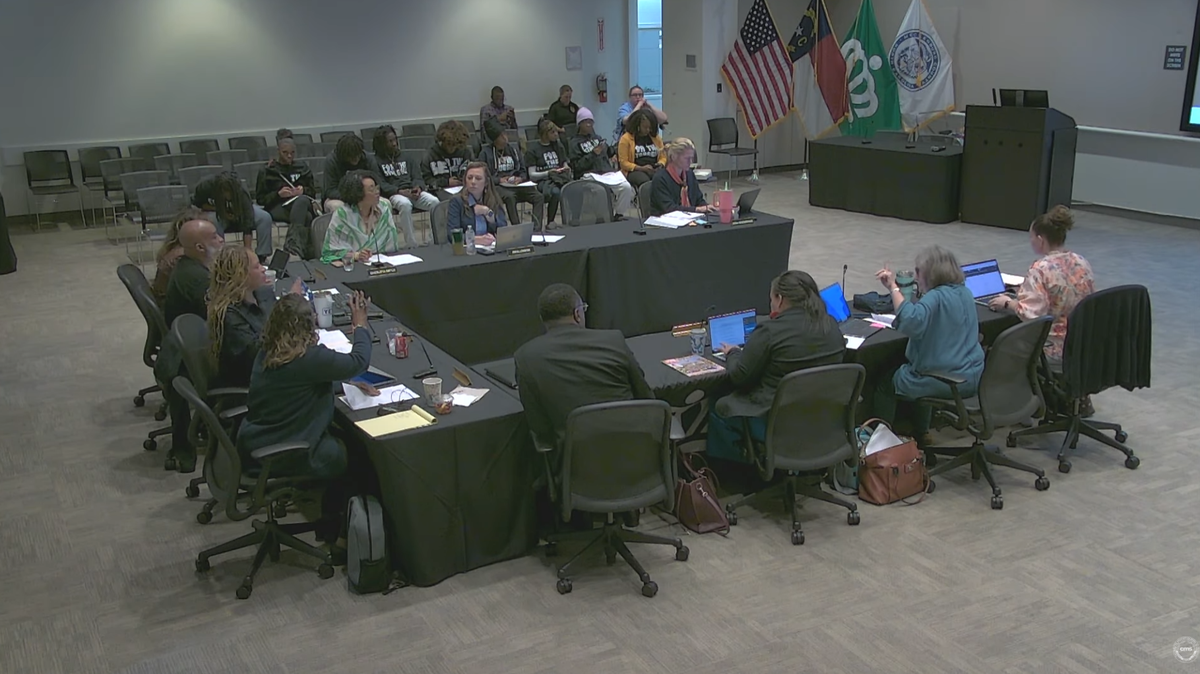
Charlotte-Mecklenburg Board of Education members are asking for more details in Superintendent Crystal Hill’s next budget proposal – but not more money.
The board scheduled a budget workshop for 8 a.m. Saturday after voting down Hill’s $2.1 billion budget plan for the 2026-27 school year Tuesday.
The district’s in crunch time: state law requires it to present a budget proposal to the Mecklenburg County Board of Commissioners by May 15. CMS board members are asking Hill to present a modified plan May 12.
At Saturday’s meeting, board members brought up a few main concerns: equity across the district, mental health support for students and how CMS plans to adapt to decreased funding from the state next school year.
“One one hand, we hear we’re not getting enough from the state. On the other hand we hear that we have everything we need,” said board member Charlitta Hatch, who represents northern Mecklenburg County. “If this is enough, then all kids should be on-track… If this isn’t enough, then let’s say what it is that we need.”
School district officials collected the board’s questions Saturday in order to update the district’s budget proposal before bringing it to the county for approval.
At-large board member Liz Monterrey Duvall said the board is not asking the superintendent to increase the $25.1 million planned request from Mecklenburg County, which would bring the county’s total contribution to CMS’ operating budget next year to $698.7 million.
Decreased funding
CMS will get less funding from North Carolina next school year than it did this year, due to a drop in enrollment.
That’s a big deal since the district gets the bulk of its funding – about 54.6% – from the state.
The district’s solution was to hire about 10% fewer new employees over the summer than it typically does. That would mean hiring around 1,800 new employees rather than 2,000.
As a result, some positions in the district have to be moved around, and board members want to know more how those decisions will impact individual schools
.“If we’re receiving less, what does that mean to my child? What does that mean to the counselor? To the principal?” Hatch asked Saturday.
Board member Cynthia Stone, who represents parts of south Charlotte, asked for clarification on how staff such as counselors and psychologists are assigned to schools and whether it is completely dependent on the number of students at a school.
“What conditions are considered when allotting staff?” asked Board Member Cynthia Stone, who represents parts of south Charlotte. “At one school, you may have 400 kids with no problems, it’s all sunshine and lollipops. And then, at another, you might have 400 kids that have all kinds of challenges…If we’re basing it solely on numbers, I think we’re missing the opportunity to support kids.”
Equity
Board members are concerned with how the district’s current budget plan will affect student groups differently. They want more answers about ensuring resources get to students who need them most.
The CMS board is guided by a set of four goals and guardrails in place until 2029. The goals are benchmarks they’re aiming to reach, while the guardrails provide the superintendent with parameters to stay within. Guardrail 1 deals specifically with equity and closing achievement gaps between student groups.
Though CMS made sizable gains in student performance overall last school year, discrepancies persist between groups of students.
Around 55% of all CMS students scored on or above grade level on end-of-grade tests during the 2024-25 school year, state data show. However, that varied greatly among demographic groups: The proficiency rate was 81.7% for Asian students, 67.8% for white students, 43.2% among Hispanic students and 39.2% among Black students.
Multiple board members said Saturday they want more specifics about how next year’s budget will close gaps.
“Is this an equitable budget? Are we adhering to guardrail 1?” board vice chair Dee Rankin asked Saturday. “Those gaps have persisted, so what is different about this budget?”
Monterrey Duvall said she’s particularly concerned with enduring gaps in the performance of students whose second language is English. She said the $13.1 million currently allocated for instructional specialists, which would include those that specifically support English language learners, isn’t sufficient.
“There’s no way this is enough… because multi-lingual learners are still at the bottom of the achievement gap,” Monterrey Duvall said Saturday.
Mental health
Mental health support for students was a major concern for the board in the drafted 2026-27 budget. Namely, board chair Stephanie Sneed said, the decrease in school psychologist funding from $18 million in this year’s budget to $11.5 million next year.
“I think this particular subject area is missing the boat in that I think we need to ensure we’re having social and emotional support,” Sneed said.
Board member Anna London echoed Sneed, saying she received letters from seven CMS students in recent weeks that brought up mental health as a concern.
“Clearly our students are concerned about their own mental health or their peers’ mental health,” London said. “What are the direct services going to students that they’re participating in?”
At Tuesday’s board meeting where members rejected the 2026-27 budget proposal 8-1, Monterrey Duvall specifically raised concerns with Capturing Kids’ Hearts, a social and emotional learning program intended to improve school culture. The district spent $2.4 million on it.
“I think that nailing social emotional learning is crucial to the advancement of our students,” she said Tuesday. “We know that we’re a very large district that requires different social emotional learning and not just one-size-fits-all. We have asked many times about Capturing Kids’ Hearts…and I still do not feel fidelity in it.”