Charlotte-Mecklenburg Schools budget debate gets ‘real snippy’ as deadline nears
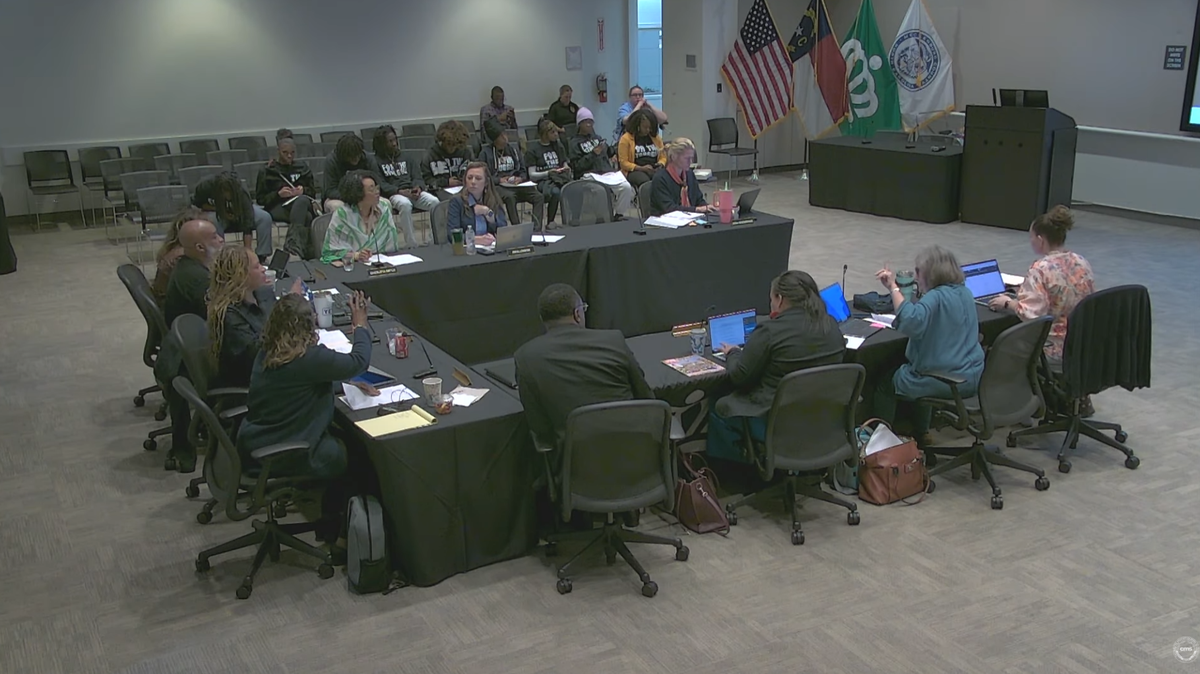
Charlotte-Mecklenburg Schools’ crunch-time budget talks turned tense Friday as board members questioned why it’s taken so long to get clarity on lingering questions.
“I think you should take responsibility for not making this clear,” board member Shamaiye Haynes told CMS Superintendent Crystal Hill at Friday’s meeting. “I feel like we’ve talked in circles for months.”
Haynes later added she’s “felt the sense that instead of being able to ask my questions and get those answered, that I have to play games, and that’s not what I’m here for.”
The CMS board punted Hill’s initial $2.1 billion budget recommendation April 28 in an 8-1 vote. Members cited a few main areas of concern: equity across the district, mental health support for students and how CMS plans to adapt to decreased funding from the state next school year.
The district is almost at its deadline. State law requires it to present a budget proposal to the Mecklenburg County Board of Commissioners by May 15. CMS board members are asking Hill to deliver a modified plan by 3 p.m. Monday, and the board will vote on it at its regular board meeting Tuesday night.
At Friday’s meeting, Hill presented options for amendments to her first draft, not an official recommendation. Some board members said Hill presented information they wished they’d seen sooner. Others described feeling they were being talked down to.
“Some of those comments are real snippy, and I don’t appreciate it,” Vice Chair Dee Rankin said. “There’s too much tension in here, and we have to figure out how to get rid of that.”
It made for a pricklier meeting than most as the district stares down its budget deadline.
Board member Charlitta Hatch told The Charlotte Observer after the meeting she hopes the community sees conversations happening as governance in action.
“Being able to fully understand how our public dollars are being utilized and how they match the priorities and the goals that the community has set for us is something that we’ve been consistently advocating for throughout the budget process,” she said. “And when we didn’t see that, the board took the hard stance of ‘Until we see the feedback applied, we’re not approving it.’”
Teacher pay uncertainties
CMS still doesn’t know how big a raise the state will give teachers. Lawmakers have yet to pass a budget for this year or next year.
Without a state budget, CMS based its estimates on past data, which suggests the state will fund raises of about 3%. That’s the figure Hill used in crafting her first budget proposal.
However, lawmakers may end up funding teacher raises between 5% to 9% for the budget year starting July 1, partially to make up for a lack of pay increases this school year.
The challenge is that around 2,700 CMS positions are entirely funded by the county, not the state. Those are roles CMS created out of need, even though the state does not fund them.
“The state’s budget does not deliver on providing a sound basic education as promised,” CMS Chief Financial Officer Kelly Kluttz said Friday.
The state won’t provide money for raises to county-funded employees. CMS, instead, will have to get that extra money from the county to match what the state gives the rest of the district’s employees.
Hill and Kluttz have clung to the 3% assumption in their $25.1 million proposed ask from Mecklenburg County. They cut central office positions and part-time roles like lunch monitors to build over $6 million in wiggle room in case the state gives raises higher than 3%.
That will cover raises for up to around 6%, Kluttz told board members Friday. If raises are higher, the district will need to cut more vacant positions to make sure all employees get the same pay increases. A 7% state raise will mean 25 vacant positions slashed, while an 8% raise will mean 50 get cut.
But board members wondered: Why not ask the county for more funding if the district expects higher raises?
“The county has essentially told us that they have a specific growth number for CMS… I can exceed it if I want to, but the likelihood of the county manager including that in his budget would be slim to none,” Hill said.
The county based its calculations on an expected state raise of 3%, so that’s what Hill has factored into her ask as well.
Hatch told the Observer she believes the information hadn’t previously been explained in a way that made it clear it was not possible to ask the county for more money for raises.
“Today, it was broken down to show that the contingency funds are not going to come from the county because the county cannot do more,” she said.
The district does control county-funded supplements to teacher pay, which range from around $8,000 to $14,000 and are added on top of state-funded salaries for each teacher in the district. Hill’s plan calls for a 5% increase to those supplements next school year.
What changes were discussed?
Hill proposed several options Friday for changes to social and emotional learning programs and family engagement.
Since 2023, CMS has used a program called Capturing Kids’ Hearts, which aims to improve well-being and school culture. Board members questioned whether the program is worth the $2.4 million it would cost the school district this year to implement.
Instead, Hill proposed options that would scrap the program altogether in favor of a more school-specific approach.
It would involve educating all staff on warning signs that students may be experiencing a mental health crisis and what to do in response. They would also involve rolling out the district’s own social and emotional learning framework called “Got Your Back.”
The $2.4 million previously planned to support Capturing Kids’ Hearts would, instead, go toward the new programs.
The new family engagement proposal would involve an expansion of a CMS program that assesses the needs of eight individual schools and works with community partners to meet needs. Instead, that program would extend to 13 campuses, with the aim of seeing what works best and applying it throughout the district.
The plan would also involve additional professional development for staff and $567,000 for parent messaging platform ParentSquare.