
At long last, CMS passes a $2.1 billion budget for next school year
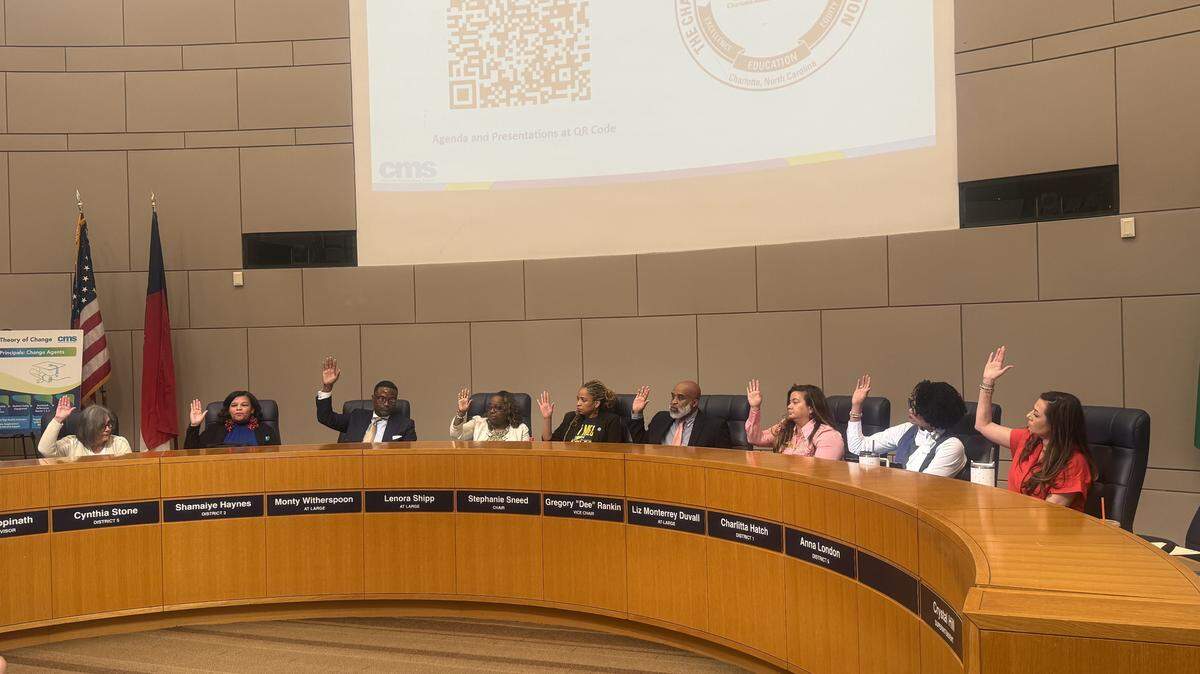
The Charlotte-Mecklenburg Board of Education passed a $2.1 billion budget for next school year in a unanimous vote, after a surprise rejection last month and several, sometimes tense, meetings that followed.
The total dollar amount, including a proposed $25.1 million increase from Mecklenburg County, hasn’t changed after Superintendent Crystal Hill’s first draft was presented in March. How the money is allocated shifted, including more set aside for teacher raises and a new social and emotional learning program for the district.
CMS board members spiked Hill’s first budget proposal in an 8-1 vote at its April 28 board meeting. They asked for several adjustments, including closing achievement gaps between student groups and taking a different approach to student well-being.
“In the next draft, we want to make sure that we are particularly paying attention to closing educational gaps,” CMS Board Chair Stephanie Sneed told The Charlotte Observer April 28. “We want to make sure we’re talking about social and emotional learning as well and making sure we have the right resources and avenues for our educators in the classroom.”
It left Hill with a tight deadline: State law requires CMS to present a budget proposal to the Mecklenburg County Board of Commissioners by May 15.
Hill and the board held a budget planning meeting Friday that got a bit “snippy,” as CMS Board Vice Chair Dee Rankin put it. Some board members said Hill presented information they wished they’d seen sooner. Others described feeling they were being talked down to.
On Tuesday, mere hours before Hill presented her new budget recommendation, state lawmakers reached a long-awaited agreement on major points of a state budget. But North Carolina remains the only state in the country to have not passed a budget for this year.
In its plan, lawmakers agreed on average raises of 8% for teachers, they told reporters Tuesday afternoon. It’s the highest pay increase NC teachers have received since 2006.
It’s also much higher than CMS projected.
In the end, board members said Tuesday they were confident in the CMS budget.
“I think it was well worth working through that process,” Sneed said. “I was confident that we would come out on the other end of this with a better budget... And, I think that’s happened.”
Teacher raises
Without a state budget, CMS based its estimates on past data, which suggested the state will fund raises of about 3%. That’s the figure Hill used in crafting her first budget proposal, but it was just an assumption. And, it turns out it was an incorrect one.
The challenge is that around 2,700 CMS positions are entirely funded by the county, not the state. Those are roles CMS created out of need, even though North Carolina does not fund them.
The state will only provide funding for raises to state-funded roles, not county-funded employees. For them, CMS has to use local funds to match the pay increases the state gives the rest of the district’s employees.
In Hill’s new proposal, she assumed a 5% raise from the state. The district cut central office positions and part-time roles to free up enough cash to fund raises of up to 6% for county-funded employees. With the state planning on 8% raises, though, CMS may have to find some more wiggle room in order to match them.
The district can’t simply ask for more money from Mecklenburg County, Hill told board members Friday.
“The county has essentially told us that they have a specific growth number for CMS… I can exceed it if I want to, but the likelihood of the county manager including that in his budget would be slim to none,” Hill said.
Instead, the district may have to make cuts elsewhere.
And, it gets more complicated still. The state doesn’t plan to give 8% raises to all school employees, only “certified” ones. Those include teachers. “Non-certified” employees, like bus drivers, cafeteria workers, etc., are slated to get raises of 3% from the state.
CMS has a roughly even split between certified and non-certified staff, so CMS will have to adjust some of its calculations after the state budget is final.
“We need to wait for additional clarification before running our final calculations,” said Kelly Kluttz, CMS Chief Financial Officer. “Once the state budget is finalized, we will return to the board for an approval of an amended budget.”
However, Kluttz said, the district may be safe with its current estimates.
“Based on the preliminary calculations we’ve done internally,... if the numbers fall where they did today, we will not have to make additional cuts if the state comes in at 8%,” she said. “When you look about look at half of your employees getting a 3% increase, and half of your employees get an 8% increase,... I think we’re going to end in a very nice place. But, we still need confirmation. “
What changes are in the new budget plan
Hill’s new recommendation doesn’t just assume state raises of 5% rather than 3%. It also shakes up the district’s approach to social and emotional learning.
Since 2023, CMS has used a program called Capturing Kids’ Hearts, which aims to improve well-being and school culture. At its April 28 meeting, board members questioned whether the program is worth the $2.4 million it would cost the school district this year to implement.
Hill’s new recommendation will scrap Capturing Kids’ Hearts entirely. Instead, it will reallocate $1.6 million to rolling out a more school-centered approach. That will include training employees on how to identify and respond to mental health crises among students as well as creating the district’s own social and emotional learning framework called “Got Your Back.”
The remaining $800,000 will go toward mental health and behavioral support for students.
Hill’s new plan will also reinstate four Department of Social Services liaisons that work to help the district’s students currently in foster care.
The county has historically paid for those roles, but it will no longer fund the positions next school year. Hill’s initial budget plan eliminated their positions and reassigned their duties. However, board and community members alike said they worried about how losing those workers would affect students.
“The liaisons are not simply administrative positions,” Elizabeth Trosch, a Mecklenburg County juvenile court judge told the board Tuesday. “When I first became a judge, the kids that I saw in foster care were failing out, or they were truant. But, the kids that are in foster care here in Mecklenburg County today are succeeding because of the intentional supports that these liaisons are able to coordinate.”
Tuesday’s budget plan will also move a handful of teaching roles from Charlotte-Mecklenburg Virtual Academy to high-need schools and set aside an additional $100,000 for family engagement strategies.
What’s the same
Hill still plans to request $25.1 million more from Mecklenburg County, toward a total operating budget of $1.97 billion. That’s a 0.8% increase over this year.
CMS’ enrollment decreased this school year by about 2,500 students, bringing its total student population to about 140,000. The decrease in students also means a decrease in state funding for next school year. That’s a big deal since the district gets the bulk of its money – about 54.6% – from the state.
The district’s solution is to hire about 10% fewer new employees over the summer than it typically does. That means hiring around 1,800 new employees rather than 2,000.
CMS’ new plan also still includes the same planned increases to teacher pay supplements.
While CMS doesn’t have control over the state salary schedule, the locally-funded supplement is the lever it pulls to adjust teacher pay and make the district more competitive in the job market. Hill’s budget asks the county for a 5% increase in teacher supplements, which currently range from about $8,000 to $14,000.
This story was originally published May 12, 2026 at 10:38 PM.