
Sharks ... in Kentucky?! Fossils uncovered in Mammoth Cave after millions of years
It’s hard to imagine in 2020, but there was once a time when Kentucky would have been an ultimate scuba diving location.
Go back — more than 300 million years ago — and the Bluegrass State wouldn’t have been known for its vast forested areas of hills and mountains and farmland. With Kentucky near the equator at that time, its geography could be similar to how the Bahamas is now, one expert said.
With that type of oceanic water comes sharks. And as it turns out, there were a lot of them in Kentucky.
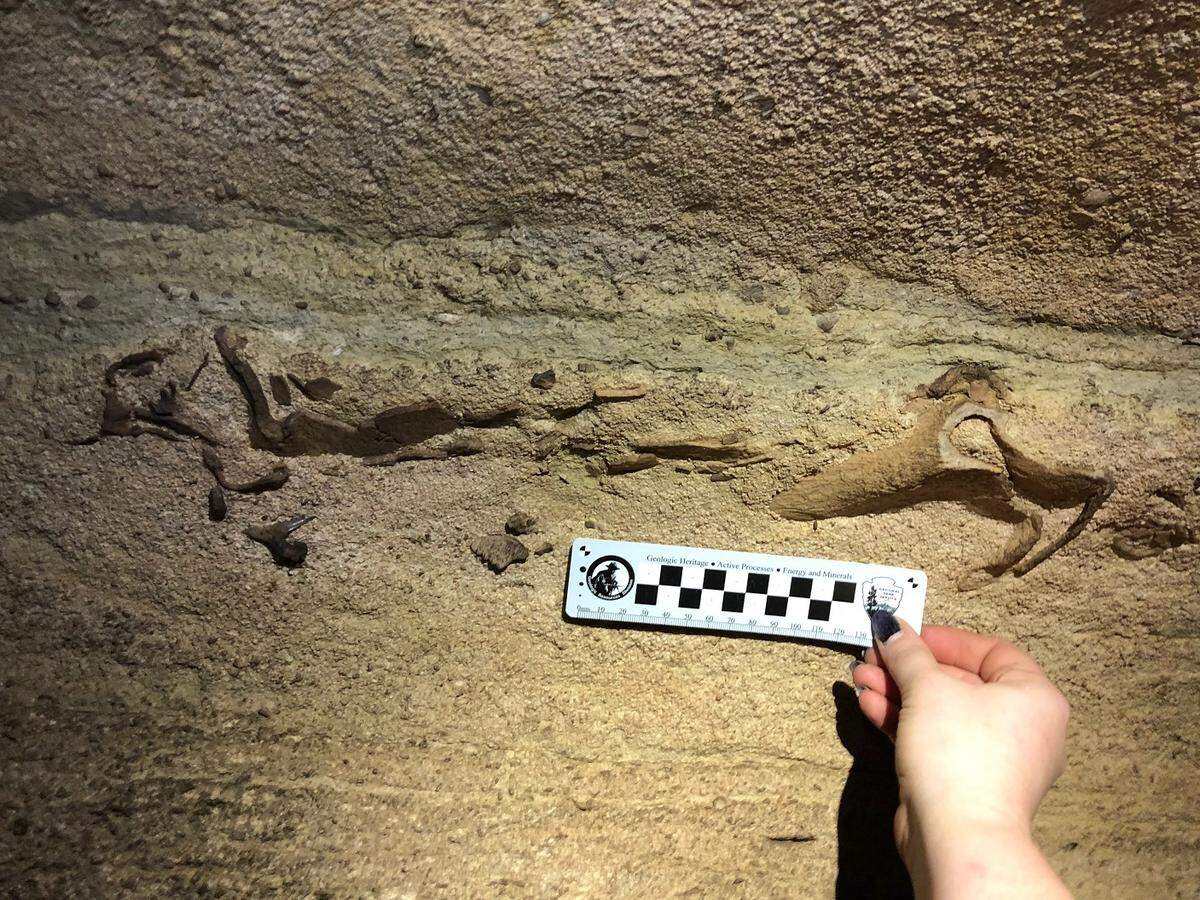
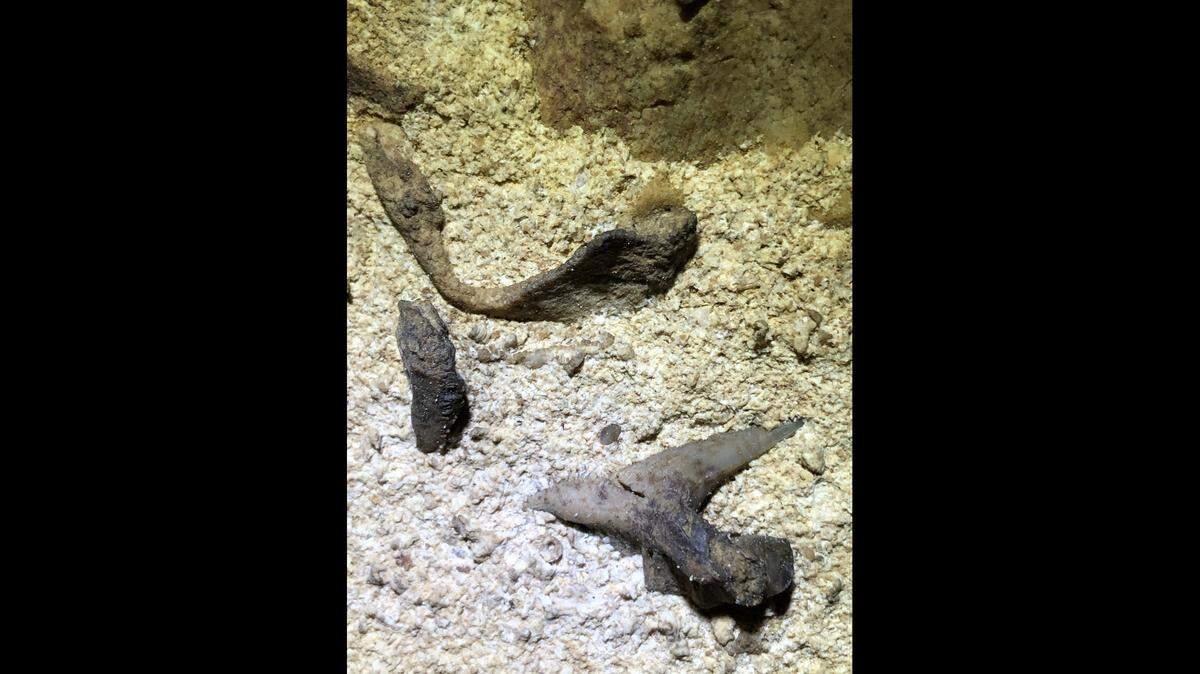
At Mammoth Cave National Park in Kentucky, recent discoveries were made that shed a little more light on the shark population in the area. More than a hundred shark teeth belonging to at least 10 different species were found, along with part of a skull of a shark in which all that was previously known of the particular species was its teeth.
JP Hodnett, a paleontologist and program coordinator for Dinosaur Park in Laurel, Maryland, told McClatchy News he would use the word “mindblown” to describe his reaction to the findings.
“There was just so much there,” he said. “I only had three days to do the field work and we just scratched the surface. The process of mapping every single tooth we were finding, it took hours just to move five feet. You see a tooth, mark it, and then there would be another right behind my head. That whole process took five to 10 minutes for each tooth.”
The presence of sharks at the location was already known to Rick Toomey, who is a cave specialist and research coordinator at the Kentucky cave. When the National Park Service was developing an exhibit on fossils from caves, Toomey sent some of their pictures of shark remains to Vincent Santucci of the Washington D.C.-based agency.
Santucci showed interest in learning more about the sharks at Mammoth Cave, so a team was assembled that included Toomey, his colleague Rick Olson and Hodnett coming in from Maryland.
“When JP came and we went out there, he was able to help us get a better search image for what these teeth look like,” Toomeytold McClatchy News. “All of a sudden, instead of just that one shark with the jaw portions, we were finding around 40 shark teeth from the area where that jaw bone was. And the other passage we went, where we knew we had four or five shark teeth, we now realize there are probably over a hundred shark teeth exposed in the fossil material.”
What did they find?
Of the shark species found at the cave, Hodnett said a lot in the chomatodus species were found. “You couldn’t take a step without finding a chomatodus tooth,” he said. Others included ones related to chimaeras, which are often referred to now as ghost sharks or rat fish, according to Hodnett.
One area of the cave featured fossilized shells and pieces of choral along with the teeth, Toomey said.
Toomey compared the area to the looks of a healthy snack.
“It would look like someone glued your granola together, but instead of it being little pieces of granola, it’s different type of fossils, little shells,” he said. “Sprinkled in the granola are raisins, but instead of raisins they were shark teeth.”
But the big find was the skull, which will add “significant knowledge to understanding the biology and relationships” of the particular shark species, Toomey said.
Judging by the size of the teeth, this shark species is likely the size of a great white shark, according to Toomey.
It’s extremely rare to find these type of skeletal remains, said Hodnett, because cartilage usually does not survive fossilization.
What’s next?
Hodnett took sediment samples and found hundreds of samples, including bony fish teeth, micro shark sediment and one shark that was eel-like, he said. He called it “some really rich material.”
“These fossils could occur on many road cuts, however in the road cuts you have freezing and thawing and rapid erosion, big storms that come through, plants, construction work ... These fossils are difficult to find in that type of environment,” Toomey said. “In the cave, what happens is the cave forming process has dissolved the limestone and leaves the fossils beautifully exposed so you can just walk up and find them.”
The area in Mammoth Cave where the shark fossils were found is not accessible to the public, so tour goers likely did not come across any shark teeth, Toomey said.
“It was exciting,” Toomey said of the project. “We went and kept saying, ‘Did you see this one? How about this one?’ There is really a lot of shark material here. And while JP was working on some of the collecting and documenting of what we were finding, we were all finding additional ones.”
He added that it is one of “the most exciting pieces of paleontology” he has been associated with and it shows additional value to Mammoth Cave.
Hodnett hopes to release some of his findings at the Society of Vertebrate Paleontology meeting this October in Cincinnati, he said. When the weather is a little warmer, Hodnett hopes to go back to Mammoth Cave to see what else is hiding in the limestone.
The collected fossils will likely not be available anytime soon for the public to view, however. Due to the rarity of the fossils and their scientific importance, they will be protected for research purposes, Toomey said.
This story was originally published January 30, 2020 at 6:02 PM with the headline "Sharks ... in Kentucky?! Fossils uncovered in Mammoth Cave after millions of years."