
A north Mecklenburg commuter rail gains traction, but transit sales tax still a tough sell
A sprawling commuter rail line throughout Mecklenburg County — traversing Davidson, Cornelius, Huntersville and center city Charlotte — has emerged as a focal priority in the region’s push to bolster transit, plus connectivity through greenways and bikeways.
The Red Line was not previously the hallmark of the transit tax plan, which has often touted the Silver Line stretching across Mecklenburg, Gaston and Union counties. Initial estimates show the expansive transit program would cost $8 billion to $12 billion, half funded locally.
The fate of the LYNX Red Line, now top of mind for Charlotte, was already a thorny topic for north Mecklenburg leaders, who told Charlotte Mayor Vi Lyles last month they were concerned about a proposed “1 cent for mobility” tax that could be on the ballot in November. And late last month, the Board of the Lake Norman Chamber of Commerce unanimously voted to oppose any sales tax increases, President W.E. “Bill” Russell wrote in an editorial to Cornelius Today.
Taiwo Jaiyeoba, Charlotte’s assistant city manager and planning director, emphasized Monday the Red Line could see traction — assuming the General Assembly approves that sales tax figure.
If the sales tax figure is shot down or reduced, Charlotte leaders will need to reexamine their ambitious plans to create an interconnected network of trails, as well as pedestrian and cycling routes, to accommodate the region’s skyrocketing population growth, Jaiyeoba said.
“We believe that frankly speaking, of all the lines — Gold Line, Silver Line, Blue Line extension to Ballantyne and the Red Line — the Red Line is actually the most affordable of all those corridors,” Jaiyeoba said in a press briefing Monday afternoon. “It’s going to cost you about $600 or so million, if not less, because it’s commuter rail. ... It’s usually not as expensive as a light rail system to build.”
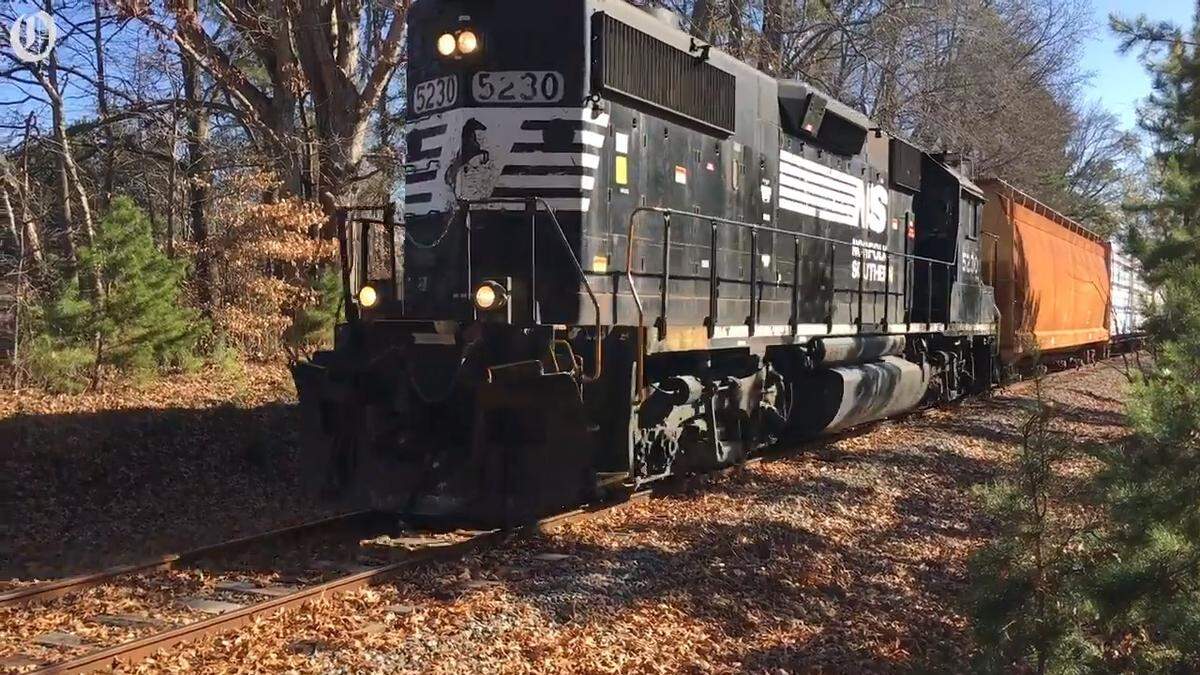
He said the Red Line progress is partially due to a change in leadership at Norfolk Southern, which for years has refused to share its tracks on the “O Line” that connects Winston-Salem and Charlotte and cuts through northern Mecklenburg. But to Norfolk Southern, nothing has changed, a spokesman told the Observer Tuesday morning.
“We value greatly our relationship with the City of Charlotte and CATS,” spokesman Jeff DeGraff said. “Our obligations and responsibilities have not changed yet, so at this time we have not reconsidered our stance on this proposal. Freight operations are long distance and customer-driven, which precludes ‘passenger only’ operating windows and temporal separation such as night-time-only freight operations.”
The clashing viewpoints come as Charlotte works to galvanize support for a sales tax referendum among Mecklenburg County commissioners, local mayors, community groups and the private sector, among other key stakeholders. City Council member Greg Phipps, newly appointed to a vacant at-large seat, called the Red Line update encouraging.
By next month, Charlotte leaders would turn to the General Assembly in Raleigh for legislative approval. In mid-summer, county commissioners would approve putting the referendum on the ballot, said Dana Fenton, the city’s intergovernmental relations manager. The final step, he said, is launching a voter campaign to educate Mecklenburg residents about the need to invest in public transit.
North Mecklenburg concerns
New information on the Red Line may forge an inflection point for Cornelius Mayor Woody Washam, Davidson Mayor Rusty Knox and Huntersville Mayor John Aneralla. In their Jan. 6. letter to Lyles, they were frustrated by the lack of a “guarantee for tangible projects for north Mecklenburg, in particular a light rail project (Red Line) connecting north Mecklenburg to Charlotte and the rest of the CATS system.”
But Charlotte City Manager Marcus Jones said conversations with town managers in north Mecklenburg are still rocky a month later.
“I would say nothing has changed. It’s going to be very difficult to get this coalition together,” Jones said during Monday’s Charlotte City Council meeting.
He said town administrators are intrigued by transportation elements intended for the county and towns, not just Charlotte. For now, residents in northern Mecklenburg rely on express buses using the Interstate 77 toll lanes. John Lewis, chief executive of the Charlotte Area Transit System, has said building tracks parallel to Norfolk Southern’s O Line is not feasible.
In a late January survey of 400 non-Charlotte residents in the county, half the respondents said they would support a county sales tax increase to fund public transportation infrastructure. The bulk of respondents were from Huntersville, with no participants from Mint Hill.
Some City Council members questioned whether the sample accurately captures residents’ stance on the proposed tax.
“I get very uncomfortable when I see this polling information. On one side of the coin, we know there are people in Charlotte and the towns surrounding us that want more transit opportunities...” Council member Tariq Bokhari said. “The problem is those folks in the towns elect their own representatives that we have to partner with and deal with in order to find an ultimate solution here.”
Funding allocation
Kelly Flannery, the city’s CFO, told City Council members on Monday that about 70% of the 1-cent sales tax revenue would be earmarked for countywide bus and rail transit.
The other 30% of the revenue is intended for the county’s greenway system, plus roadway improvements and trails for Charlotte and Mecklenburg’s six towns, Flannery said.
The ratios offered the clearest description to date of how funding would be allocated across a string of smaller mobility projects, though it is still too early to know the precise investments. The timeline is also unclear, though Jaiyeoba said the projects will be strategically staggered to avoid disruptions to residents.
A slightly lower sales tax approved by Raleigh, such as three-quarters of a cent, would not scuttle the entire plan, Jaiyeoba told reporters. Yet a larger reduction, such as a half-cent sales tax, would be “tough” — and potentially make the plan a no-go, he acknowledged.
Bus improvements, including frequency, could be seen first, Jaiyeoba said.
“You cannot just get into a construction mode — you still have to do some environmental work, some design work,” he said of light rail. “You don’t need to do all of that for a bus system. We think that’s a priority for us.”
This story was originally published February 8, 2021 at 6:10 PM.