
‘Not writing a blank check’: Tepper wants new stadium funds, council wants to hear more
Billionaire David Tepper, the NFL’s richest team owner, didn’t exactly blindside City Council members this week when he said he was counting on community support to partially fund a new uptown stadium for the Carolina Panthers and Charlotte FC.
What that community support would look like remains unclear, as does to what extent, if any, taxpayer funding would be needed. Six elected leaders, in interviews with the Observer on Wednesday, say they are willing to hear Tepper’s proposal and ascertain what it will cost to keep two professional sports teams in Charlotte for the long haul.
Right now, dollar figures and most details are scant, they say.
“I can tell you we are not writing a blank check, and I’m not aware of any official request from the Panthers right now,” Council member Dimple Ajmera said. “I’m looking forward to having a conversation about their continued partnership... Ultimately, we have to figure out what is best for our city.”
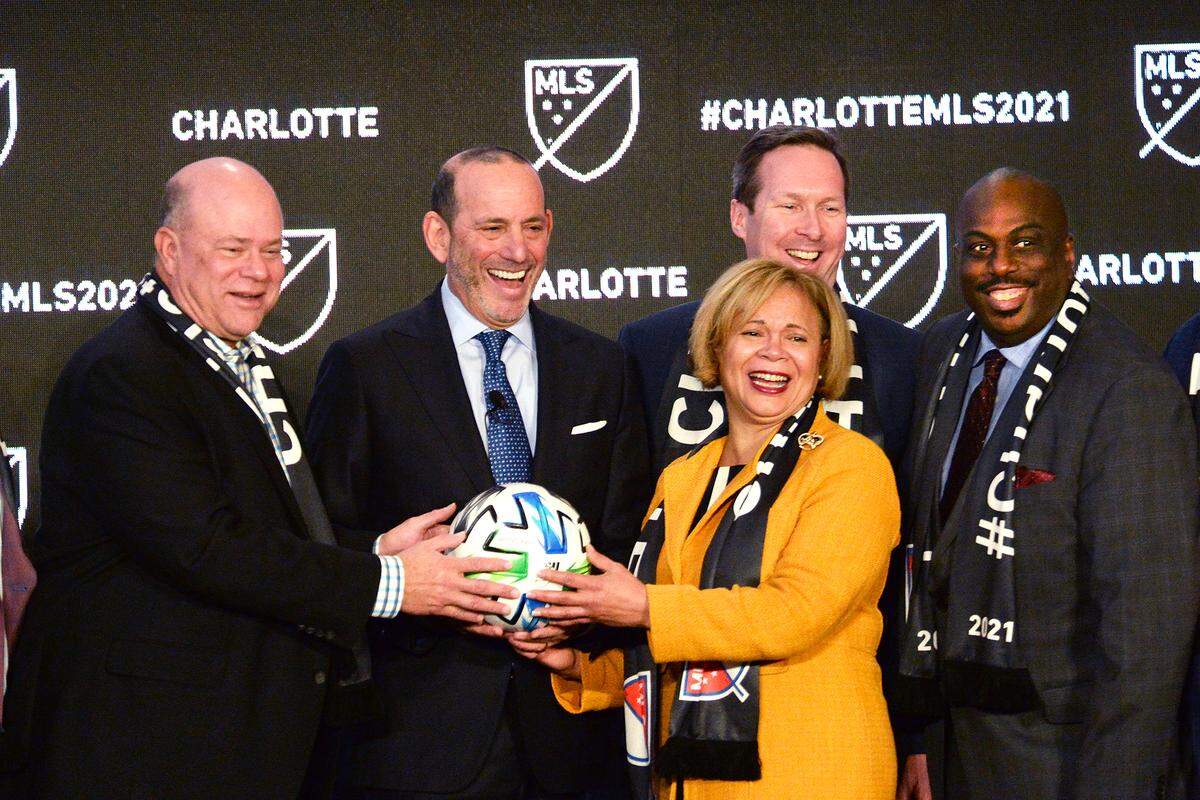
In December 2019, the City Council committed $110 million from its tourism revenue stream to landing a Major League Soccer expansion team. The money was intended for Bank of America Stadium renovations, an uptown entertainment district near the stadium and MLS headquarters at the former Eastland Mall site.
Last November, the city drastically cut back its investment to Tepper Sports & Entertainment to $35 million, with $10 million earmarked for Eastland and $25 million for stadium upgrades.
The figure was whittled down due to the pandemic’s financial toll.
MLS headquarters plans for Eastland were also scrapped, but the site will house the Charlotte FC Elite Academy headquarters with community use of fields. The land will also be used for camps, clinics, festivals and tournaments operated by Tepper Sports.
Bank of America Stadium is considered to have been privately funded with the help of the original PSL owners, who generated $52 million in deposits. The nearly 25-year-old stadium is one of the oldest in the NFL.
But any deal eventually brokered by the City Council would far transcend sports and related infrastructure needs.
“We see opportunities for Charlotte from our conversations with Mr. Tepper that would influence our conversations with him about the stadium,” Council member Ed Driggs said.
‘Strong financial standing’
Council member Larken Egleston said “it would be incredibly premature” to figure out Charlotte’s role in financing a new stadium, since no active discussions are underway with Tepper Sports & Entertainment.
Still, Egleston said he agrees with the vision Tepper outlined to reporters Tuesday: forgoing a domed stadium after the COVID-19 pandemic and embracing Charlotte’s weather, plus potentially relocating to the Pipe and Foundry site across Interstate 277 and Bank of America Stadium.
“There’s not a specific ask yet — I think it’s something we certainly anticipated would be a conversation in the coming year...” Egleston said. “I think the city is in strong financial standing right now, maybe more so than we would have anticipated a year ago when COVID began.”
When analyzing the city’s investment, Egleston said, Council members must also factor in the “social impact” for residents who live near the stadium. And Mayor Pro Tem Julie Eiselt, through text message, said the city would need to determine “the best use” of public dollars once Tepper makes his request to Council.
Charlotte Mayor Vi Lyles was not made available for an interview for this story.
Since he was appointed to serve on the council in February, Greg Phipps said no “substantive arrangements” have materialized with Tepper Sports.
Yet Phipps said Council is interested in partnering with Tepper and refining a vision for an entertainment district linking uptown and the Gateway District, a future transit hub for Amtrak, bus, light rail and streetcar.
“I would be willing to listen to (Tepper)... on what it would mean for our city and the Charlotte region to facilitate and have a continued (NFL) franchise and soccer in town,” Phipps said.
The entertainment district plan will be finalized by city leaders and Tepper Sports representatives this year, Council member Tariq Bokhari said. Live concert venues, e-sports centers, restaurants and retail businesses could all be clustered around the stadium.
“That holistic vision is going to help us sit down at a table in 2022 and piece together what the whole proposition is,” Bokhari said. “It has to boil down to the (return on investment).”
‘Presence in Charlotte’
Charlotte’s budget encompasses several tourism revenue streams, mostly taxes from hotel/motel occupancy, food and beverage, and rental cars.
At the start of the pandemic, some of those revenues dropped by 90% — and they may not return to “pre-pandemic levels” until 2024, according to the city’s proposed budget book for fiscal year 2022.
These funding buckets must be used for tourism purposes, not on affordable housing, economic development, public safety or other citywide needs, Council members emphasized.
Driggs said Charlotte currently lacks the capacity to “put up a huge amount of money from the existing hospitality tax structure.” That means Raleigh may need to get involved.
“If the team’s presence in Charlotte is on the line and we know roughly what the range is that the team is expecting from us,” Driggs said, “we would then probably have to have a conversation with the General Assembly about if we could impose hospitality taxes sufficient to serve as the debt.”
As Council member Malcolm Graham sees it, a public-private partnership with Tepper is key to protecting Charlotte’s professional sports team. Already, Tepper is deepening the Panthers’ presence in Rock Hill.
“We already lost the practice facility,” Graham told the Observer Tuesday. “I want to have NFL in the fall in Charlotte in uptown. I’m committed to working with them on a methodology for both parties.”