
These are the 4 biggest obstacles facing the Red Line transit plan in Mecklenburg
In another decade, the morning commute from Davidson, Cornelius or Huntersville to center city Charlotte might not involve sitting in an I-77 traffic jam.
The long-awaited, highly elusive LYNX Red Line commuter train could be operational by 2031, Charlotte City Council members were told by a consulting firm Monday.
That is the vision, at least, among city administrators, as they try to salvage a massive regional transportation plan — replete with hundreds of miles of light rail, greenways and bicycle networks — that for months left out collaboration with the towns in north Mecklenburg.
Residents have expected a train there for almost 25 years. An aspirational Charlotte Area Transit System plan, which is also now years behind schedule, later pegged 2030 as the opening date for the Red Line and other light rail projects.
City Manager Marcus Jones, in an interview Wednesday, emphasized the 25-mile Red Line is Charlotte’s “top priority” within the “Transformational Mobility Network,” a plan that covers a range of transportation projects throughout Mecklenburg. Of the $11.6 billion total cost for transit projects, the Red Line will cost $674 million.
But even Jones — mindful of contentious transit disagreements that need to be resolved in Mecklenburg and Raleigh — is not certain whether he can catch a train to Huntersville in 10 years’ time.
“I know that it is going to be tough...” Jones said. “Part of what we are doing is keeping this conversation going. If we don’t try to make this happen, then it definitely will not happen.”
Critics of the city’s plan, blindsided by the new timetable, have a different anticipated opening date for the Red Line: never.
Between never and a decade from now, here’s a look at the four biggest roadblocks confronting the Red Line.
Norfolk Southern resistance
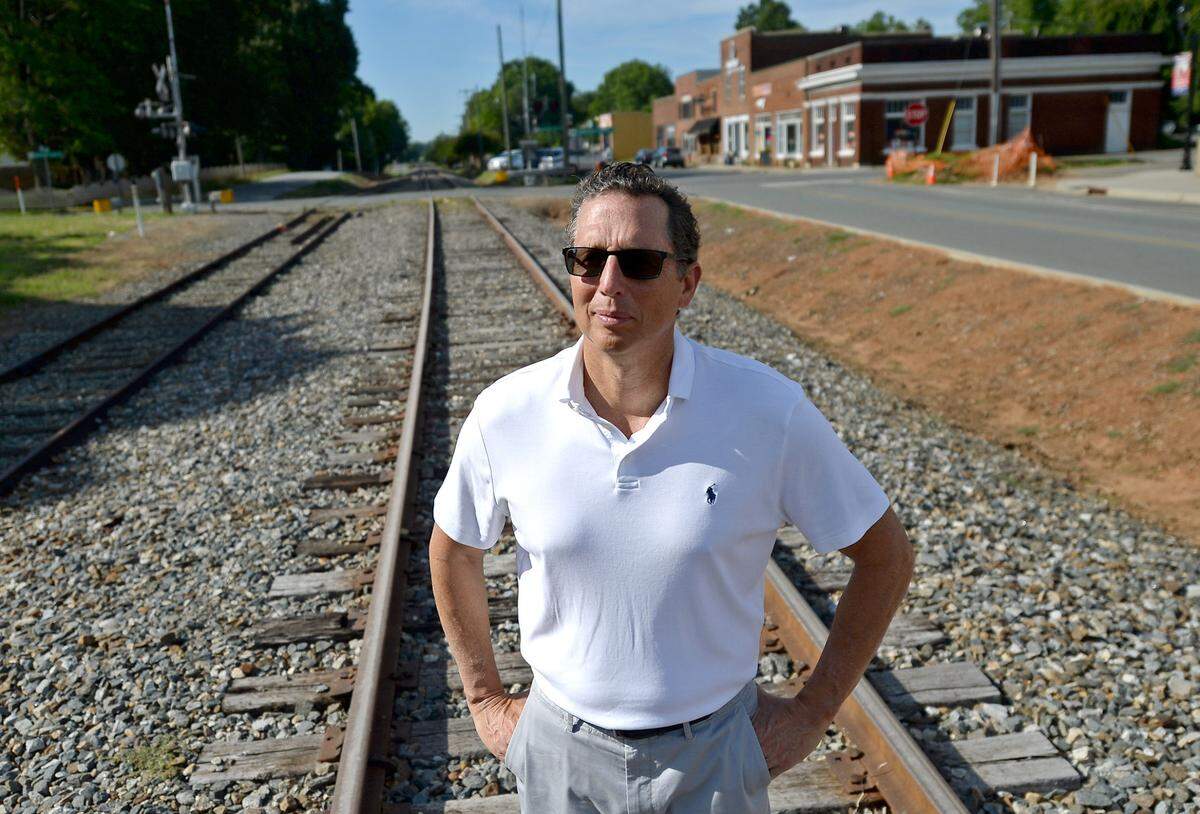
Norfolk Southern Corp. has long been an impediment to the Charlotte region’s goals for a new commuter rail, since the Red Line would need to use its mostly idle tracks.
Only occasionally do freight trains traverse the tracks, connecting Winston-Salem and Charlotte, while cutting through Davidson, Cornelius and Huntersville.
Skeptics say Norfolk Southern will likely never relent on sharing its tracks, called the O Line.
“In terms of the Red Line, you are absolutely held hostage to whatever Norfolk Southern wants to do,” said W.E. “Bill” Russell, president and CEO of the Lake Norman Chamber of Commerce. “They’ve been very resistant.”
Norfolk Southern spokesman Jeff DeGraff said Wednesday the company’s stance on sharing the tracks with Charlotte and CATS has not changed.
“Freight operations are long distance and customer-driven, which precludes ‘passenger only’ operating windows,” DeGraff had said in a February statement.
Jeff Tarte, the former mayor of Cornelius and a former state senator, said there’s “nothing to motivate” Norfolk Southern to change course.

Yet Ron Tober, a former CATS executive, believes a nudge from Gov. Roy Cooper or U.S. Sen. Thom Tillis could do the trick. “The Red Line could very well happen, if someone can get the attention of upper management at Norfolk Southern,” Tober said. “I don’t think it’s impossible to do.”
Jones said the Charlotte Regional Business Alliance is also trying to get Norfolk Southern to move past the stalemate.
Complicated funding questions
Charlotte’s $13.5 billion transportation plan revolves around a controversial funding mechanism: a countywide “1 cent for mobility” tax.
Beyond the Red Line, the money would be used for construction of the CityLYNX Gold Line streetcar, LYNX Blue Line light rail extension and LYNX Silver Line light rail, among other projects. The 29-mile Silver Line, still in the early design phase, would run between Matthews and Belmont.
North Mecklenburg leaders have balked at the funding proposal.
They often cite a countywide half-cent sales tax, passed for light rail in 1998, that ultimately did not bring public transit north of Charlotte. And that tax, retained by voters in 2007, failed to deliver on the Red Line as promised.
The new transit tax referendum, now planned for 2023, would require approval from the General Assembly.
Charlotte City Council member Tariq Bokhari, co-chair of the Intergovernmental Relations Committee, said the plan is “dead in the water,” based on feedback he’s heard from state lawmakers.
Even if the tax was OK’ed in Raleigh, Mecklenburg County commissioners would need to approve putting the referendum on a ballot. Commissioner Elaine Powell, who represents north Mecklenburg, said that will not happen without the support of her mayors.
Davidson Mayor Rusty Knox, in a statement, said he and his counterparts “will have problems” paying for the plan via a transit tax without a “substantiated guarantee” about the Red Line.
“To put a date out there for the Red Line that’s 10 years away, knowing that Norfolk Southern has not changed their posture on use of the existing corridor for the Red Line is again not fulfilling a promise that was made 23 years ago,” Knox said.
North Mecklenburg opposition
North Mecklenburg leaders say they do not trust Charlotte after years of unfulfilled promises.
“You’ve already bait-and-switched the electorate,” Tarte said, referring to past sales tax referendums. “The trust, which is what all this is predicated on, is totally broken.”
Jones, in early planning phone calls with town managers, said “it was abundantly clear that trust was an issue” dating back to the late 1990s and the half-cent sales tax. Jones said he promised to have candor in future conversations and rebuild trust.
Charlotte’s revamped transportation plan is intended as a regional economic driver, far exceeding city limits, Jones said.
But some planning discussions last year, critics say, were still Charlotte-centric and overlooked the surrounding towns. That dynamic, plus the transit tax, further strained relationships as north Mecklenburg leaders pleaded to get a seat at the table.
”What we will not do is jump on a plan where we’re dictated to by the city of Charlotte,” Russell, of the Lake Norman Chamber of Commerce, said.
Huntersville Mayor John Aneralla doubts Charlotte’s transportation plans will benefit his residents, especially when road improvements remain a top priority. Huntersville, Aneralla said, would be better off pursuing a town-specific tax from the General Assembly and dodging the countywide tax increase.
“You can’t be fooled more than one time by a bait-and-switch,” Aneralla told the Observer, scoffing at the consultant’s presentation to the Charlotte City Council.
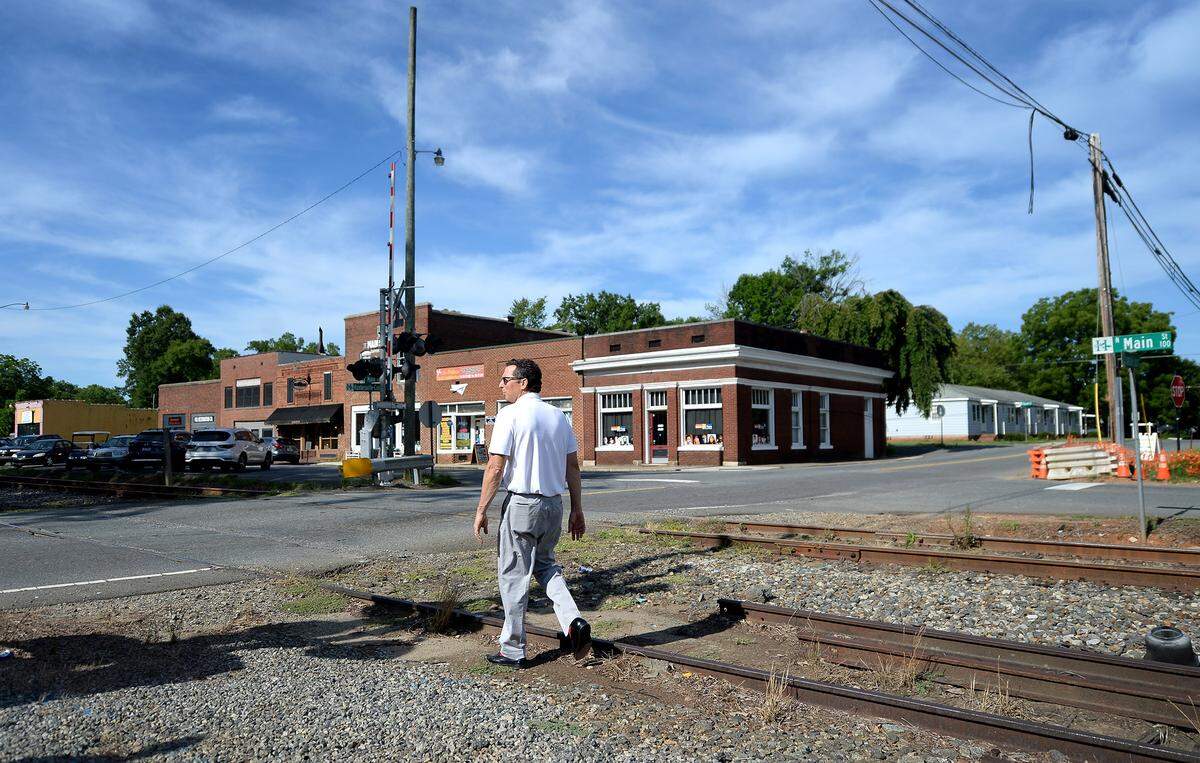
“I just think it’s disingenuous for a consultant paid by Charlotte to come up with a number that is not based on today’s reality,” he said. “It’s foolhardy to think that something is going to change just because a consultant put it on a piece of paper.”
Historically, Charlotte City Council member Ed Driggs acknowledged, Charlotte treated Huntersville poorly over the Red Line. But the recent push for transparency and inclusion can help mend relationships, Driggs said.
“I would say we got off to a very bad start,” Driggs said. “I think there is a way forward... It depends how quickly we get back down to earth. A plan like this is an incredibly ambitious and difficult undertaking.”
Concerns over technology
Finally, as Charlotte leaders redouble their pledge to construct the Red Line, some in north Mecklenburg admit they don’t even want that type of commuter train anymore.
The Red Line plan, after collecting dust for decades, should be scrapped in favor of modern technology, most town officials said.
”Maybe 100-year-old (locomotive) technology isn’t the right path,” Knox said.
Charlotte, for now, has not indicated a shifting vision for the Red Line.
Tarte proposed a hydrogen-powered train, already in use in Europe, or an underground tunnel, inspired by Elon Musk’s Boring Company. The Lake Norman Chamber of Commerce is intrigued by the tunnel technology as well, though Aneralla said there’s “too much uncertainty” to support it right now.
The need for connectivity and a solution to traffic congestion has intensified with Mecklenburg’s skyrocketing population growth — yet Tarte said infrastructure has not kept pace.
”Let’s build something that we need in 2040, 2080,” Tarte said, slamming the prospect of a diesel commuter train. “Build for the future, instead of something for yesterday. Otherwise, put in a nice horse and carriage line to Charlotte.”
Correction: An earlier version of this article referred to Jeff Tarte as mayor of Cornelius. He’s a former mayor.
This story was originally published July 2, 2021 at 11:30 AM.