
The NC budget is past due. What’s different this time between Cooper, Republicans.
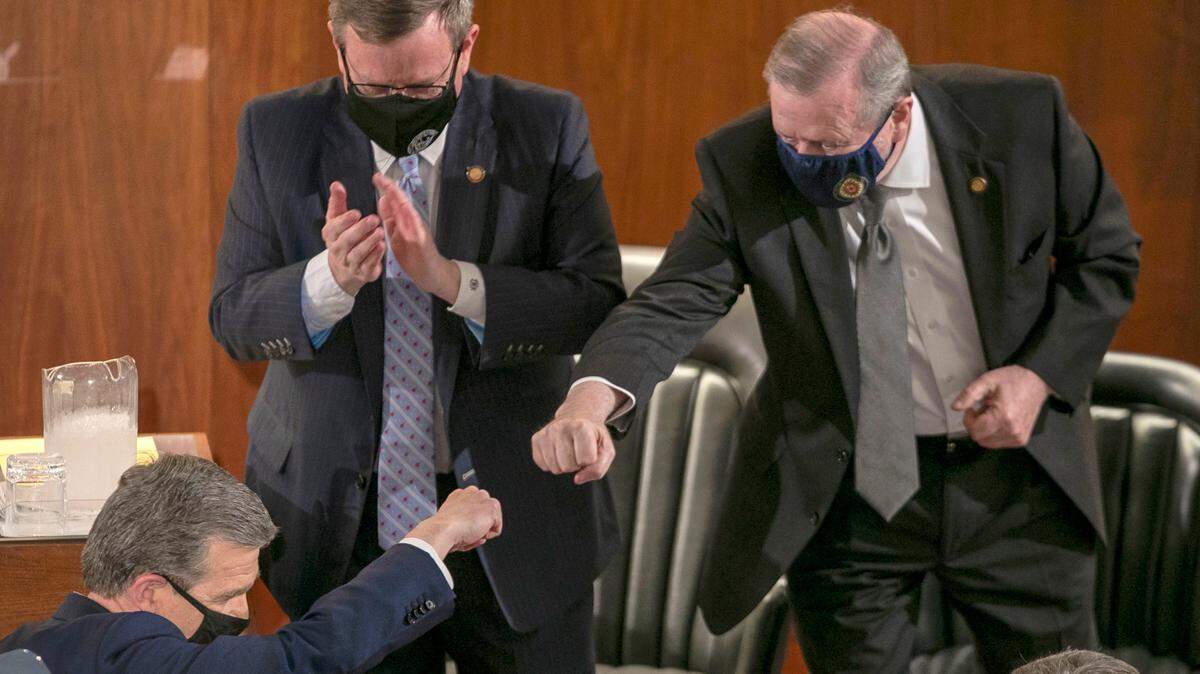
Democrats who voted in favor of the state budget have a hand in negotiating the final budget compromise.
North Carolina lawmakers are getting to the final version of how to spend $25.7 billion in taxpayer money via the state budget. It Almost two months into the new fiscal year, the House and Senate have each passed their own versions and the two chambers are now deciding what will be in the final version they’ll send to Gov. Roy Cooper’s desk.
It appears that some Democrats will have more of a say in the final budget process led by the Republican-majority General Assembly, including the Democratic governor.
At stake are raises for tens of thousands of state employees, including teachers. The budget is also likely to include tax cuts for individuals and corporations. And the state will also decide how to spend more federal coronavirus relief funds, likely on bonuses for workers.
The General Assembly is now in the “conference” budget process, in which the House and Senate, along with input from Cooper, work out a final version of the budget they plan to pass that the governor will sign into law. Both chambers have appointed their conference committees, who will do the behind-closed-doors negotiating on the budget to come up with a consensus. The committees each have some Democrats on them — those who are already friendly to the Republican-written budgets.
Both chambers passed their budgets with enough votes to override a veto, which requires a three-fifths supermajority. The House budget has higher raises for teachers and other state employees, along with lower tax cuts, than the Senate budget.
Democrats on committee voted for budgets
The Senate’s conference committee includes four Democrats. All four of those Democrats voted for the Senate budget. They are Sen. Don Davis, Sen. Kirk deViere, Sen. Paul Lowe and Sen. Ben Clark.
The House’s conference committee also includes several Democrats, all of whom voted in favor of the House version of the budget. The nine Democrats are Rep. Cecil Brockman, Rep. Brian Farkas, Rep. Charles Graham, Rep. Howard Hunter III, Rep. Marvin Lucas, Rep. Garland Pierce, Rep. William Richardson, Rep. Shelly Willingham and Rep. Michael Wray.
Farkas, a Pitt County Democrat, said in a statement after the vote last week that, “this bill is not perfect, but I am hopeful leaders from both chambers will now work in good faith with Governor Cooper in the conference committee to negotiate a final budget that both Democrats and Republicans can agree on.”
Farkas said that the House budget’s funding for a new building for East Carolina University’s Brody School of Medicine was “the biggest win for Pitt County.”
That echoes what deViere said when he voted for the Senate budget — that it was not perfect, but part of the process.
Some Democratic priorities made it into the House budget. A Senate Democrat’s failed amendment to restore master’s degree pay for teachers ended up there, as did paid parental leave to teachers who are new mothers.
In 2019, Cooper vetoed the state budget and it was not overridden. Spending levels remaining the same as the 2018 budget, along with billions of dollars in surplus and an influx of federal money, means the state is flush as it plans its financial future for the next two years. The 2019 budget fight was a stalemate that lasted into 2020. In the end, a series of piecemeal budgets were passed and teachers did not get raises.
This time will be different, state leaders say.
Cooper isn’t saying he’ll just sign the budget, though.
“We’re going to work on getting a budget, but at the end of the day we’re not going to enact a bad budget and will veto it if we have to,” he said.
“There’s a number of policy issues that would take hours and hours of meeting time and many amendments to try to get right that really ought not to be in the budget,” Cooper said. “And you can see from my budget we want to invest more in education and educator salaries. We want to expand Medicaid, we want to make sure that the children have a sound basic education. My priorities are pretty much out there and have been out there for awhile, and I think the leadership knows that.”
He wants lawmakers to drop provisions that impact his issuing states of emergency. That has been a constant issue for the past year and a half as Cooper issued executive orders imposing statewide restrictions on businesses, a mask mandate and gathering size. There are currently no statewide mandates or restrictions related to the coronavirus pandemic. Cooper let the last of the restrictions expire in July, instead letting local jurisdictions impose any new mask mandates or other rules.
“The key thing is they’re going to let me and Senate, House Democrats actually see the budget before they ... vote on it. Also understanding there are things I want to change, see moved, added, and they want to negotiate things at that point,” Cooper said Wednesday.
“What’s so different about this situation, is that we want to have these discussions before the budget is voted on and then I would have to make a decision whether to veto or sign based on a budget I really have not had a chance to see or have any input in. I think that we realized that process didn’t work last time, and it needs to happen this time,” he said.
‘Some accommodation’
House head budget writer Rep. Jason Saine, a Lincolnton Republican, told The N&O earlier this summer that Cooper’s office has been in ongoing talks with budget leaders and has had a “considerable amount of input.”
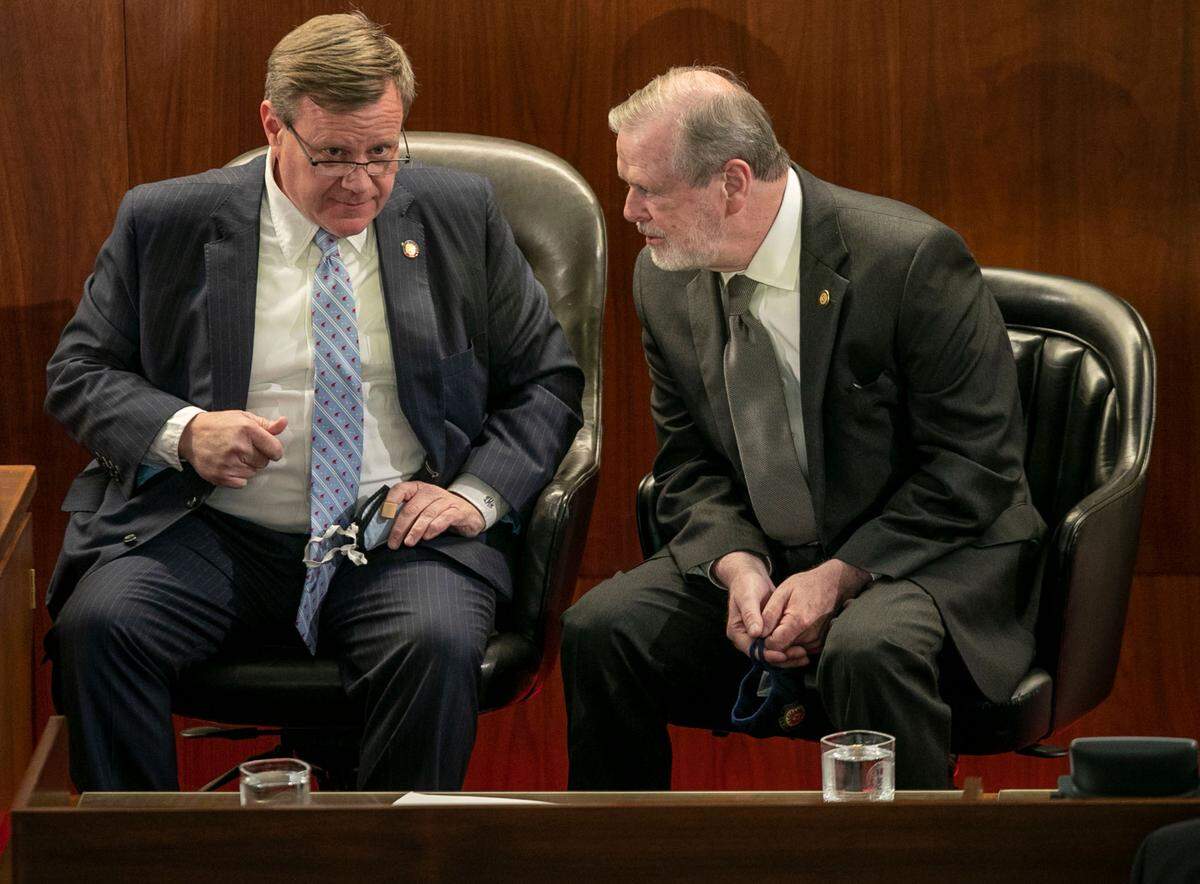
Berger told reporters on Tuesday that budget writers want the governor to weigh in after the two chambers reach a tentative compromise, but before the votes.
“This is a little different from the way we’ve done it in the past,” when lawmakers tried to negotiate a deal with Cooper after he vetoed the budget, Berger said.
“Hopefully we can give him an idea of what we’re going to agree to and let him voice his thoughts on those things, and see if there’s some accommodation that can be made to address the concerns,” he said.
Berger said he’s hopeful that the two chambers can resolve most of their differences by the end of the month. If an agreement can be reached with Cooper in the following weeks, the goal is to have final floor votes on the budget around Sept. 9.
But first, the House and Senate have to work out their own issues.
Berger told reporters Tuesday that one of the key points of contention between the chambers involves how certain budget items should be funded. He pointed out that the House budget opted to use the State Capital and Infrastructure Fund, or SCIF, to pay for programs that the Senate budget funded from other sources. Because SCIF projects weren’t included in the total spending cap that the House and Senate previously agreed to, the House budget ultimately spends a bit more than the Senate wants.
The budget timeline will also dictate when this year’s session will finally wrap up. Berger said that if a compromise budget can be enacted by mid-September, lawmakers would likely adjourn while redistricting committees conduct public hearings on proposed congressional and legislative maps. Then the full chamber could vote on maps in October. But if the budget process drags on longer, there might not be a break before the redistricting session.
This story was originally published August 19, 2021 at 11:00 AM with the headline "The NC budget is past due. What’s different this time between Cooper, Republicans.."
.jpg)