Listen: NC lawmaker and Afghanistan veteran on ending the longest war
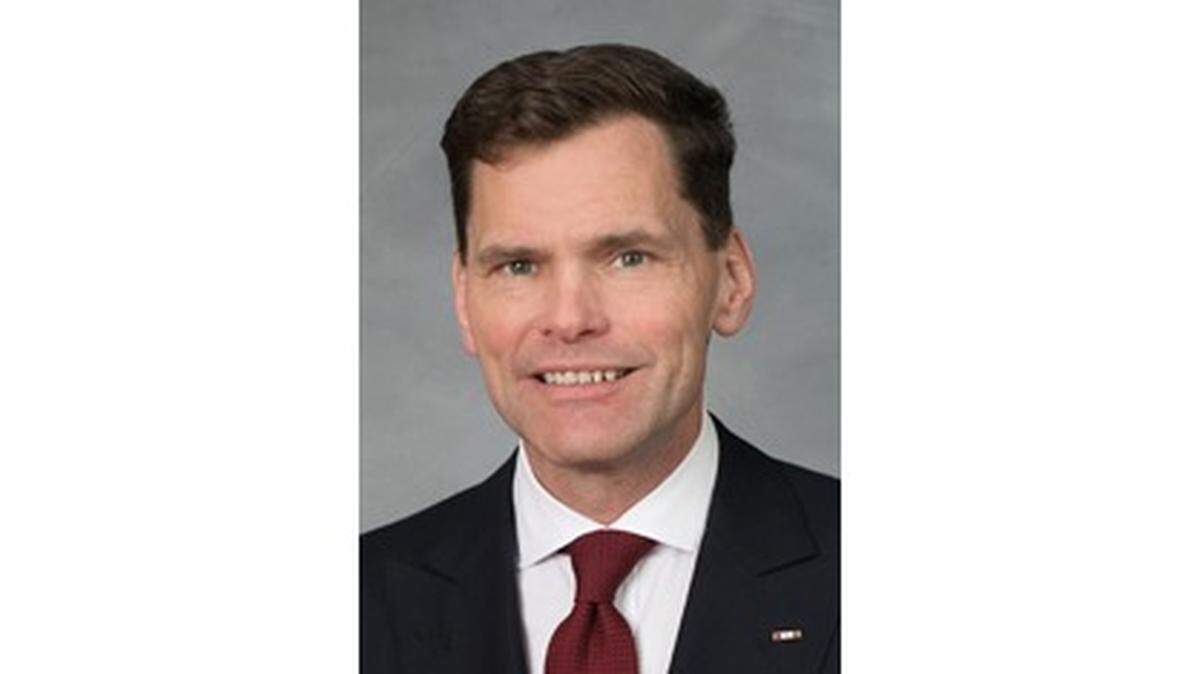
With the news of Afghanistan’s fall Sunday, Rep. Grier Martin has tried not to “think too much or feel too much” about what’s happening in the country where he served in the military nearly 20 years ago.
Martin, a Democrat from Wake County and Afghanistan veteran, was deployed in 2002, shortly after his daughter was born. But he’s tried to unplug from the news there this week.
“It’s a strange feeling, I think for most Afghanistan veterans,” Martin said. “I think I’m going to wait until the situation on the ground there settles.”
Martin spoke on The News & Observer’s politics podcast about his his time in the country, and how he’s thinking about what’s happening there now.
Each week, the Under the Dome podcast has two episodes — one on Monday that previews the upcoming week in state politics and one on Friday that dives deeper into a topic.
This conversation has been edited for length and clarity. You can hear the full conversation wherever you get your podcasts, or at link.chtbl.com/underthedomenc.
Sherman: I’m really wanting to know your perspective of what’s going on in Afghanistan right now. But, first, could you tell me about how and when you joined the military?
Martin: I joined the military. In 1991, I had done ROTC at Davidson College and graduated in ‘91, and was commissioned as a second lieutenant into the reserve component as a field artillery officer.
Sherman: How long were you in Afghanistan?
Martin: I deployed to Afghanistan in November of 2002. And got back very, very end of May of 2003.
Sherman: What do you remember about 9/11? You deployed so quickly after that, what do you remember from that day and the months following?
Martin: I think my memories are not dissimilar to just about everyone else’s. I remember where I was in my office at work in Raleigh, and a co-worker came in and said that a plane had hit one of the World Trade Center buildings. Lots of speculation about what it might or might not have been, but no one was sure.
But then, of course, when the second tower was hit, it was pretty certain that our nation was under attack. And in the next few days, I called my Army Reserve personnel manager and volunteered for active duty with the Army.
Sherman: How do you think your time in Afghanistan affected you?
Martin: In many ways, I think it gave me a deeper appreciation for how truly lucky we are here in the United States. My daughter had been born right before (I deployed), and I realized that I was very fortunate to be able to raise her in North Carolina, in the United States, where I felt comfortable that she would be safe, that she would get a good education. And that even as a woman, that she would be able to get a get a good job, and raise her own family down the road. And for all children in Afghanistan, particularly female children, that’s not something that their parents could have a hope for them.
I gained an appreciation for the color green. Afghanistan was suffering a drought while I was there, and it was very brown and dusty and dirty. I gained an appreciation for the incredible men and women that I served with in our military from all around America — really, in many cases from all around the world, and I served with many immigrants from other parts of the world — how incredible a team that we make incredible things we do when we function together as a team, and how that lesson applies for us as a nation outside of our military endeavors. It reinforced that the United States can be a force for good.
Sherman: In light of Afghanistan’s fall to the Taliban following the Biden administration’s removal of troops there, what do you think people should know about the war in Afghanistan?
Martin: They should know that, at 20 years long, almost, that it had many phases, many different components, ranging from the beginning where the mission was to just remove Afghanistan from being able to launch a terrorist attack or be the base for a terrorist attack against the United States. And then, of course, to capture or kill Osama bin Laden, and then into something different. That over the course of several administrations, the efforts seem to be to help create a stable Afghanistan, with part of the goal being to continue to prevent it from being a place where terrorist attacks can be launched against America or other parts of the world, but also because of the inherent good that that would provide for the Afghan people.
I hope that the American people know that we succeeded, and and in part of that mission — even if at the current moment, it looks like there’s not going to be a stable Afghanistan in the near or medium term future. I hope they also know that over 6,000 Americans lost their lives in Iraq and Afghanistan. And I hope they know that the Afghan people, most of them are just like Americans. They want what’s best for their families. They may not care as much about politics as they do about the same things that I cared about: a safe place to raise their families.
Sherman: What have you been thinking about, watching this play out over your phone or on your TV?
Martin: I have been intentionally trying not to think too much or feel too much about it. It’s a strange feeling, I think for most Afghanistan veterans. I think I’m going to wait until the situation on the ground there settles.
My only real thoughts now are hoping that we can get all the Americans in Afghanistan safely out — (including) the troops that have gone over there now to help facilitate that departure — and also that we can get all the Afghans who helped U.S. coalition forces safely out of Afghanistan, also, along with as many Afghans as we can, who might be threatened by the Taliban regime.
That’s the work of several weeks to perhaps months, I think. But at some point, I’m gonna see where Afghanistan is, and then see what we’ve learned, what those in the media have come up with and analyzed about what’s happened since U.S. forces departed, and see what that means for my role and my country’s role in this long war.
Sherman: What do you mean by that, in terms of your role?
Martin: What was the effect of the American presence in Afghanistan? What was the effect of my presence, and my fellow soldiers’ presence, in Afghanistan? How much of a force for good were we for the American people, the Afghan people and the people of the world? Were the thousands of American lives lost worth it? Were the billions and billions of dollars worth it? Was the time away from my wife and newborn daughter worth it?
I feel strongly now, at least with regard to that last one, that it was worth it as much of a strain on my family as it was, it was worth it. But I will want to see what the lessons learned are for future American policy.
The use of force is not something that we should resort to lightly in America, and we should understand that even what appears to be an action of potentially short to medium duration can end up being one of decades. Any time we enter into armed conflict, we need to bear in mind that the conflict itself could last longer than we anticipated, and also that even after the conflict ends that the costs of war will continue, with health care for wounded veterans, with benefits for veterans, educational, health care, and otherwise, that there’s significant costs associated with it.
Sherman: I know for me, scrolling through Twitter and watching TV, watching this play out, it feels really heavy, and I wonder how you feel as a veteran and as someone who is watching the same things that I know I feel are awful to watch.
Martin: Heavy is a good word, Lucille. As I said, I normally try to be one who examines my thoughts and second guesses them and challenges them, and I’m sparing myself that right now. I’ve found myself turning off the news when news about Afghanistan comes on now. I think (I’m) just gonna wait a little bit before I’m ready to fully process it, and there’ll be time for that.
Right now, I’ve got my hands full at the General Assembly anyway, so the mess that we’ve got on Jones Street certainly is providing a decent distraction from what’s going on in Afghanistan, where I have no ability to influence what’s happening there.
When I was there, and since then, have taken pride in hoping that I was doing something to provide a better life for the people of Afghanistan. That wasn’t my main mission there. My main mission there was to keep my country safe, but without a doubt, I have taken great pride and joy in hoping that I played some small part in making a better world, a better country for the people of Afghanistan. And that is certainly something that is not available now.
And that’s tough. It’s not as tough as what the Afghans are going through now, or even close, but it’s something that I suspect a lot of my fellow veterans — Afghanistan veterans — are feeling. Like me, they were there to keep our country safe. I know, in my job, I had a great deal of interaction with the Afghan people, as did many other veterans, and we’re really, I think, feeling for them and feeling for, I don’t know if it’s a sense of failure, or not, but a sense that we weren’t able to do everything we thought we’d be able to do in Afghanistan.
Sherman: Do you still know anyone who’s in the country?
Martin: Not that I know of, no. Well, in my legislative capacity, I had the joy of meeting several female members of the Afghan parliament and hosting them for dinner at my house. One of the great joys of my life and honors was getting to introduce my daughter to these brave women. I don’t know what their status is, how safe they are, but they’re still there.
Sherman: With Raleigh beginning to receive some refugees. What do you think people here can be doing to help them? What role do you think North Carolinians can play in this?
Martin: There’s a lot of things we can do. The News & Observer had a very good article a few days ago, with a list of resources that we in Raleigh and the Triangle area can get in touch with to help Afghan refugees. There’s three relief organizations locally that are working with the U.S. State Department to help resettle refugees. I’ve been in touch with those agencies, working to get in touch with them, to figure out how state government can help them.
Sherman: Is there anything else you want people to know about the current state of things?
Martin: Well, I would say, it’s not a bad idea if you know any Afghanistan veterans, check in on them. We veterans are a diverse group. We’re each experiencing things differently. We’re representatives of a very diverse country, so I’m only speaking for one veteran here, but check in on them. See how they’re doing.
And also, if any of my fellow Afghanistan veterans are listening out there and you’re feeling a little strange and want someone to talk to, go to mentalhealth.va.gov, and there’s a good set of resources there that can point you in the right direction. That applied before the current events Afghanistan, but certainly necessary all the more so now.
For more North Carolina government and politics news, listen to the Under the Dome politics podcast from The News & Observer and the NC Insider. You can find it at link.chtbl.com/underthedomenc or wherever you get your podcasts.
This story was originally published August 20, 2021 at 3:49 PM with the headline "Listen: NC lawmaker and Afghanistan veteran on ending the longest war."