
An unlikely debate for Democrats is lighting up this NC Congressional race
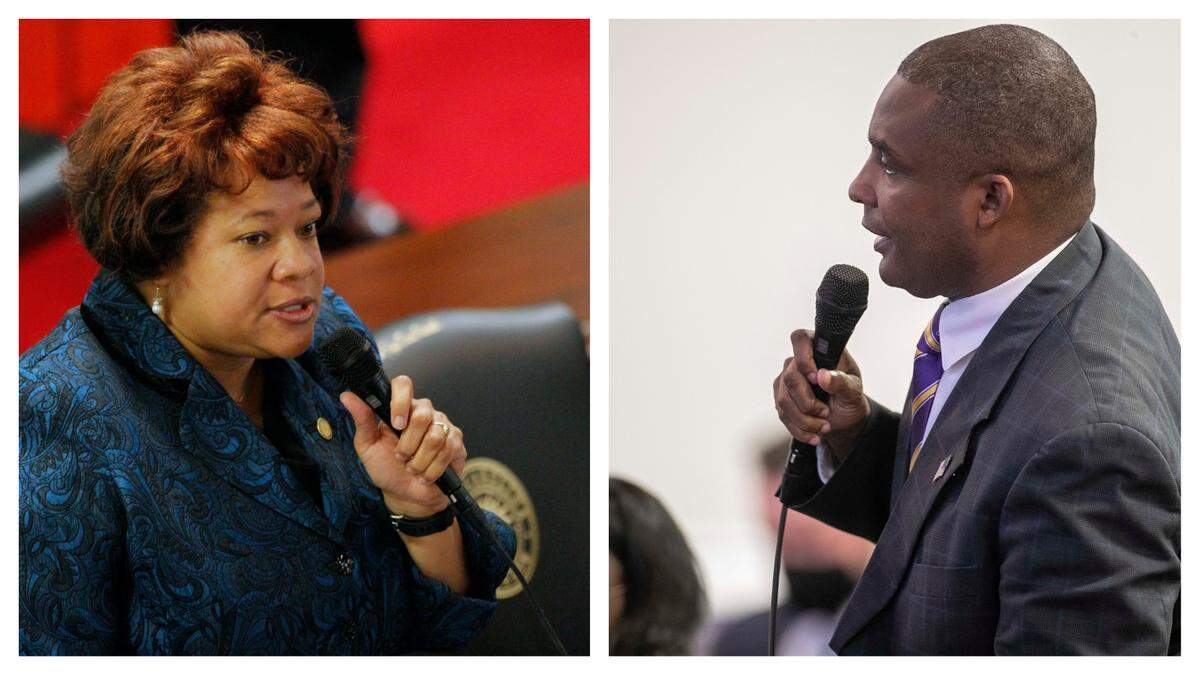
A North Carolina Democratic primary may seem an unlikely place to find sparring over abortion but it’s playing out in a Congressional race where two contenders are fighting for a key endorsement.
In District 1, former state Sen. Erica Smith’s campaign, along with pro-choice groups, criticize N.C. Sen. Don Davis’ record, including a vote two years ago to block certain taxpayer dollars from health care providers who provide abortions.
Davis, though, says he supports access to abortion and reproductive health care. As a state senator, for example, he voted against a bill, which later became law, that increased the wait period for anyone seeking an abortion and placed more regulations on doctors.
But with past support for granting state funding to anti-abortion pregnancy clinics, Davis “could not be counted on to protect or expand reproductive freedom for the people of North Carolina,” said Paige Johnson, the southeast regional chief program officer for Planned Parenthood Votes! South Atlantic, in a statement.
Davis, in an interview for the Observer, pushed back. He said his record shows an affirming stance on reproductive health, and he promised that he would vote to codify the landmark abortion case Roe vs. Wade if it ever came before Congress.
“I want to be perfectly clear: I’m not going to have any opponent define my record,” he said. “My record speaks for itself, and particularly I’m not going to allow any of my opponents to distort my record.”
The efforts to paint him as anti-choice, he said, were “disingenuous,” adding that voters in northeastern North Carolina trust him to stand up for reproductive rights.
Two other Democrats, Jullian Bishop Sr. and Jason Spriggs, are also running in District 1. The district’s current representative, G.K. Butterfield, is not seeking reelection and has not yet made an endorsement.
Davis and Smith are considered front-runners, and District 1 in northeastern North Carolina leans heavily Democratic. The two are seen as the most likely to earn Butterfield’s endorsement, if he gives one, and that would provide a significant advantage to get to Congress.
Smith’s campaign says she would “fight to protect Roe vs. Wade, to protect reproductive freedom and reproductive healthcare,” in Congress, if elected.
Morris Katz, Smith’s campaign manager, added: “Don Davis’ past record to vote to defund Planned Parenthood and override Gov. Cooper’s veto of Republican anti-abortion legislation speaks a lot louder than anything he might be trying to say now that he’s running for Congress.”
Roe v. Wade, abortion laws
In an interview with the Observer, Davis pointed to his vote against a bill in 2015 that was condemned by pro-choice advocates and Democratic politicians as chipping away at reproductive freedom.
Among other things, the bill, which then-Gov. Pat McCrory signed, tripled the waiting period for abortions from 24 to 72 hours and increased the certification standards for physicians who provide abortions. Opponents claimed the certification changes were unnecessary and designed to restrict access to legal abortions.
“I’ve stood up against ... harmful mandates in terms of waiting periods (and) against criminalizing healthcare providers,” he said.
Davis added that a family member of his died because of complications during pregnancy when he was young.
“This is near and dear and personal, so I really do take all this to heart and I want to be very clear about my support for reproductive health,” he said.
Johnson, with Planned Parenthood Votes! South Atlantic, though, pointed to other parts of Davis’ record that raise questions about his stance on abortion.
In 2019, he voted for a bill that prevented state family planning money from going to organizations that provide abortions. The move was seen as a direct shot at Planned Parenthood — and veiled in language that prevented the sale of fetal body parts after an abortion, despite that already being illegal.
Davis was also the only Senate Democrat to vote ‘yes’ on a Republican budget in 2018 that allocated more than $1 million to anti-abortion pregnancy clinics, and was one of four Senate Democrats who voted ‘yes’ on the 2017 Republican budget, which increased funding for these clinics dramatically.
He did, though, vote against an effort to override Gov. Roy Cooper’s veto of both of those budgets.
Sarah Preston, the executive director of the progressive women’s political group Lillian’s List, pointed to a bill in 2019 that instructed physicians about how to care for newborns who survive an abortion, and aimed to enact criminal punishments for people who didn’t comply.
Democrats said at the time that the bill would discourage medically necessary abortions.
Davis was the only Senate Democrat to vote to override Cooper’s veto of that bill. House Republicans failed to get enough votes to kill Cooper’s veto.
“His record is mixed at best,” Preston said, adding that his actions surrounding that bill prompted her organization to consider finding an opponent who could oppose him in the Democratic primary for state senate.
Asked whether he regrets any of his previous voting record, Davis reiterated that his record speaks for itself and that efforts to paint him as anti-choice were disingenuous.
The issue surrounding Davis’ stance on abortion comes as some states are imposing anti-choice laws that include shortening the period during which women can get abortions.
State legislatures are taking these actions even before the U.S. Supreme Court weighs in on a Mississippi law that would ban abortions after 15 weeks of pregnancy. That decision is expected to come this summer.
Preston said Congress’ role in protecting reproductive freedom will depend on the court’s decision. If pro-choice candidates win a majority in 2022, they could take steps to protect abortion rights. If pro-life candidates win, however, states will likely be allowed to continue limiting access.
As Pew Research Center found in 2020, American voters are much less likely to hold staunch partisan views on abortion than members of both parties in Congress.
“Almost all Democrats in the U.S. Senate and House of Representatives stand with their party in support of abortion rights, while almost all Republicans reflect their party’s position against abortion rights,” Pew reported. Meanwhile polling that year found 35% of Republicans or Republican-leaning independents, and slightly less than one-third of Democrats or Democratic-leaning independents, agree with their party’s platform on abortion. A significant portion of those polled, from both parties, said they don’t align with abortion views by either the GOP or Democratic parties.
This story was originally published March 9, 2022 at 2:07 PM.
.jpg)