
Top Charlotte prosecutor said he won’t pursue abortion cases. What’s his promise worth?
CLT Politics is a new weekly analysis of political news and events in Charlotte and across the region published Thursday by The Charlotte Observer.
Amid the news coverage of the U.S. Supreme Court’s decision to overturn Roe vs. Wade, an important wrinkle emerged from Mecklenburg County’s top prosecutor.
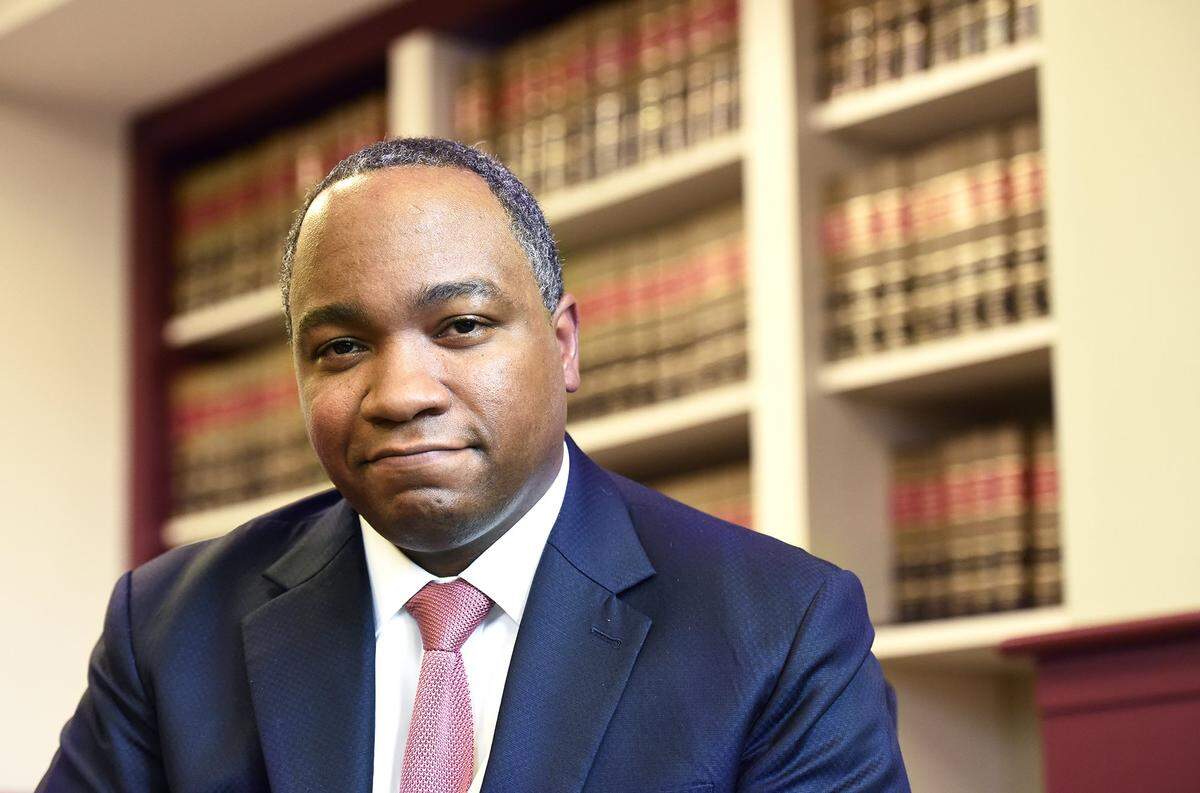
District Attorney Spencer Merriweather last week told my colleagues, Mike Gordon and Charlotte Kramon, his office wouldn’t enforce a law criminalizing abortion. The procedure remains legal in North Carolina, but GOP legislators signaled that they’ll make it a priority come January when they’re back in regular session.
“I don’t see what is gained by putting a doctor or a woman on the stand to discuss something as personal as a health procedure or prosecuting them for it,” Merriweather told the Observer last week.
Merriweather’s statement and those of other prosecutors across North Carolina and the U.S. at minimum send a signal: making abortion a prosecutable offense might not be that easy, at least not in every county, Susan Roberts, a political science professor at Davidson College who specializes in reproductive rights, told me.
Whether his assurance will have real-life implications could be a big deal here in Charlotte.
What’s the future of abortion access in NC?
At this juncture, the future of abortion rights in North Carolina remains uncertain. The November elections could give Republicans enough seats in the General Assembly to override Gov. Roy Cooper’s vetoes should they choose to pursue anti-abortion legislation.
Past that, the 2024 elections could put a Republican in the governor’s mansion, further opening the door to legislation that curtails access to abortion or makes it illegal.
Without enforcement from local prosecutors, though, could the impact of those laws be dampened in some counties?
Carissa Byrne Hessick, a law professor at the University of North Carolina, cautioned that Merriweather’s comments aren’t binding. His office could change its priorities and prosecute women who have or doctors who facilitate abortions. But taking Merriweather at his word, the potential for conflict between pro-abortion rights local officials and the General Assembly appears, at minimum, present.
Ann Webb, senior policy counsel at the ACLU of North Carolina, said we “don’t know whether there would be an attempt to circumvent those prosecutors,” but she believes some legislators will do “whatever it takes” to restrict access to abortion if the opportunity presents itself.
“I have no doubt that creative minds will ... (try to) find ways to get around people at all levels who are resisting this harmful policy,” she said.
How would enforcement work?
The hypothetical scenario could bring a fight similar to House Bill 2, commonly called the bathroom bill. Then, Charlotte and the legislature clashed in spectacular fashion over nondiscrimination ordinances passed by cities and towns. As a result, Charlotte and North Carolina lost out on millions of dollars as dozens of concerts, large conferences and business expansion opportunities went elsewhere because of corporate protest over the bill, the Observer reported in 2017.
House Bill 2 didn’t spell out how to enforce the part of the bill regulating which bathrooms transgender people were allowed to use.
How the state would prosecute a woman for having an abortion without the compliance of local law enforcement also isn’t clear. Attorney General Josh Stein’s website says his office does not have the authority “to prosecute specific crimes unless requested to do so by the local district attorney.”
Asked about potential paths forward, Webb reminded me the ability of the state to prosecute someone for a crime rests on more than a district attorney.
From an arrest to issuing a charge to a jury handing down a conviction, there are several layers of people that have to be on board for our criminal justice system to work properly — and that’s how the founders of our country designed it, she said.
“You need all of these different actors to agree to actually deprive someone of liberty,” Webb said. “It’s a feature, not a bug.”
This story was originally published June 30, 2022 at 6:00 AM.
.jpg)