Would NC prosecute abortion like a crime? Here’s where district attorneys stand.
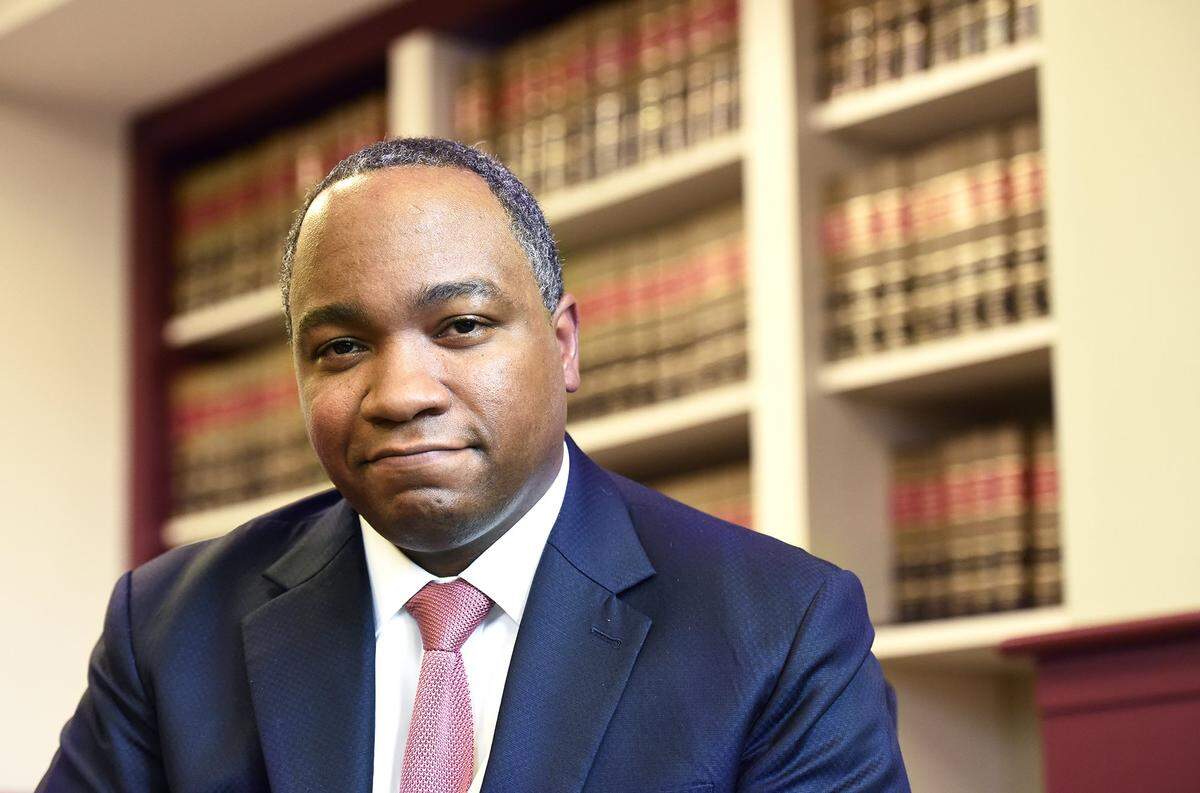
If the North Carolina legislature somehow passes a law criminalizing abortion, Charlotte-Mecklenburg’s top prosecutor says he won’t enforce it.
District Attorney Spencer Merriweather told The Charlotte Observer that taking doctors and patients to court over personal health care decisions could strain his office’s ability to handle other crimes and do long-term damage to the reputation of the courts.
“I don’t see what is gained by putting a doctor or a woman on the stand to discuss something as personal as a health procedure or prosecuting them for it,” Merriweather said. “I don’t see how that would be functionally possible.”
The Supreme Court’s decision on Friday to overturn the 50-year-old abortion protections in Roe v. Wade is expected to set off a frenzy of abortion restrictions or outright bans in conservative states. Thirteen have passed bans that are expected to be put in place shortly, according to the Washington Post. South Carolina has a ban on abortion after six weeks of pregnancy tied up in the courts that is now expected to be enforced.
As of now, North Carolina remains one of the last states in the South where abortions remain legal. How long remains to be seen. An N.C. law banning most abortions after 20 weeks that a federal judge ruled unconstitutional in 2019 could be reinstated, although it’s unclear how quickly that could happen, The News & Observer reported.
Republican legislative leaders already are promising an aggressive anti-abortion agenda for next year.
“North Carolinians can ... expect pro-life protections to be a top priority of the legislature when we return to our normal legislative session in January,” House Speak Tim Moore, a Kings Mountain Republican, said Friday as he welcomed the Supreme Court’s ruling.
Gov. Roy Cooper, a Democrat, pledged to do what he can to stop them. “I will continue to trust women to make their own medical decisions as we fight to keep politicians out of the doctor’s exam room,” he said in a Friday statement.
Before any new abortion law is considered here, Merriweather said he hopes the General Assembly would consider the impact of prosecuting physicians and women over “something so personal, so invasive ... how it not only would look to a jury of 12 but to the community at large, and what that would say about how our court system would handle the privacy and dignity of every member of this community.”
NC district attorneys on abortions
Merriweather, a practicing Catholic who describes himself as pro-choice, becomes the latest district attorney from one of the state’s bigger counties to publicly oppose criminalizing abortion in the state.
Durham DA Satana Deberry again voiced her opposition to an abortion law in North Carolina last month.
“Criminalizing personal health care choices around abortion creates untenable choices for women — particularly those experiencing sexual assault and domestic violence — and undermines trust and fairness in our criminal legal system,” Deberry said in a statement.
Other district attorneys have joined her, including Todd Williams of Buncombe County.
“The criminalization of abortion would erode trust in the rule of law and would end a long-settled right to privacy and bodily autonomy that has been the law of the land for more than 50 years,” Williams said in a statement to The Citizen Times of Asheville on Friday.
Guilford DA Avery Crump told Triad City Beat before Friday’s Supreme Court ruling that she would not seek to prosecute or “revictimize” women and children for accessing medical care.
“As a woman and mother I reaffirm my stance on a woman’s fundamental right to make decisions related to her reproductive health,” Crump said. “It is her choice.”
Wake County DA Lorrin Freeman, in a text message to Raleigh’s Indy Week, said she could not comment on potential prosecution because she is named in a Planned Parenthood lawsuit on five abortion-related state laws.
Other Charlotte-area district attorneys, including Travis Page of Gaston County, Scott Reilly of Catawba, Sarah Kirkman of Iredell and Roxanne Vaneekhoven of Cabarrus, did not reply to an Observer request for comment. The office of Union County DA Trey Robinson declined comment.
DA: Duty is to appropriate use of resources
Merriweather, who was recently elected to his second four-year term, says he spent the bulk of his career prosecuting rape cases.
“It put me in the position of calling those who had awful crimes committed against them to talk about very personal things,” he said. “ Not only did it rob them of their dignity having to do that, quite frankly it was difficult for the prosecutors to ask those questions.”
Merriweather said it is not his role to tell the legislature, “You pass a law, I’m not following it.” However, he says, one of his elected responsibilities is “determining what is an appropriate use of court resources, and what puts us in the best circumstances to uphold justice and the dignity of every person who resides here.”
There’s also this: Before a case could be prosecuted, he said, “You’d have to find a law enforcement agency that would consider making an arrest.
“It starts there.”
This story was originally published June 24, 2022 at 5:00 PM.