
After nail-biter election in south Charlotte, observers look to November and beyond
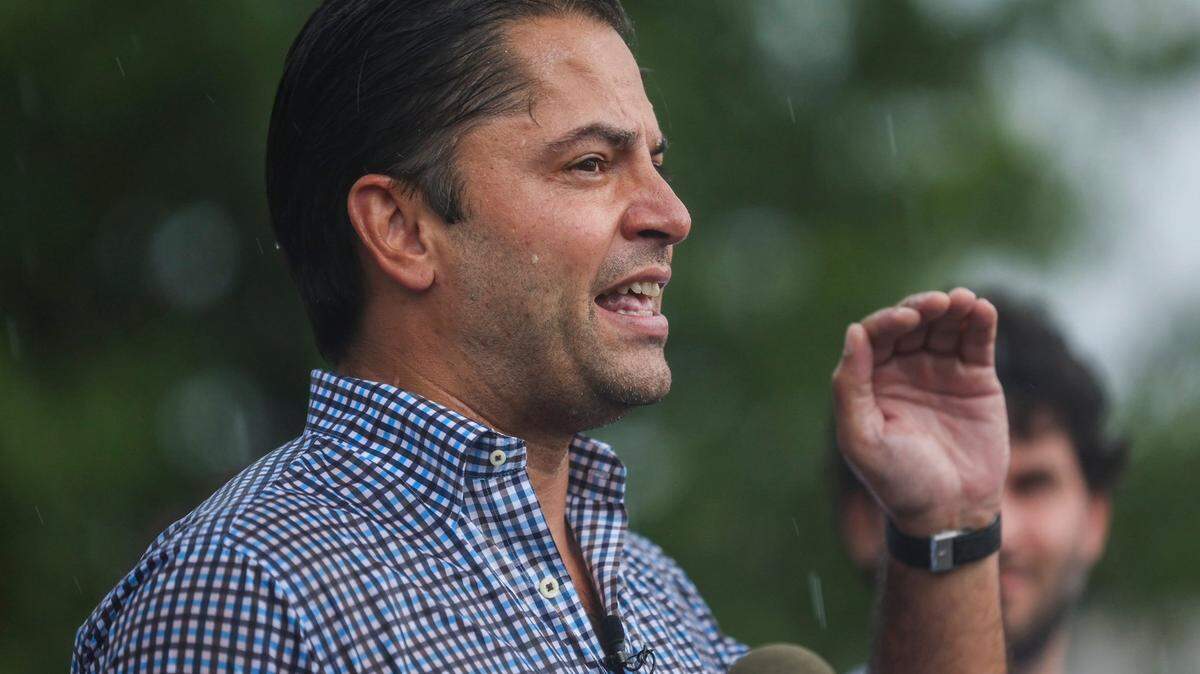
Republican City Council candidate David Merrill looked down at his Fitbit Tuesday night to check his heart rate. It was at over 100 beats per minute. Normally, he’s sitting right around 60.
The energy at the Republican watch party for City Council candidates was palpable. Candidates stood on chairs and gave speeches to roaring applause at the Selwyn Pub in south Charlotte. Councilman Tariq Bokhari, who beat his Democratic challenger Stephanie Hand by less than 400 votes, said he hasn’t seen that kind of excitement for Charlotte Republicans in a decade or more.
To deal with the sweat, Merrill’s wife brought him an extra shirt.
In the end, Merrill and the three other Republican at-large candidates lost by a wide margin. Kyle Luebke came the closest, but still fell short by almost 14,000 votes.
What becomes of the Republican slate, which knocked on tens of thousands of doors and made more than 10,000 phone calls in their longshot bid to win city-wide in a Democratic stronghold, isn’t clear. The candidates said they aren’t sure if they’ll run again. Carrie Olinski said she’d pray on it.
As those candidates wonder what’s next, some political observers have their eyes on bigger races in November and beyond, and on the lessons learned Tuesday night.
All eyes on Bokhari
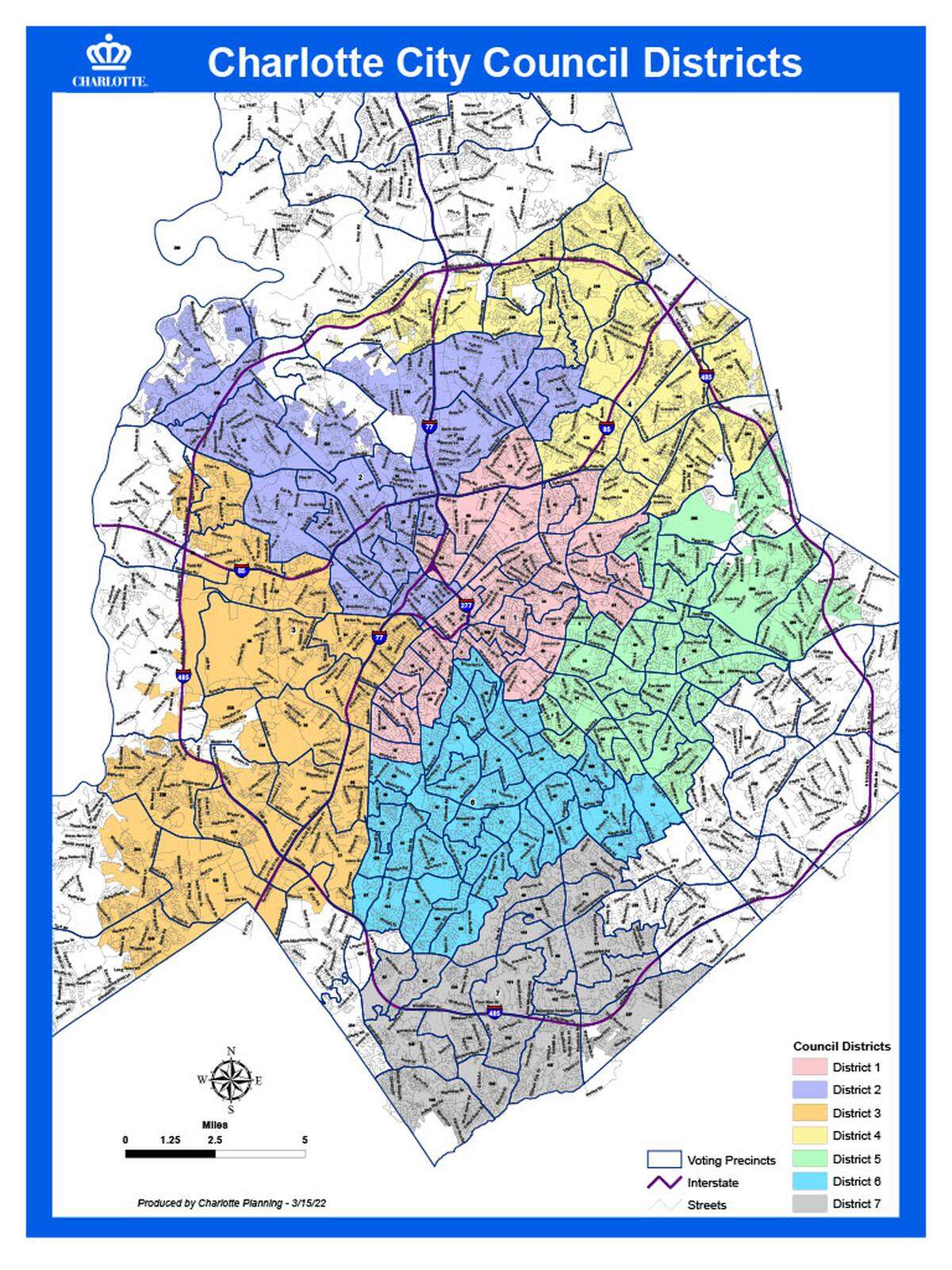
For much of the night, all eyes were on Bokhari and the results in District 6, which covers much of south Charlotte.
His race came down to the wire in a district where the math, at least on its surface, looks unfavorable for Republicans.
A composite of the “Big 3” 2020 elections shows that nearly 60% of District 6 voters preferred the Democrats. Joe Biden won the district with more than 60% in 2020, as did Gov. Roy Cooper. Democratic U.S. Senate Candidate Cal Cunningham won more than half of voters there in his losing bid against Sen. Thom Tillis.
Using a composite of those three races, Bokhari pulled off a more than 5% swing in his favor in 10 precincts. He flipped five from Democrat to Republican.
Republican operative and Charlotte attorney Larry Shaheen said Bokhari’s performance showed that Charlotte’s urban suburbs are still competitive political battlegrounds, even if the race was tight — much closer than Bokhari’s 2019 and 2017 races.
Though District 6 changed slightly under a redistricting plan approved by the City Council last year, its partisan makeup remained mostly consistent with prior maps.
“The entire makeup of the Democratic Party and establishment was in District 6 actively trying to get rid of (Bokhari) and they failed,” Shaheen said. “Them not beating Tariq showed that the suburbs are up for grabs.”
But are they?
Like everything in politics, Shaheen’s theory is up for debate.
Catawba College political science professor Michael Bitzer said the trend of District 6 is what it looks like on the surface: Democrats are gaining ground, and they won’t stop there.
Bitzer pointed to Bokhari’s previous elections. In 2017, he won with 62% of the vote. In 2019, he won with 59%. Tuesday night, that dropped to 51%.
“The time is growing near that that district is going to flip Democratic,” Bitzer said. “You can only stave off that kind of behavior by the voters for just so long.”
Democratic operative Dan McCorkle said Hand, the Democratic candidate in District 6, was “running against 45 years of history.” He’s confident she’d win in 2023 if she were to run again.
In District 7, where Republican councilman Ed Driggs ran unopposed, more than 11% of voters wrote in another candidate rather than voting for Driggs. In the other districts where the candidates were unopposed, all of whom were Democrats, the write-in percentage was about 5%.
Bitzer said he’d be “stunned” if the Democrats don’t put somebody up against Driggs in 2023, when the City Council is up for reelection.
“If Bokhari’s is low-hanging fruit, Driggs’ district is next for the pickings,” he said.
It doesn’t end at City Hall
City Council candidates likely aren’t the only ones looking at these numbers.
Southern Mecklenburg County is home to at least two competitive races for the General Assembly. That election is in November. Since the overturning of Roe vs. Wade, those seats have come into the spotlight.
Whether Democrats can hold enough seats in the state legislature to uphold Gov. Roy Cooper’s veto power could determine the future of abortion rights in North Carolina. In both the state House and Senate, Democrats hold that power by just a handful of seats.
In other words, every race matters.
North Carolina is also approaching its November election for U.S. Senate, where Rep. Ted Budd, a Republican, faces Democrat Cheri Beasley, the former chief justice of the state Supreme Court.
Shaheen said Bokhari’s victory against a strong candidate pushes back against “the idea that Charlotte’s lost.”
But, he said, “It takes money. It takes commitment ... This was a sophisticated campaign operation. What happened last night was not an accident.”
‘Guilt by association’
There’s little to no indication that the at-large candidates will have an easier time any time soon. With south Charlotte becoming more Democratic, running with an “R” next to your name becomes more of a hindrance, Bitzer said. Republicans haven’t won a city-wide race in Charlotte in 13 years.
Trump’s presidency and his continuing influence make the prospect of victory even less likely, he said.
“Guilt by association is probably what’s dooming most urban Republicans,” Bitzer said.
Luebke’s experience speaks to that. In the primary, he finished fourth among the four at-large Republicans who made it to the general election, but finished first Tuesday.
McCorkle said that shows Luebke won over some Democrats or Democratic-leaning unaffiliated voters.
Luebke, after it was clear that he lost Tuesday night, said he wished municipal elections weren’t partisan.
“Whoever’s in the White House doesn’t care that your sidewalk isn’t fixed. Whoever’s in the White House doesn’t care that the buses aren’t running,” he said. “That’s what I think a lot of people realized who voted for me — I was talking about the issues that mattered here in the city.”
This story was originally published July 28, 2022 at 6:00 AM.
.jpg)