Charlotte becomes first NC city to pass protections against income discrimination
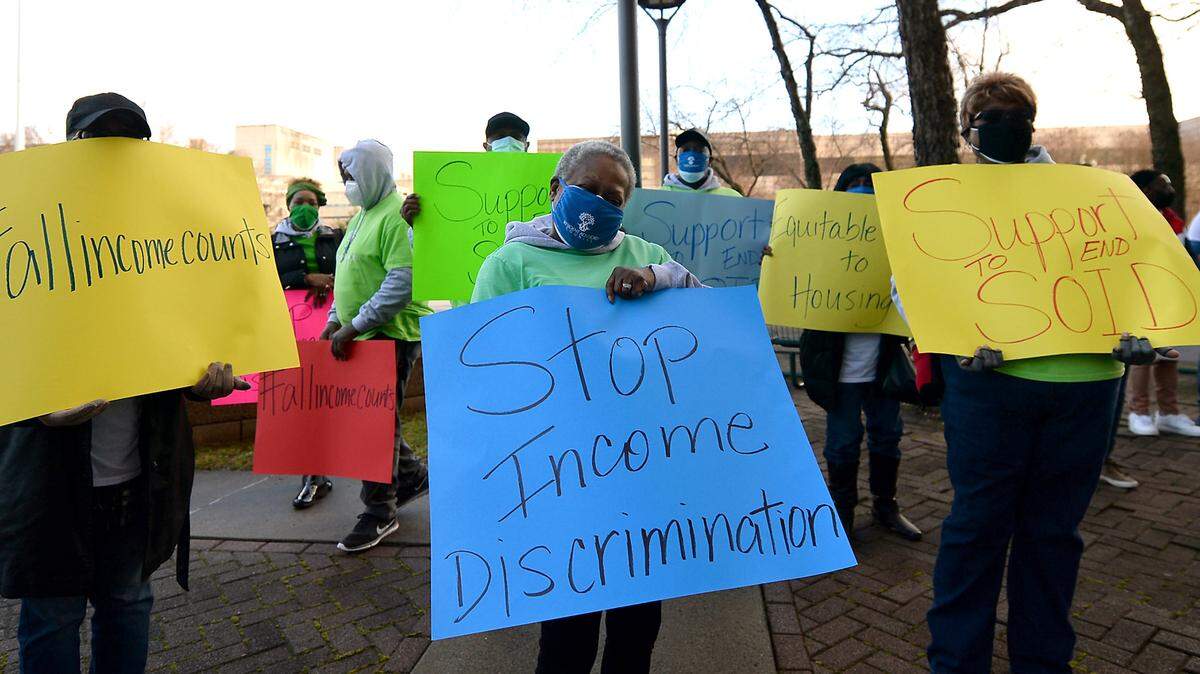
Charlotte became the first city in North Carolina to implement protections against source of income discrimination Monday night.
The policy is intended to protect people who pay for housing with vouchers, a federal subsidy that helps renters with monthly payments. Under the new policy, owners of city-supported housing approved in the future could receive thousands of dollars in fines if they fail to comply in a timely manner.
The policy would apply only to housing that received city subsidies, not developments funded without city support. The policy was spearheaded by City Councilwoman Victoria Watlington with the purpose of providing “opportunities for individuals and families to obtain safe, quality affordable housing,” city documents state.

District 6 Councilman Tariq Bokhari was the sole “no” vote Monday night for source of income protections.
Discrimination protections
Enforcements approved Monday include:
▪ First violation: Landlords and property owners will have to complete compliance training and have 30 days to cure the violation. If not cured in 30 days, the violator will pay the applicant denied housing $100 a day until the violation is cured or for 180 days, whichever comes first. If not cured in 180 days, the owner could pay the city up to $23,000.
▪ Second violation - The second violation mimics the first, but if the owner does not cure the violation in 180 days, they could be required to pay the city up to $57,500.
▪ Third violation - The third violation is also the same, but the remedy amounts could reach $115,000. The owner could also be precluded from future city contracts.
The remedy amounts set for violations are based on the U.S. Department of Housing and Urban Development Fair Housing Act’s maximum civil penalties. These are adjusted annually based on inflation.
“Certainly there’s going to be more work to do in terms of expanding our authority to make sure that that source of income protection extends past our public investment but as it stands today, I’m happy to be raising my hand in support of source of income protections for publicly invested-in housing,” Watlington said before voting on the policy.
How discrimination affects renters
Charlotte severely lacks affordable housing — just 1% of apartments in Mecklenburg County rent for less than $1,000 per month.
While Section 8 vouchers, also known as Housing Choice vouchers, provide additional support, one in five renters who get a voucher return it after failing to secure housing within the search period. Under the federal housing program, renters in Charlotte can wait up to eight years before it’s their turn for a voucher and then have 180 days to find housing.
A 2018 Urban Institute study commissioned by HUD shows widespread discrimination by landlords who refuse to accept vouchers. Tenants fared better in cities that had protections.
After approving the protections, Charlotte joins a list of cities such as New York, Chicago, Boston and Denver that already have protections in place.
North Carolina is one of 19 states that currently have no statewide legislation protecting against source of income discrimination, data from the National Multifamily Housing Council show.
County officials hope to see that change at the federal level.
Mecklenburg County recently attended the National Association of Counties annual conference and successfully introduced a policy resolution for the creation of federal non-discrimination legislation to prevent landlords from discriminating based on source-of-income.
The National Association of Counties is expected to advance the resolution before Congress, the White House and federal agencies.
This story was originally published August 23, 2022 at 9:30 AM.