
From new natural gas to potential rate hikes, NC carbon reduction plan meets criticism
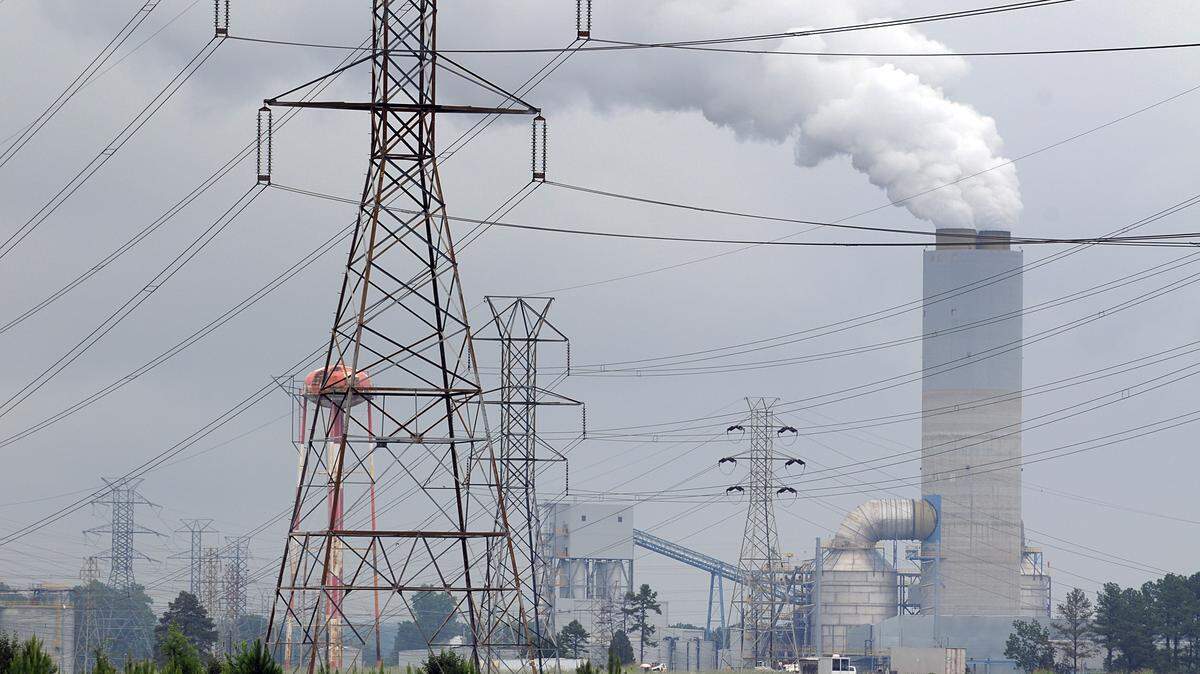
The N.C. Utilities Commission’s first-ever plan to reduce carbon dioxide emissions caused by generating electricity in the state has been met with widespread criticism.
Environmental groups and solar energy trade associations have argued that the plan unnecessarily limits the amount of new solar energy while allowing Duke Energy to move forward with plans to build new power plants that burn natural gas. Those groups argue that solar represents the quickest, cheapest path for North Carolina to cut its reliance on coal and natural gas to generate electricity.
“North Carolina needs a strong Carbon Plan that lowers electricity bills, reduces health-harming air pollution and achieves the state’s climate targets. Unfortunately, the Commission’s plan does not guarantee those critical goals will be met, leaving the door open to new gas,” Will Scott, the Environmental Defense Fund’s director of Southeast climate and energy, said in a written statement.
Duke Energy, meanwhile, has said the plan represents an “all of the above” approach that will allow it to shift away from coal as a power source in North Carolina while adding natural gas, solar and potentially wind farms.
“We do plan to institute action based on what the Commission issued in their order,” said Kendal Bowman, Duke Energy’s North Carolina state president. “To me, I think that’s the benefit of 951 is this check-and-adjust approach, that you’re coming in every two years and checking and adjusting to make sure you’re on the right path.”
The Utilities Commission did not choose one of the portfolios of generation sources presented by Duke Energy or environmental groups. Instead, it directed the utility to take a number of steps that it says will position Duke to reach the carbon dioxide emission reductions required in 2021’s House Bill 951. That bill directed the Utilities Commission to target a 70% reduction in Duke Energy’s carbon dioxide emissions by 2030, with the utility reaching net zero by 2050.
To reach that goal, the commission has directed Duke to procure 2,350 megawatts of new solar panels to go online by 2028, required the utility to retire its six remaining North Carolina coal plants by 2035 and required it to extend the licenses at its three nuclear power plants in the state.
The commission is also allowing Duke to procure 1,000 megawatts of battery storage that will draw energy from the electric grid and 600 megawatts that will be paired with solar panels, as well as upgrading the electric grid to connect the new solar panels.
Additionally, the utility is supposed to study the possibility of acquiring and developing areas off the coast for new wind farms, as well as plan for new natural gas-fired power plants
The seven-member commission is appointed by the governor and confirmed by the General Assembly. All seven current commissioners were appointed by Gov. Roy Cooper.
Generating electricity is the second-largest source of greenhouse gas emissions in North Carolina, according to a report prepared by the N.C. Department of Environmental Quality. The energy sector was responsible for the equivalent of 52.32 million metric tons of carbon dioxide, or 32.9% of the state’s greenhouse gas emissions in 2018, the last year for which information is available.
Much of the Utilities Commission’s action plan was initially proposed by Duke Energy, said David Neal, a senior attorney at the Southern Environmental Law Center. The utility originally said those short-term actions left open four power generation pathways, three of which delayed meeting the goal of a 70% reduction in emissions until after 2030 due to new small modular nuclear plants or offshore wind farms.
“It’s a little perplexing that they went with a short-term action plan that was largely informed by portfolios that don’t meet that 2030 deadline,” said Neal, who represented the Natural Resources Defense Council, the Sierra Club and Southern Alliance for Clean Energy.
As the next iteration of the carbon plan is hashed out, Neal added, those groups will be focused on adding solar and wind to the grid sooner to ensure that the 2030 deadline can be met while also meeting the cost and reliability requirements included in the 2021 legislation.
A powerful conservative think tank pointed to that reliability requirement in its critique of the carbon plan.
Amy O. Cooke, the John Locke Foundation’s CEO, argued that retiring 9,000 megawatts of coal plants could risk more significant rolling blackouts than the ones North Carolina experienced on Christmas Eve. Cooke called for the N.C. General Assembly to conduct oversight hearings into the carbon plan.
“Rather than pander to a handful of well-funded special interest groups, we urge decision makers to adopt a clean, reliable energy plan that minimizes the financial burden on ratepayers and increases grid reliability and security,” Cooke wrote.
The December blackouts were caused by higher-than-expected demand during the December cold snap and exacerbated when infrastructure at coal and natural gas plants froze, Duke officials told the Utilities Commission earlier this month. Renewable resources performed as expected, they said, but solar was unavailable before the sun rose.
Environmental groups are particularly worried about the new natural gas plants, pointing to science that shows methane, a long-lasting greenhouse gas that is the key component of natural gas, is a key contributor to climate change.
“Instead of joining Attorney General Josh Stein and numerous environmental, social justice and business organizations — who argue that new gas is neither needed nor a valid way to decarbonize, the (Utilities Commission) consented to Duke’s climate-wrecking demands,” Jim Warren, the executive director of NC WARN, wrote in a statement.
In November, 45 scientists penned a letter to Cooper arguing that stopping methane emissions would slow global warming faster than any other strategy.
Warren vowed that NC WARN and other environmental groups will oppose the certificates of public need and necessity that Duke needs to obtain from the Utilities Commission before moving ahead with the new gas-fired facilities.
House Bill 951 requires the Utilities Commission to revisit the plan every two years. That means Duke Energy will file an updated plan by September, with expert witness hearings scheduled to happen in May 2024.
As part of its next update, Duke will need to show how the Infrastructure Investment and Jobs Act and incentives from the Inflation Reduction Act could affect the prices of building new energy sources. It will also need to run models that show what it must do to reach the carbon dioxide reduction targets by 2030.
Asked if the 2030 goal is within reach, Bowman said, “I think it’s still achievable.”
This story was produced with financial support from 1Earth Fund, in partnership with Journalism Funding Partners, as part of an independent journalism fellowship program. The N&O maintains full editorial control of the work.
This story was originally published January 14, 2023 at 10:04 AM with the headline "From new natural gas to potential rate hikes, NC carbon reduction plan meets criticism."