Charlotte Mayor Vi Lyles to demolish, rebuild home in McCrorey Heights historic district
A home in the historic McCrorey Heights neighborhood owned by Charlotte Mayor Vi Lyles is set to be demolished, a county permit shows.
The permit to demolish the home on Madison Avenue is dated August 10 — just five days before Charlotte City Council voted to establish McCrorey Heights as a historic district.
Lyles told reporters Tuesday she bought the home knowing it was a fixer-upper and intended to move into it. Lyles said she decided to demolish and rebuild after discovering problems that came with the home built in the 1950s.
When asked if the demolition permit was filed before the historic designation was set in stone, Lyles said she did not have an answer. The mayor told reporters the home will be rebuilt to standards of the historic designation and that she’s talked to the neighborhood association about her plans.
“I’ve been following every rule that every resident has to follow and this is a place that I intend to call home,” Lyles said. “It’s a place that really is important to me. And I’m looking forward to actually living in McCrorey Heights with people that I consider as both my neighbors and my friends.”
McCrorey Heights history

McCrorey Heights is located north of Johnson C. Smith University off Beatties Ford Road and has an important role in the city’s Black history. Built by JCSU President H.L. McCrorey in 1912 specifically for African Americans, the neighborhood grew after World War II to house much of Charlotte’s Black educated elite, according to the city website.
The home owned by Lyles is no exception.
According to Charlotte history and urban geography website History South, the home was built in the 1950s by Black engineer Isaac Heard, Sr. Architect Harvey Gantt, the city’s first Black mayor, designed an extension to the home in 1975.
Lyles has history in the neighborhood, too.
“My father in law’s house is on the corner of the block of Patton and my aunt lived on Van Buren Avenue,” Lyles said. “These places were dear to me as I was growing up in Columbia and often visiting Charlotte. “
Petition to stop Lyles
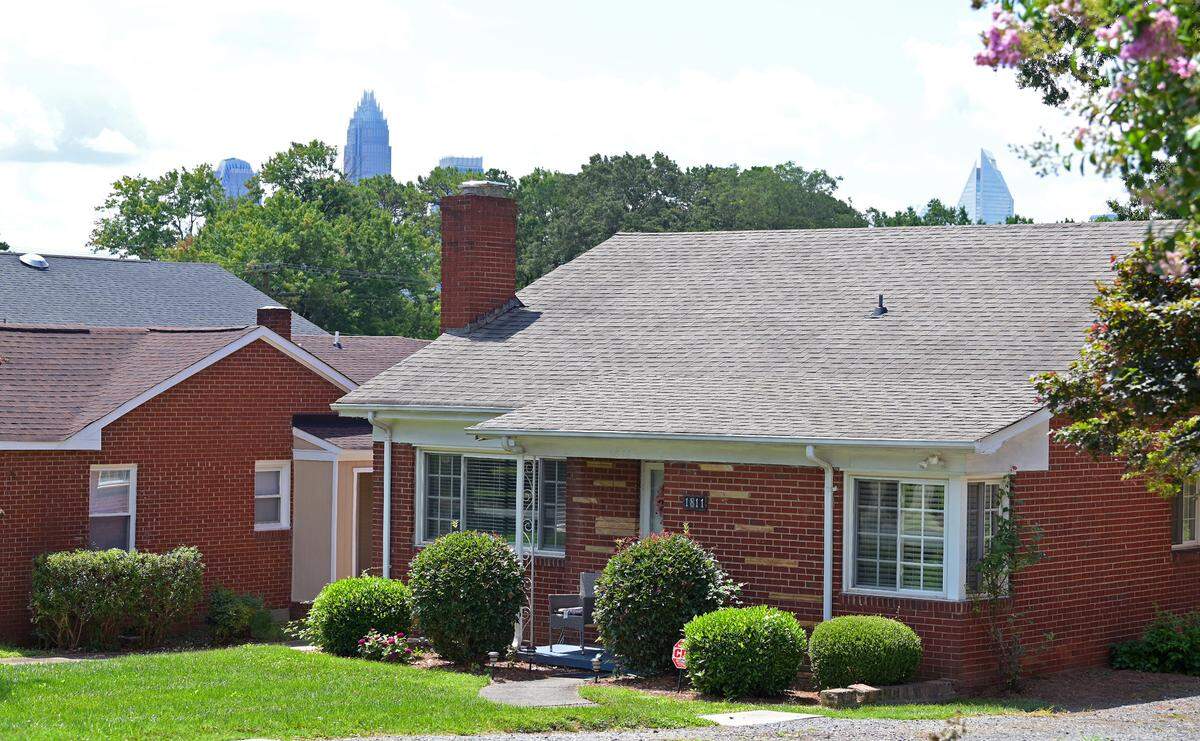
A petition created by Angela Stoyanovitch calls to stop demolition of the home to preserve it. As of about 3:15 p.m. Tuesday, the petition had 226 signatures.
Lyles said she was unaware of the petition but not surprised.
“Change is difficult,” Lyles said. “I also know I’m committed to this neighborhood.”
Because Lyles filed a demolition permit before the historic designation was finalized, its unclear if the list of standards required now for a demolition within a historic neighborhood were followed.
“It’s a place that it means a lot to me,” Lyles said. “I don’t know that people have really considered that.”
Demolition within a historic district is difficult but not impossible.
The city’s historic district design standards handbook says demolition must be considered carefully because the loss of a building can create a gap in the neighborhood’s character and culture.
The Historic District Committee determines which requests for demolitions of private property within the district are appropriate based on historical significance, value and character.
This story was originally published February 14, 2023 at 3:25 PM.