Democrats blast ‘intrusive’ power granted in NC budget to GOP-led oversight committee

READ MORE
North Carolina state budget
After much dead air and months of delays, the North Carolina state budget has passed. Here, The News & Observer, The Herald Sun and The Charlotte Observer will break down what is in the budget and what raises will go into effect. This also includes any changes to current laws and earmarks for your corner of NC.
Expand All
The state budget expands the power of lawmakers to supervise state and local agencies, as well as nonstate agencies that receive public funds.
Democrats say this would hand a Republican-controlled committee too much power.
The revised law, tucked into the budget bill set to be voted on Thursday and Friday, says that “the General Assembly finds that the scope, cost and complexity of State and local government operations require continual review and evaluation by” lawmakers.
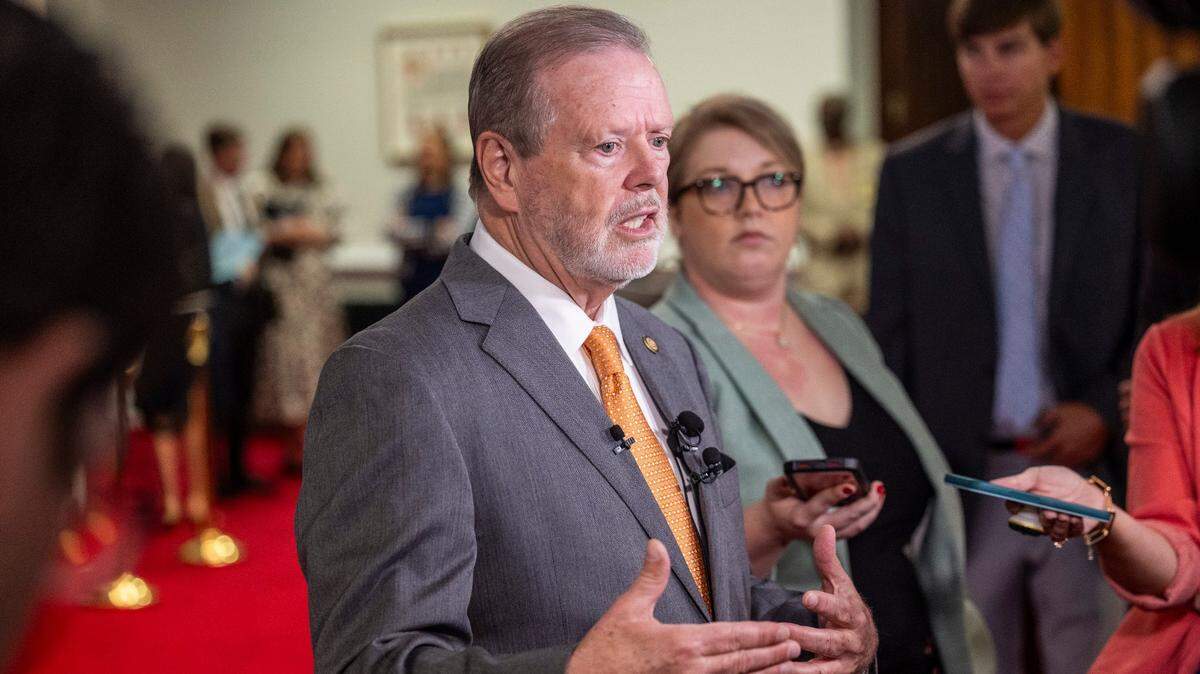
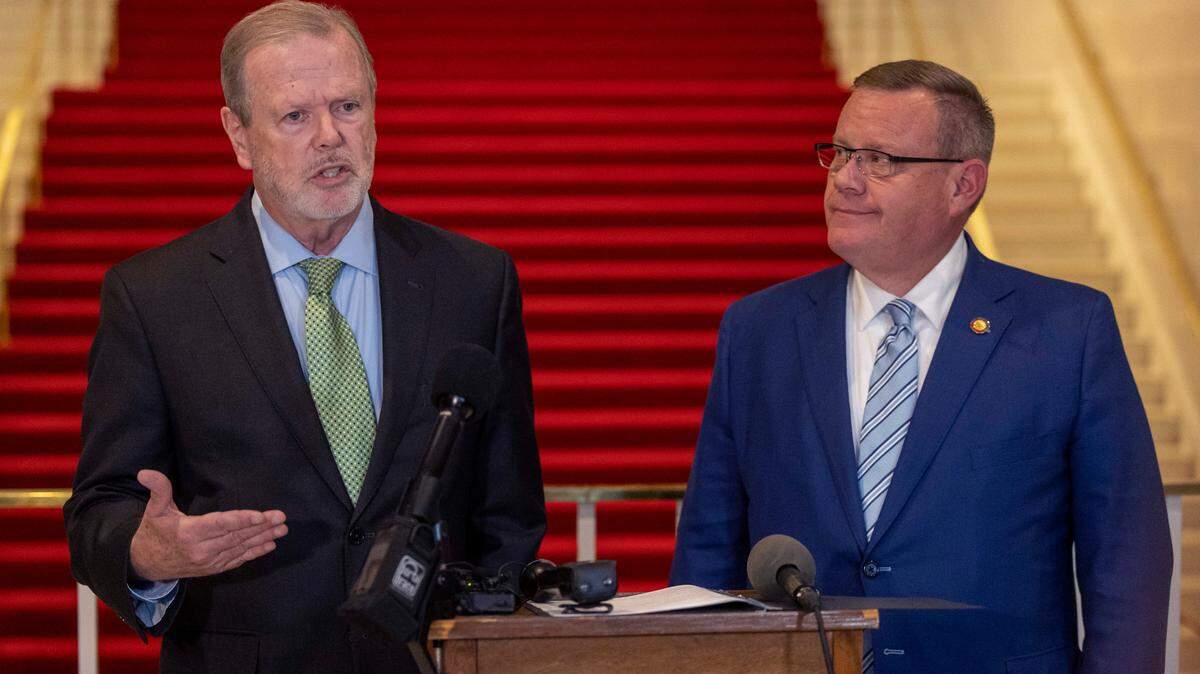
The bill would grant the Joint Legislative Commission on Governmental Operations, which is currently composed of 42 members and co-chaired by Senate leader Phil Berger and House Speaker Tim Moore, the ability to investigate “possible instances of misfeasance, malfeasance, nonfeasance, mismanagement, waste, abuse, or illegal conduct.”
The commission has looked at hurricane Florence and Matthew recovery efforts, distribution of federal COVID-19 funds and more.
Moore said the investigations of hurricane relief were “stonewalled,” prompting the need for new powers.
Committee gets access to records. Is it ‘intrusive?’
For its investigations, the commission would be able to access documents or records related to any contract awarded by the state and their subcontracts. The commission and its staff would be able to access any building owned or leased by a state agency, local government, public authority or nonstate entity receiving public funds.
During debate on the budget before a Senate vote, Democratic whip Jay Chaudhuri of Raleigh questioned Sen. Brent Jackson, an Autryville Republican, on whether the provision would allow entrance into his home, if he had a private business there that subcontracted with the state. Jackson said agents would have that authority to enter in order to see relevant documents.
Sen. Graig Meyer, a Democrat from Hillsborough, said this provision, as well as another one largely exempting legislators from the state’s public records law, will lead to a “dangerous level of intrusive and dark government.”
During debate on the budget before the first House vote, Rep. Allison Dahle, a Wake County Democrat, said this section of the bill would “give carte blanche to legislators and legislative employees to look into any entity that receives state funding,” such as businesses and nonprofits receiving state funding.
“This secret police force can even come into, for example, a law firm that receives state funding for court-appointed lawyers. This now means that the sanctity of the attorney-client privilege is now defunct,” she said.
Hurricane relief investigations ‘triggered’ the move, Moore says
Speaker Moore, after the bill passed a first vote in the House, said of the comments about the commission that “it sounds like the speaker is gonna be, like, super powerful. Maybe I need to stick around for another term, if all that stuff’s really true.” Moore is not running for another term as speaker.
“The reality is, is that’s not what that’s about. I always appreciate hyperbole and political debate, and that’s all good stuff,” but the bill is meant to allow a deeper look into the use of funds, including hurricane Florence and Mathew recovery funds, he said.
In late 2022 and early 2023, legislators grilled officials within the N.C. Office of Recovery and Resiliency, tasked with managing federal disaster recovery funds for Hurricane Matthew in 2016 and Hurricane Florence in 2018. NCORR was started by Democratic Gov. Roy Cooper specifically to address these hurricanes.
But the agency has failed to get thousands of people affected by the hurricanes back into homes, or do necessary repairs.
“I think you all were making requests, too, asking, ‘why is it taking so long for these people to get back in their houses?,’” Moore said.
“So when our gov ops committee came in and said, and started asking those same questions, they were stonewalled as well. They weren’t providing the information,” Moore said.
“That’s what triggered the need to do this.”
Asked about the committee changes, Berger said lawmakers “have a constitutional obligation to oversee how the money that’s appropriated is being spent. We have a constitutional obligation to oversee what the executive branch is doing.”
“So the gov. ops. committee is actually being being modernized to actually function in an environment where we likely will have divided government.”
This story was originally published September 21, 2023 at 6:46 PM with the headline "Democrats blast ‘intrusive’ power granted in NC budget to GOP-led oversight committee."