Is bus rapid transit in Mecklenburg’s future? Some of its leaders went to Miami to find out
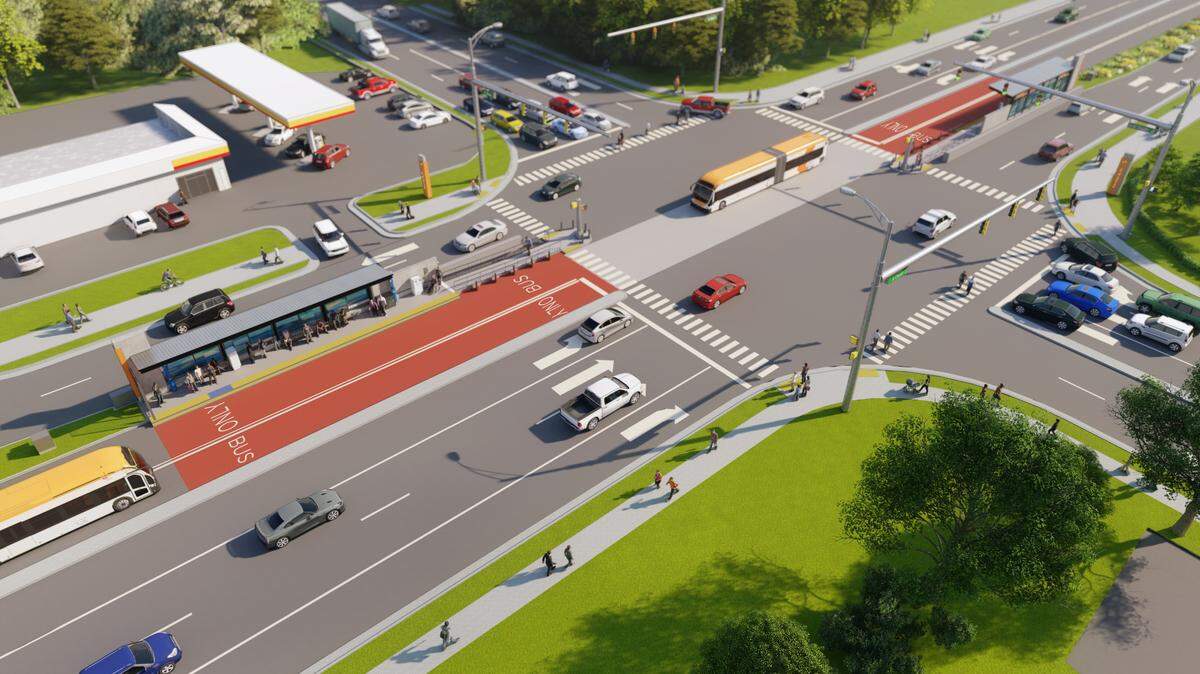
Some Mecklenburg County leaders see potential in bus rapid transit, which could be included in a revamped regional transportation plan, after an out-of-state trip to research the transit option.
More than 20 elected officials and members of the business community traveled to Miami on Thursday to see the Florida community’s progress on a new bus rapid transit system on a trip organized by the Charlotte Regional Business Alliance.
The trip came as Mecklenburg leaders grapple with opposition to bus rapid transit in east Charlotte and Matthews, communities currently slated to be included in the Silver Line rail corridor. The terms of draft legislation on a 1-cent sales tax increase to pay for transportation could lead to changes to the project, including the eastern portion converting to bus rapid transit.
Both Charlotte Mayor Pro Tem Danté Anderson and at-large Mecklenburg County Commissioner Leigh Altman said the visit was an informative experience.
“We still have a lot of work to do to see exactly where and how (bus rapid transit) can be implemented here, but as a concept, it’s been very successful in other communities around the world, in the United States. And it absolutely could be successful here, if we do it with fidelity,” said Altman, who also chairs the Metropolitan Transit Commission.
Matthews Mayor John Higdon, who declined to go on the trip, remains unconvinced.
“I just don’t have any faith that a gold-rated bus rapid transit system could be built here,” he said.
What is bus rapid transit?
Bus rapid transit involves running buses in dedicated lanes or busways that often have traffic signal priority, elevated platforms and enhanced stations.
It can be found in cities such as New York, Los Angeles, Boston, Miami and Richmond.
“With the right features, BRT is able to avoid the delays that can slow regular bus services, like being stuck in traffic and queuing to pay on board,” the Federal Transit Administration says.
It’s been a “rapid rise to prominence” over the last two decades for bus rapid transit, an FTA study released earlier this month concluded. But, the study continued, “it is still a relatively recent development in the United States,” and more research is needed to fully understand its cost, performance and impacts.
Exploring Miami’s bus rapid transit system
The idea to visit Miami began with an event hosted by the Real Estate and Building Industry Coalition in June, where developers heard from Miami and other cities about their experiences with bus rapid transit, CLT Alliance CEO Andrea Smith and Chief Advocacy Officer Joe Bost told The Charlotte Observer.
“Miami has some similarities as to Charlotte … They’re fast-growing metropolitan areas, and both identified the need to invest in the transportation networks and systems,” Bost said.
On Thursday’s trip, 25 Mecklenburg leaders met with Miami-Dade County officials and experienced the Florida community’s public transit system firsthand, including riding along what’s been built so far for bus rapid transit.
Anderson noted Miami aims for its bus rapid transit system to become the first to get a “gold standard” rating from the Institute for Transportation & Development Policy, a global organization that rates public transit.
“It was really good to sort of like touch and feel it as they’re standing up their actual system,” she said.
Anderson was interested to see and hear about how technology has changed bus rapid transit since she first saw the concept while living in New York City years ago. She walked away from Thursday’s experience thinking a similar approach to Miami’s — with dedicated lanes, well-built stations and preferential traffic signaling — could work in Mecklenburg.
Altman was impressed with the stations she saw, and the development around them, as well as the dedicated lanes to get around other traffic.
Bost is optimistic bus rapid transit could spur economic development along a potential corridor. He said business leaders in the Charlotte area are excited about the prospect of a major investment in transportation, and they’re more concerned with “certainty” it will happen rather than what mode of transit goes in.
“It’s the certainty that business and developers need to be able to plan and elect to invest their dollars,” he said.
Matthews remains skeptical about bus rapid transit
Despite others’ enthusiasm, Higdon, who spoke out previously about the prospect of bus rapid transit replacing rail along the planned Silver Line corridor in his community, questioned why other local leaders picked Miami for their research, given its bus rapid transit corridor is still under construction.
“I have no idea on earth why Mecklenburg officials would go there to learn about BRT when there are other cities across the country, like Albuquerque or Cleveland or Ottawa, Canada, that have, you know, mature BRT systems.”
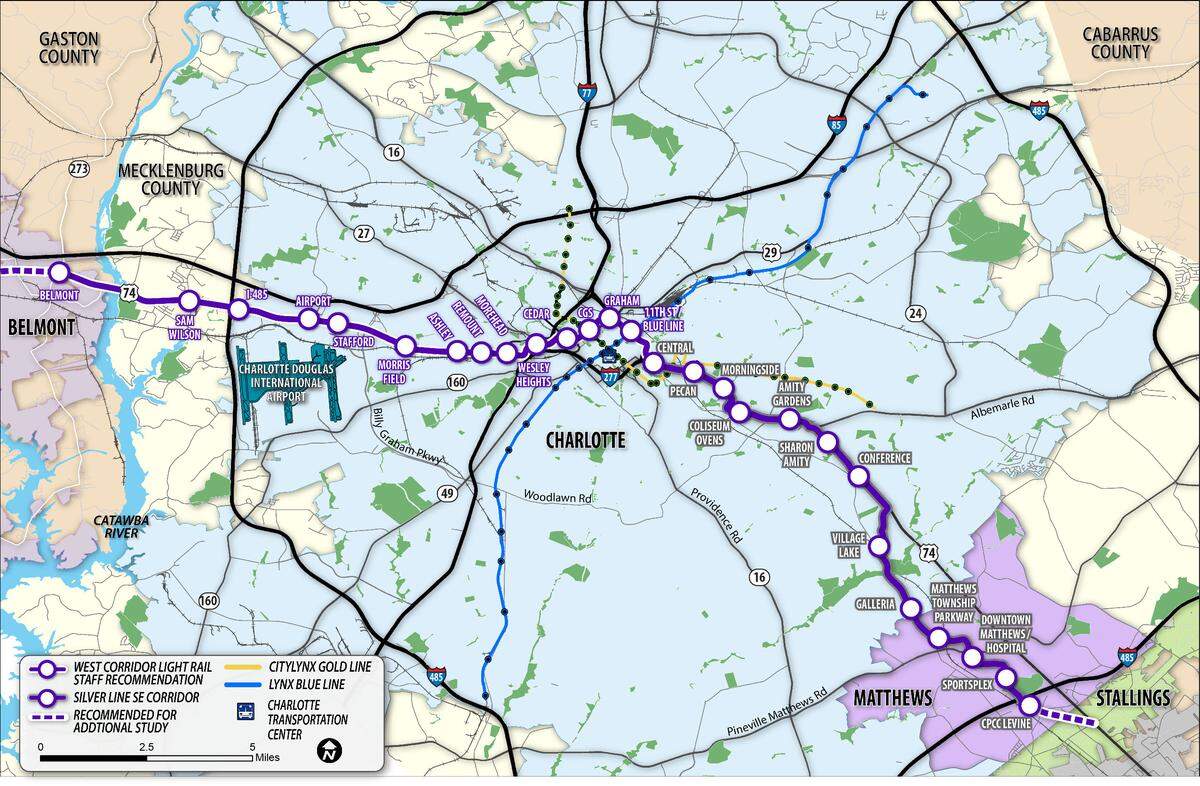
Higdon is doubtful Mecklenburg could “build gold standard when nobody else has been able to build it in North America, ever.”
“If it was truly a gold standard, I might be interested … But every project that I’ve seen, almost without fail, in Mecklenburg County has been designed and then value engineered to cut costs,” he said.
The Matthews leader told the Observer he’s working to gather local leaders for a summit in the coming weeks to further discuss draft transit legislation currently on the table. He’d like to see it revised to put more money into rail in order to preserve the Silver Line as planned, or potentially up the sales tax increase included in the bill from 1 cent to 1.4 cents.
“If it goes forward as is, with no changes, then I’m going to be strongly urging my constituents to vote against it, because it’s just terrible. It’s a terrible deal for Matthews,” he said.
Anderson attributed the current spending split in the legislation to the N.C. Legislature, which must approve any sales tax referendum before it can get on the ballot and wants more money for roads.
Altman noted an official decision hasn’t been made yet on the Silver Line.
“The only question on the table is whether or not the General Assembly would give us the authority to put this to a referendum at some point in the future,” she said.
But Higdon stood by his assertion that the current funding split in the draft bill won’t leave “enough money to build Silver Line east as rail.”
“I think all of us need to be honest with our constituents and voters,” he said.
What’s next for transit plan?
The Matthews Town Council already voted to oppose the sales tax legislation, and Cornelius already voted for it. Charlotte and the other towns in Mecklenburg County, as well as county commissioners, are currently considering the draft deal.
The draft legislation will then be in the hands of the N.C. Legislature. Charlotte’s goal is to put the sales tax referendum on the ballot in November 2025.
If things move forward, it’ll be up to the Metropolitan Transit Commission or a new transit authority to decide what transit projects will be prioritized and what mode of transportation they will entail.
Anderson, whose District 1 includes parts of east Charlotte, hopes everyone involved, including the community, prioritizes how to meet the needs of the east side.
“There’s a clear need for public transportation. There’s clearly a job desert that exists out in the far east of the east corridor,” she said. “And so if we are going to be about trying to allow residents to not only live but thrive and give them the opportunity and the infrastructure to advance on the economic strata, we have to think about the needs and how we address them.”