
Senior citizens dying while sitting on waiting lists for help. Advocates cite lack of money
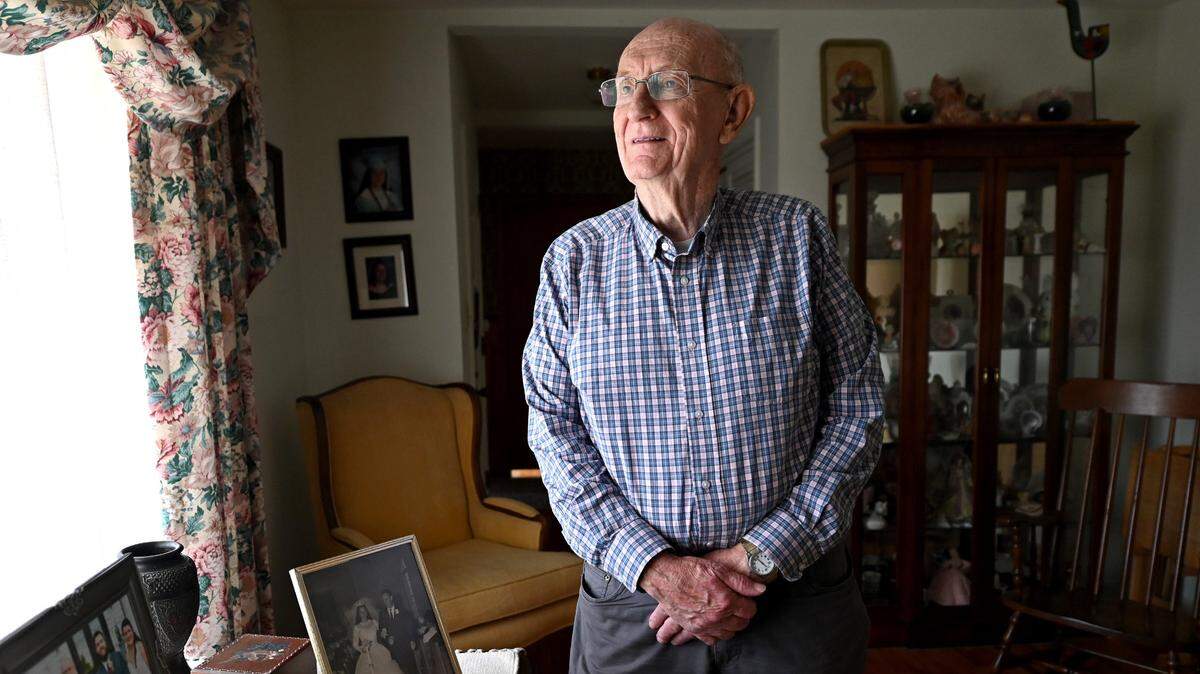
Andrew Friend, the executive director of Union County’s Council on Aging, held back tears as he addressed county commissioners at their October board meeting.
The organizations tasked with providing crucial services to the county’s older adults are falling short due to insufficient funding from the state and federal government, he explained.
Waiting lists for programs such as home-delivered meals and in-home aides are the longest they’ve been in 50 years, putting care out of reach for many.
The county’s nutrition services program — which provides home-delivered meals to seniors — reviewed its more than 500-person wait list this summer. Over the previous year, officials found, 32 people on the list had died, waiting for help.
The population of people 85 and older in Union County is growing rapidly, with a projected increase of 264% over the next 20 years, Friend said. Without additional money, seniors will increasingly suffer.
“Commissioners, we’re not able to serve these people who need us the most,” Friend said.
Advocates say this problem is not unique to Union County. The population of people 85 and older statewide is expected to grow 114% over the next 20 years, according to the North Carolina Division on Aging.
Government funding has not kept up with the growing population and inflation, advocates say. As a result, some families put their loved ones into expensive long-term care or people pass away waiting for services.
In North Carolina, nearly 30% of senior citizens who receive Social Security benefits rely on them for 90% of their monthly income, according to the North Carolina Medical Journal. The average monthly pay out is $1,669 per month.
The North Carolina General Assembly created the Home and Community Care Block Grant in 1992, combining state funding with federal and local dollars to provide free services to eligible clients. This year, the state contributed $38 million to the program. The federal government provided $56 million, according to the state’s Fiscal Research Division.
But when adjusted for inflation, the funding falls far short of the need, with insufficient services and long waiting lists across North Carolina, said Summer Tonizzo, a spokesperson for the state’s Department of Health and Human Services.
There is some temporary federal relief — $43 million in American Rescue Plan funding, Tonizzo said. But that money must be used by Sept. 20, 2025.
The North Carolina Senior Tar Heel Legislature — an advocacy group created by the state legislature to advocate for the needs of senior citizens — said when adjusted for inflation, the state’s funding for Home and Community Care services has decreased by 10% since 2004. This is while the population of people over 60 has increased by 82%.
Last year, the NC Senior Tar Heel Legislature asked the General Assembly to provide an additional $8 million for these programs. But it was not included in the state’s budget.
Woody Brinson, the speaker of the NC Senior Tar Heel Legislature, said additional funding has been one of the organization’s main priorities for the past 12 years. Now that the 85+ population is growing faster than ever before, he and other advocates want state leadership to be proactive.
“During this 12 year period of time, we’ve gone backwards, not forward,” Brinson said. “The cost of providing the services goes up, the demand for the services goes up, but the funding, if it stays stable, you’ve gone backwards.”
Funding shortfalls in a growing county
Robert O’Kelly, a Union County resident, has a home aide through the Council on Aging. With neuropathy in his legs and an aching back, he needs help doing chores around the house. Once a week his aide comes in to clean his house.
He used to have an outside agency come in a few times a week to look after his wife, who had Alzheimer’s, while he ran errands. But it wasn’t cheap. He recalls paying around $10 an hour.
Through the Council on Aging, the services are free to him.
“Everytime I call them, they help me with anything I need,” O’Kelly said.

Union County, the Union County Council on Aging and the City of Monroe Parks and Recreation all provide services for senior citizens, funded by the Home and Community Care Block Grant. This year Union County, with contributions from the federal and state government, received about $1.2 million — only an $8,011 increase from the previous year when accounting for inflation.
The greatest needs for Union County seniors are home-delivered meals and in-home aides. To serve the 738 people on these waiting lists at the end of October, the county and Council on Aging would need an additional $1.85 million.
Because the Council on Aging is a 501(c)(3), Friend has been able to fundraise to help fill the gaps. But it’s not enough, he says, and Union County government can’t raise substantial money through fundraising.
“The people that are not receiving services because they’re on our waiting list are essentially going without,” Friend said. “That puts them at risk of premature institutionalization or unnecessary institutionalization.”
Inflation is a major factor, Janet Payne, director of Union County’s Human Services Agency, said.
When going out for bids for frozen and warm meals this year, Payne said the agency saw a price increase of 35%. Without adding on any new clients from their waiting list, the county was looking at a $100,000 deficit.
Counties like neighboring Mecklenburg don’t solely rely on the grant to fund their help for seniors. Most services are funded through county dollars, said Greg Tanner, director of the county’s Services for Adults division.
This year, Mecklenburg received about $4.4 million in Home and Community Care Block Grant funds, a small portion of its $28.5 million budget for seniors.
The county’s additional support has also allowed the Services for Adults department to operate without a waiting list for any of its Home and Community Care Block Grant programs.
But Mecklenburg County is home to a larger population and a government with more money to spend.
In smaller Union County, Commissioner Melissa Merrell said she was concerned to see such long waiting lists.
“This is a crisis,” Merrell said. “We have Union County citizens that helped build and make a great county to work and live in. And now in their golden years they’re sitting on a wait list, and may never make it off the wait list.”
State plans and advocate pleas
In May 2023, Gov. Roy Cooper issued an executive order to make North Carolina more friendly for seniors. The North Carolina Department of Health and Human Services worked with experts in senior care to create a 10-year initiative to address the needs of its growing senior population.
The initiative, called All Ages, All Stages NC was launched in September and listed the need for increased funding for Home and Community based services among its top priorities.
Mary Bethel, the board chair of the North Carolina Coalition on Aging, helped create All Ages, All Stages NC. The plan lists 41 recommendations to help North Carolina’s senior population, including 14 that would require legislative action, Bethel said.
“We cannot wait till 2040 to talk about how we’re going to better address the needs of that particular segment of the population,” Bethel said. “The longer you wait to be proactive and begin to address issues, the less options you have.”
Union County Commissioner Merrell said she plans to bring her concerns to the county’s state representatives. She said the commissioners meet with legislators twice a year to present their priorities.
But advocates on the state level have run into roadblocks.
Woody Brinson, speaker for the NC Senior Tar Heel Legislature, said in his eight years as a member and leader of the organization, he hasn’t seen much support from the state legislature, specifically the Senate.
Last year, Brinson said, a member of the state Senate Appropriations Committee told their organization that he was not willing to support additional funding to Home and Community based services until the federal government did so.
“Personally, I don’t see enough interest. The interest is there from the advocates. I just don’t see the interest from our elected officials to address all these growing population issues,” Brinson said.
Rep. Mike Clampitt and Rep. Garland Pierce co-chair the House Families, Children and Aging Policy Committee. Republicans currently control both chambers of the state legislature.
Clampitt, a Republican, said he was unaware of any concern about lack of funding for the Home and Community Care Block Grant. He said he couldn’t specifically remember the Tar Heel Legislature’s request for $8 million and declined to comment on what future support would look like.
“It would be premature for me to make any speculation about what will be happening in the next year in next year’s budget,” he said.
Pierce, a Democrat, said he was surprised to hear that the Tar Heel Legislature’s requests for additional funding for senior programs were not approved last year. In the grand scheme of the budget, an additional $8 million for Home and Community based services didn’t seem like too much of an ask, he said.
He said he was appalled to hear that people were dying before they had a chance to get off waiting lists in Union County and that he would do what he could to support the state’s senior population.
“Society will be judged by how it treats its seniors and children,” he said.
This story was originally published December 5, 2024 at 5:00 AM.