
Public left in the dark after NC legislators made campaign donation probes secret
Two years ago, the State Board of Elections asked a state prosecutor to evaluate whether criminal charges should be brought for suspect campaign contributions connected to Mako Medical CEO Chad Price.
The board found six donations made from his credit card that were listed as coming from a business associate and family members, the prosecutor said.
North Carolina law forbids anyone making political contributions anonymously in the name of another. It also bars candidates, political parties and others from receiving such money.
A public hearing could have tracked the money trail in the open, and addressed several other campaign finance transactions linked to Price, including contributions made in the name of a sister with severe developmental disability. A hearing could have also shed light on a donation filed on behalf of a woman who shared Price’s last name but denied giving money, and another from a man named as a donor who did not exist.
But no hearing happened. And the prosecutor quietly ended the matter a year after receiving the referral.
State lawmakers put an end to the hearings with legislation passed in 2018. They funneled campaign finance investigations into a new, secret and longer process.
In the six years since the law passed, not a single campaign finance charge has been filed by a North Carolina state prosecutor, state election officials and campaign watchdogs say. In the six years prior, election board hearings on complaint donation complaints were steps to criminal convictions against two state lawmakers.
Supporters of the campaign finance law say the lack of charges does not necessarily indicate a problem.
“Maybe nobody did anything that results in charges being warranted,” said state Senate Leader Phil Berger, a Rockingham County Republican.
But not all informed observers see it the same way.
“For the public — all of us — we’re the loser,” said Bob Phillips, the executive director of Common Cause North Carolina, a nonprofit that helped pass election reforms nearly 20 years earlier after campaign finance scandals.
A history of big revelations
The North Carolina election board held hearings in past years when their investigators found potential criminal conduct. Those hearings produced dramatically revealing moments, including these four that played a role in criminal charges:
In 2018, the board found state Rep. Rodney Moore, a Charlotte Democrat, failed to report more than $141,000 in campaign contributions and expenditures from 2010. Moore in 2019 pleaded guilty in state court to one felony count of making false statements under oath and received a year of probation.
In 2015, a board investigator detailed more than $100,000 in campaign money that state Sen. Fletcher Hartsell, a Concord Republican, spent on family meals, personal vehicle expenses and speeding ticket costs. He was sentenced in 2017 to eight months in prison on federal charges of mail fraud and filing false tax returns.
In 2009, a fundraiser who flew Democrat Gov. Mike Easley around the state told the board the governor’s campaign gave him $11,000 for roof and bathroom repairs at the governor’s personal residence in Raleigh. Easley pleaded guilty in 2010 to a state felony charge of certifying a false campaign report and was fined $1,000.
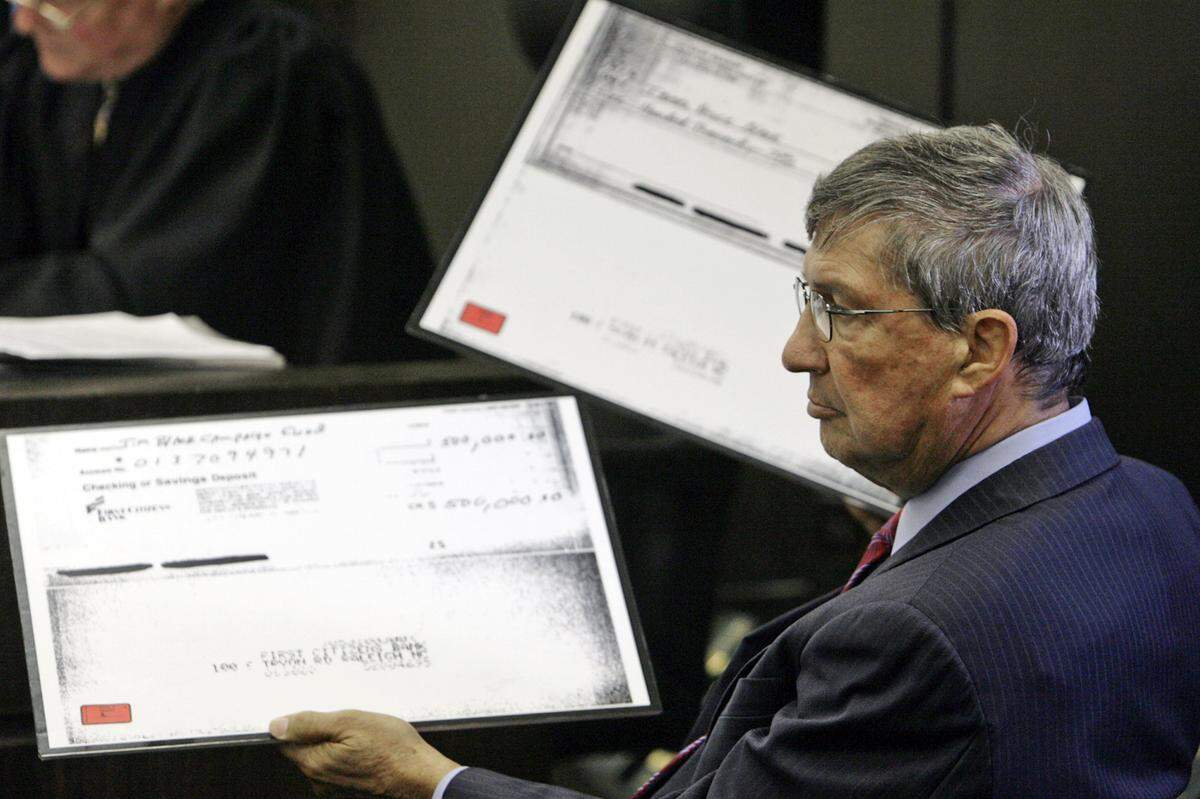
In 2006, House Speaker Jim Black, a Matthews Democrat, was forced to admit that he filled in three blank checks totaling $4,200 with the name of a lawmaker whose political party change helped keep him in power. Black, the following year, received a sentence of five years and three months on a federal public corruption charge.
It was a process that drew praise from watchdog organizations and helped instill confidence in state government.
Complaints do get filed. Some of the only data the elections board shares about campaign donation complaints is their number.
That included 48 in 2022, nearly double the 25 filed in 2020. In the 11 months so far this year, 24 complaints were filed, the board said.
Election board staff say a 2018 state law forbids them from making public any details of campaign finance complaint cases today, regardless of an investigation’s outcome. They do notify people who submit complaints and those accused if the board finds no violations. But neither is notified when the board forwards the complaint to a district attorney, said Lindsey Wakely, the board’s deputy general counsel.
“We read the change in the law to limit what can now be shared by the agency, because it’s not merely ‘not a public record.’ It’s confidential,” she said.
Prior to the 2018 law, the board would release complaints and election records associated with them public, until it found possible criminal conduct, said Gary Bartlett, the board’s executive director from 1993 to 2013.
“Whenever there was a filed complaint, everything was open record until there was evidence that a criminal violation may have occurred, and then we did not provide any more information until the hearing of the State Board of Elections,” Bartlett said.
Unknown: Evidence collected after complaints
Beyond the Mako case, details from three other substantial campaign donation complaints have been made public since the 2018 law went into effect. Bob Hall, the retired executive director of Democracy North Carolina, filed all three and shared the complaints.
But the election board has cited the 2018 law when declining to provide status reports on the complaints, he said, adding: “These things just drop into a mystery box.”
Secrecy isn’t the only issue. If election board members find evidence of a criminal violation, the 2018 law requires them to send their findings to the State Ethics Commission for a review that can take up to 90 days. The commission then can agree or disagree with the board’s recommendation on whether criminal charges may be merited.
The ethics commission’s findings are secret too under the 2018 law.
The 2018 law for the first time also put board campaign donation investigations on a timer. It now has a four-year window to investigate violations once it becomes aware of them, even though North Carolina has no statute of limitations on felony criminal charges.
None of the three cases that Hall filed have resulted in charges.
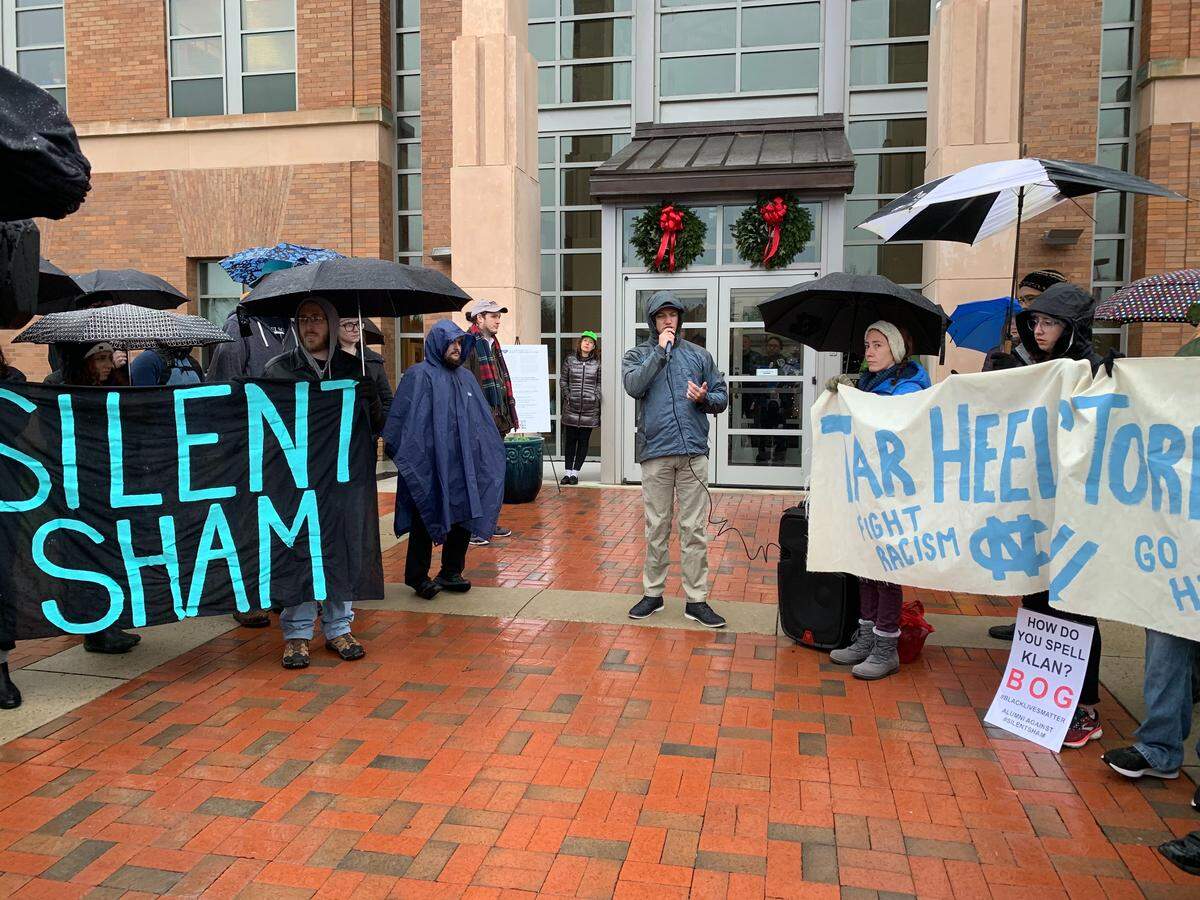
Hall’s January 2020 complaint alleges that the N.C. Sons of Confederate Veterans had illegally created and funded a political action committee that donated to Republican candidates. That’s the group that struck a secret $2.5 million deal, scuttled by a judge, to take possession of the controversial Silent Sam statue memorializing Confederate soldiers at UNC-Chapel Hill, which protesters tore down.
A year later, Hall asked the board to investigate Lt. Gov. Mark Robinson’s campaign committee’s spending of roughly $10,000 in campaign donations, including on medical bills and clothing for Robinson and his wife, which The News & Observer had documented. Hall’s complaint alleges that he found evidence of more questionable expenses and contributions, including five from political action committees that lacked required information such as an address, he said.
Last year, Hall asked the board to investigate the video poker industry after identifying $885,000 in campaign contributions to state lawmakers from donors with gambling ties. The complaint alleges that the money was given while state lawmakers considered expanding gaming in North Carolina, Hall said.
The elections board did forward its findings on the Sons of Confederate Veterans complaint to Lorrin Freeman, the Wake County district attorney disclosed. She handed the case to the SBI for further investigation and said charging decisions may be made within the next 45 to 60 days.
The Board of Elections has not notified Freeman whether it will refer the Robinson or video-poker complaints to her office, she said.
.JPG "RAL_110524-MARK-ROBINSON-TEL11 (1).JPG")
Adequate staff for assignments?
The state Board of Elections is tackling increased responsibilities with a limited staff, said Executive Director Karen Brinson Bell.
The board’s campaign finance unit has five analysts and a director to audit roughly 2,000 candidates, political action committees and political parties, Brinson Bell said. Its three investigators have to juggle campaign finance cases with other election misbehavior, such as candidates running in districts in which they do not reside.
Efforts to ensure and promote ballot integrity have increased since President-elect Donald Trump’s false claims after the 2020 election, Bell noted. The board also oversees a new voter ID law that requires verification of IDs that voters can use at the polls.
State lawmakers have not provided adequate funding to match the impact of the state’s growing population or a growing number of candidates and active political groups in a purple state, Brinson Bell said.
“The growth in the number of campaign finance committees continues, but our staff does not,” Brinson Bell said.
Ann Webb, Common Cause North Carolina’s policy director, said the legislature signaled its election priorities in October when it approved $5 million to help residents in the Republican-rich western part of the state hit by Hurricane Helene cast ballots. That’s roughly half of what state lawmakers have given to the board for operations each year, state budgets show.
“We completely agree that Western North Carolinians should have access to the ballot,” Webb said. “We also know that if the legislature truly cared about election integrity, it would be fully funding the staffing and technological needs of the State Board of Elections year after year.”
Freeman, the Wake DA, agreed that the board is hampered by a lack of funding and staff, and that problem extends to the SBI as well, she said.
When Freeman first became district attorney in 2014, the SBI’s financial crimes unit turned around investigations in roughly nine months, she said. Now, some probes have stretched to two years, she said.
“Certainly it’s understandable, the public’s frustration,” Freeman said. “And it does give the unfortunate appearance that there is some game of delay and cover up, but that’s not necessarily what’s happening.”
DA criticizes Price-complaint investigation
Larry and Susan Price in 2019 filed the complaint against Chad Price, their son who was the legal guardian of their severely disabled daughter, Jessica. They alerted the board to $17,500 donations made in Jessica’s name to five candidates in North Carolina and three other states.
Some campaign finance reports logging those donations said Jessica was an employee of Raleigh-based Mako Medical.
The complaint was made public only because the Prices contacted The News & Observer, which confirmed the donations in her name, and found donations by others that raised questions. All told, Price and others connected with him and Mako Medical made roughly $560,000 in campaign contributions over a five-year period, The N&O found.
Price, who The N&O has reported submitted inflated educational and work experience to win a Wake Tech Board of Trustees seat, did not return messages seeking comment about the case.
This is all that is known: The state election board in 2022 referred its findings that political donations were made with a credit card in Chad Price’s name but with other people listed as the donors, Freeman said. Three years after the initial complaint was filed, Freeman requested that the SBI investigate.
But in July 2023, Freeman closed the case, criticizing the election board for its incomplete investigation in a letter. Board staff had interviewed only one person in whose name donations were made, the letter said. The SBI interviewed that person and others. But one gave “inconsistent statements about providing Mr. Price with money and authorization to make donations,” she wrote.
“These inconsistencies create a credibility issue in a key witness to any prosecution of this matter and raise questions as to how the contributions in question came about,” Freeman wrote.
That witness was Jerry Bynum, a friend and business partner of Price’s, Freeman said in an interview. Bynum, his wife and his brother each made a $5,200 donation to House Speaker Tim Moore, a Cleveland County Republican whose campaign later returned the money, and a $5,100 donation to Rep. Donna White, a Johnston County Republican.
All of the donations were paid with a credit card in Chad Price’s name, Freeman said, but Bynum gave the SBI bank records showing he sent money to Price at the time, and told them it was a reimbursement.
“It would have been helpful and perhaps saved resources had your agency attempted to interview additional witnesses prior to presenting the case to the Board. In the future, if we can assist with determining the scope of your agency investigation, please do not hesitate to reach out,” she wrote.
The election board did not ask Freeman to review any findings about donations Price made in his disabled sister’s name, Freeman said in an email message. So the specifics of how its staff investigated those complaints have not been made public.
Price’s role as Jessica Price’s guardian left Freeman concerned she might not be able to prosecute those donations, she said. Price’s authority as Jessica’s guardian was limited to her care, though, and did not include handling her estate, court records show.
Freeman declined to release the election board’s investigation into Price’s donations, saying the board had determined it was secret. She also would not release the SBI’s investigation. Her standing policy is not to release them, she said.
Legislators said changes promote fairness
At the time they passed the secrecy provision that now cloaks so much about campaign finance complaints and investigations, Republican lawmakers said making public unproven campaign finance violation allegations was not fair.
To get changes into law, they stripped a bill focused on transportation laws that had passed both chambers in different versions, and inserted wide-ranging language that reconfigured the elections and ethics boards among several other things.
That “gut-and-amend” tactic, as it’s commonly called, meant legislators could not amend the bill or discuss it in a specialized committee. They could only vote for or against the bill.
Democrat Gov. Roy Cooper vetoed it, citing the new secrecy. Republican lawmakers — who overrode his veto with the help of one Democrat in each chamber — said at the time they couldn’t trust an election board with a Democrat majority.
State Sen. Ralph Hise, a Mitchell County Republican, said his campaign was subjected to an unnecessary investigation over bookkeeping errors because of complaints by a Democratic campaign finance researcher. Hise paid a fine and restitution.
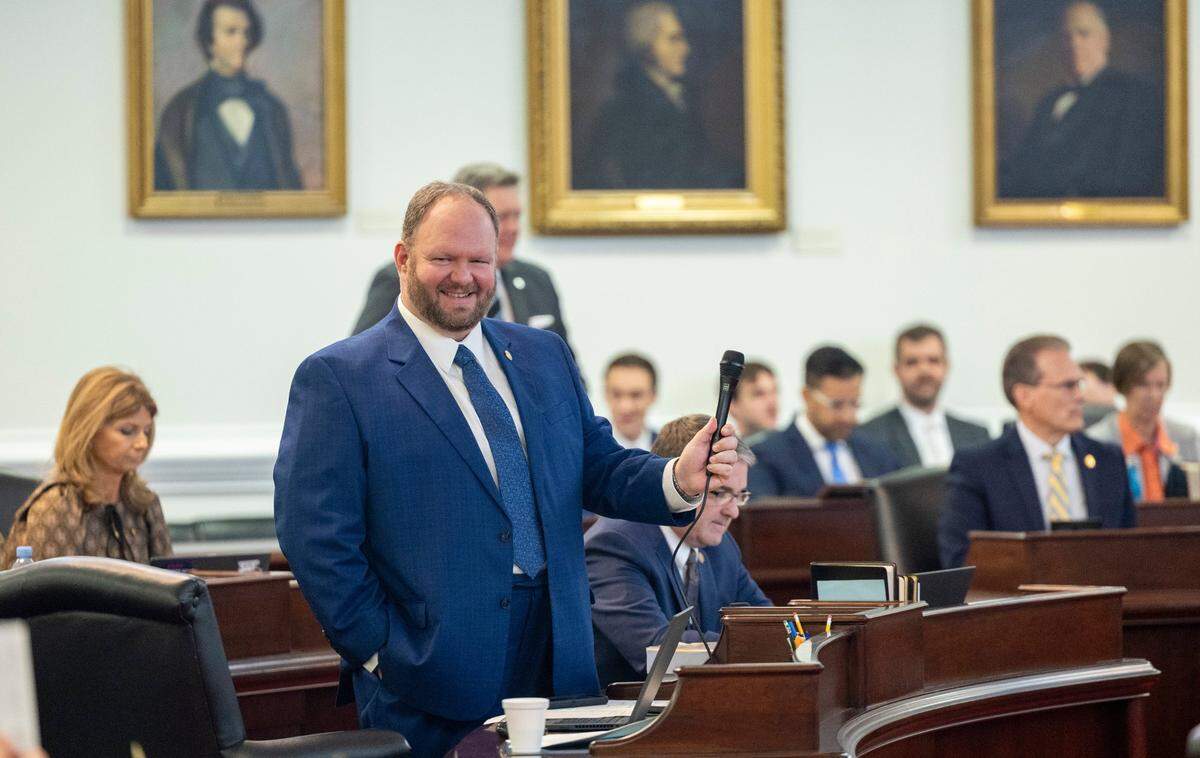
“This is about someone creating a violation for political purposes,” Hise told his colleagues during debate on the legislation.
During votes on the bill, Senate leader Berger said results of board investigations would become public despite the new rules.
“The only confidentiality is if a charge is made, if someone files a complaint, that’s the confidentiality,” Berger said then. “If the board makes an investigation, if they find something, the information is perfectly legitimate and ought to be released.”
When asked in October about the distance between what he said would happen and what is happening, Berger questioned whether the board was correctly interpreting the level of secrecy in the 2018 law.
He did not offer to resolve the differing interpretations.
Frustration with outcome
Larry and Susan Price became estranged from Chad Price shortly after he became Jessica’s guardian in 2013, and they had unsuccessfully sought to win her guardian status back through the courts.
They filed campaign finance complaints against their son with authorities in five states and the Federal Election Commission.
There has been much tragedy in the family. In February 2022, Jessica accidentally drowned in a bathtub in a townhome in East Raleigh that Chad Price owns. She was severely ill, and primarily living there with a caretaker and the caretaker’s husband, a death investigation found. Susan Price died from lung cancer in August, her husband said.
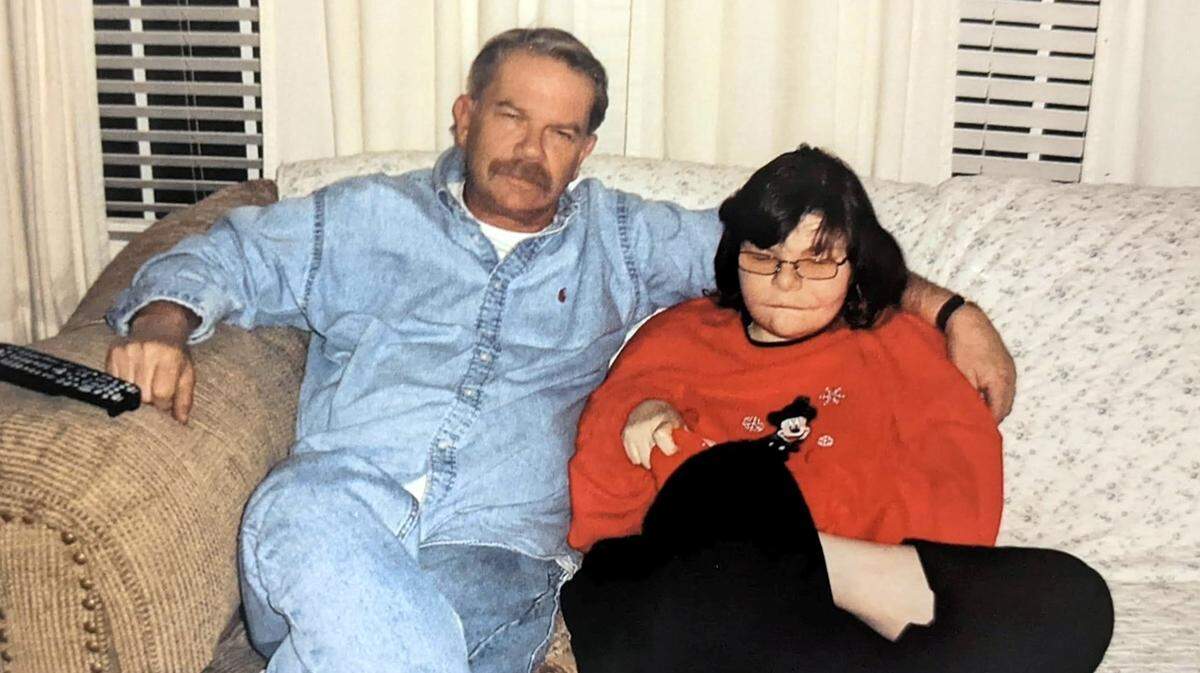
Larry Price learned about the outcome of the North Carolina investigation from The N&O, he said. He received no notification from the State Board of Elections.
Filing the complaints proved to be frustrating and demoralizing, Larry Price said, as one government agency after another declined to pursue charges. Only one, in South Carolina, ultimately fined Chad Price $20,000 for making donations in the names of his businesses that actually came from his personal accounts.
They did so, Larry Price said, after warning him he could face a criminal charge for making his complaint there public.
Power & Secrecy is a News & Observer investigative series exploring both in North Carolina state government, especially the N.C. General Assembly since 2011, when Republican lawmakers won control of both chambers. Find stories at newsobserver.com/topics/power-secrecy.
This story was originally published December 12, 2024 at 5:30 AM with the headline "Public left in the dark after NC legislators made campaign donation probes secret."