
He helped in Afghanistan. Now, his family is blocked from coming to Charlotte under Trump.
An executive order signed by President Donald Trump is blocking refugees from coming to Charlotte.
They include persecuted Christians. Relatives of Afghans who fought the Taliban are also stuck in hostile territory. Some expect to die if the decades-old Refugee Admissions Program does not come back soon.
The program is on pause and pending a review from Trump’s cabinet. The new administration also froze funds for refugee resettlement groups, making their work more difficult.
“It could happen any time that I could be (handed) to the Taliban,” one Afghan Christian who is hiding in Pakistan told The Charlotte Observer. “You know the consequences.”
On the run
The likely consequences if he and others are captured: torture and death.
When the United States ended its 20-year war in Afghanistan in 2021 and withdrew from the country, the Taliban retook power. A 2022 State Department report laid out the dangers under the new regime to “apostates,” people who reject the Taliban’s interpretation of Sunni Islam. Shiite Muslims, Sikhs, Hindus and Christians have been harassed, driven into exile, hurt or killed.
The man the Observer spoke to knows what could happen from personal experience. For his safety, the Observer is not publishing his name.
He has been on the run for three years.
The Taliban raided his family’s home after they retook the government. They detained his brother and father, who worked for the old Afghan army. His mother later found their bodies on the road, and the Taliban denied responsibility, the man said.
His mother told him not to come home.
He said “good Christians” helped him flee to neighboring Pakistan.
Worried for his mother
He has faced new problems there.
Other refugees at a shelter beat him, believing his status as a Christian convert might draw negative attention to them. Pakistan has deported him to Afghanistan twice even though he is registered as a refugee with the United Nations — something that should protect him.
Pakistan is reluctant to host Afghans since Kabul fell in August 2021.
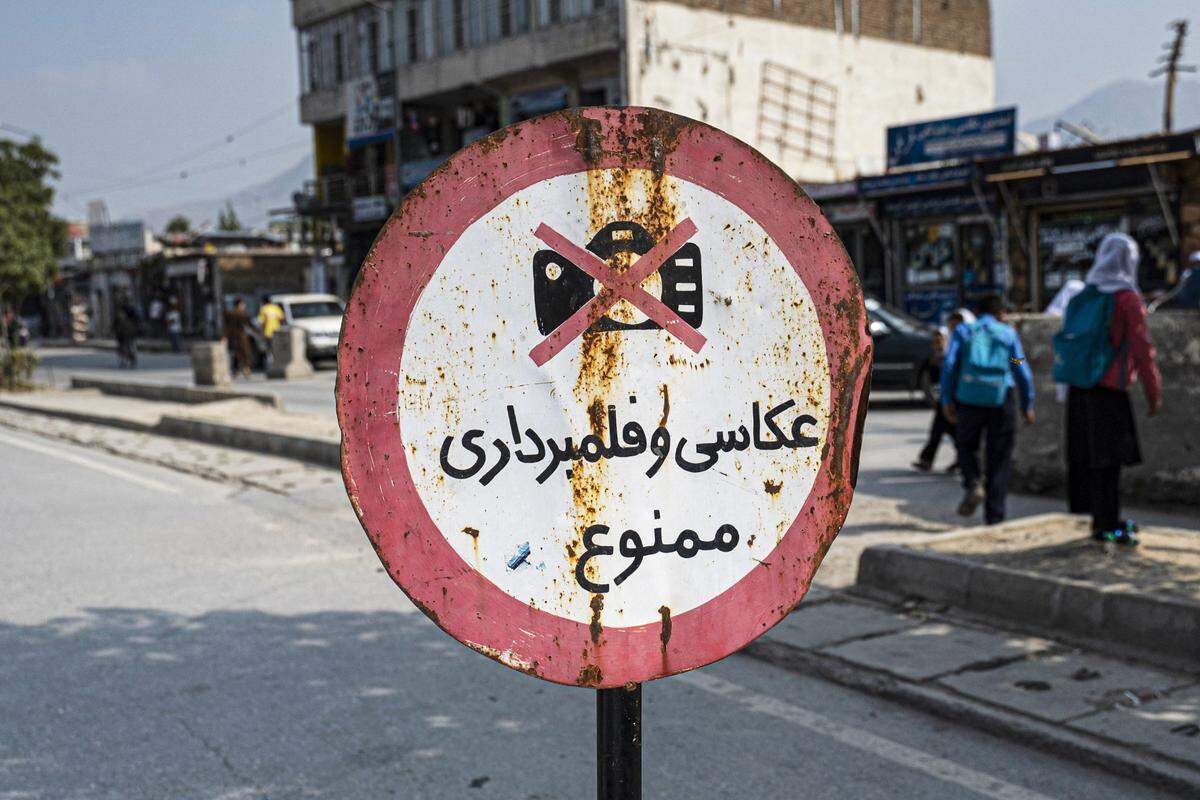
The man the Observer spoke to is worried about his mother, who is still trapped in Afghanistan. She has long been his protector, and loved and supported him when he converted to Christianity as a child, he said. It was their secret.
He said the Taliban beat her and broke her legs, hoping she would tell him to come home. She did not.
“Son, don’t worry about me… Just go and get yourself to a safe place,” he remembered her saying. “Please go anywhere. Because they already killed your brother, your father and they will kill me also.”
While trying to stay alive, he has also tried to get her help. At one point, he debated turning himself in to the Taliban, but friends convinced him that would only lead to his death and his mother’s. She is still under the Taliban’s watch, he said. He hopes to save her one day, just as she saved him.
Right now, he said, “It’s like we are stuck here, between death and freedom.”
An international migration office reached out to the man on Jan. 6, according to Neighbor the Nations, a local resettlement group that has been helping him.
If not for Trump’s executive order, he likely would have been in the Charlotte area within three months of starting the process, Neighbor the Nations said.
Trump’s executive order and funding freeze
On his first day back in office, Trump signed an executive order that paused the United States Refugee Admissions Program, which has been in place since 1980. Last year, the country accepted more than 100,000 refugees through the program.
“The United States lacks the ability to absorb large numbers of migrants, and in particular, refugees, into its communities in a manner that does not compromise the availability of resources for Americans, that protects their safety and security, and that ensures the appropriate assimilation of refugees,” the president’s order read.
The order said that the homeland security secretary and secretary of state should submit a report to him within three months “regarding whether resumption of entry of refugees into the United States under the USRAP would be in the interests of the United States.”
A federal judge in Seattle granted a nationwide preliminary injunction in February, meant to hold Trump back from shutting down the refugee program and lift a federal funding freeze for resettlement agencies.
The administration has charged ahead anyway.
A day after the injunction, the State Department issued termination notices to all national agencies under the country’s refugee program, canceling agreements that fund aid groups. The judge who told Trump to slow down has questioned whether the administration is ignoring his order.
Trump’s Justice Department said in a filing Tuesday that it would likely take months to restart the refugee program after terminating contracts.
The Washington Post reported recently that Melissa Keaney, an attorney representing those aid groups, alleged the administration’s actions were of “flagrant intent to undermine and circumvent the judiciary and Congress.”
Carpet yanked from under
One of the groups that received a “stop work” order in January was World Relief, a Christian nonprofit that got its start helping displaced Europeans after World War II. It is now asking churches to contribute more to fill the gap left by the government.
World Relief is nonpartisan. Its recent appeal to the Trump administration leans on Christian values.
A petition by World Relief to bring back the refugee program and federal funding cites Bible scripture that says God created man in his image, urges followers to “not mistreat or oppress a foreigner” and says one should “relieve the fatherless and widow.”
The people World Relief helps are vulnerable, said Ansley Ozment, a coordinator for the global nonprofit who lives in Charlotte. There is a legal definition for a refugee. And if they want to come to the United States, they go through a long and thorough process filled with background checks, security checks and interviews, she said.
“They have oftentimes spent years and years in a refugee camp, just trying to get refugee status, and then two years trying to work through this legal pathway,” she said. “And then their journey isn’t over. Getting here is the beginning of a whole other stage of this process.”
World Relief case workers around the country had to visit people they promised to help — those who were new to the country and finding their footing — and explain the funding freeze, she said.
Just as some found stability, “The carpet is just completely pulled out from under them,” she said.
Federal lawmakers from North Carolina haven’t told refugee groups where they stand.
Republican Sen. Ted Budd recently responded to concerns raised by a refugee resettlement group and did not take a position.
Budd’s letter referenced a bill introduced by Minnesota Sen. Amy Klobuchar, a Democrat. If passed, that bill would expand eligibility for permanent residence to more Afghans, and specifically to those who helped the United States in the war and their families. He did not say whether he supported the bill.
“Should this or any similar legislation come to a vote in the United States Senate, please know I will keep your concerns in mind,” he wrote.
Resettlement groups motivated by Christian duty
At least one person doing resettlement work in Charlotte wants lawmakers to make a greater effort to help refugees.
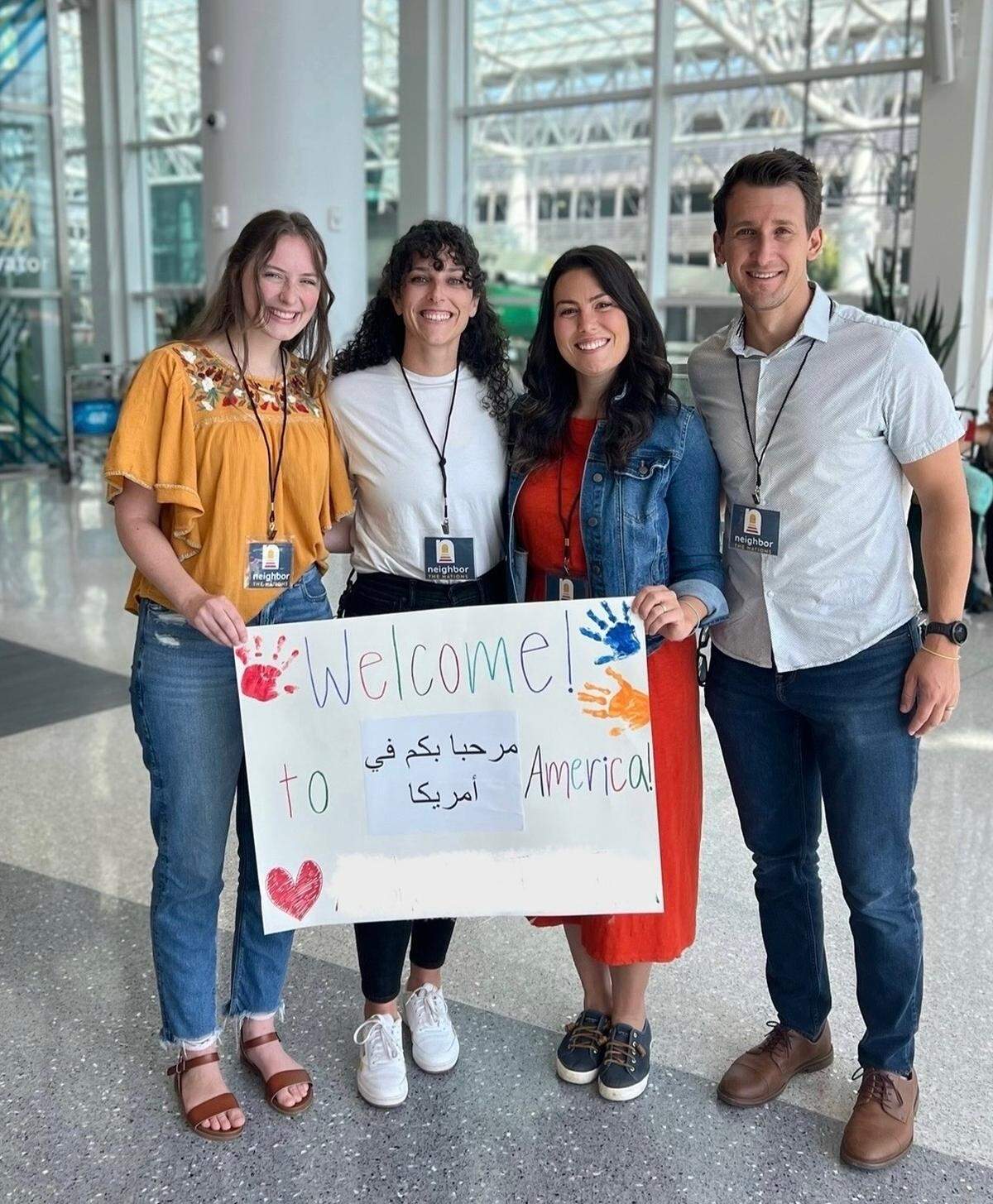
“We would like for them to do more,” said Chris Phillips, who runs Neighbor the Nations. “We represent some big churches that represent a lot of their voters. These are (refugees) in situations that are very important to a lot of people who are in their voting districts.”
Like World Relief, Neighbor the Nations is nonpartisan and rooted in Christian values.
Phillips and his wife, Kendall, started the nonprofit in 2023. They were inspired after working in the Middle East from 2015 to 2019. They felt called to do something as the Syrian Civil War displaced an increasing number of people around them.
Phillips pointed to Matthew’s gospel. There, Jesus told the disciples that what they did to the “least” of people — or those in the worst of circumstances — they did to him as well.
“For I was an hungred, and ye gave me meat,” Jesus said in Matthew 25:35. “I was thirsty, and ye gave me drink. I was a stranger, and ye took me in.”
Phillips connected the Observer with refugees for this story, hoping to draw attention to the issue. If the United States continues to block refugees, the consequences will be fatal, he said after hearing the Christian stranded in Pakistan share his story with the Observer.
“There will be people that will die because of this, and there will be people that will be tortured because of this,” he said. “It has huge ramifications. Being a neighbor … will change lives. It will save lives.”
Brothers separated
Another Afghan the Observer interviewed worked directly with NATO from 2007 to 2014.
He translated for special forces when they went on night missions. Others in his family helped the United States and its war allies, too.
The translator has lived in the United States for about a decade. He has been in the Charlotte area for two years and works in manufacturing now. One of his brothers came to the country in 2017, and his parents in 2022. The family made its way to the United States and out of danger incrementally.
But one brother hasn’t made it.
For three years, the translator and his family have paid attorneys, signed documents and exhausted every program that might get his brother out of Asia.
His brother finally made headway with Welcome Corps.
He was one week from getting the final stamp through that program, which allows United States citizens to host refugees. He would have come to the Charlotte area. Then Trump’s executive order suspended Welcome Corps, which falls under the country’s refugee program.
“He went to his first interview, second interview, his medical,” the translator said. “He was waiting only for his youngest daughter’s medical (clearance)… He would be here if he (didn’t) have any change in the current situation.”
Unsure where else to go
Their parents’ already poor health has deteriorated further from constant stress, the translator in the Charlotte area said as he recalled all his brother had gone through.
The brother at first fled to Islamabad, Pakistan’s capital. Police officers would show up in uniform and harass his family, then show up out of uniform to demand payment, the translator said. His brother also had to pay about double what rent ought to cost as he was exploited.
His brother fled next to Peshawar, where he has received unlisted phone calls from people looking for him, the translator said. The government wants his brother to register his location with police.
The man said he’s run out of options for getting his family here.
“Now, we don’t know where (for him) to go,” he said. “He can’t go to Islamabad because the Pakistani government is not allowing him to live there. He can’t go to Afghanistan due to the Taliban. He can’t stay in Peshawar because people are still following him and asking for money.”
His brother’s children are afraid of the word “police” now, hiding under their beds like there’s a monster in the closet. They have missed school. They live like they are in a prison, the translator said.
“(I have) no answer for you,” he recalled telling his brother in a recent phone call. “What can you do? I can’t tell you to go to Afghanistan. I can’t tell you to go to Islamabad. I can’t tell you to stay in Peshawar. I have no clear answer for you.”
His last hope is that Trump changes course.
“When they needed our help, we did help,” the man said. “Now we need help.”
Ryan Oehrli covers criminal justice in the Charlotte region for The Charlotte Observer. His work is produced with financial support from the nonprofit The Just Trust. The Observer maintains full editorial control of its journalism.
This story was originally published March 14, 2025 at 5:00 AM.