
Does closing Department of Education violate the Constitution? Here’s what McMahon said
President Donald Trump was expected to sign an executive order Thursday afternoon that would begin to dismantle the Department of Education.
That didn’t happen.
But Trump told reporters it’s coming.
“I want to just do it,” Trump said to pool reporters in the Oval Office. “I know we’re starting the process. We’re trying to get the schools back into the states, let the states run the schools.”
News of the executive order broke just three days after senators approved the nomination of Linda McMahon, 77, a native of New Bern and founder of World Wrestling Entertainment, to lead the Department of Education Monday night.
That made McMahon the 13th secretary of education since the agency opened in 1980.
And Trump has been clear from the beginning that he believes if McMahon were to be successful in leading the department, she would also close it down.
Doing so was a campaign promise Trump ran on.
But McMahon testified in her confirmation hearing that she knew to close the agency required congressional approval.
On Thursday morning, Senate Minority Leader Chuck Schumer said the executive order would be “one of the most destructive and devastating steps Donald Trump has ever taken.”
“Right here, is why every single Democrat said ‘hell no’ to the nomination of Linda McMahon,” Schumer said. “This is why we did it.”
The Department of Education
The Department of Education is relatively new, having first opened in 1980. It is the United States’ smallest Cabinet agency with 4,500 employees and a $268 billion budget.
The Department of Education provides four main functions: to create policy and distribute federal financial aid, collect data from research on schools, make recommendations for education reform and prevent discrimination so everyone is ensured equal access to education.
The agency, however, has no authority over what is taught in schools.
Congressional action
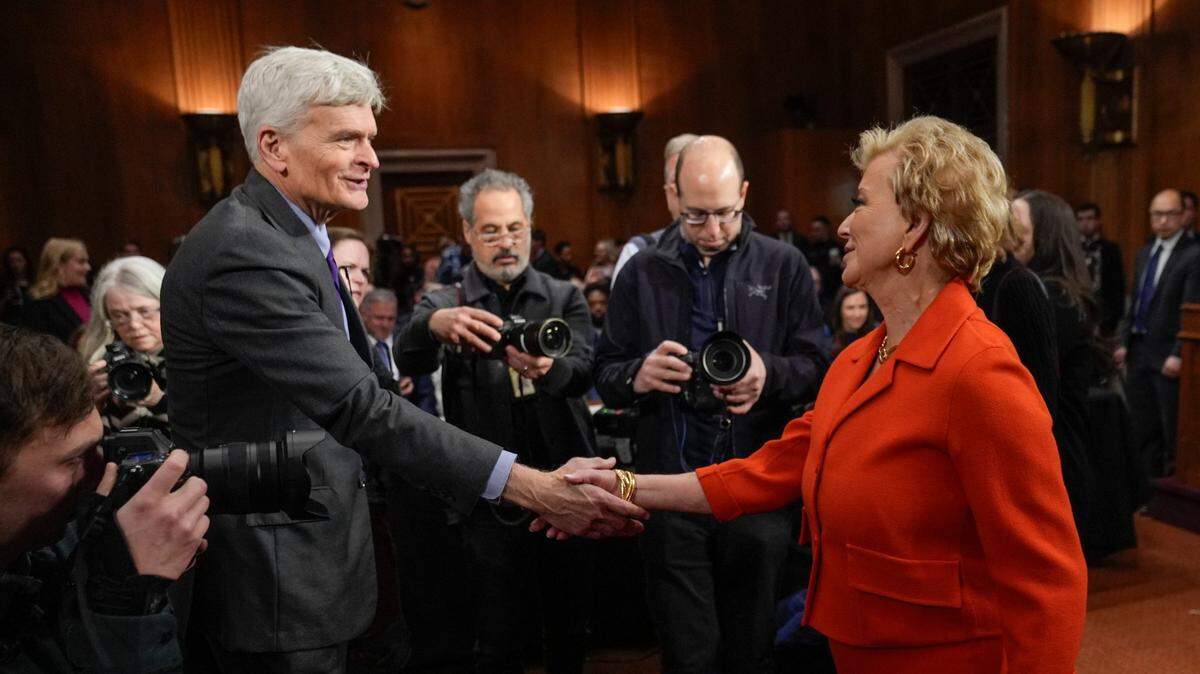
Knowing the concerns of Democrats that McMahon had been charged with closing the agency, Sen. Bill Cassidy, a Republican from Louisiana, asked McMahon point blank during her confirmation hearing about whether she believed an act of Congress was needed to close the agency.
“Certainly, President Trump understands that we’ll be working with Congress,” McMahon told Cassidy. “We’d like to do this right. We’d like to make sure that we’re presenting a plan that I think our senators could get on board with; and our Congress could get on board with, that would have a better functioning Department of Education.
“That certainly does require congressional action,” McMahon said.
Andrew Hessick, a constitutional law professor at UNC’s School of Law, said if Trump draws up an executive order that completely closes the agency, that would run afoul of the Constitution.
“If the statute says, as it does, that there shall be the Department of Education, it sort of lays out the structure of the department, then that is law,” Hessick told McClatchy, “and the president can’t issue an executive order that unwinds that law. He can’t say there’s no longer a Department of Education.”
Hessick said that would immediately be adjudicated in court.
Obsolete education
However, Hessick said, there’s many ways to make a department obsolete without running afoul of the Constitution.
“Agencies can adopt all sorts of internal policies that say what they’re going to do, and they can just sort of go dormant,” Hessick said.
Knowing that, Cassidy pushed McMahon further during the confirmation hearing and asked her, in terms of downsizing the agency, what she believed wouldn’t require congressional approval.
McMahon told Cassidy that departments established under law need to be looked at closely.
“But long before there was a Department of Education, we fulfilled the programs of our educational systems,” McMahon said. “Are there other areas, other agencies, where parts of the Department of Education, that could better serve our students and our parents on a local level?”
She added that she is “all for the president’s mission, which is to return education to the states.”
Federal funding
McMahon assured Cassidy that the states would still receive the federal funding needed, even if the agency ceased to exist.
For North Carolina, that is around an estimated $4.8 billion for the 2025 fiscal year.
Schumer warned the public in a news conference Thursday that without that funding, property taxes across the country would go up.
“The blast radius of this order will harm nearly every child, every teacher, every family and every community in the country,” Schumer said.
This story was originally published March 7, 2025 at 5:00 AM with the headline "Does closing Department of Education violate the Constitution? Here’s what McMahon said."
