Senate budget would eliminate office that helps minority firms seek NC contracts
A Democratic lawmaker said Tuesday she was working to save a program slated to be eliminated under the Senate GOP’s budget proposal that works to increase diversity in state purchasing and contracts.
“Targeted reductions” that Senate Republicans proposed making throughout state government, as part of the 439-page spending plan they unveiled Monday evening, would eliminate the Office of Historically Underutilized Businesses at the Department of Administration.
The office was established by lawmakers in 2001 to “educate and encourage minority-owned businesses how to compete for contracts with state and local government agencies,” according to its website. It currently employs 12 people, according to budget documents.
It’s one of multiple programs and initiatives related to encouraging diversity in business and education that Senate Republicans proposed cutting in their budget.
Sen. Gladys Robinson, a Greensboro Democrat, was quick to ask GOP budget writers about the elimination of the HUB office during the first committee hearing the budget received Tuesday morning ahead of votes expected Wednesday and Thursday.
Robinson said she had data on the work the HUB office does and the benefit it provides by expanding access to state procurement to minority-owned businesses.
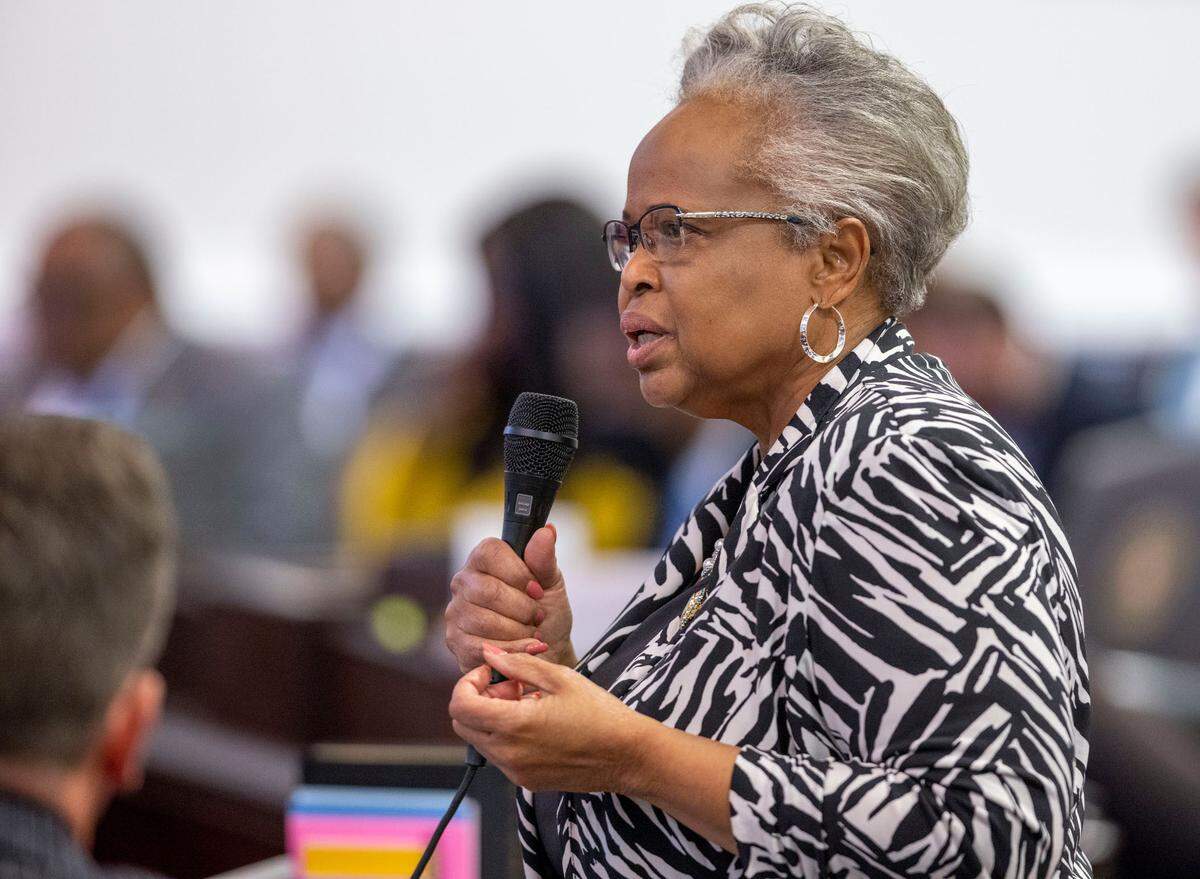
Asked by Robinson for a rationale behind the decision to eliminate the office, Republican Sen. Ted Alexander of Cleveland County said that budget writers “weren’t certainly trying to specifically cut anyone’s jobs, but were trying to save taxpayers money.”
“And the more money we can save now, the faster we can rebuild Western North Carolina,” Alexander said, arguing that the combined cost savings from cutting unnecessary programs across state government would free up more money for Helene relief.
“Of course, nothing prohibits minority or underutilized businesses from continuing to ask for contracts or go after contracts,” Alexander added.
By eliminating the office, the state would save $1.7 million that would have otherwise been spent over two years, part of a $72 million total budget for the administration department.
Robinson said in response that she had spoken with another Republican budget writer, Sen. Carl Ford of Rowan County, about the importance of the HUB office and its economic benefits, and was going to request an amendment to the GOP budget bill to spare the office from elimination right now.
Instead, Robinson suggested, the HUB office should be left in place and could be studied by the auditor’s office under the DAVE Act, a legislative push by Senate Republicans this year calling on Auditor Dave Boliek to review government programs for efficiency.
The Senate recently passed that bill, sending it to the House, and included its provisions in Monday’s budget proposal as well.

Under the existing HUB program, qualifying businesses can apply to become designated “HUB vendors” and be added to a database the office maintains, which it encourages state agencies, departments, and universities and their purchasing officers to use and do business with.
To qualify for certification as a HUB vendor, a business must be majority-owned by someone who is Black, Hispanic, Asian-American, American Indian, female, socially and economically disadvantaged, or disabled.
The budget would also eliminate the $1.6 million allocated over two years to the Community College System’s Minority Male Success Initiative, which seeks to “to increase the progression and completion rates of minority male students.”
The Board of Community Colleges is currently required to report to lawmakers annually on the success of minority male mentoring programs, but would no longer be required to.
This story was originally published April 15, 2025 at 3:05 PM with the headline "Senate budget would eliminate office that helps minority firms seek NC contracts."