National Guard decision in LA ‘very similar’ to 2016 Charlotte protests, McCrory says
Former Gov. Pat McCrory this week compared his decision to send in the National Guard during protests in Charlotte to President Donald Trump’s deployment in Los Angeles.
There are key differences, but both occurred despite some local opposition.
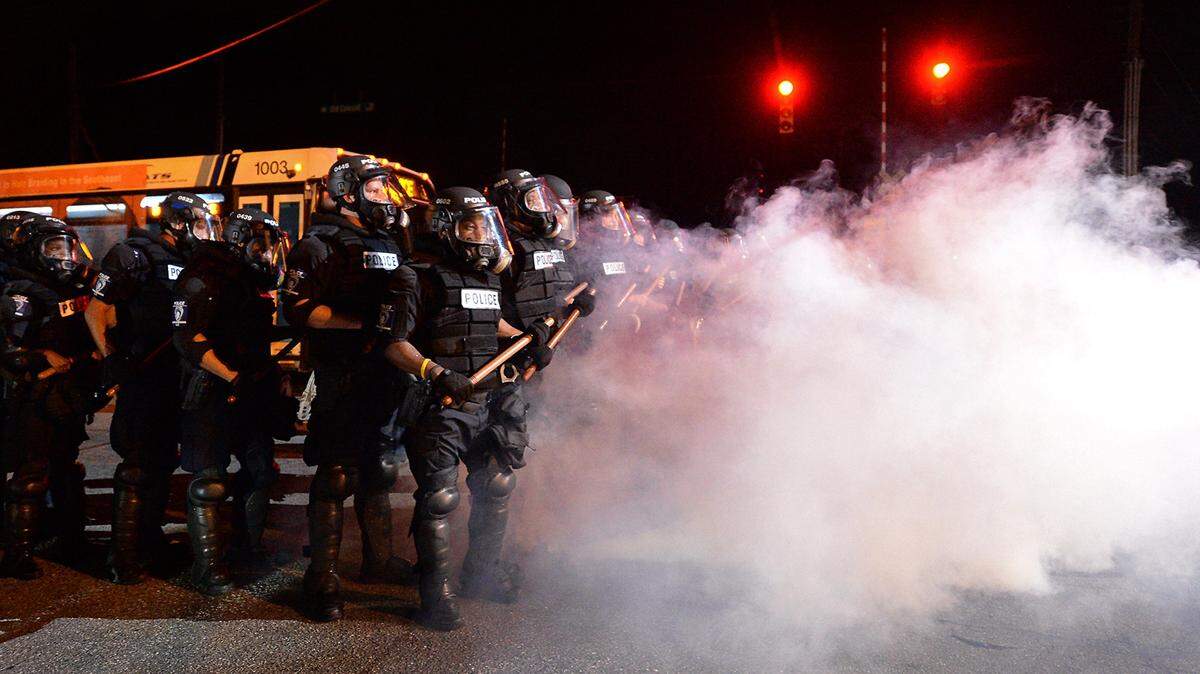
Nearly a decade ago, McCrory sent National Guard troops to protect federal buildings and support law enforcement officers already responding to protests that turned violent after police shot and killed Keith Lamont Scott. Charlotte officials were not initially requesting the use of the National Guard in 2016, but McCrory said he had no choice but to protect the city from “an organized Antifa.”
Last week, Trump sent 2,000 National Guard troops to Los Angeles against California Gov. Gavin Newsom’s directions. The president deployed them to quell protests and interference with immigration arrests, according to Reuters. His order is the first time the federal government has activated Guard troops without governor consent since the 1960s.
“The dynamics are very similar,” McCrory told The Charlotte Observer after making a Facebook post that’s received more than a thousand “likes” and hundreds of shares and comments.
McCrory said the state is put in a precarious position when a governor and mayor aren’t willing to work with the president. He supports Trump’s call to override Newsom.
Jennifer Roberts, mayor of Charlotte during the protests, said she initially objected to calling in the National Guard in 2016 because she needed to talk to the city manager and police chief. After a second night of protests, Roberts said the police chief agreed the National Guard would be useful in protecting federal buildings.
“We called Pat and said ‘yeah we can use them now,’” Roberts recalled. “Turns out he had already mobilized them.”
Charlotte vs. Los Angeles
Bob Schurmeier was director of the North Carolina State Bureau of Investigation in 2016. He said McCrory couldn’t wait for local officials to agree with the National Guard’s deployment.
“If you’re getting ramped up when the riot begins, you’re already behind,” Schurmeier told The Charlotte Observer. “You’ve got to prepare for it. You got to stay ahead of them. You got to be effective.”
One major difference between Charlotte and Los Angeles is that the deployment of the National Guard “was the end of it” in 2016, UNC Charlotte political science professor Eric Heberlig said. Protests continue in Los Angeles.
In 2016, the Guard stood in front of Charlotte buildings while local police interacted with the crowd, McCrory and Roberts said. According to NBC Los Angeles, National Guard troops have also been protecting ICE agents while they make arrests in California, expanding their power past property protection.
“When the National Guard arrived in Charlotte, they were great,” Roberts noted. “We were collaborative.”
The Guard’s presence in Charlotte did not escalate the situation, Roberts said. Meanwhile, Trump sent 700 Marines Tuesday to help National Guard troops stifle protest violence and damage, according to the Los Angeles Times. It’s proof the Guard’s presence escalated tensions there, Roberts said.
Another difference between McCrory’s call for military support and Trump’s is that Charlotte demonstrations stemmed from controversy over whether a Black man was armed and posed a danger to police when he was shot and killed. Los Angeles rallies center around a call to end immigration raids and the U.S. Immigration and Customs Enforcement agency.
Political disagreements
McCrory said there is pressure for left-wing politicians “not to call the guard when they need it.”
But before Charlotte protests, McCrory and Roberts had been at odds over a number of things, Heberlig said. So, McCrory had the political incentive to override Roberts’s initial objection to using the National Guard, he said.
Political disagreements during heated protests, Heberlig said, “just add fuel to the flames.”
Roberts said people dislike when their local officials are overruled. And the president’s decisions created constitutional questions about whether Los Angeles necessitated using military force against civilians — a move only legally acceptable under the Insurrection Act that Trump hasn’t invoked yet, according to NPR.
It “opens a Pandora’s box that’s been broken before,” McCrory said about Trump calling the Guard without Newsom’s consent.
“I wish the governor would have been the one who called the guard initially, so we wouldn’t be in this potential constitutional question,” McCrory said.
‘Exercising their free speech’
In Charlotte, McCrory said “a small number of anarchists” planned violence and destruction. Roberts said there are people who take advantage of protests and create chaos, but that those in 2016 “seemed pretty organic.”
“There are people who are going to get arrested, but the majority of folks are their exercising their free speech,” Roberts said.
Roberts also noted that media depictions of demonstrations can conflate the amount of violence or tension people think is happening in a given area.
This story was originally published June 12, 2025 at 5:00 AM.