Charlotte autism nonprofit turns to local business for help amid federal cuts
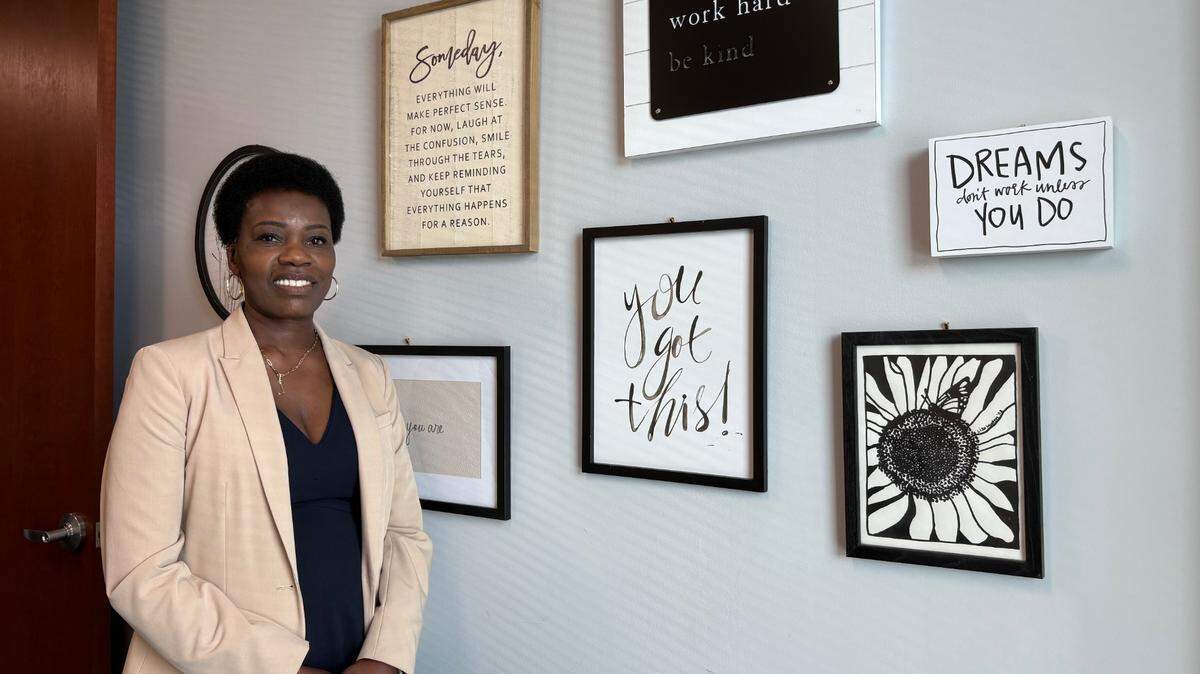
La Becky Roe remains focused on optimism.
The founder and executive director of Let’s Talk About It-The Autism Center, a Charlotte-based nonprofit for autistic people and loved ones, is bracing to see if federal spending cuts and policy changes will hit her group, housed at 601 E. Fifth St.
She’s also turning to fundraising to ensure her work continues.
Autism spectrum disorder — described by the National Institute of Mental Health as “a neurological and developmental disorder that affects how people interact with others, communicate, learn, and behave” —impacts a growing number of Americans.
Despite an emphasis on autism research from some in the Trump administration, including U.S. Health and Human Services Secretary Robert F. Kennedy, Jr., some projects have actually lost money amid federal funding cuts. And advocacy groups caution cuts to Medicaid will jeopardize access to care for many autistic people.
Roe, mom to an autistic son, told The Charlotte Observer she’s still trying to “stay positive” and explore new ways to keep up her organization’s work and support the autism community. That includes a fundraising partnership with a pair of local salons to raise money this month for her nonprofit.
“I don’t want parents to worry. I want them to continue to have hope,” Roe said.
Cuts to autism research, Medicaid
Kennedy announced earlier this year a $50 million research initiative delving into the causes of autism and possible connections to other chronic medical conditions, Reuters reported.
Kennedy — whose previously promoted debunked links between autism prevalence and vaccinations — pointed to research by the Centers for Disease Control and Prevention showing 1 in 31 American children are autistic.
“The autism epidemic is running rampant,” Kennedy said in an April statement.
But, a Reuters investigation found, the National Institutes of Health actually reduced funding for autism-related research by an estimated $31 million in the first quarter of 2025. Many of the canceled projects “involved diverse populations, studied differences in gender or took place at research universities currently under scrutiny by the Trump Administration,” Reuters reported.
Advocacy groups are also concerned about what changes to Medicaid will mean for autistic people.
The Trump administration’s “One Big Beautiful Bill Act,” signed into law earlier this month, cut Medicaid funding and implemented more eligibility requirements for Medicaid recipients. Critics including North Carolina’s Democratic Gov. Josh Stein and Republican U.S. Sen. Thom Tillis have warned the legislation jeopardizes the state’s Medicaid expansion.
The Autism Society of North Carolina said in a July statement it was “deeply concerned” autistic people would lose Medicaid coverage. About 14,000 people with autism or other intellectual and developmental disabilities receive Medicaid services in North Carolina, the group said, amid 1.6 million autistic people who rely on Medicaid nationwide.
Lost funding and more eligibility requirements would make it difficult for providers to maintain current care levels and expand care for people currently on waiting lists, the Autism Society said.
‘We still have to keep moving’
Roe is no stranger to the complicated path for autistic people and their loved ones. Her son, now an adult, was diagnosed with autism spectrum disorder in 1998.
Her organization, founded in 2018, provides life skills and job training for autistic people, support groups and community outreach.
“What we want the community to know, and even family members of individuals on the autism spectrum, is don’t look at autism as a negative, because it’s not a negative. We have plenty of successful persons on the autism spectrum,” Roe said.
Her nonprofit is largely supported by grants from a variety of sources, and Roe is still waiting to see what direct losses if any the group will face.
She’s hopeful pushback against recent federal moves will help preserve federal support.
“We can’t get caught up on what’s going on in D.C. We still have to keep moving and make things happen for our families,” Roe said.
Filling the gaps
Roe’s nonprofit is also looking to private philanthropy to support its work.
This month, that includes a fundraising collaboration with a pair of local salons: La Pure Organic Nail Boutique in Plaza Midwood and J’Adore Nail Boutique in uptown.
The businesses are donating a portion of their profits throughout July to The Autism Center as their “charity of the month.” It’s a tradition the salons have carried on since they opened in 2017, owner Dee Tran said.
“Our goal is not to just give money, but to give visibility to that nonprofit or charity organization,” she said.
In partnering with many groups over the years through her business’s fundraising initiative, Tran’s seen first hand how many of them struggle to find the resources they need, even before federal funding cuts.
“This affects all of us,” she said.
In addition to lost federal funding, charitable giving in the U.S. has also dropped in recent decades.
Both Roe and Tran are hopeful more people in the Charlotte business community will take up philanthropy amid the federal uncertainty, and that community members will support those who step up.
“We have had clients who travel across town just to come to us, because they see what we’re doing and they believe in it,” Tran said.