Medicaid cuts take effect in NC. Here’s a look at the expected impacts.
AI-generated summary reviewed by our newsroom.
- State enacted Medicaid cuts of 3–10%, may force providers to cut staff, pay.
- Medicaid Direct recipients such as some nursing homes will feel cuts earliest.
- Some organizations are delaying reductions temporarily but will recoup payouts if cuts persist.
The Medicaid provider payment cuts that took effect Wednesday are expected to have broad and far-reaching consequences, health experts and some state leaders have said.
But those effects will not be felt all at once, and the reductions — ranging from 3% to 10% — are deeper for some medical providers than others.
Pay cuts, firings, scaled-back investments and providers choosing not to treat Medicaid patients could follow.
Some organizations that pay providers are delaying cuts.
Lawmakers are expected to come back in late October to Raleigh, where they could provide more funding for Medicaid. In late July, lawmakers approved $600 million for the program, but state health officials said the amount fell short of covering needs through June 2026.
Without more money, officials in Democratic Gov. Josh Stein’s administration said they would impose cuts effective Oct. 1. The House and Senate, led by Republicans, separately advanced bills last week to provide more funding, but failed to reach an agreement.
Medicaid cuts create strain
Some providers — such as many who provide personal care services, like adult care homes — are still paid directly by the state under what’s called Medicaid Direct.
But North Carolina’s Medicaid program relies largely on a managed care system. That means it moved away from a model in which the state directly reimbursed providers for each visit or procedure (Medicaid Direct) to one in which most beneficiaries enroll in a health plan, which then manages their care. Tailored plans cover people with complex needs, such as intellectual or developmental disabilities, serious mental illness, or certain substance use disorders.
Those who are paid through Medicaid Direct will see the effects first, said Dave Richard, a former North Carolina deputy secretary for Medicaid and now a senior vice president with McGuireWoods Consulting.
Richard said he has a client “that runs a lot of adult care homes, they immediately will have to start making decisions about reducing staff, (and) reducing staff pay.”
“That obviously impacts the quality of care,” which could lead to issues with the state’s health and human services department, as they have to meet regulatory requirements, he said.
Richard said many nursing homes also receive much of their payment through Medicaid Direct.
“You think about a 10% cut to a nursing home, how difficult that will be for them,” he said.
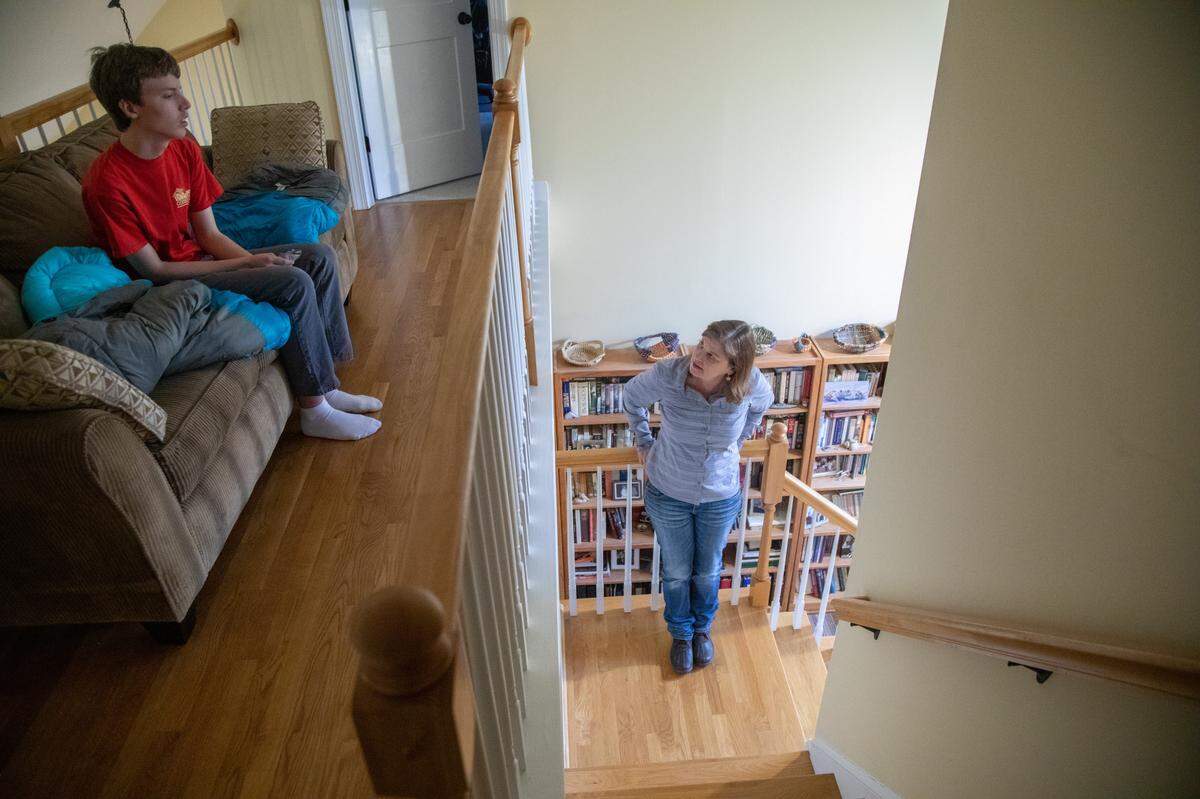
Jonathan D’Angelo, chair of the N.C. Council on Developmental Disabilities and an appointee of former Democratic Gov. Roy Cooper, said the cuts are already creating strain.
Community Alternatives Programs under Medicaid Direct will see a 3% cut, according to a list shared Tuesday by the state Department of Health and Human Services. But that 3% is not the same across the board. For services that support adults with disabilities, the reductions are closer to 8%, D’Angelo said.
D’Angelo relies on caregivers for daily living support that allows him to work full time and serve on the council. He hires and manages his own caregivers, and said his fiscal management service — which acts as an intermediary handling payroll for Medicaid — has already instructed him to cut wages in line with new state rates.
“In today’s economy, reducing pay — that is existential,” he said.
He said one caregiver’s hourly rate is dropping from $20.98 to $19.30, a difference that quickly adds up. He shared a document provided by his fiscal management service showing that and several other cuts, including for Community Alternatives Programs care offered to children.
“These are caregivers who do not make a substantial amount of money at all,” he said. “Anytime you tell someone you’re going to be getting a pay cut, there’s a real fear that they’re going to start looking for another job.”
He added that the demand for these programs already far outstrips supply, with more than 3,000 waiting for Community Alternatives Program for Disabled Adults (CAP/DA) services.
“This puts an enormous strain on a system that is already enormously strained,” D’Angelo said. “These are devastating.”
Hitting medical providers differently
The North Carolina Nurses Association called the cuts “a challenging issue that impacts different places in different ways. Cuts at a small rural hospital are going to hit differently than the same level of cuts at a big urban teaching hospital. Private practice is going to be impacted even differently, with some providers opting to stop seeing Medicaid patients all together.”
“The big picture is that every provider is going to absorb it as best they can, and the cuts will inevitably hurt patient access and could cost healthcare workers’ jobs,” the group said. “We hope legislators and Gov. Stein can work out some sort of agreement that prevents the cuts in the first place.”
Richard said psychiatric residential treatment facilities, which provide non-acute inpatient care, including for children, will also be affected. Because out-of-state programs often pay higher rates than North Carolina, he said children here could end up waiting longer in hospitals, staying in county Department of Social Services offices or being sent to facilities outside the state.
He also said Monarch, a mental health services provider he lobbies for, faces more than $2 million in service reductions over the next nine months.
“You’re going to lose staff. You’re going to have a difference in quality when these things happen, and for some smaller providers, they’ll just go out of business.”
Josh Dobson, the president of the North Carolina Healthcare Association, said it’s “a new environment,” pointing to the federal Medicaid cuts following passage of the Big Beautiful Bill and the state cuts.
“All options have to be on the table, and that might include layoffs at hospitals, it could be service lines that hospitals are currently providing that they may not be able to provide in the future. Potentially capital investments that are going to have to be put on hold — maybe permanently. And investments in behavioral health services that are badly needed across the state could potentially be put on hold for an extended period of time.”
Delaying some of the impacts
The tailored plans are managed by local management entities/managed care organizations, or LME/MCOs. The state pays those plans a fixed per-member, per-month rate to cover patient care. Within guardrails, the plans decide how to pay providers in their networks. They must also meet state and federal standards for adequate provider networks.
Four LME/MCOs operate in the state, each covering different regions, and they are the organizations trying to delay the effects of the cuts.
They’re doing that by temporarily shielding providers from lower payments in October.
But if cuts persist into November, the plans will recoup the difference retroactively for services provided in October, according to a letter from the North Carolina Association of Public Community Health Plans that was shared by Drew Elliot, vice president of public affairs for Vaya Health, one of the state’s LME/MCOs.
The association represents the LME/MCOs.
The letter also says that if DHHS determines the cuts are not needed before Nov. 1, the LME/MCOs will not implement reductions.
It’s unclear whether standard plans will take similar actions.
Peter Daniel, executive director with the NC Association of Health Plans, said “we are working diligently with provider groups to minimize disruptions and to support our network of providers with as much flexibility as our contracts with NCDHHS allow. We remain committed to collaborating with providers to forestall the impact of rate cuts for as long as possible, while continuing to prioritize stability and access to care.”
“If nothing changes, they’ll have to recoup the increased dollar amount for most of those programs,” said Richard, who is also a lobbyist for the association representing LME/MCOs.
“That is almost a double cut,” he said. “Many of those programs are having to make really difficult decisions; even though the plans may delay the reduction, they have to be prepared,” said Richard.
Dobson said “we have to assume the cuts are now, and make preparations accordingly, because unless something changes, whether it’s today or tomorrow or next week: At some point in the near future, these cuts will go into effect.”
This story was originally published October 2, 2025 at 7:00 AM with the headline "Medicaid cuts take effect in NC. Here’s a look at the expected impacts.."