NCDOT will explore I-77 tolls tunnel as it welcomes ‘innovative’ designs
The North Carolina Department of Transportation said it’s open to innovative designs from developers for its controversial Interstate 77 South toll lane project — as long as those designs fall within the footprint it has already laid out for elevated lanes.
State transportation officials largely rehashed old information during a presentation to Charlotte City Council’s transportation committee Thursday. But the department confirmed it will conduct a detailed analysis of what an underground tunnel option could look like and invited potential developers to think outside the box with their proposals.
The design is about 10% to 15% complete and won’t be final until late 2027, according to the transportation department.
“If our developer teams can innovate and find some other way to deliver this project and construct the lanes, then they’re gonna be pursuing that. They’re listening to these conversations,” said Brett Canipe, the western chief deputy engineer for NCDOT.
NCDOT did not offer a timeline for when it might finish analyzing an underground option. The department previously ruled out tunnels as too costly.
And Canipe said any developer proposals must fall within the “narrow footprint” that transportation staff already created for the elevated toll lanes because they determined that pathway resulted in the smallest community impact.
“Obviously the road is where it is. The goal is to improve the road, improve the existing facility. That could occur by some number of means,” Canipe told reporters after the meeting. “We want folks to be able to pursue this project and work to reduce those impacts further.”
NCDOT announced Monday it was delaying the next phase of its process by three months, bowing to pressure from residents and the City Council.
The agency was supposed to issue requests for proposals to four finalist companies this month, which would have been a key step in advancing the project by inviting each firm to create a construction plan. NCDOT delayed those requests until June and is instead sending “preliminary project information” to the shortlisted companies on March 13.
In the meantime, NCDOT is extending and expanding its community outreach efforts. Next month the agency will open a community engagement center, where residents can drop by during office hours to ask questions and get information. Hours and location for that center have yet to be determined, but Canipe said information collected from this outreach will “shape the outcomes and shape the final design” of the project.
Council members LaWana Slack-Mayfield, Malcolm Graham and Joi Mayo, whose west Charlotte District 3 contains most of the affected part of I-77, pressed the agency on its slow responses to their questions, asked in November, shortly after NCDOT released its maps for the first time.
“This is our job. That is part of theirs. They have been asked questions from council. They have been asked questions from community. We need some answers to those questions,” Slack-Mayfield said.
NCDOT committed to answering as many questions as it can every Friday moving forward and documenting the questions it is working on.
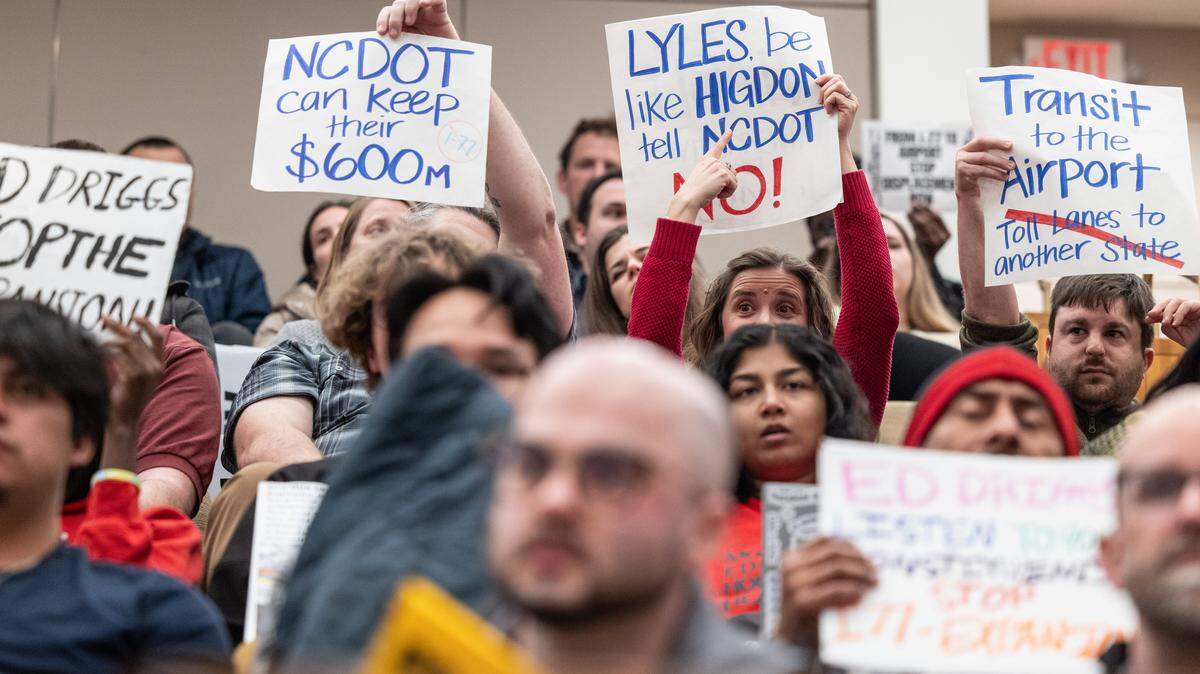
Residents in the audience told reporters they were unsatisfied with the night’s discussion and felt there was a lack of clear progress.
“I assumed today was going to be more talking at us, which is all that’s pretty much happened so far,” said Jessi Garde, a Wesley Heights resident. Her neighborhood falls along the I-77 path. “There’s been very little back-and-forth conversation.”
This story was originally published March 5, 2026 at 8:42 PM.