Why is Charlotte excluding its oldest history museum from yearly arts funding?
AI-generated summary reviewed by our newsroom.
- Charlotte Museum of History wants city funding to address $211,000 deficit.
- The museum isn’t on the city’s list of annual arts funding recipients.
- Officials and funders point to each other, creating a circular funding gridlock.
The Charlotte Museum of History is again asking the city for financial support amid staff reductions and event cancellations.
But the museum says it’s entangled in a bureaucratic loop involving the city, the Arts & Science Council and the Foundation For The Carolinas, with conflicting explanations on how to add its name to the ledger.
“Year over year the other museums in this city are getting massive investments, and we’re getting zero. And it’s just not fair,” museum CEO Terri White told The Charlotte Observer. “I’m tired of being told, ‘You guys put in the work, and we love what you do,’ and no one wants to pay the bills.”
White has petitioned for a spot on the city’s list of annual arts funding recipients since she started in 2022. The city responded with smaller forms of financial support, she said, but red tape and procedural confusion block her from accessing permanent funding.

The city took over arts funding authority from the Arts & Science Council in 2021. Rather than creating a fresh application process, the city inherited a list of 37 organizations that had received grants through the ASC since the early 2000s.
The history museum does not receive funding today because it was not on that “longstanding list,” the city said in a written statement provided by spokesperson Jack VanderToll. No organizations have been added to the list since the city took over. Five were removed: one closed, and the other four fall outside city limits.
VanderToll confirmed to the Observer that the city has authority to request changes to the list, like adding the history museum, but has chosen not to out of consideration for those that already receive funding.
“Any change may impact the funding levels for other organizations,” VanderToll said in the statement.
The Levine Museum of the New South, which is the history museum’s closest direct peer, received more than $566,000 this fiscal year from the city’s arts fund. Some organizations receive more than $1 million for annual unrestricted operating support. And many, but not all, operate in city-owned buildings, meaning the city carries a vested interest in their financial stability.
The Charlotte Museum of History is the city’s oldest history museum and regularly hosts programming and exhibits for all ages. It also maintains the Alexander Rock House, the oldest surviving building in Mecklenburg County that dates back to 1774. It does not use city-owned buildings.
Since White took the helm, she said attendance has returned to pre-pandemic numbers, and revenue is the highest it’s ever been.
Yet the museum still faces a $211,000 deficit due in large part to facility emergencies in its 27-year-old main building.
“I can budget and plan and be mindful with the dollars we have, but you can’t plan to have a boiler go out three times in a month,” White said.
Why Charlotte won’t invest
Arts funding has undergone several iterations in the past five years.
Charlotte established the arts infusion fund in 2021 as a three-year public-private partnership to support local arts and culture institutions. Foundation For The Carolinas raised millions in the private sector, while the city pledged millions more in public dollars.
Then, in 2024, the foundation and ASC unveiled a longterm successor to the infusion fund. Each year, Mecklenburg County approves a $10 million contribution, and the city approves $11 million. The ASC board then votes to confirm grant decisions.
While the ASC has some flexibility in deciding how to spend the county’s portion of the money, it has no say over the city’s share. Only the city can decide how to spend its $11 million and, therefore, who goes on its recipient list.
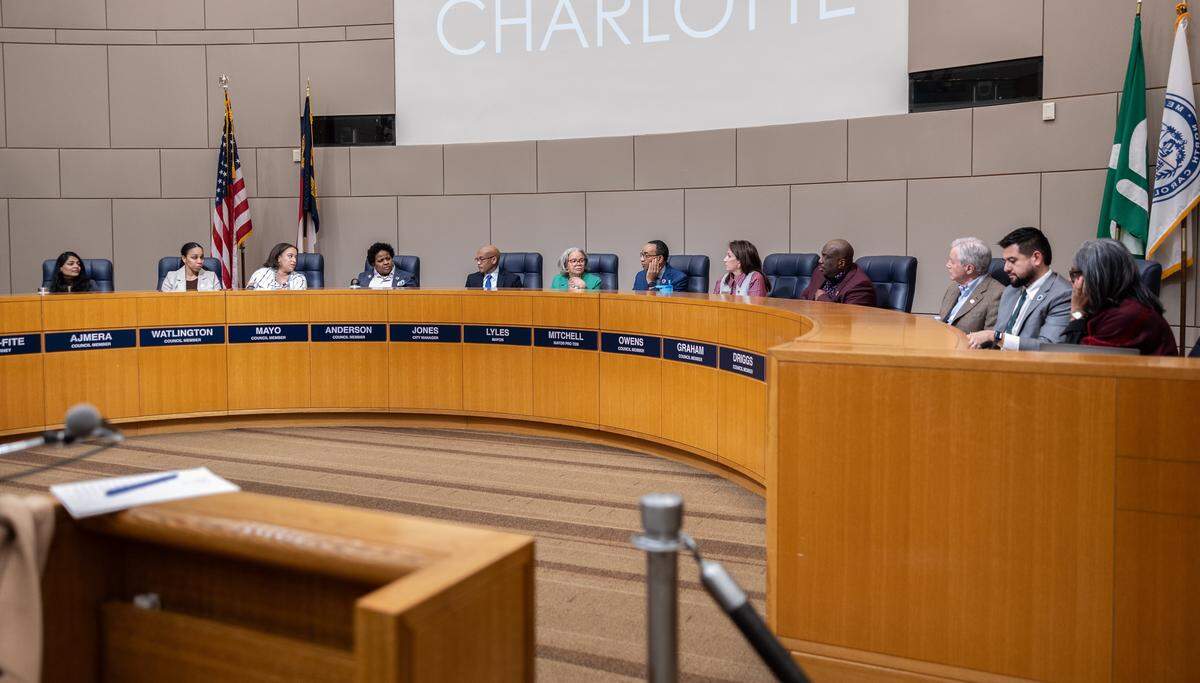
That ever-changing funding structure has caused misunderstanding about the scope of the city’s authority, said Bob Stickler, the former chair of the history museum’s board and former president of the Charlotte Symphony Orchestra. He served on an advisory committee to help set up a new funding system.
“Members of the City Council said basically, ‘Well, we’re not deciding who’s on that list. We’re providing the money.’ I think at the time there was a lot of confusion about what was happening,” Stickler said.
Officials with the Foundation For the Carolinas and the Arts & Science Council directed them to the city, while City Council members directed them back to ASC and the Foundation, according to White and Stickler.
“It’s a circular conversation of who actually has the power to manage this list,” White said. “I don’t really care who it is at this point ... But who is going to step up and say, let’s cut through the bureaucracy and just put our name on the list?”
Why does the Charlotte Museum of History want extra money?
The history museum has a budget of $1.4 million, which is double what it was in 2022. Capacity and program expectations warrant a budget of at least $2 million, White said.
Her aging building presents a new challenge every week, White said. The boilers are older than the building itself, and the roof is made of three different materials. Unexpected repairs caused by years of deferred maintenance siphon funds away from other areas, like programming.
The museum canceled a Scotch-Irish history celebration planned for August, for example, which would have centered on the TV show “Outlander.” Museum staff lined up an actor from the show but had to pull the plug when they couldn’t afford his deposit fee, White said.
White created a long term plan for how she would use city funding to pay off the deficit and address deferred needs.
“To get six or seven figures year over year, to have the ability to make these changes that, frankly, the public doesn’t want to fund, it would be life changing for us,” White said. “Life changing.”
The city has offered support through other channels.
Charlotte twice awarded $100,000 to the Museum of History through its financial partner program in 2024 and 2025. It also awarded $50,000 to support an interactive American Revolution exhibit. White said she appreciates the investment but considers it a temporary solution that doesn’t fully address her museum’s extensive needs.
The financial partner program awards smaller amounts than the arts fund and caps the number of times an institution can apply for and receive money.
The history museum did not apply for additional financial partner program funds this year, according to the city. White said she had to let go of the person who helped her with grants due to budget restraints.
“I gotta tighten my belt for the rest of this fiscal year, and it’s frustrating,” White said.
This story was originally published March 18, 2026 at 5:00 AM.