Why are Charlotte’s government leaders united against NC property tax cap?
AI-generated summary reviewed by our newsroom.
- Local leaders warn a proposed property tax cap would harm services.
- Property taxes provide 64% of Mecklenburg County revenue and 54% of Charlotte revenue.
- Officials say a statewide cap would ignore cost of living differences.
Local officials on Tuesday warned a proposal from the General Assembly to cap property tax increases could have “detrimental impacts” on every child and service across Mecklenburg County.
North Carolina legislators are considering a bill that would allow voters to decide whether they want a statewide limit on how much local governments can raise their property taxes. If it makes it through the legislature during this session, it would be on the November ballot.
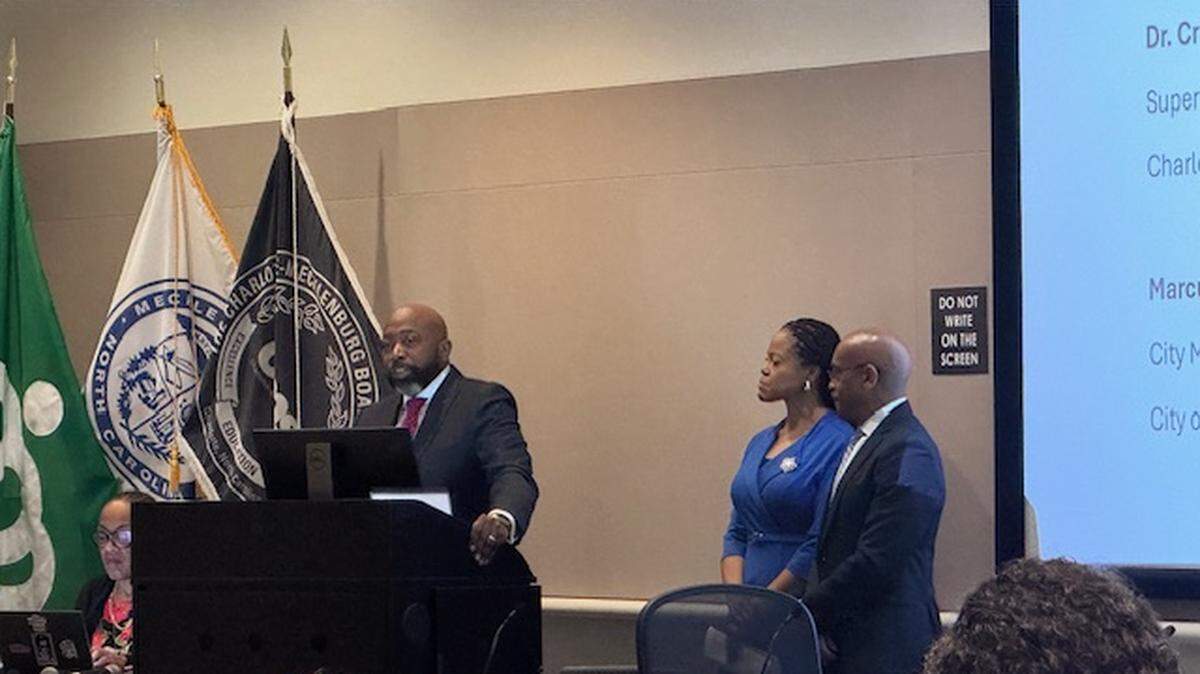
Representatives from the county, the city of Charlotte and Charlotte-Mecklenburg Schools shared a united voice during a joint forum on Tuesday as they urged state legislators to fight against the bill. Ten legislators attended the forum.
“It could change the way we have to do business in a dramatic fashion that will be almost impossible to undo in the future,” said Charles Jeter, a former legislator who works as executive director of intergovernmental relations for CMS. “It will have a detrimental impact on every child in this community, every resident of this community and every service that this community provides.”
The proposed referendum would ask about a constitutional amendment instructing the General Assembly to enact “laws limiting the amount by which the levy of taxes on property may increase,” the Raleigh News & Observer previously reported. An exact amount hasn’t been decided.
Legislators last month framed the bill as a way to give residents financial predictability. Property taxes are collected once a year based on value of items like cars or homes, but cities, towns and counties have flexibility in raising that rate to address local needs. Charlotte and Mecklenburg County use property taxes to fund public services such as schools, roads and police.
Teacher pay also depends, in part, on how much property tax the county collects. The state sets base teacher salary, but local governments can approve supplements to keep pay competitive.
David Boyd, chief financial officer for Mecklenburg County, said local governments have limited flexibility beyond property taxes. At the same time, the state still hasn’t passed a budget for the current fiscal year, which ends in June.
Property taxes account for 64% of the county’s revenue and 54% of the city’s.
“It’s like a perfect storm. If we do have any type of limitations on the single revenue stream that local officials actually have control over, that completely exacerbates the situation,” Boyd said.
Property taxes sit at their current level because local governments have to incur the cost of services that Boyd said should be paid by the state.
“If we’re going to underfund the responsibilities that the state needs to deal with it, how is it that we’re supposed to pay for those things?” Boyd said. “Help us limit what those costs are and fund them as they should be at the state level, and then we won’t have to be concerned about raising the property tax rate.”
Adrian Cox, the county budget director, said the legislature’s proposal ignores the fact that cost of living differs between counties and could put Mecklenburg, the second-largest county in North Carolina, at greater risk for impact.
“One size does not fit all,” Cox said.
The current property tax rate for the county is 49.27 cents per $100 of assessed value. For the city, it’s 24.71 cents per $100 of assessed value.
Both fall well below the current property tax limit of $1.50 per $100 of assessed value.
“The idea that somehow these communities are somehow abusing or overspending is just not factually true,” Jeter said. “The city and county deserve a heck of a lot more credit for what they try to do putting, frankly, five pounds of issues in a 3 pound bag that the General Assembly allows us to do with tax rates.”
This story was originally published April 14, 2026 at 3:37 PM.