Charlotte will pick mayor finalists by Thursday. These 4 could be among them
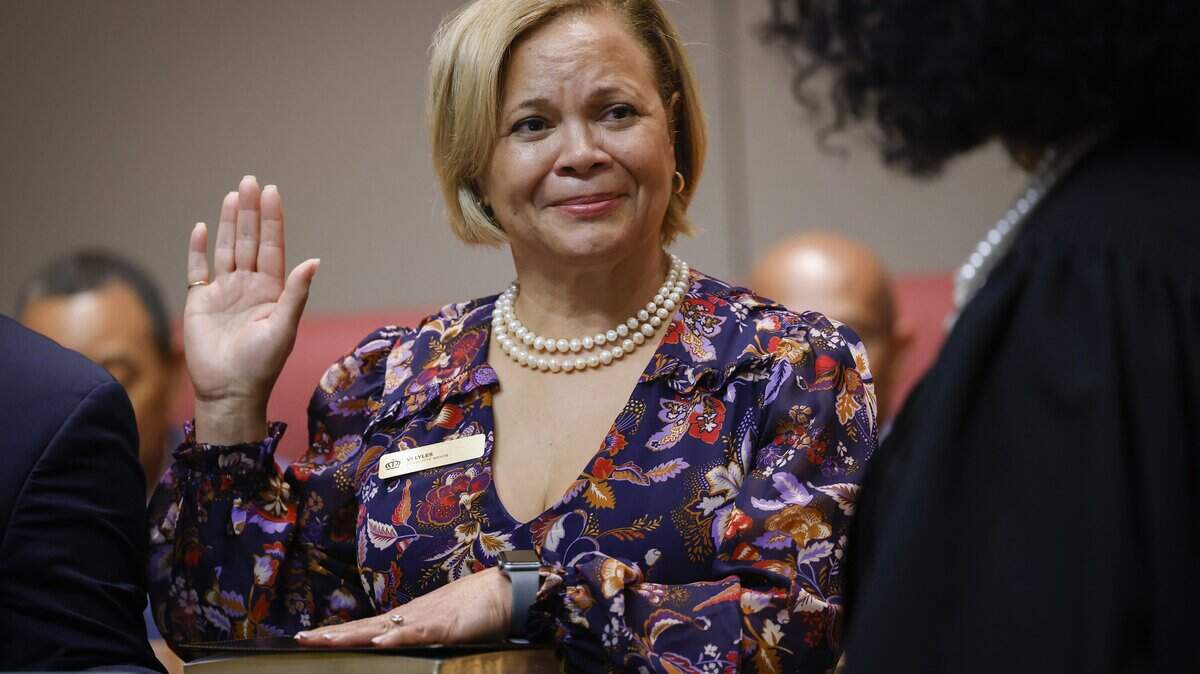
The Charlotte City Council heard from more than 20 interim mayor applicants during a candidate forum Monday. A small handful of finalists will advance to public interviews Thursday, with a final decision set for next week.
Leading candidates touched on several common themes, including affordability, infrastructure and repairing relationships with state legislators.
Candidates also say the interim mayor must return order to meetings, which have become increasingly discordant as the public interrupts proceedings and occasionally hurls pointed insults at council members. Mayor Vi Lyles, who plans to resign as soon as an appointment is made, rarely intervenes when discussion goes awry and often loses track of motions.
One of the mayor’s primary responsibilities is facilitating meetings and maintaining decorum. The mayor only votes in cases of a tie.
The 11 City Council members will vote for up to three of their top choices in a survey Tuesday, and the five candidates who receive the most votes will advance to the interview round.
Although voting hasn’t begun, City Council members have already highlighted several candidates as ones to watch. None of the top applicants to watch intend to run for a full term next year, according to their applications.
More than 110 people applied, many of whom were disqualified because they did not meet voter or residency requirements.
High-profile names include Mayor Pro Tem James Mitchell, who has a vote in the selection and who the city attorney said does not have to recuse himself from the process; former mayor Jennifer Roberts, who did not attend the candidate forum; and state Sen. Caleb Theodros, who would have to give up his seat in the General Assembly for the temporary position.
Here are four candidates council members are considering, and how they say they’d run the mayor’s office.
Harold Cogdell
Harold Cogdell wants to lower the temperature on the City Council. Cogdell told The Charlotte Observer he is deeply concerned by “the erosion of civility, trust and communication” in public discourse.
“There is an opportunity for an interim mayor to come in and really work on shifting the culture of governance, the way people engage with one another,” he said. “That’s the value of the council looking outside.”
Cogdell is an attorney who served on the City Council from 2001 to 2003 and later was chair of the Mecklenburg Board of County Commissioners.
Cogdell said he wants to build one-on-one relationships with each council member to understand what’s important to them and ensure they can advance the discussion on those issues.
“Best governance doesn’t come from stifling minority viewpoints. Best governance comes from giving people the opportunity to be heard,” Cogdell said.
Beyond the city, Cogdell said it is critical that Charlotte repairs its relationship with Raleigh and get conversations around Interstate 77 improvements back on track. The region in May pulled out of a funding agreement that had been more than a decade in the making, leaving the future of the I-77 toll expansion project uncertain.
Cogdell declined to say whether he agreed with the city’s decision to rescind support for its funding agreement with the state.
“We’ve gotta figure out how to find that common ground. (Charlotte and Raleigh) need each other. We really do,” Cogdell said. “It is mutually beneficial for everyone involved for us to figure out how to be mindful, how to be thoughtful, how to be engaging, how to have input and not have a disproportionate impact on any communities.”
Carrie Cook
Carrie Cook would be a first-time government official, but she’s no stranger to local politics.
She has worked with the council and mayor “in various roles as a strategic partner, advocate, and relationship builder,” according to her application. She served on the city’s affordable housing committee and was especially involved in the Charlotte business community, where Cook said she advanced the city’s use of public-private partnerships to fund development.
Cook was a vice president of the Charlotte Chamber of Commerce, now the Charlotte Regional Business Alliance. She also led two nonprofits: EmpowHERment, which fostered leadership skills in girls, and GreenLight Fund Charlotte, which works to address economic and racial equity gaps. More recently, she led community development strategy at the Federal Reserve Bank of Richmond.
“We have families who cannot afford to stay in the neighborhoods they built. We have residents who need to feel safer in their communities. And we have growth that demands intentional planning with community,” Cook said at Monday’s forum. “I have spent my career working inside these very issues, listening, building coalitions and advancing solutions.”
Cook said she is well suited to bring people with different perspectives together during the decision-making process.
“I’ve done it in several roles and my intentionality, transparency, and professionalism as a leader is what I’d offer to this body,” Cook said in her application.
Mike Evans
Civic engagement runs in the family for Mike Evans.
His wife was the first woman to serve as chief district court judge in Mecklenburg County, one of his daughters was an attorney for the Charlotte-Mecklenburg Police Department and another worked for the Obama administration.
That’s to say nothing of his own experience bridging the public and business sectors. He chaired the Charlotte Regional Visitors Authority and the Charlotte Mecklenburg Public Broadcasting Authority; served on boards for the chamber of commerce, Central Piedmont Community College and Novant Health Presbyterian Hospital Foundation; and was a treasurer for the United Way of the Central Carolinas, among other roles.
He was also a campaign manager for Lyles.
“I have often been asked to run for office over the years. I chose instead to contribute to the fabric of Charlotte by assisting other qualified, competent and passionate individuals to seek elective office and subsequently serve,” Evans wrote in his application. “The limited term of the Interim Mayor is the attractive feature of this opportunity.”
Robert Harrington
Robert Harrington has chaired the Charlotte Mecklenburg Library Board and the Arts and Sciences Council board; served as president of the North Carolina Bar Association, North Carolina Bar Foundation and Mecklenburg County Bar; and served on the board for multiple other groups, including TreesCharlotte and the Levine Museum of the New South.
But his daytime job as a trial lawyer is the role that has prepared him best for interim mayor, he said.
“More than anything, the skill of this profession is listening to people and trying to understand what they’re saying,” Harrington told the Observer. “I like to run meetings, frankly. I like to listen to people at meetings, and I think this council could probably use that to preserve the order that is here and is necessary to debate some pretty significant issues.”
Harrington considers himself a “process person.” He wants to ensure orderly processes are in place so all stakeholders are heard on each issue, and the council can make decisions with a full set of information.
That applies to I-77, too, Harrington said. That vote came as a surprise even to some of the City Council’s own members.
“It’s the type of decision that needs to be made with everyone informed and everyone prepared to vote,” Harrington said.
Harrington said he didn’t have enough information about how the council landed on its vote to judge whether he agreed with it.
“There’s no easy answer to the question,” Harrington said. “We gotta figure out how we make those kinds of tough decisions now and be able to look back at them and say, ‘OK, everybody got heard. All the information was shared. All the communications with Raleigh were had. And we came up with a decision that the majority of the leaders believe is in the best interest of the city.’”
This story was originally published June 15, 2026 at 6:49 PM.