Anatomy of a swing state: What these 6 counties tell us about the upcoming NC election
What does it take to win North Carolina?
Throughout the state are swaths of deeply red rural counties; blue cities and urban, dense suburbs; and some areas that may be hard to predict heading into Tuesday’s general election.
For most voters, the biggest race on the ballot will be for U.S. Senate. Democrat and former state Supreme Court Chief Justice Cheri Beasley faces Republican U.S. Rep. Ted Budd. Both campaigns have crisscrossed the state in the months leading up to Election Day.
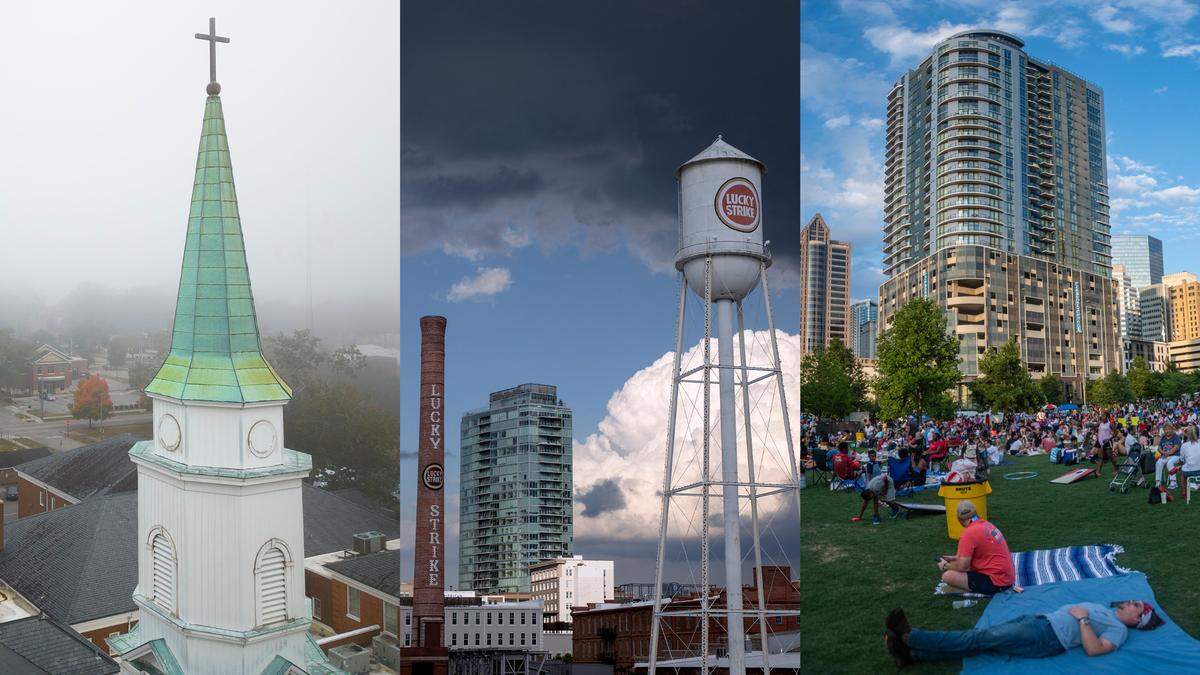
Driving from some of the reddest counties to some of the bluest reveals the diversity of North Carolina politics — from Charlotte coffee shops to Randolph County church pews.
Even in counties likely to lean one way, people will surprise you. As a reporter introduced himself to a woman in now-red Robeson County, she walked onto her porch and asked if the reporter wanted to talk about “T-R-U-M-P.”
“I won’t even say his name.”
ROBESON: SHIFTED RED
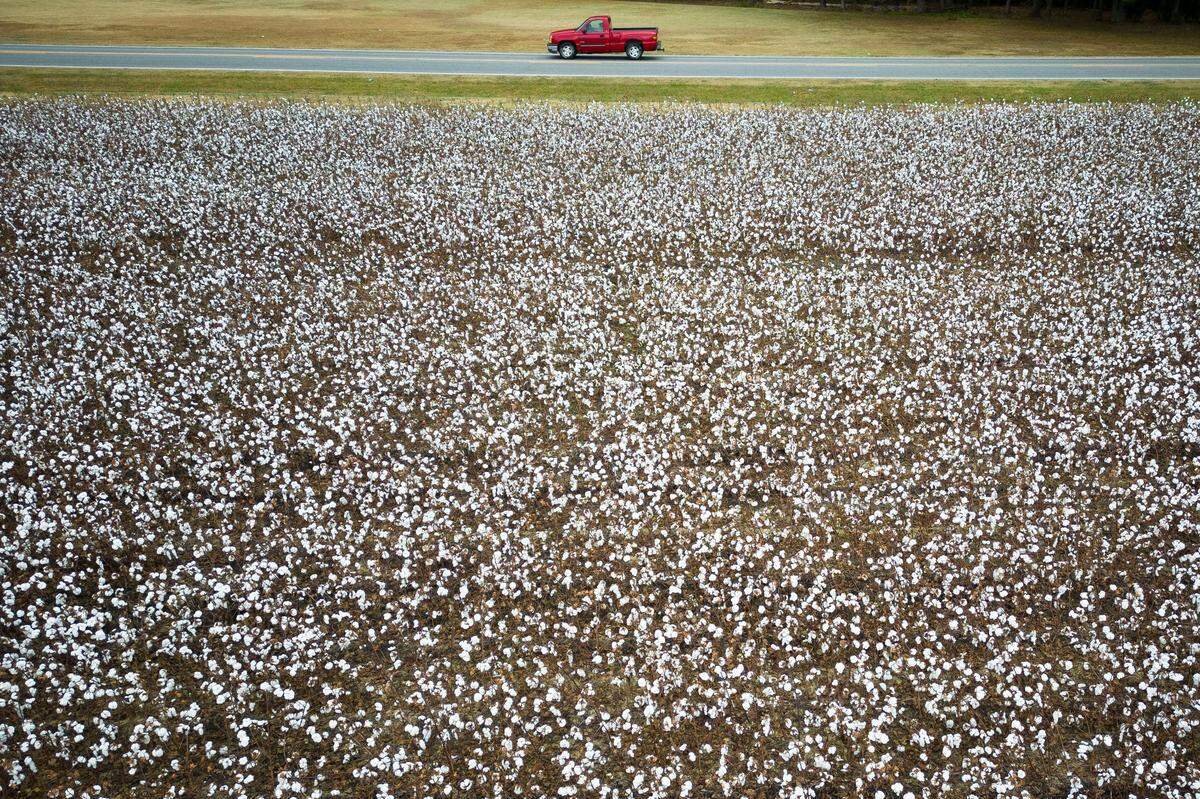
By late October, many of the cotton fields in Robeson County had been harvested. Those that hadn’t been — some stretching for what looked like a mile or more — laid out over the ground to the farthest treeline like a quilt.
Retha Freeman, 73, started picking that cotton when she was 7 or 8 years old.
Her story is familiar in Robeson County. A Lumbee American Indian, Freeman grew up working in agriculture. Her parents were sharecroppers, meaning they tended to a landowner’s farm and received a share of the profits at the end of the year.
Throughout her life, she watched as the smaller farms declined in number. Tobacco is a fraction of what it was. Machines now do much of the work Freeman grew up doing by hand.
As she grew older, Freeman worked in textiles. She worked for a time at the Converse factory, which closed in 2001, and said she went on to open a sewing manufacturing business of her own.
Like many people in Robeson County, Freeman’s political views, informed by the area’s changing economy, are complicated.
A Democrat who has volunteered on campaigns over the years, Freeman said she’s unsure who she’ll vote for in the U.S. Senate race. Beasley hasn’t impressed her, and she’s unsure about Budd.
She’s a loyal supporter of Charles Graham, a Democratic state representative, who she said helped get funding to fix up a mosquito-infested ditch between her house and the road. Graham is challenging Rep. David Rouzer for a seat in Congress.
Recent election results indicate Budd will win Robeson County. Republican U.S. Senate candidates won the county in both 2016 and 2020, as did former President Donald Trump.
But the county’s Republican-leaning is relatively new.
Former President Barack Obama carried Robeson by wide margins in both 2008 and 2012. Democratic U.S. Senate candidates won in 2010 and 2014.
“The Democratic county, I guess, isn’t a Democratic county anymore,” Pearlean Revels, chair of the Robeson County Democratic Party, told The Robesonian after the 2020 election.
Robeson is among the most diverse counties in the country, according to data from the U.S. Census Bureau. In 2020, more than a third of residents were American Indian, a quarter were white, 22% were Black and 10% were Hispanic or Latino.
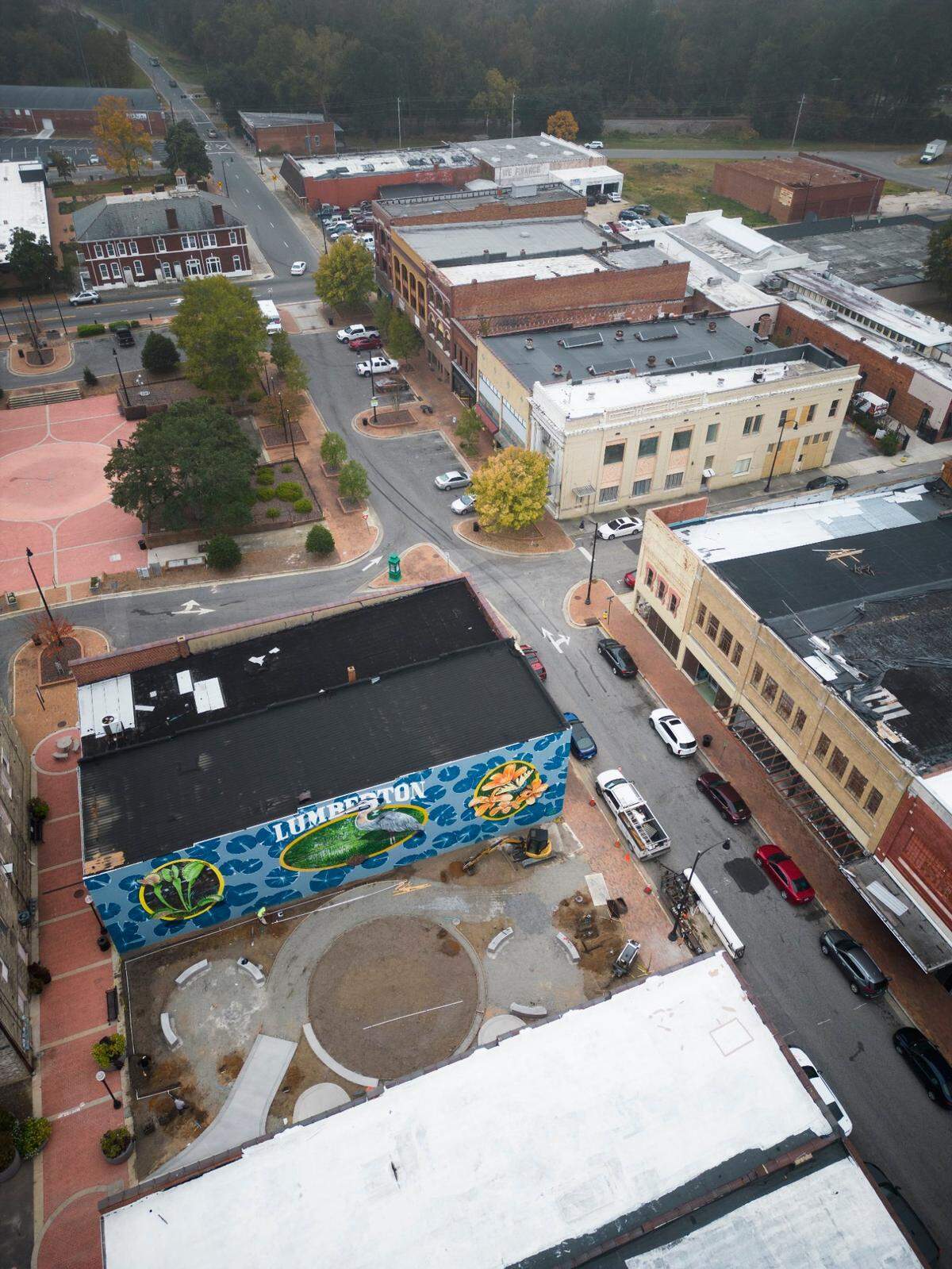
The Republican Party has made moves hoping to maintain its momentum.
In June, the Republican National Committee opened a community center there, hoping to build on relationships with the Lumbee Tribe “and remind people that there is a place for every American in the Republican Party,” an RNC news release wrote at the time.
“We’re excited that this county went red in 2020, but we don’t want it to be a one-off election,” North Carolina GOP Chairman Michael Whatley said in a statement at the time. “We want this to be a Republican county going forward.”
MECKLENBURG: SHIFTED BLUE
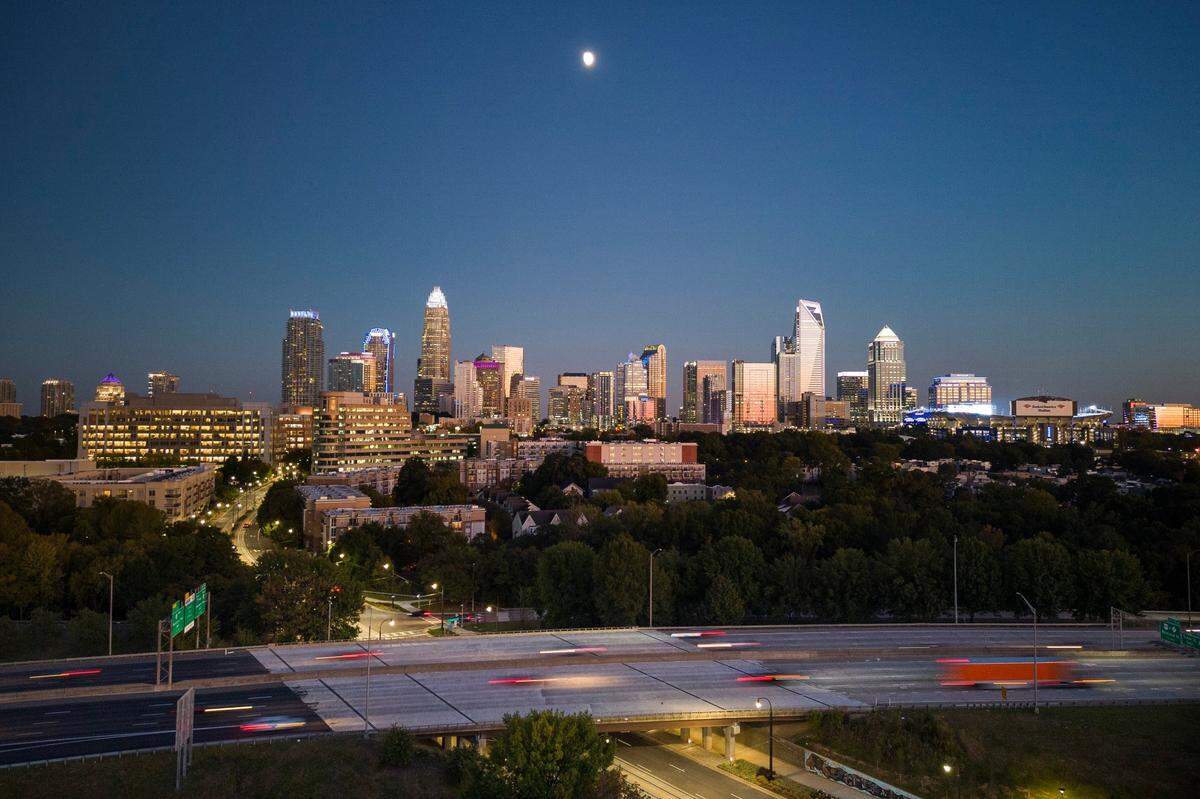
Driving through much of Mecklenburg County, its political leanings are obvious.
As you get farther from the county lines, yard signs supporting abortion rights take the place of the Trump flags you’d see in Republican-leaning surrounding counties. There are more Democrats here than in any other county in North Carolina.
“We’re like an island,” said Dan McCorkle, who has worked as a Democratic political operative for 37 years.
It hasn’t always been that way. Republican former Gov. Pat McCrory, also Charlotte’s longest-serving mayor, won Mecklenburg as recently as 2012.
But in federal elections, the trend line points reliably left.
U.S. Sens. Thom Tillis and Richard Burr both saw dramatic declines in Mecklenburg over their last two elections. Burr saw a 9 percentage-point drop from his 2010 election to 2016; Tillis saw a 5 percentage-point drop from 2014 to 2020.
In addition to a far-reaching media market, the county’s voters can also make up a huge amount of ground for candidates running statewide. Mecklenburg County voters represent about 11% of all North Carolina voters. Of the state’s roughly 2.5 million Democrats, 14% live in Mecklenburg County.
“Mecklenburg’s a huge deal,” said Larry Shaheen, a Republican political operative and attorney in Charlotte.
Shaheen said the Mecklenburg strategy for statewide candidates differs by party. Republicans, he said, have to “lose by less,” meaning they expect to lose, but a loss of extreme margins in Mecklenburg could severely hurt a candidate’s chances at victory.
Democrats, meanwhile, want to push turnout as high as possible, Shaheen said.
Since 2010, Republican U.S. Senate candidates have done considerably worse in presidential election years in Mecklenburg. Turnout is also much higher in those years.
While McCorkle also said Mecklenburg can play a big role in winning statewide, he said relying too much on the reliably blue county can be a mistake.
When Beasley lost by about 400 votes in her statewide bid for chief justice, McCorkle said some people pointed to Mecklenburg County and accused Democrats there of dropping the ball.
Beasley won the county by 33 percentage points — or more than 182,000 votes — but even such an overwhelming lead in Mecklenburg can end up with a loss overall.
“People think Mecklenburg can (pull the same weight as) 80 counties. Well, it can’t,” McCorkle said. “A statewide candidate needs to run a complete statewide campaign.”
SCOTLAND: PURPLE COUNTY
Just northwest of Robeson County, which flipped from blue to red in 2016, is Scotland County, one of North Carolina’s tightest areas in recent elections.
Scotland was one of just three counties in North Carolina to flip between the 2016 and 2020 presidential elections. The others were Nash and New Hanover.
With a population of about 34,000, Scotland has voted reliably Democratic since 2008. Obama won by a wide margin in both 2008 and 2012. Hillary Clinton won in 2016 with 52.5% of the vote.
But in 2020, Trump won with 50.58%.
As in Robeson, Scotland County has moved to the right recently. The margins of past elections, though, indicate it’s still a swing county in a state where many areas lean reliably one way or the other.
In Laurinburg, the county seat, unoccupied storefronts stand next to restaurants that fill up at lunchtime.
One Friday afternoon in October, boutique owner Terry Gallman talked with clients who came in to sample her going-out-of-business sale.
Gallman has lived in Scotland County for 27 years. Three years ago, she opened Terry’s Boutique, which she said couldn’t survive the combination of the pandemic and recent inflation.
As she’s followed the U.S. Senate race and other campaigns, Gallman said she thinks Democrats are focusing too much on abortion. Economic issues and law and order, she said, “hits everybody.”
“It’s become a luxury to get an $11 meal,” Gallman said.
From 2016 to 2022, Democratic representation among registered voters shrank from 58% of Scotland County voters to 48%. Meanwhile, Republican representation jumped from 16% to 21% and unaffiliated representation climbed from 26% to 31%.
The overall population has declined by about 5% since 2010, while the state’s population has grown. Over the same time period, 51 counties lost population and 49 counties gained population, according to an analysis of U.S. Census data from UNC-Chapel Hill.
Many of the counties that lost population were rural parts of the Sandhills and the northeast.
Outside of town, Mark Thames stood outside his garage, above which hung a Trump 2024 flag. Thames moved here from Concord, near Charlotte, looking for a better price on a home and a bit less noise.
Thames said he plans to vote for Budd, and he expects even some registered Democrats to follow suit.
Thames also pointed to economic issues as a major political driver in Scotland County – one that could push it further to the right in November.
“(Democrats) don’t want to admit” that inflation is a problem, Thames said. “They say it’s Trump’s aftermath that we’re feeling.”
DURHAM: SOLID BLUE
As far back as 1952, Durhamites have voted in favor of Democratic presidents, except in 1972, a Republican landslide year in which they favored President Richard Nixon over Democratic Sen. George McGovern of South Dakota.
Durham has also often opted for Democratic senators, House members and other elected officials. Currently, Durham’s congressman, David Price, all of its state House and Senate members, the city mayor and all county commissioners are Democrats.
Politicians and academics who spoke with The News & Observer said Durham is such a blue county because of its demographic diversity and its urban nature.
Durham’s importance in elections lies largely in its population numbers. One example came in 2016. On election night, Democrat Roy Cooper was lagging behind former Gov. Pat McCrory, who was seeking a second term, until roughly 90,000 votes from Durham were added to the tally, helping push Cooper over the finish line.
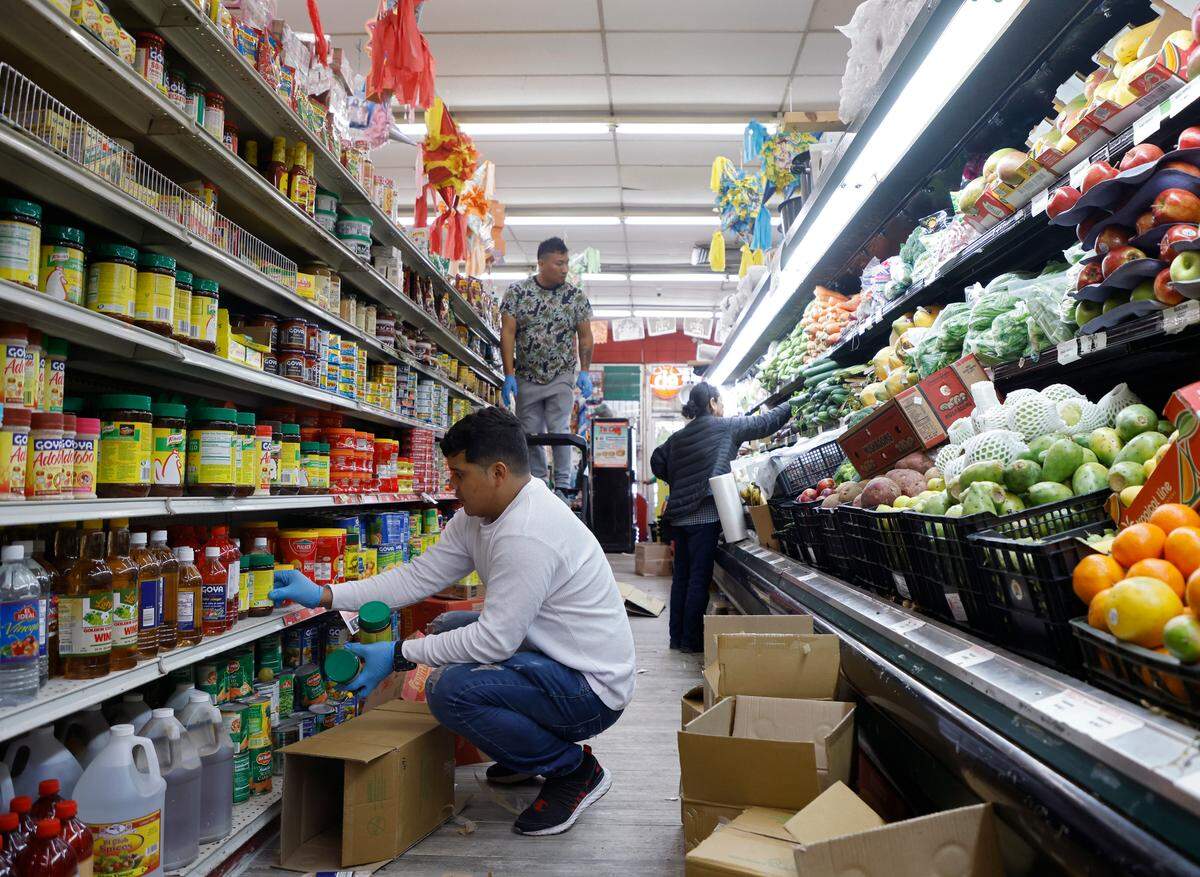
Durham has the fourth-highest number of registered Democrats in the state, behind only Mecklenburg, Wake and Guilford counties.
For Floyd McKissick, first vice chair of the N.C. Democratic Party, Durham has trended “bluer and bluer” over time because of its substantial, politically engaged African American population — 32% of registered voters are Black — and young people moving from other parts of the country, who in some instances have a “more progressive thought and opinion.”
“I think those are factors that tend to make us one of the bluest dots in North Carolina, and we tend to not only meet expectations, we tend to exceed expectations in terms of voter turnout,” McKissick said.
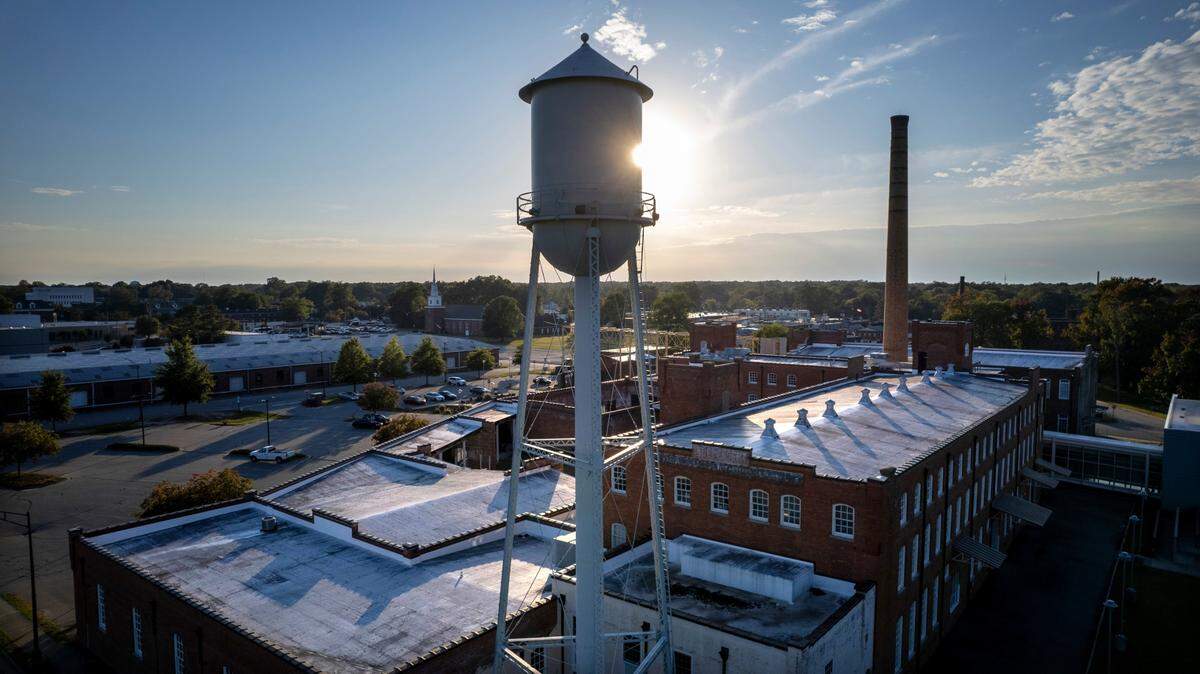
In the past decade, Durham, once a tobacco and textiles hub, has seen tremendous growth: Its business district has expanded, housing units and buildings have risen — in what often feels like from one day to the next — and more and more people are moving to the area.
Durham was dubbed the “Black Wall Street” during the late 19th century and early 20th century, as the Black middle class grew and Black-owned businesses lined a set of four blocks on Parrish Street. Still, the vast majority of Durham’s Black residents were low-wage, working class.
The Great Depression in the 1930s hit Durham’s textile industry hard, and desegregation in the 1960s caused many Black-owned businesses to shut down as they could not compete with their white counterparts.
Today, it’s known for Duke and N.C. Central universities, its growing business sector, its thriving entertainment scene and its racial and ethnic diversity.
“Durham County is unique,” said Immanuel Jarvis, chairman of the Durham Republican Party. “We have multiple major universities here, which bring a high level of youth and diversity. But it also brings a political timbre that invites and creates basically an incubator for liberalism,” Jarvis told The N&O in an interview during a ‘Ted Budd Meet ‘n Greet’ event hosted in the Durham County GOP headquarters in mid-October.
The N&O spoke with a handful of people at the event. They mostly expressed concerns about illegal immigration, wanted more oversight on federal spending on programs and largely supported more abortion restrictions.
Gabe Milla, 49, who said he is registered as unaffiliated, said he will probably vote for Budd, as he aligns more with Budd’s conservative views. In particular, he supported more oversight on abortions and welfare programs.
“I believe that you should be able to take care of yourself. And while I believe that there are people who genuinely need assistance and help, and they should be helped, I think there’s a lot of people who, if the government gives them money, they’re not gonna work,” Milla said.
A few weeks earlier, during an event at NCCU, Beasley — alongside Laphonza Butler, president of EMILY’s List, a national organization that works to elect women candidates who support reproductive rights — talked about the importance of women having access to abortions and reproductive care, as well as the importance of addressing climate change and everyone having access to health care and economic opportunities.
“It’s really important for us to fight hard for abortion rights,” Beasley said. “This is the first time in our nation’s history that a constitutionally protected right has been taken away. And if it can happen once, it can happen again.”
The conservative-majority U.S. Supreme Court in June overturned Roe v. Wade, which had granted the constitutional right to an abortion.
NCCU students in attendance told The N&O they were concerned about reproductive rights, crime in the county and education.
Devin Freeman, a political science sophomore, said he hoped if Beasley won the Senate race that she’d work to ensure abortions remained available and accessible and that she’d fight to improve social justice issues, such as gentrification, gun violence, and student debt.
“Far too often, I see these same issues going on in my community, but I don’t hear them talked about on the state, as well as on the national level,” he said.
McKissick hoped young voters in Durham would turn out for Beasley this midterm, following the reversal of Roe v. Wade and President Joe Biden’s announcement in late August that the federal government would forgive up to $20,000 in unpaid student loan debt.
Democratic state Sen. Natalie Murdock called on Durham voters to vote during a Democratic event in Durham in late October.
“We got to do it like Durham. Durham has elected so many folks statewide,” said Murdock, who is running for reelection in her district against Alvin Reed, a Republican.
“Votes will be on the margins because we are a purple state,” Murdock said. “There are counties where it will be tough. So Durham, we have to vote and that turnout has to be really, really, really, really high — folks are depending on us,” Murdock said.
NASH: PURPLE COUNTY
Driving into Nash County, one sees large swaths of open fields – a sign of one of the state’s prime agricultural communities.
Still, the county is considered urban by official measures. It has experienced recent industrial growth but continues to face challenges in recruiting businesses and attracting people to live there.
This growth is most noticeable near its biggest city, Rocky Mount, where residents tend to vote for Democrats, and there’s more diversity. Residents also often commute to and from — or are a transplant from — the Triangle, according to local politicians, while those who live in the more rural areas of the county often vote Republican and have lived in their community for generations.
This exurban reality is something many counties within commuting distance of the Triangle face. In Nash, it also contributes to making it one of North Carolina’s most purple counties by many measures, according to local politicians and academics interviewed by The N&O.
In 2016, voters narrowly favored Trump with 48.92% of votes over Clinton with 48.75%. In 2020, Biden won 49.64% of votes to 49.41% for Trump. It also has flip-flopped its political preference across the years in U.S. Senate races.
That’s true even though registered Democrats dominate; 44% of registered voters are Democrats, 29% are registered Republicans and 27% are unaffiliated.
For Jarrod Kelly, assistant professor of political science at North Carolina Wesleyan University, located in Rocky Mount, the Senate race in the state will largely come down to whether Budd and Beasley can win over unaffiliated voters and turn out their bases — in particular, for Democrats, African American voters, and for Republicans, white voters in rural areas, he said.
“It’ll be interesting to see in these Republican, more rural areas in Nash County, whether Trump not being on the ballot, we’ll still see a such high turnout among those types of voters,” Kelly said. “There’s also a big question mark on the Democratic side; we’ve seen some declines in support for President Biden, among Democrats. I think those declines have been less steep for African American voters.”
For Mark Edwards, Nash County Republican Party chairman, Nash is “on the knife’s edge of being 50/50.” Who wins in a given year depends on the election and voter excitement, he said.
“When Obama ran for the first time, you can see a heavy turnout of Democrats who were very enthusiastic about Obama,” Edwards said. “And, that helped put him over the top in Nash County. But then you have other years where you see that there’s a little bit more excitement in the Republican base. And when that happens, you see the Republican win.”
Midterm elections don’t have the same voter engagement as presidential elections, he said, and the “atmosphere, when you’ve had Trump on the ticket in the past, it’s certainly not the excitement that comes with that.”
Edwards spoke to The N&O during an interview at the Fields & Cooper, PLLC law firm, where he is a practicing attorney. The firm was founded by Democratic Gov. Cooper’s father. Cooper, who was born and raised in Nash County, also was an attorney there before becoming attorney general, Edwards said.
For the Senate election, Edwards said that Budd “not being from the east, does suffer from some lack of name recognition in this area of the state, and his campaign, I believe, is working to combat that issue.”
Still, he said, Budd, “needs to work through that name recognition issue, even here, in the last few weeks of the campaign for us to feel comfortable about him putting it over the top.”
Edwards said he thinks abortion — a topic that has been at the forefront of many Democratic campaign efforts — would not be a rallying cry for voters in Nash.
“The Democratic Party here in Nash, a big constituency in this party, is the African American community. And I don’t think that abortion is the number one issue with them as it is may be in other areas where the progressive wing of the Democrat party may be more dominant in a particular county,” Edwards said.
In Nash, 39% of people are Black and 49% are white, according to the U.S. Census Bureau.
“It’s more crime and the economy,” Edwards said. “That’s of interest to both Democrats and Republicans. And if I’m correct, and those are the issues that are on voters’ minds, I feel good about how that helps Republicans on Election Day.”
During a Democratic campaign event in late October with Rep. Jim Clyburn, the House majority whip, at The Prime Smokehouse, a Southern cuisine restaurant in Rocky Mount, state Rep. James Gailliard called Nash a “very slightly leaning Republican county.”
On Democrats’ prospects in the Senate race, Gailliard said he recognized that the “rural Eastern North Carolina vote is sometimes difficult to get.” He also said that “we need to see more aggressive campaigning from Cheri’s campaign, quite frankly, here in the rural eastern part of North Carolina.”
“When you look at the needs of inner-city Rocky Mount, compared to some of the needs in our county, it is very, very different,” said Gailliard, who is running against Republican Allen Chesser and Libertarian Nick Taylor.
Rocky Mount is split between Nash and Edgecombe counties. Edgecombe leans significantly in favor of Democrats, has a larger percentage of Black or African American residents and has almost twice Nash’s poverty rate, according to the census.
In Nash, Gailliard said, “We are seeing some growth in the job sector. The problem we have here is the same problem we have statewide, but I think it’s exacerbated here, which is, we just don’t have the workforce.”
“So what happens with these good paying, $25- to $30-an-hour jobs that we get? They’re driving in from Johnston County, they’re driving in from Wake County, they’re driving in from Pitt County, and that tax base is going back with them,” Gailliard said.
To fix this issue, community college systems in the county and workforce development entities need to be involved at the time of negotiations with companies coming in so that they could have the appropriate time to prepare and train the local workforce, he said.
For Cassandra Conover, chair of the Nash County Democratic Party, unaffiliated Nash voters will align with the party that touches on issues that matter to them.
“When we’re talking about women’s rights and women’s right to health care with abortion, when we’re talking about the impact of the economy, that affects everybody,” she said.
In addition, she said voters in Nash wanted to see improvements in high-speed internet access — in particular farmers — and many were concerned about the teacher shortage, mental health declines, gun violence and safety issues.
Budd, she said, had supported a bill for abortions to be prohibited after 15 weeks of pregnancy and voted against the Bipartisan Safer Communities Act, which funded crisis intervention and expanded background check requirements for young people buying guns, in certain circumstances.
“We know how he has voted,” said Conover, who also said Beasley had been active in Nash, having been to the county at least three times during her campaign.
Susan Larkins, 67, while grocery shopping in Dortches, said she had followed the Senate race “very little. I’m one of those, I’m gonna bone up on it before I go,” she said. “I try not to watch all the negative stuff so that I’m not swayed one way or the other,” she said. Still, she was likely going to vote “straight Republican. I feel like that’s in our best interest right now with what our country is going through,” she said, citing concerns with inflation and border security.
Another voter, Cassandra Williams, 35, also said she had not been following the Senate race and that while she votes by candidate and not by party, she was leaning towards Beasley.
“One thing that I do care about is, I hope abortions are still legal in North Carolina, I’m not saying that I’m for abortion, but some circumstances are required to save a mother’s life,” said Williams, who said she was also concerned about crime.
RANDOLPH: DEEP RED
Budd stood on a stage in Asheboro’s Bicentennial Park in Randolph County on a sunny Sunday afternoon in late October.
“We got inflation, we got crime under Joe Biden, then folks are coming up right now to me and they’re saying you know what, ‘I think that parents ought to have a say in their kids’ education, anybody believe that out there?’” he said, addressing the 100 or so people in the audience.
The crowd cheered. Someone shouted in agreement.
Budd has often touched on crime, education, inflation and illegal immigration during his campaign events. He often speaks about these issues in party-line terms, placing the blame on the Biden administration and Democrats.
This approach works well in Randolph — a county in his House district, and one whose economy is largely based on manufacturing. It’s one of the state’s reddest counties. The county is also racially homogeneous, with an 88% white population, according to the census.
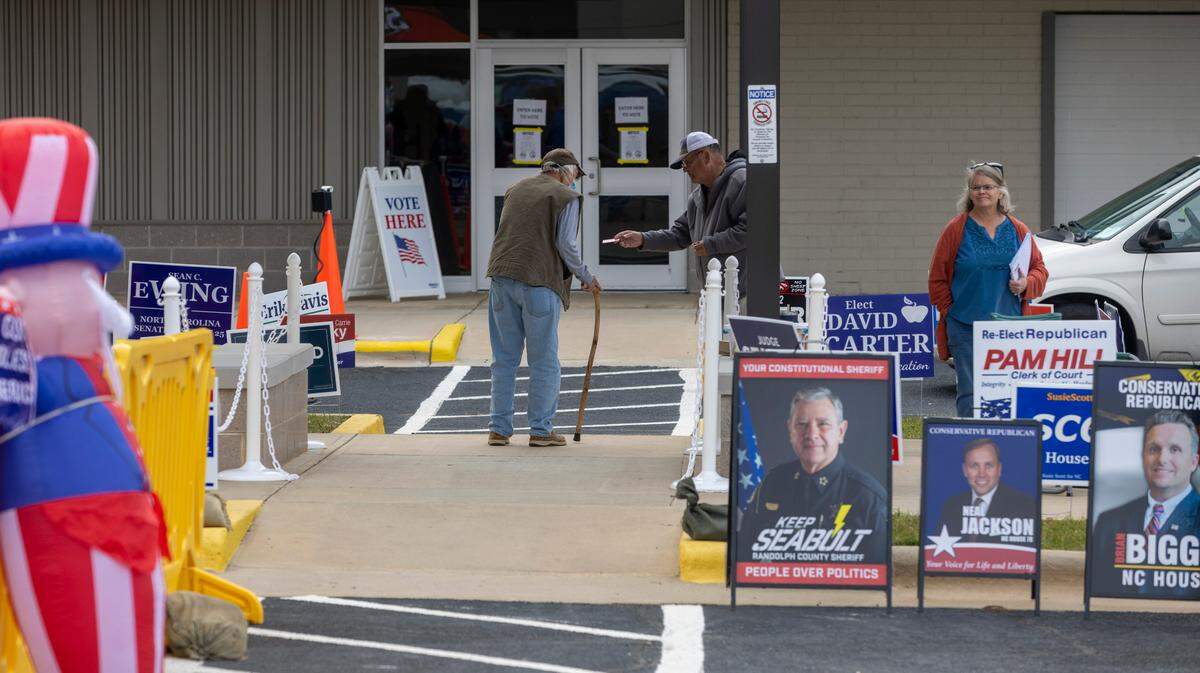
Since 1952, no Democratic presidential candidate has won in Randolph. Residents have also voted for Republican candidates for Senate, most recently opting for Republicans in 2014, 2016 and 2020.
Also in attendance at Bicentennial Park was Lt. Gov. Mark Robinson, the top Republican in North Carolina’s executive branch, who decried the state of the country — blaming Democrats — lauded Trump and once more hinted at running for governor in 2024.
“We can once again put a pro-America candidate and America-first candidate into the White House and restore some dignity and sanity to that office,” he said.
“That America can be led into the future by someone who truly loves this nation, not someone who is being ruled over and run by Communist China,” Robinson said.
Budd was endorsed by Trump during the Republican primary. He voted against certifying Biden’s election.
In an interview with The N&O in the GOP headquarters in Randolph County, T. Rick Smith, chairman of the county party, traced Randolph’s Republican affiliation to history. In particular, Smith mentioned the settlement of conservative Christians and other religious denominations, such as the Quakers — Religious Society of Friends — in the Piedmont Triad area.
Quakers’ belief in the sacredness of human life has informed their views on the human family, gender equality, pacifism and the abolition of slavery, according to the Encyclopedia of North Carolina by the University of North Carolina Press. Quakers, during the Civil War, opposed joining the Confederacy and had viewpoints more aligned with Republicans, President Abraham Lincoln’s party.
Large Republican affiliation in Randolph remains because of “strong leadership over many decades that had some basic values and principles,” Smith said. Residents have held onto “conservative Judeo-Christian heritage values. They certainly look toward the government, especially the federal government, doing the necessities, not expanding into trying to govern over every detail of people’s lives.”
Just a minute’s walk away, on the same street, Randolph County Democratic Party Chair Elizabeth Hubbard also
traced Republican dominance to the establishment of Quakers and other religious denominations in the area.
“So many people in this county have been here — their families have been here — since that time, and I think they just continued to register Republican,” Hubbard said.
“My dad, my daddy, was a Republican, so was his daddy. So they continued to register as Republican and they just sort of formed their politics to what the Republicans stand for now,” Hubbard said. But for Hubbard, rather than remaining with the party that backed liberty and rights, they “switched” and “stayed Republicans, but changed their way of thinking,” she said.
Voters she speaks with often care about improving Social Security benefits and health care and expanding Medicaid, and are concerned about the reversal of Roe v. Wade.
She said the county was in dire need of infrastructure improvements, in particular roads and pipes. Beasley, she said, would work to get those improvements as she would be less “stingy” with money.
Smith said voters he heard from cared about border security, wanted lower taxes and were concerned about crime and inflation.
Terry Green, 53, said while at the polls on the first day of early voting that he considered himself an independent but planned to vote for Budd. Green was against Biden’s federal student loan forgiveness and said he wanted abortion restrictions, but with exceptions for rape and incest.
Randolph looks likely to remain a red stronghold, even as change is on the horizon, including the opening of a new Toyota battery factory in Randolph in 2025 and plans by VinFast — a nascent automotive company from Vietnam — to build a multibillion-dollar production facility in neighboring Chatham County.
Hubbard hoped the large number of people coming into the county for the new jobs might lead to a slightly more purple county.
“When you have one party in charge for years and years and years, there’s a whole group of people that are not represented at all. And it is not a very fair way to live,” she said.
For Smith, these changes won’t lead to a more purple county.
“I really don’t see the political climate changing in any major way anytime soon. In fact, the more that nationally, folks get disenchanted with what’s going on in other places, sometimes I find they get even more dedicated to making sure that some of these things don’t come over here, “ Smith said.
For more North Carolina government and politics news, subscribe to the Under the Dome politics newsletter from The News & Observer and the NC Insider and follow our weekly Under the Dome podcast at campsite.bio/underthedome or wherever you get your podcasts.
This story was originally published November 4, 2022 at 6:00 AM.
.jpg)