What not to wear: Can poll workers ask you to leave if you’re wearing candidate garb?
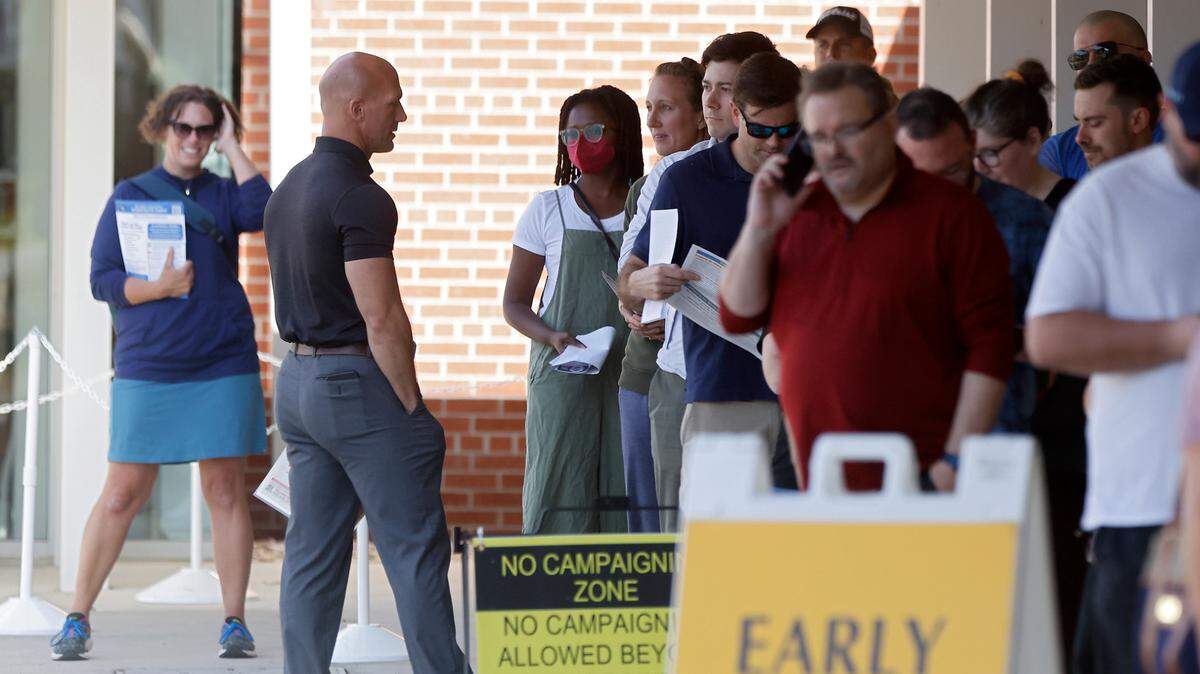
The 2022 midterm elections have finally arrived and more than 2 million North Carolina voters, including more than 200,000 in Charlotte, have already cast their ballots ahead of Election Day.
As political hopefuls battle it out, some voters may be inclined to show support by fashioning buttons, hats, shirts, or other garb of a candidate while at the polls.
But is that practice really allowed? The answer is more complicated than it seems.
According to Kristin Mavromatis, a public information manager at the Mecklenburg County Board of Elections, voters are allowed to vote at their polling place while wearing political clothing and accessories (hats, shirts, buttons, etc.) as long as they do not linger, do not speak to anyone and vote in a timely manner.
“Anyone’s allowed to wear whatever they want to vote,” Mavromatis told The Charlotte Observer. “But, if you wear it, you have to walk in, vote, and leave.”
North Carolina legislation is often used as a rebuttal, more specifically GS 163-166.4, which states that “no person or group shall hinder access, harass others, distribute campaign literature, place politics ad or solicit votes.”
But this rule doesn’t stop voters from wearing clothing that simply states a candidate’s name, The News & Observer reported.
Voters run into trouble when their political garb attempts to convince others at the polls to vote for their candidate, with phrases like “Vote for.” That’s when the items you wear could become electioneering.
According to Chapter 163 of North Carolina’s election laws, “electioneering” usually refers to any broadcast, cable, or satellite communication, mailing, or phone call that mentions a clearly identified candidate for elected office and is transmitted to the masses.
Poll workers, who are prohibited from wearing political paraphernalia, may ask voters to cover up their shirts and remove caps while they vote. However, it is fair game to wear what you want outside voting facilities, Mavromatis said.
However, wearing shirts, hats or buttons that contain a call to action for your candidate and even verbally encouraging others to vote for a specific person are all examples of electioneering at the polls, too.
When asked about electioneering enforcement, Mavromatis told the Observer that deciding to wear political items is a “First Amendment right” for voters but could be problematic depending on the circumstance.