Less than 50% of Mecklenburg voters cast a ballot this year. What kept so many home?
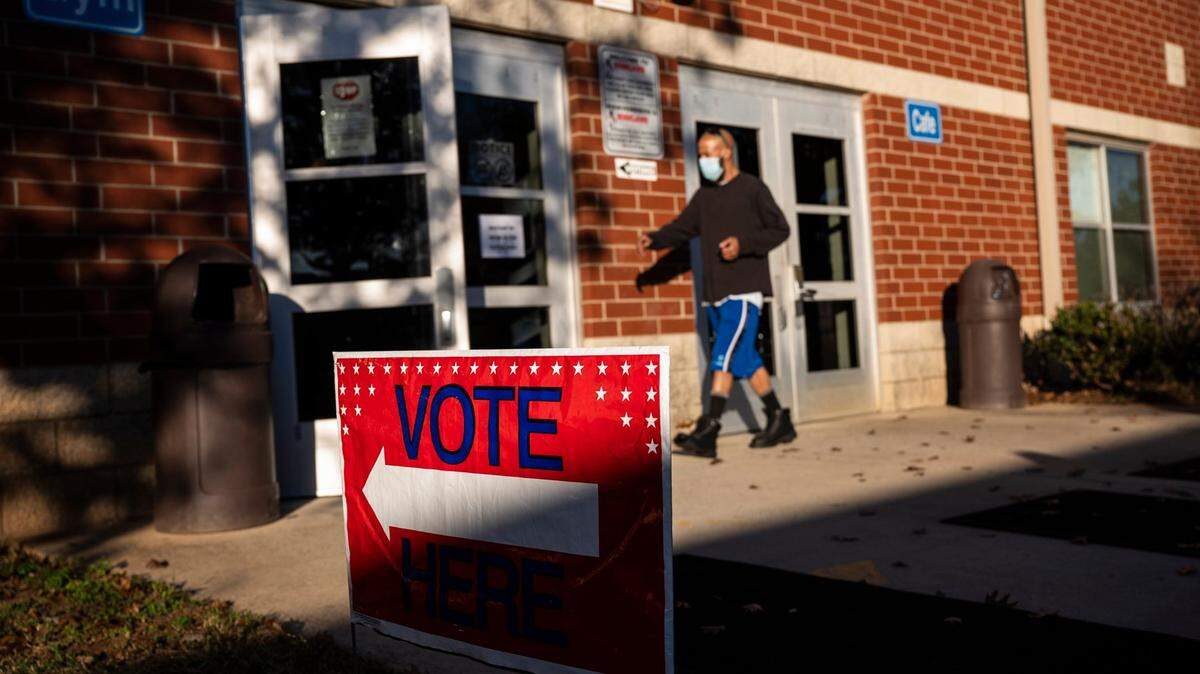
Despite a politically charged landscape and hotly contested U.S. Senate race, less than half of eligible Mecklenburg County voters cast a ballot in the 2022 midterms, state data shows, lagging behind much of the rest of North Carolina.
Local voter turnout levels weren’t completely disappointing or surprising, Charlotte political experts said, but do raise questions about the effectiveness of candidates, campaigns and “get out the vote efforts.”
“There were still over 400,000 votes left on the table …,” local Democratic strategist Annetta Foard Watkins told The Charlotte Observer. “Everybody has to be asking themselves today: How do we get 400,000 additional people to just go and vote?”
2022 voter turnout in Mecklenburg County
About 44.4% of Mecklenburg County voters participated in the 2022 midterm election, according to data from the state Board of Elections.
That’s less than North Carolina’s statewide voter turnout of 50.5%, and also trails other Charlotte-area counties and Democratic-leaning metro areas in the state, such as the Raleigh-Durham area.
“That is something that the Democratic Party needs to be very concerned with because the fact that Wake County increased turnout from 2018, which was their high watermark, but Mecklenburg County decreased points to some form of dysfunction within the party’s turnout apparatus around Mecklenburg County,” Republican consultant Larry Shaheen told the Observer.
It’s important to compare this year’s turnout number, Democratic strategist and campaign consultant Dan McCorkle said, not just to other parts of the state but also past election cycles.
Voter turnout this cycle was down in Mecklenburg County from 2018 midterm election levels of 50.9%. But, 2022’s figure exceeded the 39% total of 2014.
“I did a turnout model, and I was actually pretty proud of it, that said 42% to 45% (of voters) are going to vote in Mecklenburg County,” McCorkle said. “We do that by looking at past history. We looked at 2018, we looked at 2020 and we even looked at the 2019 special election.”
The demographics of a large urban area like Mecklenburg County, and the ways they differ from other, more rural or suburban parts of the state, can also impact turnout levels, UNC Charlotte political science professor Eric Heberlig explained.
“Typically when you have more low-education, low-income population centers, younger population centers, those are lower turnout demographics, so the county as a whole sees its average pulled down by that,” he said. “But that doesn’t explain why we would sink more this year than the other urban counties.”
A lack of competitive local races may have impacted voter enthusiasm in Mecklenburg, he added.
Did Mecklenburg turnout impact statewide races?
The marquee race of the midterms this election cycle was the battle between Democrat Cheri Beasley and Republican Ted Budd to succeed outgoing U.S. Sen. Richard Burr. Polls showed a relatively close race, and the outcome was expected to help decide which party would have majority control in the U.S. Senate.
The Democratic-leaning Mecklenburg County was critical territory for Beasley, who ultimately lost to Budd. But higher turnout in Charlotte wouldn’t have made a difference, McCorkle suggested.
“She lost badly all around Mecklenburg County,” he said. “People try to compare us to Georgia, but they cannot because Georgia has DeKalb, Gwinnett, all these counties around Atlanta that are Democratic. All the counties around Mecklenburg are staunchly red counties.”
Although he said he believes issues including President Joe Biden’s approval rating and high inflation had more of an impact on the Senate race, Shaheen noted turnout can have an impact when races get close.
“When you look at the last two competitive Senate races, (20)‘14 and ‘20(20), you’re talking a margin of less than 80,000 votes … (Turnout) could make a difference,” he said.
Mecklenburg County’s voter turnout “certainly depressed the Democratic vote totals” this election cycle, Heberlig said.
“Looking at the percentages, Democrats got the percentages of votes that traditionally would help them win statewide from Mecklenburg County, ‘‘ he said. “But part of the reason that the Democratic margins were wafer thin was if the turnout was a little lower.”
Shifting demographics in rural counties also had a significant impact on Democrats’ statewide chances, he added.
“The more rural areas of the state that used to be more Democratic now are much more solidly Republican,” he said. “So Mecklenburg can come in at 67% Democratic, and that used to be enough to help Democrats win statewide. But the Democrats are losing rural parts of the state by larger margins that can offset the high margins in Mecklenburg County.”
Candidates, voter outreach critical to future elections
Looking forward to the 2024 election cycle, Heberlig expects a “competitive” presidential race and gubernatorial election to help drive people to the polls.
“Those two races are the type that bring in lots of outside spending to the state. Lots of media attention,” he said. “Those are the things that are going to drive turnout statewide. So particularly in terms of Mecklenburg County, that means getting staff and volunteers on the ground that help identify and turn out lower propensity turnout voters.”
Who ends up on the ticket in the 2024 presidential election will likely also impact turnout, Shaheen predicts.
“I think we need to wait and see whether or not (former President) Donald Trump actually gets the nomination, because that’s going to be the number one factor in how things happen,” he said. “If Donald Trump gets the nomination, Republicans need to run for the hills. If Donald Trump does not get the nomination and someone like (Florida Gov.) Ron DeSantis does, there’s a possibility of this country moving in a decidedly rightward direction.”
Taking steps to make voting easier for folks, especially for those for whom voting in person on Election Day can be cumbersome due to work or family obligations, can help increase turnout, McCorkle added.
“(Voting) has to be important to you, and if you’re struggling day-to-day, is it important to you?” he said.
Regardless of party affiliation or who is on the ticket, Watkins said candidates, campaigns and activists need to focus on helping potential voters understand the impacts elections have on their daily lives.
“Oftentimes what I hear is people think that their vote doesn’t matter,” she said. “And so it is very much about education and building awareness about what the issues are and making it very practical about why this particular thing does impact your life.”
This story was originally published November 10, 2022 at 1:27 PM.