NC’s Latino voters are up for grabs for either party, advocates say. Here’s why.
It’s a potentially pivotal question in this year’s elections: Whether Latinos will move rightward toward the Republican Party and its presidential nominee, Donald Trump.
Predictions of such a shift have been made for years with mixed results: In 2022, in Florida, while Republicans made inroads with Latinos, they were not as large as expected. Still, Democrats lost races in blue strongholds such as Miami-Dade County, which has a large Latino population.
And in North Carolina, the Latino community — making up 11% of the state’s population and 4% of registered voters, and with its voting-eligible population exploding in recent years — could play a significant role in the presidential election, which often comes down to the wire in the battleground state.
Latino voters’ significance centers on whether and which of the major political parties will be able to turn them out to vote.
Some topics “make people lean to the right. Some of the other topics might make people lean to the left. At the end, I think that this is just going to be kind of like a last-minute decision for Latinos (in North Carolina), especially because there hasn’t been the outreach that other groups have received,” said Frederick Velez, senior director of communications at Hispanic Federation, one of the nation’s largest Latino advocacy organizations.
And this campaign season has been full of uncertainty considering, among other things, Trump’s convictions for falsifying business records, the assassination attempt against him and most recently, the decision by President Joe Biden to withdraw from the presidential race following concerns about his mental acuity.
Vice President Kamala Harris — Biden’s two-time running mate and now the Democratic nominee — is likely associated by voters with Biden’s policies, though she may seek to differentiate herself.
In North Carolina, far more Latino voters are registered Democrats than Republicans. But those who identify with neither major party are growing, just like in the state’s population as a whole. Nearly half of Latinos, 46%, are registered as unaffiliated.
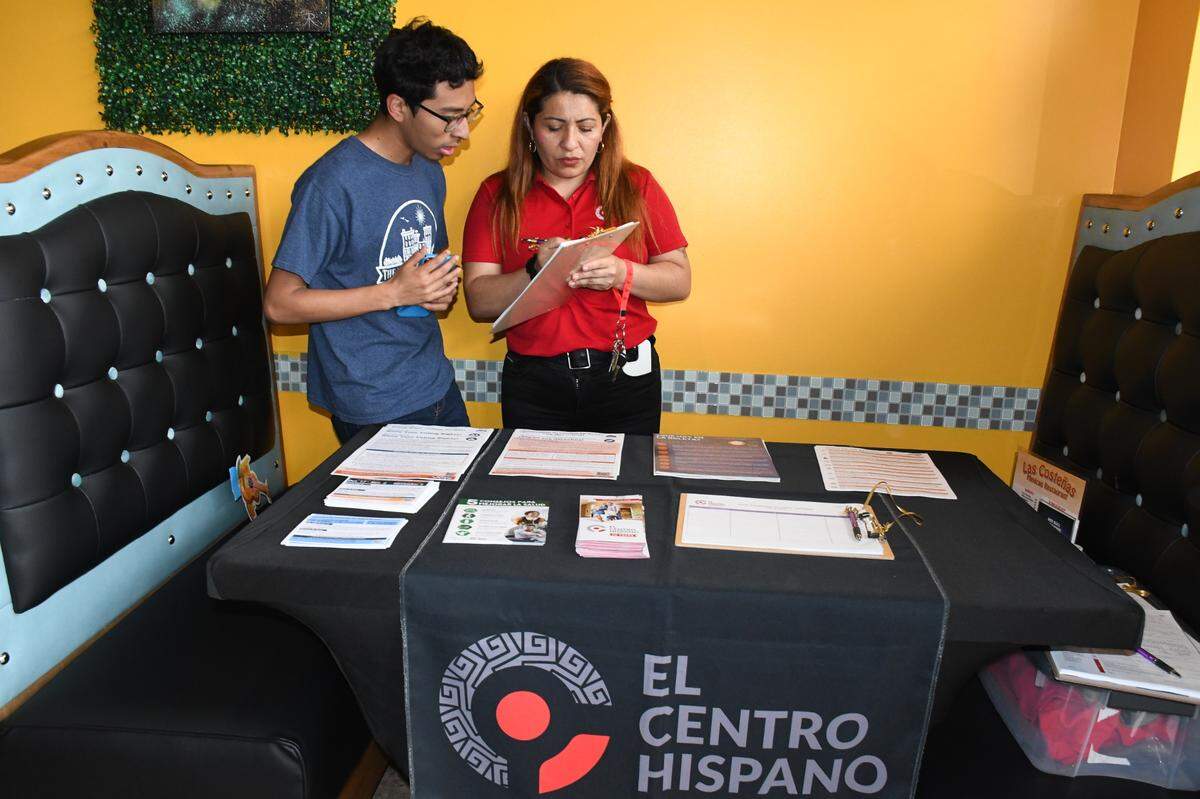
Less than 16% are registered Republicans. But potentially indicating a shift, more of the Latino voters who turned out to vote in the March primary were Republican than in past elections.
For experts, Latino voters’ non-alignment stems from lacking outreach by the political parties and Latino turnout lagging behind that of the general population and other minority groups.
This often means these voters are sidelined and “not listened to,” Velez said.
“Both political parties have made assumptions about what are the issues that we care about,” he said. But there’s not “like a cheat sheet” or a “silver bullet” to pinpoint what Latinos care about, he said.
“We’re not a monolithic” group, and “we not only care about immigration, we don’t only care about the economy,” he said.
Key issues and priorities for Latino voters
Guillermo Nurse, Oxford’s mayor and the first Latino mayor in the state, is among those who don’t line up with either party.
Nurse’s military background initially aligned him with the Republican Party, drawn by their support for the military.
Disillusionment with unfulfilled promises — particularly on immigration reform — led him to reevaluate his political allegiance. Transitioning to the Democratic Party, he sought action on critical issues but said he felt disappointed once again.
The Latino vote, Nurse emphasizes, is a diverse and multifaceted demographic with varying priorities and concerns. While some may lean toward traditional party affiliations, many remain open to candidates who genuinely engage with their community and address their needs.
“In the Latino community, again, they’re waiting to see which candidate is going to do or have the track record of doing what they promised,” he said.
Political parties will tend to focus on voters they’ve been able to turn out before, said Nikki Marin Baena, co-director at Siembra NC, a Latino-focused, statewide progressive political organization
Latinos are often left out because of this, so they often lack information on a party’s exact policies and are left to interpret what they believe the parties will actually do if they get into power, she said.
Democrats have largely campaigned on how the election will have repercussions on the future of reproductive rights and democracy. They’ve also touched heavily on health care access, with North Carolina being a bright spot for them considering the state’s expansion of the federal-health insurance program, Medicaid.
Republicans have honed in on inflation, other economic problems and the surge in illegal immigration.
“All of the Latino voters that we’ve talked to, their main concerns are the economy, how expensive things are, and whether they will be able to find work. And that’s regardless of who they are planning to vote for,” Marin Baena said.
She said Latino voters are also concerned about school safety, particularly in the aftermath of the shooting in Uvalde, Texas, a predominantly Hispanic city.
“My observation is that neither candidate is really speaking to that anxiety in our community. And so our community is left to make guesses using other information about which candidate will best address those anxieties,” she said.
“Right now it’s a toss-up,” on who Latinos will vote for, said Marin Baena, “I think it’s anyone’s game, it’s anyone’s race.”
In North Carolina, it’s not uncommon for voters to split the ticket — that is, vote for candidates from different parties across offices.
Eduardo Sosa, a registered Republican, reflects those nuanced views. The Butner Town council member said he leans conservative due to his traditional upbringing — a sentiment that resonates with some Latino voters.
“The values I represent are family, dignity, economic freedom and religion,” he said.
Reflecting on his identification with the GOP, Sosa said Trump “represents certain aspects to me. I don’t base my decisions on personality. I focus on the values he endeavors to uphold for Hispanics, such as prioritizing education for their children, devoid of a gender perspective, and advocating for educational reform.”
But Sosa said he would not vote for Mark Robinson, the GOP candidate for governor, deeming him too radical. Democratic Attorney General Josh Stein is facing off against Robinson.
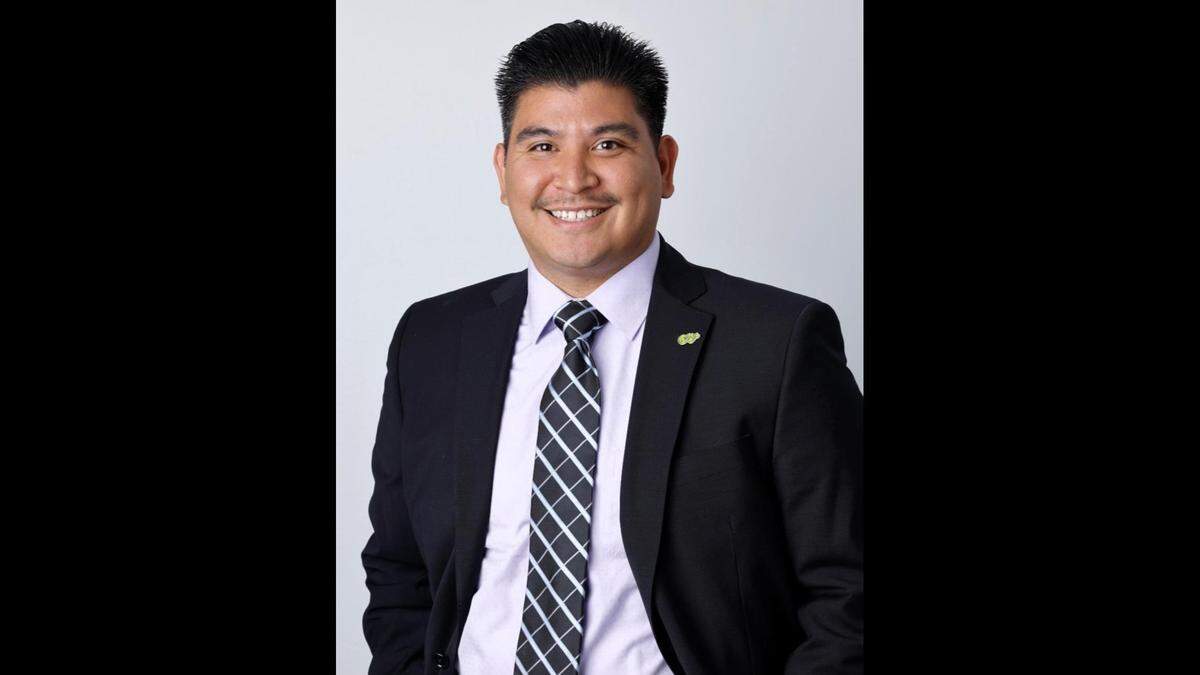
Other voters like Eliazar Posada, Carrboro’s first openly gay Latino council member, are drawn to the Democratic Party’s commitment to inclusion and diversity.
“Initially, I was not a Democrat,” Posada said in Spanish, “but this changed based on the policy of not only including the Hispanic, African American, other racial communities, but also the LGBTQ+ community.”
The state has no Latino elected officials serving in the legislature or in any statewide office.
Competing sets of values on immigration
One area where Latinos often grapple with competing sets of values is on immigration.
Julian Abreu, the founder and president of the Asociación Dominicana de Carolina del Norte (North Carolina Dominican Association), said in Spanish that “people without documents, what I hear is that they don’t want Trump to come back.”
“But those who have documents — who are residents, owners of businesses, that can vote — I have heard them say they would vote for Trump, particularly due to economic reasons,” Abreu said.
The voting dilemma is particularly true for younger Latinos in mixed families — including some members who are in the country legally and some who are not — who often rely on their family’s approval of a candidate or party to guide their decision-making.
This is why it’s important for family members to teach young Latinos the importance of voting, Abreu said. But, unfortunately, many Latinos are “apathetic” to elections and voting, he said.
“Therein lies a double effort. A double effort to make that young man aware that he — his vote being whatever — can help his father or can push for immigration reform in the future so that his father can resolve his situation of immigration uncertainty,” Abreu said.
Trump has made immigration one of his campaign’s key topics, often citing the increased influx of immigrants entering through the U.S.-Mexico border. He has promised to launch “the largest domestic deportation operation in American history” should he return to the White House.
Meanwhile, Biden had faced criticism, even among traditionally supportive Latino voters, for issuing humanitarian parole to immigrants from Cuba, Haití, Nicaragua and Venezuela arriving at the border during his tenure and the perceived lack of progress on immigration reform for long-settled immigrants without legal authorization.
In response, Biden in June announced an asylum ban that bars migrants from being granted asylum when U.S. officials deem that the border is overwhelmed.
He also announced a new path for long-term residents married to U.S. citizens to obtain residency. This could help Biden — and in turn Harris — in battleground states, such as North Carolina, in which 5% of U.S. citizens live in a “mixed-status” household.
The GOP and critics have blamed Harris for failing to address border issues, honing in on her role in 2021 as the point person in charge of examining the cause of surging immigration, in particular from El Salvador, Guatemala and Honduras.
Advocates say the election will be critical for immigration policy.
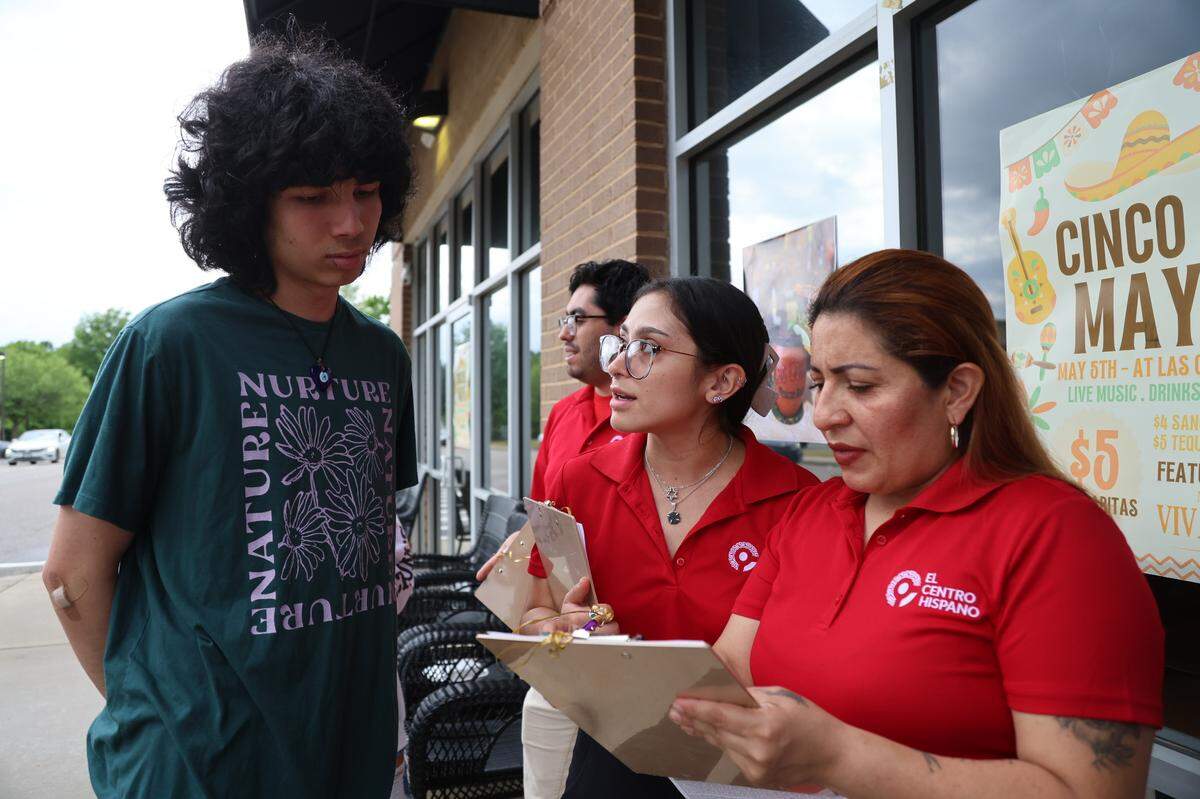
“We need to strongly encourage our young people to get informed and register”, said Pilar Rocha-Goldberg, president and CEO of El Centro Hispano, which organized a May 5 event where volunteers visited Hispanic restaurants to register voters.
“This year is crucial because we need to preserve the gains we’ve made and enable our community to achieve a migratory status that allows them to lead a more fulfilling life in this country,” she said in Spanish.
At the forefront of El Centro Hispano’s agenda is the urgent need to register Latino voters, particularly in light of House Bill 10, a bill filed by GOP lawmakers in the state that would require local law enforcement to cooperate with immigration authorities.
Republicans and those in favor have said the bill will increase safety and that people who are in the country illegally and commit a crime, should be deported. The bill gained traction in April but has since been tied up.
“With proposals like HB10 advancing in the state Senate, our vote is more important than ever,” said Denisse Burgos in Spanish. Burgos is the manager of the Civic and Community Participation Department at El Centro Hispano.
The economy is a priority for Latinos
But while immigration policy remains a concern for some Latinos, financial issues seem to take higher priority for those who are eligible to vote.
In the election, economic issues such as inflation, the cost of living, health care and housing affordability are top concerns for Latino voters, according to a survey by BSP Research on behalf of UnidosUS y Mi Familia Vota.
For Clarissa Martínez-de-Castro, vice president of UnidosUS’s Latino Vote Initiative, “It is absolutely true that Republicans have been able to regain some of the ground they have lost with Latinos in the last 10 years or so.” This, she said, is largely because the GOP has been able to solidify a public perception that they fare better on economic issues.
Many speculate “that if there’s some movement to the Republican Party it’s because people are aligned with some of the immigrant positions or some of the incendiary statements that some candidates have been making. For many Latinos, it is in spite of that,” she said.
“It has to do more with the economy,” she said.
Growth in the US economy continues to be above expectation, according to Deloitte. Unemployment remains low.
But this has not necessarily translated into pocketbook benefits. Interest rates and inflation remain above pre-pandemic levels. The purchasing power of a dollar dropped by 23% between June 2019 and June 2024. This means one dollar in 2019 has the purchasing power of $1.23 in 2024.
Latino unemployment has followed the same trend line as that of the general population, though it is usually slightly higher.
The jobless rate for Hispanics hit a record low of 3.9% in September 2019, under Trump. It jumped to 18.9% in April 2020. As of June, it was at 4.1%, according to the U.S. Bureau of Labor Statistics.
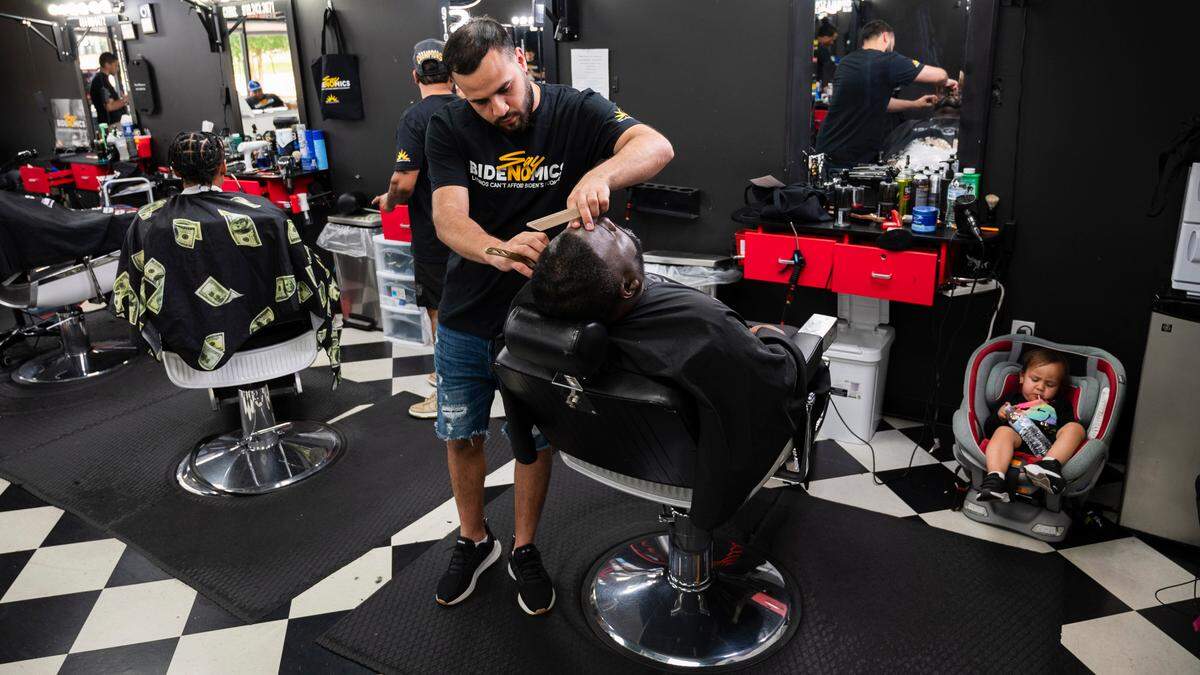
Jose Mora, president of the Latinos Raleigh Chamber of Commerce, criticized “Bidenomics,” or the moniker used by the Biden administration for their economic platform.
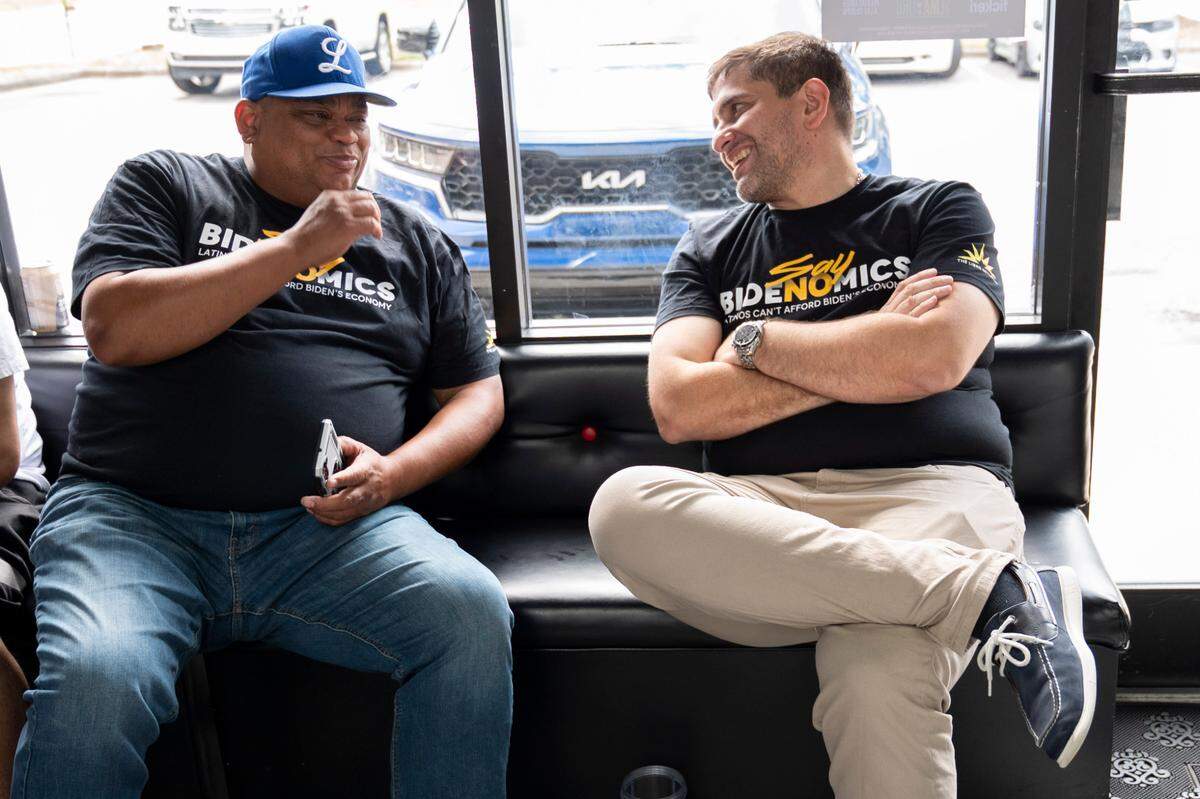
Mora, formerly vice president of the Wake Hispanic GOP, said in Spanish that many Latinos will use their vote to express discontent with the current administration’s economic policies, rather than to outright endorse the GOP.
Harris “is a different person and doesn’t necessarily have to have the same luck as President Biden,” he said. “However, she faces a tough challenge in convincing the Hispanic vote, as the economic situation remains unchanged.”
Jeffrey Balwin, strategic director for the LIBRE Initiative, said the Democratic Party is not paying attention to the economic impacts of policies on the Hispanic population, citing a recent Department of Labor ruling that reclassified many independent workers as company employees. Many Latinos work as independent contractors.
LIBRE, which is nonpartisan but usually supports Republicans, is backed by billionaire Charles Koch’s donor network, which also funds conservative advocacy group Americans for Prosperity.
“It almost looks like they’re not paying attention to what matters for the Hispanic community because they are putting more policies that are making working harder for the Hispanic community, it’s affecting the working-class community. And that’s kind of the stories that we hear from people when we are at events, knocking on their doors,” said Baldwin.
Party strategies to reach the Latino voters
Democratic and Republican party operatives are intensifying their outreach efforts to secure Latino support in North Carolina.
However, operatives for these parties agree that more outreach needs to occur.
The Democratic Party “has often viewed Latino engagement as an afterthought, assuming Latino support without actively investing in genuine outreach efforts,” Posada said.
Posada said he attended an event in rural North Carolina where both major parties had set up tables.
However, what caught his attention was the additional table set up by the Republicans — in Spanish. Posada said the Democratic Party is behind, but is doing more outreach for this upcoming election.
Some Republicans aren’t satisfied with how their party’s outreach has looked in the past, either. When “we go knock doors, when we go to festivals, Latinos really haven’t heard from Republicans ever,” Eduardo Andrade said. And that makes those voters hesitant to engage with Republicans, he said.
“It’s really only been in the last three election cycles where the Hispanic community has been able to actually listen to Republican or conservative talking points,” he said.
Andrade is the political director for the North Carolina Republican Party. He is also the second national vice chair for the Republican National Hispanic Assembly and the former chairman of the RNHA in North Carolina.
“Latinos are being targeted,” he said. “It’s all about doing the grassroots work, extending our hand out and saying we’re here as a party, to engage and to communicate,” he said.
As for what is being done by Democrats to engage Latinos, Posada cited the revitalization of the Latino Caucus — a forum for Latino Democrats to voice concerns and shape party platforms.
“The caucus hasn’t been super visible in recent years, and now, with the new leadership of the Democratic Party, there’s a lot of focus on creating county-level groups or county caucuses to support the state-level caucus,” he said.
This reporting, also available in Spanish, was done in partnership with Enlace Latino NC, North Carolina’s only Spanish-language nonprofit news organization.
This story was originally published August 6, 2024 at 6:00 AM with the headline "NC’s Latino voters are up for grabs for either party, advocates say. Here’s why.."