Republicans fight to keep NC’s Senate seat. Can any of them beat Cooper?
AI-generated summary reviewed by our newsroom.
- A public spat with Trump over Medicaid and policy led Tillis to withdraw from reelection.
- Michael Whatley is Trump’s handpicked GOP candidate for the NC Senate seat.
- Whatley got national mention, yet 56% of NC voters said they were unfamiliar with him.
READ MORE
NC Primary Election 2026
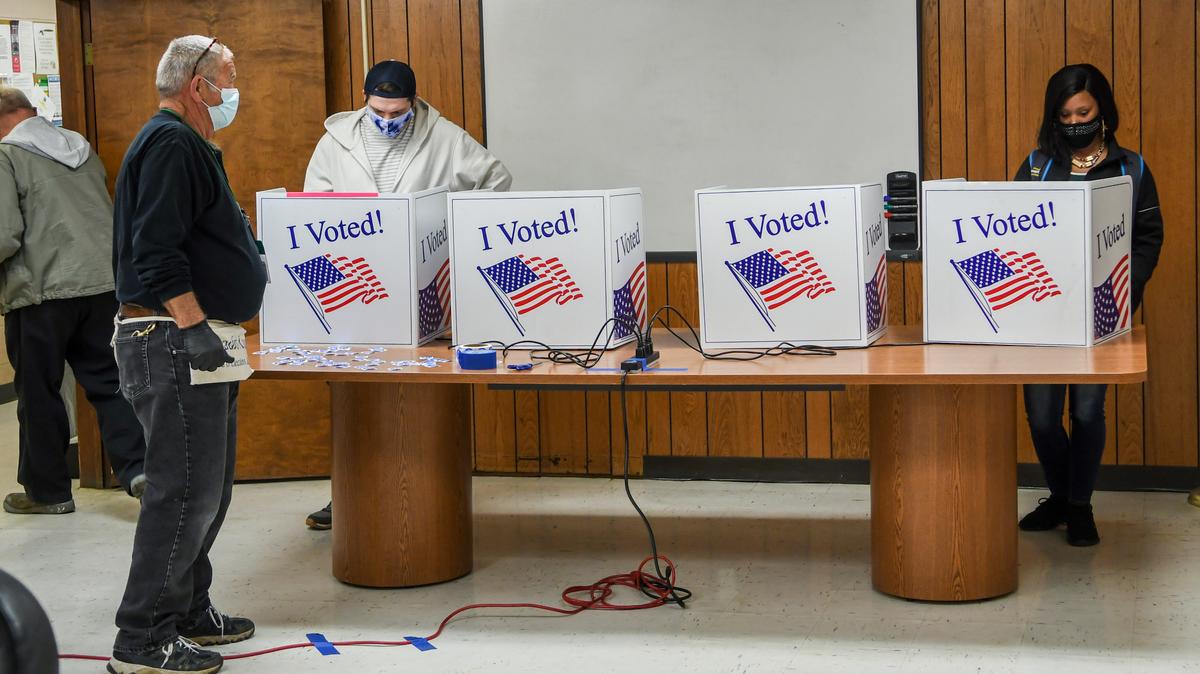
North Carolina’s primary election is March 3, 2026, with early voting starting Feb. 11, 2026. Here are stories on candidates, voting and issues to help voters as they head to the polls.
Expand All
One of North Carolina’s candidates for U.S. Senate found himself, this month, on The Washington Post’s list of 50 people shaping society in 2026.
But in back-to-back polls by High Point University, at least 56% of the 1,000 North Carolinians polled said they were unfamiliar with or unsure about him.
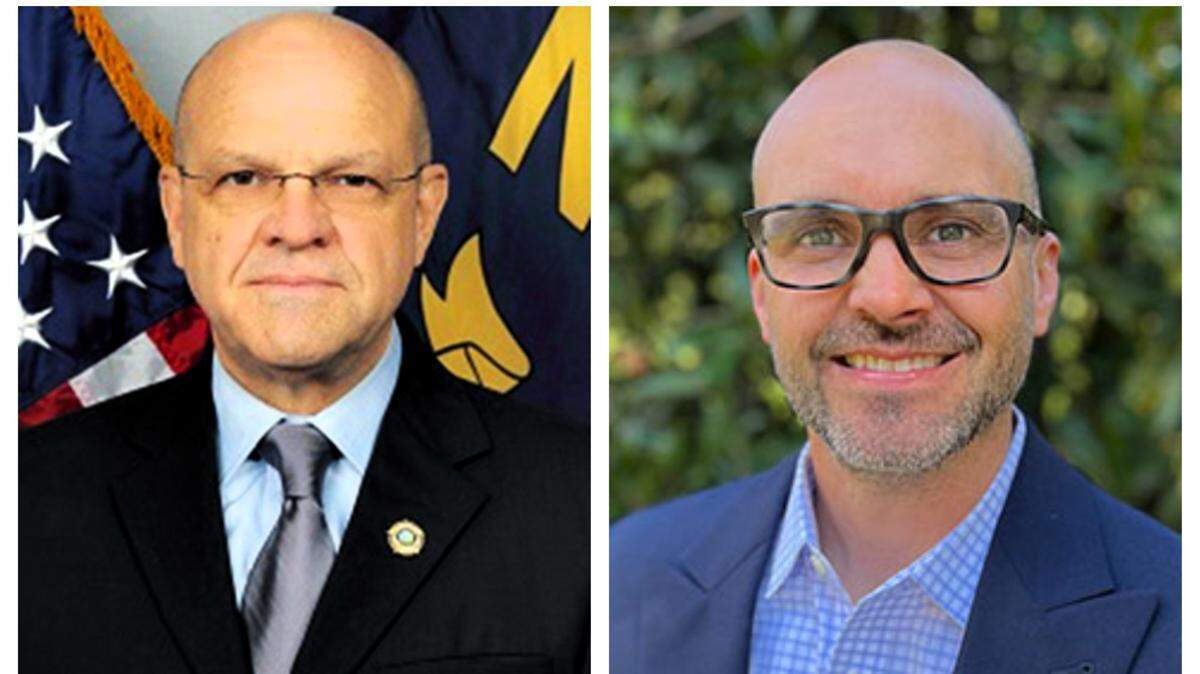
Michael Whatley, 56, a Republican from Gastonia, is President Donald Trump’s handpicked successor to Sen. Thom Tillis.
But to win the Republican nomination for the seat, Whatley would have to defeat five other candidates in the March 3 primary.
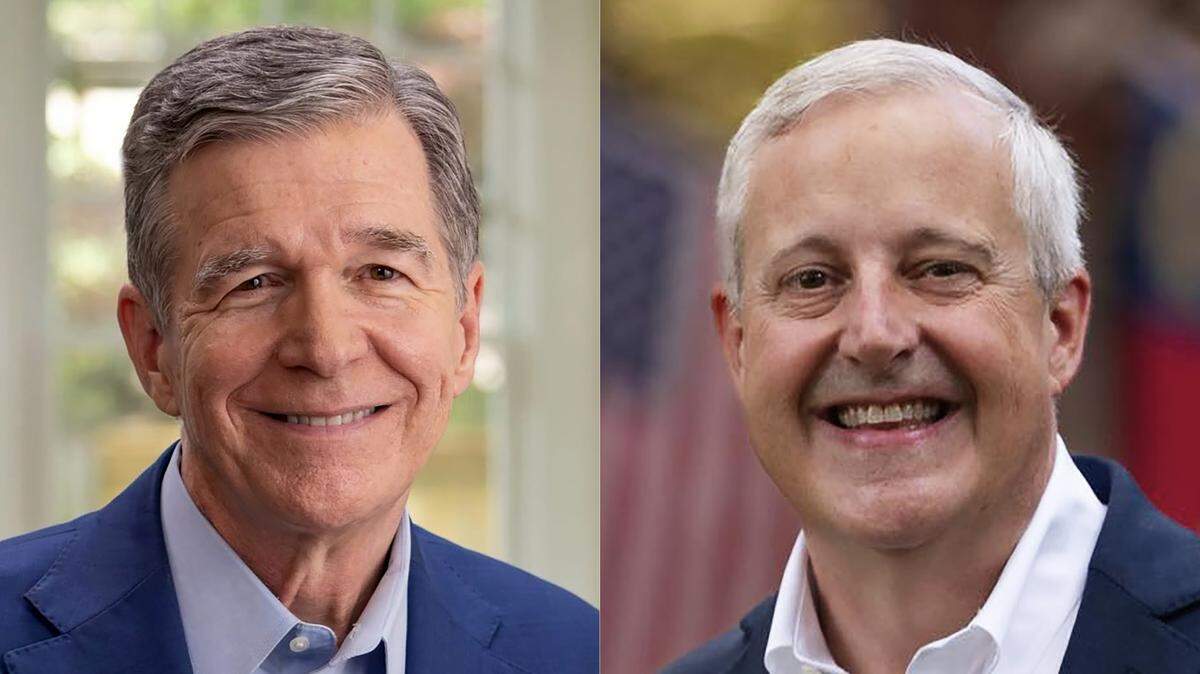
Then he would face a Democrat in the fall. Former Gov. Roy Cooper is the frontrunner in a field of six Democrats.
Holding North Carolina would help Republicans make sure they maintain their majority in the Senate, which they currently hold by a margin of six votes. The late Sen. Kay Hagan was the last Democrat from North Carolina to hold a seat in the Senate, and her term expired at the beginning of 2015.
But in every public poll since both candidates entered the race, Cooper has been ahead of Whatley.
Tillis exits
Tillis, the Republican who defeated Hagan, had planned to run for a third term. In December 2024, Tillis announced plans to seek reelection. But over the summer, Trump and Tillis got into a public sparring match over Medicaid coverage for more than 600,000 North Carolinians.
Tillis voted against the One Big Beautiful Bill Act, a tax and spending package looking to fulfill much of Trump’s 2024 campaign promises, saying it would jeopardize North Carolina’s Medicaid coverage.
And with any Republican who opposed Trump’s signature bill in danger of losing their seat, Tillis chose not to seek reelection after all.
In an interview with Fox Business aired this week, Trump told the news organization that he’d been fighting with Tillis for a long time, and that’s why Tillis ended up “quitting.”
“Ack Mr. President,” Tillis wrote in a message to Trump at the time, obtained by McClatchy. “Start thinking about my replacement.”
And Trump was.
He tapped Whatley to take Tillis’ place.
“I need him in Washington, and I need him representing you,” Trump wrote in a statement on Truth Social before offering his “complete and total endorsement” of Whatley.
Who is Michael Whatley?
Whatley, who grew up in Blowing Rock, has never served in public office, though politics has been a large part of his career.
He began as a law clerk in Charlotte before taking a job in Washington at the second Bush administration’s Department of Energy and then became chief of staff for Sen. Elizabeth Dole. Following his stint working for Dole, he worked as an oil lobbyist.
In 2016, he led Trump’s energy, environment and agriculture transition teams before being tapped to lead the North Carolina Republican Party as its chairman and as general counsel for the Republican National Committee.
In 2024, he was tasked with chairing the national party through the presidential election, where he made more than $714,000 that year, his Senate financial disclosure report states. Combined with other income in 2024, Whatley made over $1 million. That does not include stocks he holds in pharmaceutical, oil, technology and other companies.
Whatley was still leading the national committee when Trump asked him to run for Senate.
At the time, supporters said that Whatley could put up a good fight against Cooper, especially in fundraising.
As of Dec. 31, Cooper had $12.4 million in his war chest and Whatley had $3.7 million. That’s not including money held by allied political committees.
In October, Jason Husser, director of the Elon University Poll, said Whatley “faced a steep uphill climb in name recognition in the year between now and Election 2026.”
“Even after serving in high-profile national and state party roles, almost three-quarters of North Carolinians say they’ve heard of him only a little or not at all,” Husser said. “That’s a tough starting point for any major race, especially one in a swing state with an opponent who has an enormous visibility.”
Whatley’s campaign
Whatley’s campaign website offers no information about his campaign platform nor any upcoming events.
“You can’t find where Whatley stands on anything,” said Don Brown, one of the other Republican candidates.
In a Carolina Forward poll published last month, Whatley outperformed Brown, the closest contender, 36% to 6%.
A Carolina Journal poll showed Cooper out-performing Whatley 47%-39% and Brown 48%-38%, meaning there was little difference in Cooper’s lead whether he ran against Whatley or Brown.
Brown reported $32,400 cash-on-hand at the end of December.
But Brown told McClatchy he was feeling good about his prospects in the race, saying, “Whatley is not universally popular.”
Who is Don Brown?
Brown, 65, of Charlotte, is a retired Navy Judge Advocate General attorney and author of 13 published books.
Unlike Whatley, Brown’s website has a list of policy positions, including cutting two-thirds of non-military federal personnel to help reduce the nation’s debt, eliminating the IRS and income tax, and ensuring that vaccine and mask mandates are no longer legal.
He wants abortion bans; protections for gun owners; the elimination of the Department of Education; and term limits.
“I feel like we have a very winnable race,” Brown told McClatchy, “and we intend to win it.”
Brown had been in the race for nine months before candidates filed with the state board of elections to get their names on the ballot.
Michele Morrow a late addition to race
For months, rumors had been swirling that another candidate, Michele Morrow, might join the race.
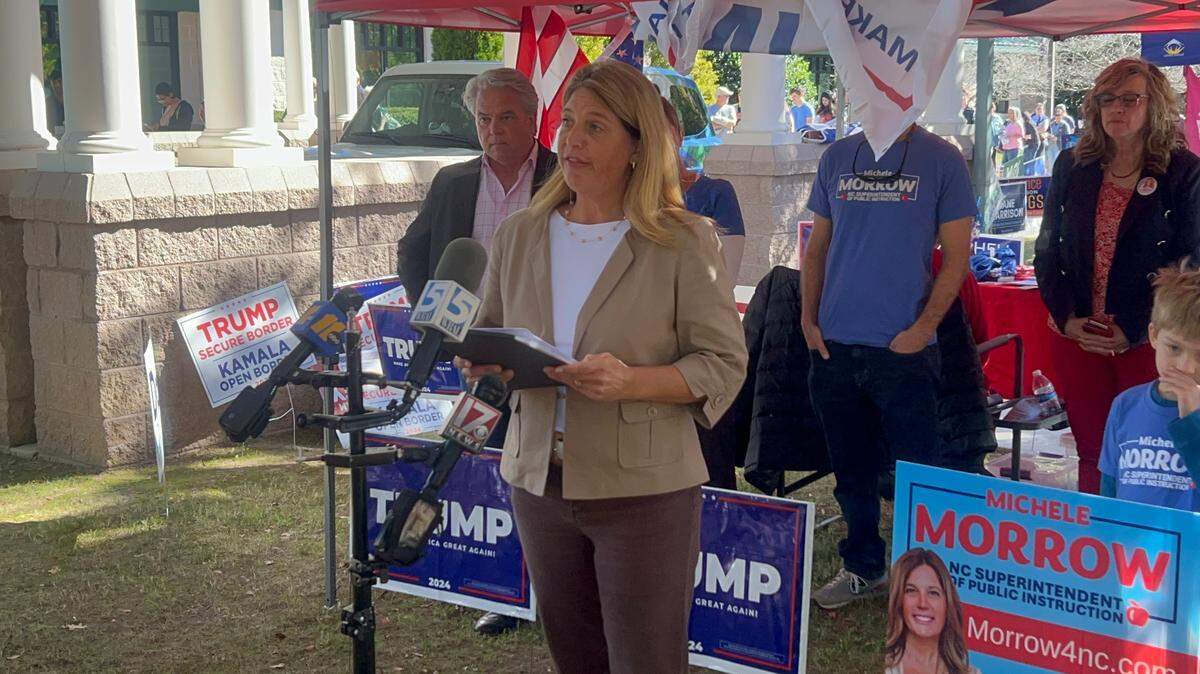
Morrow, 54, of Cary, made a name for herself for controversial statements she made before and during her 2024 campaign for state superintendent of education, including attacking LGBTQ+ people and calling for the execution of Democratic leaders.
Morrow, a nurse, waited until almost the deadline to file for Senate, launching her campaign in December.
Earlier this month, Morrow sent a letter to supporters to address rumors that have circulated online. Within the letter, she discussed her decision to run and the impact it might have.
One of the rumors she describes and rebuts is that she got into the race to split the grassroots vote and help Whatley win against Brown.
“My only considerations for entering this were, ‘Can Whatley beat Roy. Can Don beat Roy. Can I beat Roy,’” Morrow wrote in the letter, which McClatchy obtained through her campaign. “And my answers were NO, NO, Yes and I can unite the grassroots and the party and not only beat Cooper, but help us win up and down the ballot. That’s it. Period. I am not the one that is splitting the vote or creating division in the Grassroots.”
Morrow polled behind Brown at 3% in that same Carolina Forward poll.
With such a short runway for raising money, she had only $1,600 in her campaign accounts on Dec. 31.
But Morrow is confident in her ability to win the primary and defeat Cooper in the fall.
“I have the name recognition,” Morrow told McClatchy. “I have the trust of the people of North Carolina. I have been fighting for them and with them for the last 11 years.”
Like Brown, Morrow’s website also includes issues she wants to address in Washington.
Her key issues include securing the border, election integrity, ensuring federal relief in disasters, holding FEMA accountable and restoring law and order to communities.
She opposes abortion and believes in “the nuclear family.”
Other candidates
There are three other candidates running in the Republican Party: Elizabeth Anne Temple, Thomas Johnson and Richard Dansie.
Whoever wins will face off against Green Party candidate Brian McGinnis, Libertarian Party Shannon Bray and independent Shaunesi Deberry.
Democratic candidates include, along with Cooper:
- Robert Colon
- Justin Dues
- Daryl Farrow
- Orrick Quick
- Marcus Williams
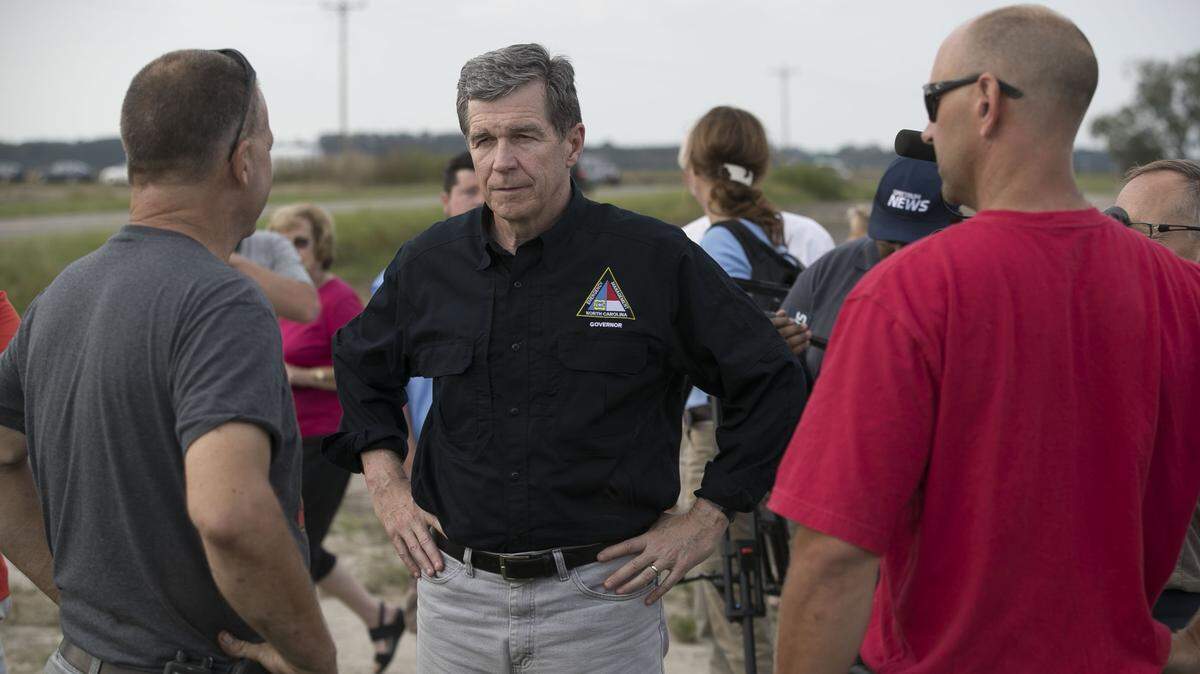
Roy Cooper
Cooper, 68, a Democrat from Raleigh, began his career in the state House, then the state Senate before becoming attorney general and finally governor.
Over a 19-month period starting Jan. 1, 2024, Cooper made just over $217,000 from his salary as governor and collected $67,000 from his state pension, according to his financial disclosure report. He also made just over $20,000 teaching a course at Harvard University just before launching his campaign. He doesn’t have any individual stocks but does hold mutual funds.
Cooper’s gubernatorial terms encompassed the COVID-19 pandemic, which put him on television across North Carolina daily.
He also received national attention helping to campaign for Democratic presidential nominee Kamala Harris, introducing her at the Democratic National Convention and undergoing consideration to be her running mate, an idea he rejected.
Like Whatley, Cooper doesn’t include a platform on his website, but he’s served in government since the 1980s and his lists of accomplishments found on his website offer a glimpse of what people can expect from him if he wins the Senate seat.
Among the things he highlighted were the creation of thousands of new jobs, working across the aisle to help enact bipartisan bills, expanding Medicaid coverage to more than 650,000 North Carolinians, relieving $4 billion in medical debt to 2 million North Carolinians, boosting public education, taking on the opioid epidemic, revitalizing rural communities and ensuring North Carolinians have the training for better-paying jobs.
There has been no public polling showing Cooper against another Democrat or any of his primary opponents against any of the Republicans.
This story was originally published February 12, 2026 at 5:00 AM with the headline "Republicans fight to keep NC’s Senate seat. Can any of them beat Cooper?."




.JPG)