
Salmonella, cronobacter update: Another infant death, and more baby formula recalled
The death of another baby caused Monday’s recall of more infant formula made at Abbott Nutrition’s Michigan facility.
This recall of Similac PM 60/40 powdered formula came 11 days after Abbott pulled certain lots of Similac, Alimentum and EleCare powdered formulas while the Centers for Disease Control and Prevention and the FDA separately investigated cronobacter and salmonella illnesses linked to the formula. The original recall also followed a baby’s death.
What’s new?
On Monday, Abbott recalled lot No. 27032K80 of Similac PM 60/40 in cans and lot No. 27032K800 in cases. This lot went to the United States and to Israel.
“This is a specialty formula for certain infants who would benefit from lowered mineral intake and was not included in the previous recall,” the FDA said.
The CDC says this comes after a report that a baby who had consumed that Similac from that lot died and tested positive for cronobacter. The FDA says this is the fourth child to test positive for cronobacter, which “may have contributed to the death” of two children. A fifth child tested positive for salmonella. All three surviving children, the FDA said, had to be hospitalized.
In a statement emailed to The Miami Herald, Abbott said, “We want to extend our heartfelt sympathies to the families. We value the trust parents place in us for high quality and safe nutrition and we’ll do whatever it takes to keep that trust.”
What baby formulas are recalled?
In addition to the Similac above, there’s Similac, Alimentum and EleCare powdered formulas that can be identified by the lot code on the bottom of the can and the expiration date.
All these will be present: The first two lot code digits are a number from 22 through 37; the code includes “K8,” “SH” or “Z2;” and the expiration date is 4-1-2022 or later.
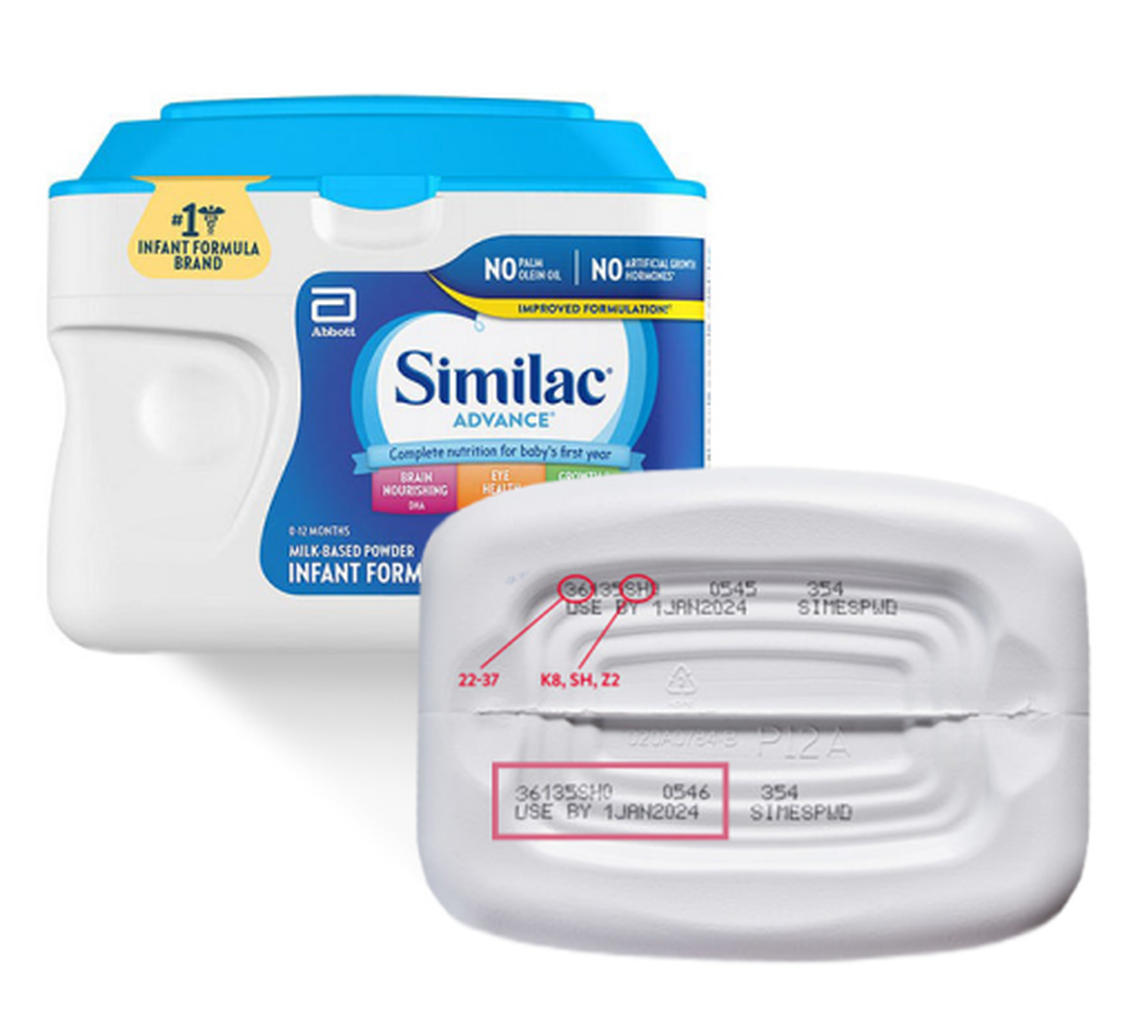
The FDA “is advising consumers not to use recalled Similac, Alimentum, or EleCare powdered infant formulas.”
Abbott says all infant formula products are tested for cronobacter, salmonella and other pathogens before being sent to the shelves and recently tested product samples tested negative.
Abbott has a place you can go to check your lot number. Those who have recalled formula should stop using it and contact Abbott through the above website or at 800-986-8540.
What is Cronobacter?
The CDC says cronobacter used to be called enterobacter sakazakii and can live in dry places, which is why it has been found in dry foods (powdered infant formula, powdered milk, starches such as rice and pasta, herbal teas). In addition to being possibly lethal for babies, it can be just as deadly for senior citizens and those with a damaged immune system (organ transplant recipients, people living with HIV or cancer).
Infants who have a fever along with low appetite, “excessive crying,” or low energy should be checked by a doctor. Cronobacter can cause the blood infection sepsis or meningitis, when the linings around the brain and spinal cord swell.
“Infections in infants usually occur in the first days or weeks of life,” the CDC says. “Infants 2 months of age and younger are most likely to develop meningitis if they are infected with cronobacter.”
What is Salmonella?
By the CDC’s count, salmonella strikes 1.35 million Americans each year, hospitalizes about 26,500 and kills 420. Most at risk for the worst effects are senior citizens, children under 5 and those with damaged immune systems. Most people get fever, vomiting, stomachaches and diarrhea that starts around 12 to 72 hours after eating the tainted food and runs for four to seven days.
This story was originally published March 1, 2022 at 10:55 AM with the headline "Salmonella, cronobacter update: Another infant death, and more baby formula recalled."
